Understanding the Importance of a 3D Artist Cover Letter
In the competitive world of 3D artistry, a compelling cover letter can be your golden ticket to landing your dream job. It’s more than just a formality; it’s your first opportunity to make a strong impression on potential employers and set yourself apart from the competition. A well-crafted cover letter provides a platform to showcase your personality, passion, and skills, demonstrating why you’re the ideal candidate for the role. Failing to provide a cover letter can suggest that you did not put enough effort in and may be seen as a red flag.
Why a Cover Letter Matters
Your portfolio is undoubtedly crucial, but a cover letter adds depth and context. It allows you to connect with the hiring manager on a personal level and highlight the specific skills and experiences that align with the job requirements. This document is also your opportunity to explain any gaps in your resume, address specific company needs, and express your genuine interest in the position. A well-written cover letter is a great first step and should not be avoided.
How a Cover Letter Complements Your Portfolio

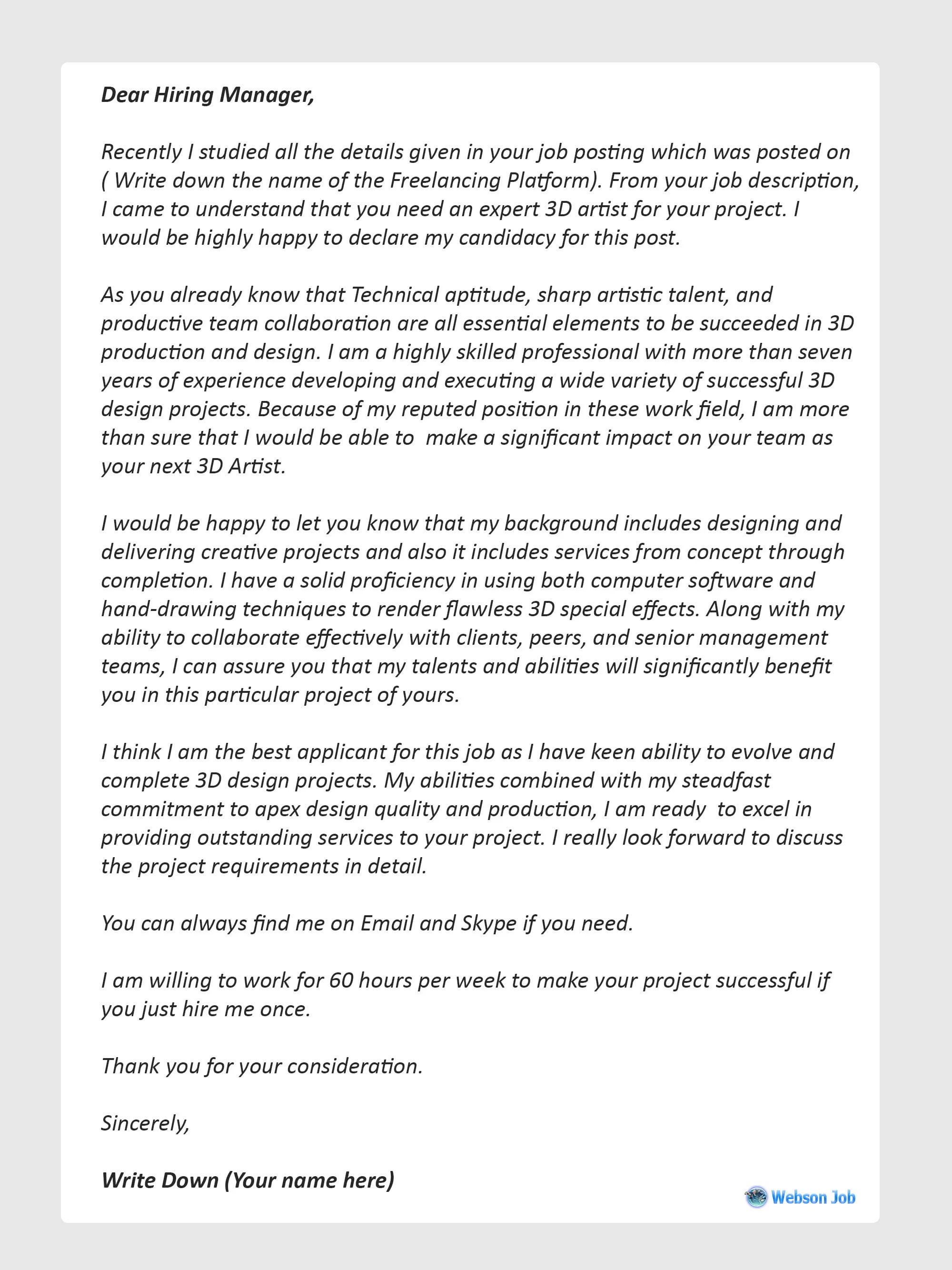
While your portfolio showcases your artistic skills, your cover letter provides a narrative. It explains the ‘why’ behind your work and connects your skills to the company’s needs. Think of it as a teaser for your portfolio – it should intrigue the reader and encourage them to explore your visual work. It’s also a chance to talk about the specific projects and your role within them. A cover letter helps to make the hiring manager to understand the value that your work provides. See image below.
Key Components to Include in Your 3D Artist Cover Letter
A strong cover letter is a carefully constructed document. It should follow a clear structure and include all the essential information. Let’s break down the critical components that can make your cover letter shine and capture the attention of the hiring manager. These essential elements not only provide the necessary information but also showcase your attention to detail and professionalism. These elements are also important for making the cover letter standout.
Your Contact Information
At the top of your cover letter, include your full name, phone number, email address, and a link to your online portfolio. Ensure your email address is professional. Make it easy for the hiring manager to reach you. It is best practice to add the contact details at the very top of the cover letter. Ensure that the details are updated and correct. The below image shows a sample of contact information for the cover letter.
The Hiring Manager’s Name

Whenever possible, address your cover letter to a specific person. Research the company and find out the name of the hiring manager or the person responsible for reviewing applications. Addressing your letter to a specific person shows that you’ve done your research and are genuinely interested in the role. This personal touch makes a significant difference and demonstrates your attention to detail.
A Compelling Opening Paragraph
Start with a strong opening that grabs the reader’s attention. State the position you’re applying for and briefly mention where you found the job posting. Then, immediately highlight your most relevant skills and experience. Show your enthusiasm for the company and the role. This initial paragraph should set the tone for the rest of the letter and encourage the hiring manager to continue reading.
Highlighting Relevant Skills and Experience
Use the body of your cover letter to showcase your skills and experience. Tailor your writing to match the job description and emphasize the skills and experiences that the employer is seeking. Instead of just listing your skills, provide specific examples of how you’ve used them in previous projects. Here’s how to highlight key skills and experience.
Showcasing Your 3D Modeling Skills

Discuss your proficiency in 3D modeling software such as Maya, 3ds Max, Blender, or ZBrush. Mention your experience with different modeling techniques, such as hard surface modeling, organic modeling, and sculpting. Provide examples of the types of models you have created, whether characters, environments, or props. Your cover letter must show that you have strong knowledge of the 3D modeling. Below image shows an example of a 3d model.
Demonstrating Your Animation Abilities
If the role requires animation skills, highlight your experience with rigging, animation, and motion capture. Describe the types of animations you have worked on and mention any specific animation techniques you are proficient in. Illustrate your animation capabilities by providing links to your animation reels or specific projects in your portfolio. Do not hesitate in including any animation projects in your previous work or even a personal project.
Mentioning Software Proficiency
List the 3D software and tools you are proficient with, such as Maya, 3ds Max, Blender, ZBrush, Substance Painter, and others. Mention your experience with rendering engines like Arnold, V-Ray, or Cycles. Specify your knowledge of any relevant plugins or tools. Ensure that your software list matches the requirements outlined in the job description. Your knowledge in tools may set you apart from the competition.
Quantifying Your Achievements

Whenever possible, quantify your achievements. Instead of saying ‘I improved the efficiency of the modeling process,’ say ‘I improved the efficiency of the modeling process by 15%, reducing project timelines by two weeks.’ Use numbers, data, and statistics to provide concrete evidence of your skills and accomplishments. This demonstrates your impact and provides a tangible measure of your abilities. It is also helpful in showing your value as a 3d artist.
Expressing Your Enthusiasm for the Role
Show your enthusiasm for the specific role and the company. Explain what excites you about the opportunity and why you are interested in working there. Mention any specific projects or aspects of the company’s work that resonate with you. Personalize your letter to show that you have done your research and are genuinely interested in the position and the company. This interest may make a difference in the hiring managers decision.
Closing with a Call to Action
End your cover letter with a clear call to action. Thank the hiring manager for their time and consideration, and express your eagerness to discuss your qualifications further. State that you are available for an interview and provide your contact information again. This will also show that you are interested in the role. Make sure to let them know that you are available for any further discussion.
Formatting and Presentation Best Practices

The presentation of your cover letter is just as important as its content. A well-formatted, easy-to-read cover letter increases your chances of making a positive impression. This section focuses on formatting choices to make your cover letter shine. Proper formatting and attention to detail will not only make your cover letter more readable but also showcase your professionalism and attention to detail. The below image shows the formatting that can be applied.
Choosing the Right Font and Font Size
Choose a professional, easy-to-read font such as Arial, Calibri, or Times New Roman. Use a font size between 10 and 12 points to ensure your text is readable. Maintain consistency throughout your cover letter. A clean, well-chosen font will make your letter more accessible and improve readability, ensuring that the hiring manager focuses on your message.
Keeping Your Cover Letter Concise
Keep your cover letter concise and to the point, ideally within one page. Hiring managers are busy and may not have time to read a lengthy letter. Focus on highlighting your most relevant skills and experience. Ensure that every sentence serves a purpose. Brevity shows that you respect the reader’s time and can effectively communicate your message. Being brief will make the cover letter more focused.
Proofreading and Editing for Errors

Proofread your cover letter carefully for any spelling, grammatical, or punctuation errors. Errors can undermine your credibility and make you appear unprofessional. Use a spell checker and consider having a friend or colleague review your letter for you. Ensure your cover letter is polished and error-free. A well-proofread letter shows that you pay attention to detail and take pride in your work.
Tailoring Your Cover Letter to Each Job Application
Avoid sending a generic cover letter. Instead, tailor your letter to each job application, demonstrating that you have read the job description and understand the requirements. Customization is a critical element of a successful cover letter. Taking the time to personalize your cover letter for each role will significantly increase your chances of getting noticed and securing an interview. Your efforts will demonstrate your dedication to the job.
Researching the Company and the Role
Before writing your cover letter, research the company and the specific role you are applying for. Visit the company’s website, social media pages, and any relevant industry publications to learn more about their work, culture, and values. Understanding the company will help you tailor your letter to show how your skills and experience align with their needs. If you do not have the right information, the cover letter may be unsuccessful.
Customizing Your Letter to Match the Job Description
Carefully review the job description and identify the key skills, experiences, and qualifications that the employer is seeking. Then, customize your cover letter to highlight how your skills and experience match those requirements. Provide specific examples that demonstrate your ability to meet the employer’s needs. Matching the job description is key to the success of the cover letter. This demonstrates that you understand the role and can meet the requirements.
Showcasing Your Unique Value Proposition
Think about what makes you unique as a 3D artist. What are your strengths, passions, and specializations? Use your cover letter to showcase your unique value proposition. Explain what you bring to the table that sets you apart from other candidates. Highlighting your unique value proposition helps the hiring manager understand why you’re the best fit for the role. Remember to put the best part of yourself in the cover letter.
Cover Letter Examples and Templates for 3D Artists
To help you get started, there are numerous cover letter examples and templates available online. You can find examples tailored to various 3D artist roles, such as character modelers, animators, and environment artists. These resources can provide inspiration and help you structure your own cover letter effectively. You can find all kinds of examples to find the right one that fits you best. Remember that the aim is to stand out from other applicants, so use them as inspiration.
In conclusion, a well-crafted cover letter is a critical tool for any 3D artist seeking a job. By following these guidelines and tailoring your letter to each application, you can significantly increase your chances of making a positive impression and landing your dream job. Remember to highlight your skills, quantify your achievements, and express your enthusiasm for the role. Good luck with your job search!