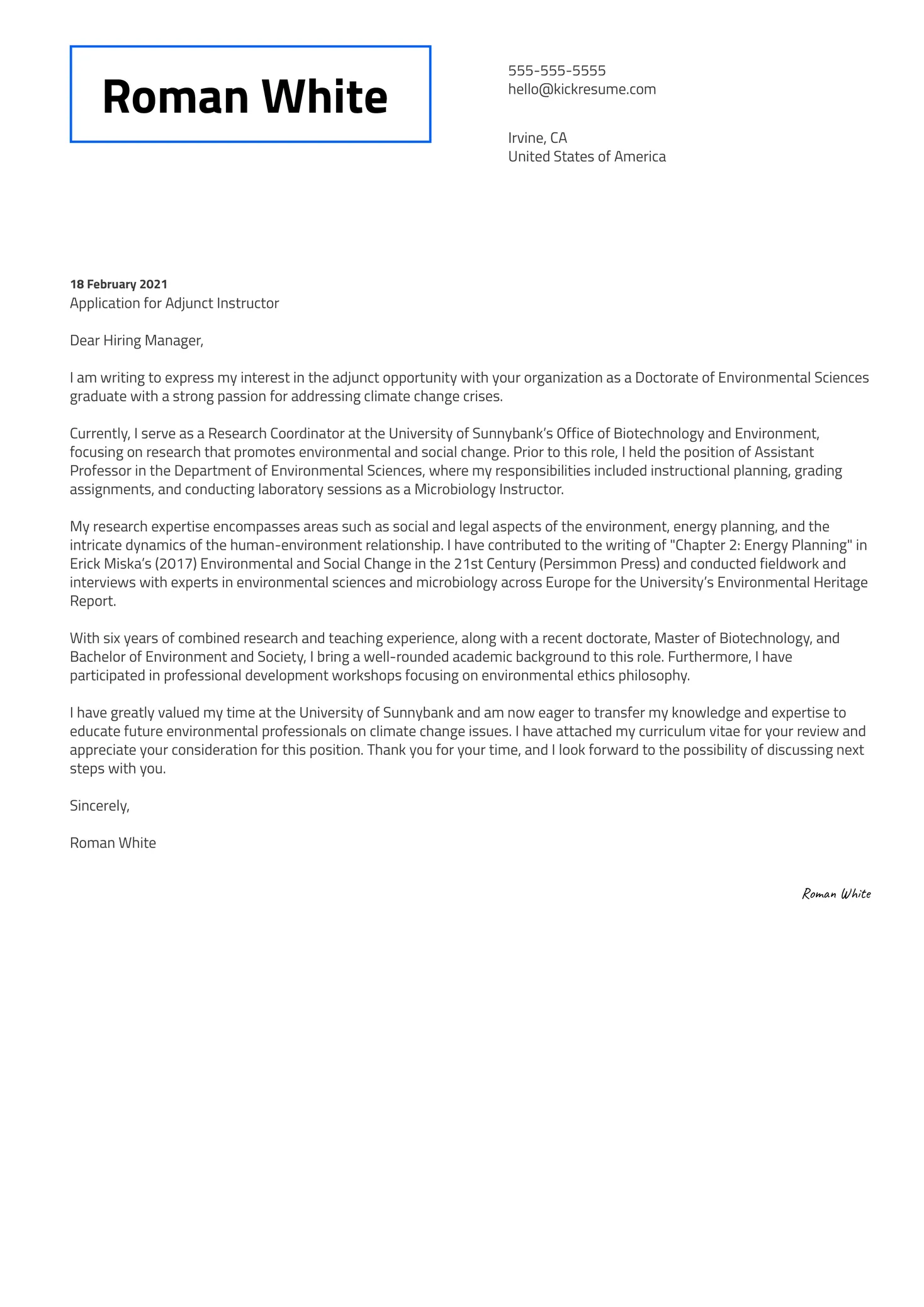
Understanding the Adjunct Faculty Cover Letter
A cover letter for an adjunct faculty position is a crucial document that serves as your introduction to the hiring committee. It’s your chance to go beyond the information in your resume and showcase why you’re the perfect fit for the role. This letter should highlight your skills, experience, and teaching philosophy, demonstrating your passion for education and your ability to contribute to the institution’s academic environment. A well-crafted cover letter is not just a formality; it’s a strategic tool that can significantly increase your chances of getting an interview. Remember, adjunct positions often attract many applicants, so a strong cover letter is your first step in standing out from the competition. It should be tailored specifically to each position, reflecting your understanding of the institution’s needs and values.
Why a Cover Letter Matters for Adjunct Positions
In the competitive landscape of adjunct faculty hiring, a cover letter is indispensable. It provides context to your resume, allowing you to explain your qualifications and connect them to the specific requirements of the job. Unlike a resume, a cover letter lets you convey your personality, enthusiasm, and teaching style. It’s where you can demonstrate your understanding of the institution’s mission and how your expertise aligns with their goals. For adjunct positions, where experience can vary widely, the cover letter offers a chance to clarify your background and explain how your unique skills will benefit the students and the department. It shows you’ve taken the time to learn about the position and the institution, indicating your genuine interest and professionalism. A compelling cover letter can set you apart from other candidates, even if your resume is similar to others.
Key Components of an Effective Cover Letter

An effective cover letter comprises several key components, each serving a specific purpose in persuading the hiring committee. These components must work together to present a cohesive and compelling narrative. They include a professional header with your contact information, a personalized salutation addressing the hiring committee or specific individual, a concise and engaging opening paragraph, detailed body paragraphs that highlight your skills and experiences, a clear and enthusiastic closing, and a professional sign-off. Each section should be carefully crafted to communicate your suitability for the position, emphasizing your passion for teaching, your relevant experience, and your ability to contribute to the institution’s academic goals. The overall tone should be professional and enthusiastic, reflecting your genuine interest in the role.
Header and Contact Information
Your header should include your full name, address, phone number, and email address. Ensure your contact information is up-to-date and professional. The header should be clearly formatted and easy to read. It’s the first thing the reader sees, so it sets the tone. Place the header at the top of the page, either left-aligned or centered, depending on your preference. Ensure the font matches the rest of your document and is easy on the eyes. Double-check all details to avoid any errors, which could make you seem careless. The header should be simple, clean, and uncluttered. A professional email address is also vital; avoid using informal or outdated email addresses. Use a professional-sounding name (e.g., Jane.Doe@email.com) to make a positive first impression. Keep the header concise and relevant, omitting unnecessary details. The header is a small but essential element that contributes significantly to your overall presentation.
Addressing the Hiring Committee
Address your cover letter to the hiring committee or, if possible, a specific person, such as the department head or search committee chair. Research the department’s website or contact the institution to identify the appropriate name and title. Using a specific name shows that you’ve taken the initiative to personalize your application, which can significantly impress the hiring committee. If you can’t find a name, use a professional salutation like “Dear Hiring Committee” or “Dear Search Committee.” Avoid generic greetings such as “To Whom It May Concern.” Always ensure correct spelling and title accuracy, as errors here can make you appear inattentive to detail. Personalization demonstrates respect and shows that you’ve done your homework on the position and the institution. It also helps you establish an initial connection with the readers. Remember, a personalized salutation creates a more positive first impression and sets a professional tone.
Crafting a Compelling Opening

Your opening paragraph should immediately grab the reader’s attention. Start with a strong statement that highlights your key qualifications or expresses your enthusiasm for the position. Briefly state the position you’re applying for and where you found the job posting. Instead of simply restating your intention to apply, use a captivating opening that showcases your understanding of the role and the institution’s needs. For example, you might mention a specific aspect of the institution’s mission that resonates with you or a unique skill that aligns with the job requirements. Briefly explain why you are the right candidate. This first paragraph sets the tone for the rest of the letter, so make it concise, engaging, and tailored to the specific position. The goal is to make the hiring committee want to read the rest of your letter. A well-crafted opening is crucial to making a positive first impression.
Highlighting Relevant Skills and Experience
In the body of your cover letter, focus on your skills and experiences that directly relate to the adjunct faculty position. Carefully review the job description and identify the key qualifications and responsibilities. Provide specific examples of how you’ve demonstrated these skills in the past. Use action verbs to describe your accomplishments, for instance, instead of saying you “managed” a project, you could say you “successfully led a team to complete a project on time and under budget.” Quantify your achievements whenever possible; for example, “increased student engagement by 15%” or “taught courses to over 200 students.” Tailor your examples to fit the specific needs of the institution and the department. This demonstrates that you understand their requirements and can effectively contribute to their goals. The key is to show, don’t just tell, the hiring committee what you bring to the table. Link your skills and experience directly to the job requirements.
Tailoring Your Experience to the Job Description
Customize your cover letter to each job you apply for. Generic cover letters are easily spotted and rarely make a strong impression. Read the job description carefully and identify the key requirements, skills, and qualifications. Then, in your cover letter, highlight how your experience and skills align with these needs. Use the same keywords and phrases from the job description when appropriate, but ensure you do so naturally and authentically. Provide specific examples of how you have demonstrated these skills in previous roles or teaching experiences. This demonstrates that you’ve taken the time to understand the position and that you possess the qualities the institution is seeking. By tailoring your letter, you show the hiring committee that you are genuinely interested in the role and prepared to meet its challenges. Your ability to tailor your experience demonstrates attention to detail and a proactive approach.
Quantifying Achievements and Contributions

Whenever possible, quantify your achievements and contributions. Instead of saying you improved student outcomes, state by what percentage or in what specific ways. Use numbers to demonstrate the impact of your work. This will help the hiring committee understand your impact more effectively. For example, instead of saying “I increased student engagement,” write, “I increased student engagement by 20% through the implementation of interactive teaching methods.” If you developed new curriculum, state how many students benefited, or the positive feedback you received. Quantifiable results add credibility and make your accomplishments more impactful. Numbers help the hiring committee understand the tangible benefits you bring to the table. Numbers also help you stand out from other applicants. By showing what you have achieved with data, you immediately make your work more clear.
Demonstrating Teaching Philosophy and Style
Articulate your teaching philosophy and style. Describe your approach to education, including your methods, values, and goals. Explain how you engage students and create a positive learning environment. If the job posting asks for it, make sure to specifically include this in your cover letter. Briefly mention your teaching methods, such as student-centered learning, collaborative projects, or technology integration. Highlight your ability to foster critical thinking, creativity, and communication skills in your students. Mention your beliefs about assessment, feedback, and student success. Share your commitment to diversity, equity, and inclusion in the classroom. Your teaching philosophy provides insight into how you will contribute to the institution’s educational mission. Reflect your passion for teaching, and demonstrate your ability to create a supportive and stimulating learning environment. Be authentic and let your unique perspective shine through.
Writing About Your Teaching Experience
Provide detailed information about your teaching experience. Include the courses you’ve taught, the levels of students, and the subjects you’ve covered. Describe your responsibilities in each role and the methods you used to engage students. If you have any teaching awards or positive student evaluations, highlight them. Mention any unique projects or initiatives you’ve implemented. Focus on the impact you had on student learning and the overall success of the courses. If you lack formal teaching experience, discuss relevant experiences such as mentoring, training, or leading workshops. Illustrate how your experiences have prepared you for the role of adjunct faculty. Demonstrate your ability to adapt your teaching style to different learning environments and student needs. Give specific examples of how you have successfully contributed to student success and classroom innovation.
Showcasing Your Research and Publications

If the adjunct faculty position requires or values research experience, include this information in your cover letter. Briefly describe your research interests and areas of expertise. List any publications, presentations, or scholarly achievements. Mention any grants or funding you’ve received. Tailor this section to align with the specific requirements of the position and the institution’s research priorities. Emphasize any research experience that is relevant to the courses you will be teaching. Include research experiences that align with the job description to increase the likelihood of getting a positive response. However, remember that the primary focus should be on your teaching qualifications and your ability to contribute to the institution’s teaching mission. Include research experiences but place more of the focus on your teaching ability.
Including Relevant Certifications and Training
Mention any relevant certifications, licenses, or professional training you’ve completed. Highlight certifications that demonstrate your expertise or your commitment to professional development. Mention any training in teaching methodologies, curriculum design, or educational technologies. If you have any certifications, make sure to include it on your resume and cover letter. Include certifications that are relevant to the specific courses or the institution’s needs. Certifications and training can demonstrate your commitment to lifelong learning and your preparedness to meet the challenges of the role. Be sure to note certifications that are directly related to the field of education. Show your dedication to improving your skills to increase your likelihood of success. Such certifications can also demonstrate your commitment to staying current in your field and your profession.
Expressing Enthusiasm and Interest
Express your genuine enthusiasm and interest in the position and the institution. Show that you’ve researched the institution and understand its mission and values. Explain why you’re excited about the opportunity to teach at this specific institution. Mention any aspects of the role that particularly appeal to you or any initiatives you’re eager to contribute to. Convey your passion for teaching and your desire to make a positive impact on students’ lives. Demonstrate that you are committed to the success of the institution. This enthusiasm can leave a lasting impression on the hiring committee. Let your passion for teaching and education shine through. Enthusiasm can be contagious and can make the reader want to learn more about you.
Closing Your Cover Letter

Conclude your cover letter with a strong and professional closing. Reiterate your interest in the position and thank the hiring committee for their time and consideration. Express your eagerness for an interview and state how you can be reached. Reiterate the value you will bring to the role. The closing should be concise and professional, reinforcing your qualifications and enthusiasm. Make it clear that you are available for an interview and provide your contact information. End with a formal sign-off, such as “Sincerely” or “Best regards.” This closing paragraph is your final opportunity to make a positive impression. Ensure the closing is free of errors and reflects your overall professionalism. Make it clear that you are looking forward to hearing from them. The closing should be brief but memorable. Use a simple closing that reflects your personality and professionalism.
Proofreading and Editing Your Cover Letter
Proofread and edit your cover letter carefully before submitting it. Check for any grammatical errors, spelling mistakes, and typos. Ensure that the formatting is consistent and professional. Have someone else review your cover letter to provide a fresh perspective and catch any errors you might have missed. Pay attention to the tone and style of your letter. Does it reflect your professionalism and enthusiasm? Proofreading is crucial because it demonstrates attention to detail. The final impression you give is extremely important. Mistakes can damage your credibility. A well-written and error-free cover letter shows that you are careful and thorough. Proofreading allows you to ensure that your cover letter presents the best possible impression. Edit your cover letter multiple times to catch any mistakes. Ensure that the tone of the cover letter is appropriate and fits with the context of the job.
Common Mistakes to Avoid
Avoid common mistakes in your cover letter. Do not use generic templates or clichés, as they often fail to impress. Do not make the cover letter too long; it should be concise and to the point. Do not use jargon or overly complex language. Do not include irrelevant information. Avoid negative language and focus on your strengths and accomplishments. Ensure that you’ve proofread and edited your letter. Avoid overstating your experience or exaggerating your qualifications. Make sure the cover letter is tailored to the specific job description. Avoid making any negative remarks about previous employers or colleagues. Always be professional and positive in your tone and messaging. Avoid any information that might be seen as controversial. Always use a professional tone and avoid using slang.
Formatting and Layout Tips

Follow these formatting and layout tips to create a professional and easy-to-read cover letter. Use a standard font such as Times New Roman, Arial, or Calibri in a size of 11 or 12 points. Use single spacing within paragraphs and double spacing between paragraphs. Keep the margins at one inch on all sides. Use a clear and concise layout. Break up large blocks of text with bullet points or short paragraphs. Use boldface or italics sparingly to emphasize key information. Ensure that your cover letter fits on one page, if possible. A well-formatted cover letter is easy to read and visually appealing. The format should reflect the professional tone and content of the letter. Make sure the layout and format align with professional standards. Formatting and layout can have a big impact on the overall impression of the cover letter.
Using Keywords Strategically
Incorporate keywords from the job description into your cover letter strategically. Identify the key skills, qualifications, and requirements listed in the job posting. Use those keywords and phrases naturally throughout your cover letter. However, avoid keyword stuffing, which can make your letter sound unnatural and robotic. Focus on incorporating relevant keywords while maintaining a professional tone. When you include a keyword, make sure to contextualize it to demonstrate your experience. Incorporating keywords demonstrates that you meet the requirements of the role. Using keywords can improve the chances of your application being noticed by applicant tracking systems (ATS) or other automated screening tools. Use keywords thoughtfully to emphasize your qualifications and skills.
Examples of Strong Cover Letter Phrases
Include these phrases in your cover letter to enhance its impact. Instead of saying you are “hardworking,” say “demonstrated a strong work ethic.” Instead of saying you “worked well with students,” say “fostered student engagement and success.” Instead of saying you are a “good teacher,” say “implemented innovative teaching methods that resulted in improved student outcomes.” Use phrases that emphasize your achievements and skills. “Proven ability to…”, “Successfully managed…”, “Developed and implemented…” Use active verbs to describe your accomplishments (e.g., “led,” “managed,” “developed,” “implemented,” “achieved”). Phrases such as “I am passionate about…” or “I am enthusiastic about…” are also effective. These phrases will make your letter more compelling and memorable. Use such phrases appropriately to emphasize your unique qualities and your commitment to the profession.