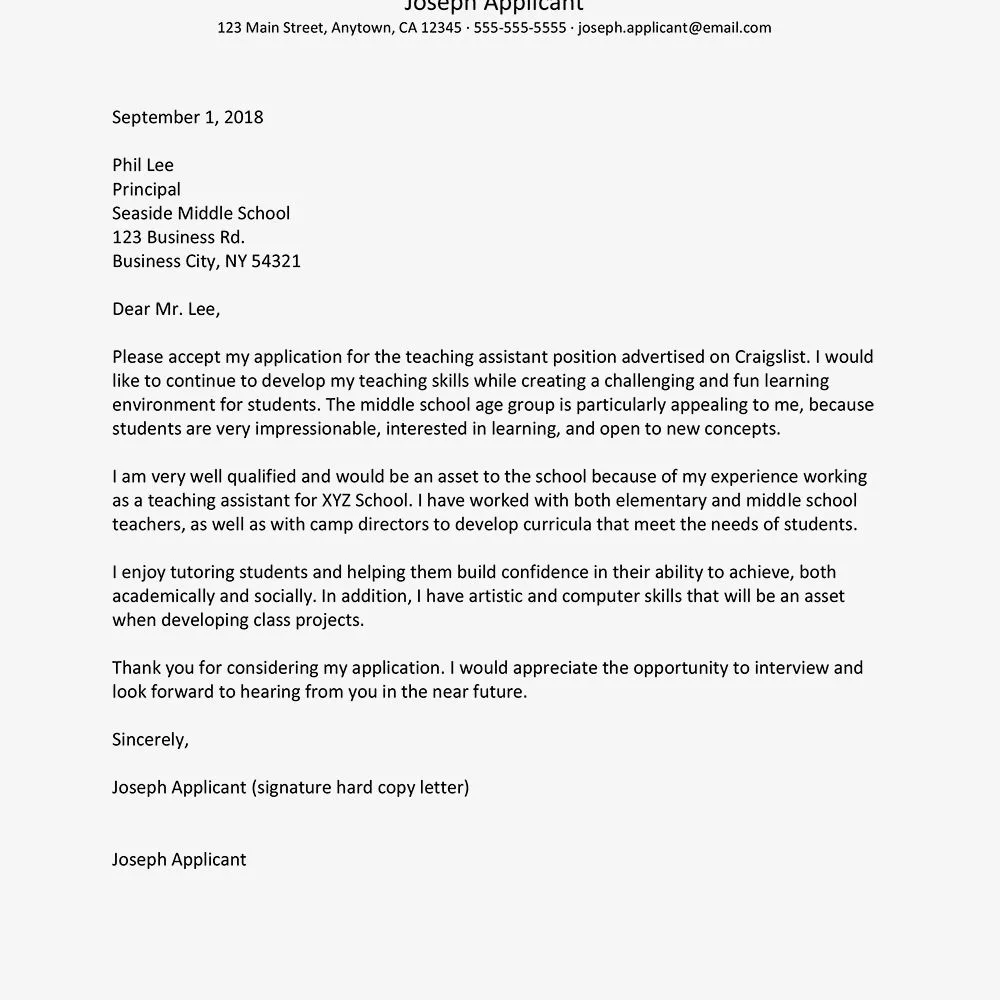
Understanding the Assistant Professor Cover Letter
The cover letter for an Assistant Professor position is a critical document that serves as your initial introduction to a search committee. It provides an opportunity to showcase your qualifications, experience, and suitability for the role. Unlike a CV, which primarily lists your accomplishments, a cover letter allows you to provide context, tell your story, and demonstrate your passion for the position. It is not merely a formality; it is a strategic tool to persuade the committee that you are the ideal candidate. A well-crafted cover letter sets you apart from the competition, increasing your chances of securing an interview. It should be tailored specifically to each position, reflecting the unique requirements and priorities of the hiring department.
Key Components of an Assistant Professor Cover Letter
A successful cover letter for an Assistant Professor position typically includes several key components that work together to create a cohesive and compelling narrative. These components should address your research expertise, teaching experience, and alignment with the department’s goals. The structure generally includes a strong opening, detailed sections on your research and teaching, explicit addressing of job requirements, and a compelling closing. Each section should be well-written, supported by concrete examples, and demonstrate your commitment to excellence in research, teaching, and service. Remember to maintain a professional tone, while also allowing your personality and enthusiasm for the position to shine through. This will help you stand out from the crowd.
Contact Information and Salutation

Begin your cover letter with your full contact information, including your name, address, phone number, and professional email address. Place this information at the top of the document. Next, use a professional salutation. If you know the name of the search committee chair, address the letter to them directly (e.g., “Dear Professor [Last Name]”). This demonstrates that you have taken the time to personalize your application. If you don’t know the chair’s name, use a general salutation such as “Dear Search Committee.” Avoid generic greetings like “To Whom It May Concern,” as they can make your application seem impersonal. Ensure the salutation matches the tone of the rest of your letter, and double-check the spelling of the recipient’s name. A well-crafted salutation shows attention to detail and respect for the individuals reviewing your application.
Highlighting Your Research and Publications
This section is where you showcase your research achievements and expertise. Provide a concise overview of your research interests and explain how they align with the department’s goals and the specific requirements of the position. Highlight your most significant publications, grants, and presentations. Include details about your research methodologies, findings, and their impact on the field. Quantify your achievements whenever possible (e.g., “secured a grant for $X amount,” “published Y papers in peer-reviewed journals”). Emphasize any interdisciplinary collaborations or unique aspects of your research. Avoid excessive jargon and explain your work in a way that is accessible to a broad audience. The goal is to demonstrate the quality and significance of your research and its relevance to the university’s strategic priorities. Include images like graphs, tables, or the cover page of your most important publications, to catch the attention of the reviewers.
Showcasing Teaching Experience and Philosophy
Describe your teaching experience, including the courses you have taught, the level of students, and the teaching methods you employ. Highlight any innovative pedagogical approaches or evidence-based practices you use to engage students. Articulate your teaching philosophy, explaining your beliefs about effective teaching and learning. Provide examples of how you create a positive and inclusive learning environment. Discuss your approach to assessment, student feedback, and curriculum development. Mention any teaching awards or recognitions you’ve received. Demonstrate how your teaching aligns with the department’s commitment to student success and educational excellence. Convey your passion for teaching and a commitment to fostering student learning. Include an image showing you teaching or interacting with students to connect with the committee on a personal level.
Demonstrating Alignment with the Department

This is your opportunity to show why you are a good fit for the specific department and university. Research the department’s mission, values, and strategic priorities. Identify faculty members whose research interests align with yours and mention them by name. Explain how your research, teaching, and service contributions would complement the department’s existing strengths. Discuss your understanding of the university’s culture and your potential to contribute to its community. Show that you have carefully considered the position and are genuinely enthusiastic about joining the department. Mention any opportunities for collaboration, mentorship, or interdisciplinary work that appeal to you. This demonstrates your commitment to the department and your long-term vision for your career. An image of the department building or a group of faculty members could be useful to show your familiarity with the department.
Addressing the Specific Job Requirements
Carefully review the job description and address each of the required qualifications and expectations. Use the job description as a roadmap for structuring your cover letter. Explicitly state how your skills, experience, and research align with the stated requirements. Provide specific examples to demonstrate your ability to meet these requirements. If the job description emphasizes certain skills or areas of expertise, be sure to highlight them in your cover letter. Don’t assume the search committee will make the connections for you; make them clear and explicit. Tailor your language and examples to match the specific requirements of the position. This shows that you understand the role and are well-prepared to take on its responsibilities. Creating a table that maps your skills and experiences to the requirements is also an effective approach.
Emphasizing Skills and Qualifications
In addition to research and teaching, highlight other skills and qualifications relevant to the position. This could include leadership experience, administrative abilities, grant writing expertise, or experience with specific software or techniques. Mention any experience you have with mentoring students, advising student organizations, or participating in university committees. Quantify your achievements whenever possible. For example, “successfully secured over $X in grant funding,” or “mentored Y number of students.” Demonstrate your ability to contribute to the department’s broader mission, such as diversity and inclusion initiatives. Tailor this section to the specific requirements of the job, focusing on the skills that will make you a valuable asset to the department. Adding an image of a relevant project or a professional certification might be a good idea.
Adding a Compelling Closing

In your closing paragraph, reiterate your interest in the position and express your enthusiasm for the opportunity. Summarize your key strengths and qualifications, reminding the committee why you are a strong candidate. Thank the search committee for their time and consideration. State your availability for an interview and express your willingness to provide any additional information they may require. Maintain a professional and confident tone. Proofread carefully and ensure that the closing leaves a lasting positive impression. A strong closing reinforces your enthusiasm, highlights your key qualifications, and leaves the committee with a clear understanding of your suitability for the role.
Reviewing and Editing Your Cover Letter
Before submitting your cover letter, take the time to thoroughly review and edit it. Check for any grammatical errors, typos, or formatting inconsistencies. Ensure the tone is professional and consistent throughout the document. Ask a colleague, mentor, or career advisor to review your letter and provide feedback. Make sure your letter is well-organized, easy to read, and free of jargon. Verify that all information is accurate and up-to-date. Tailor your letter to each specific position, highlighting the skills and experience most relevant to that opportunity. A polished and error-free cover letter demonstrates your attention to detail and professionalism. Take pride in presenting the best possible version of yourself to the search committee. Also, consider using a proofreading tool to make the text perfect.