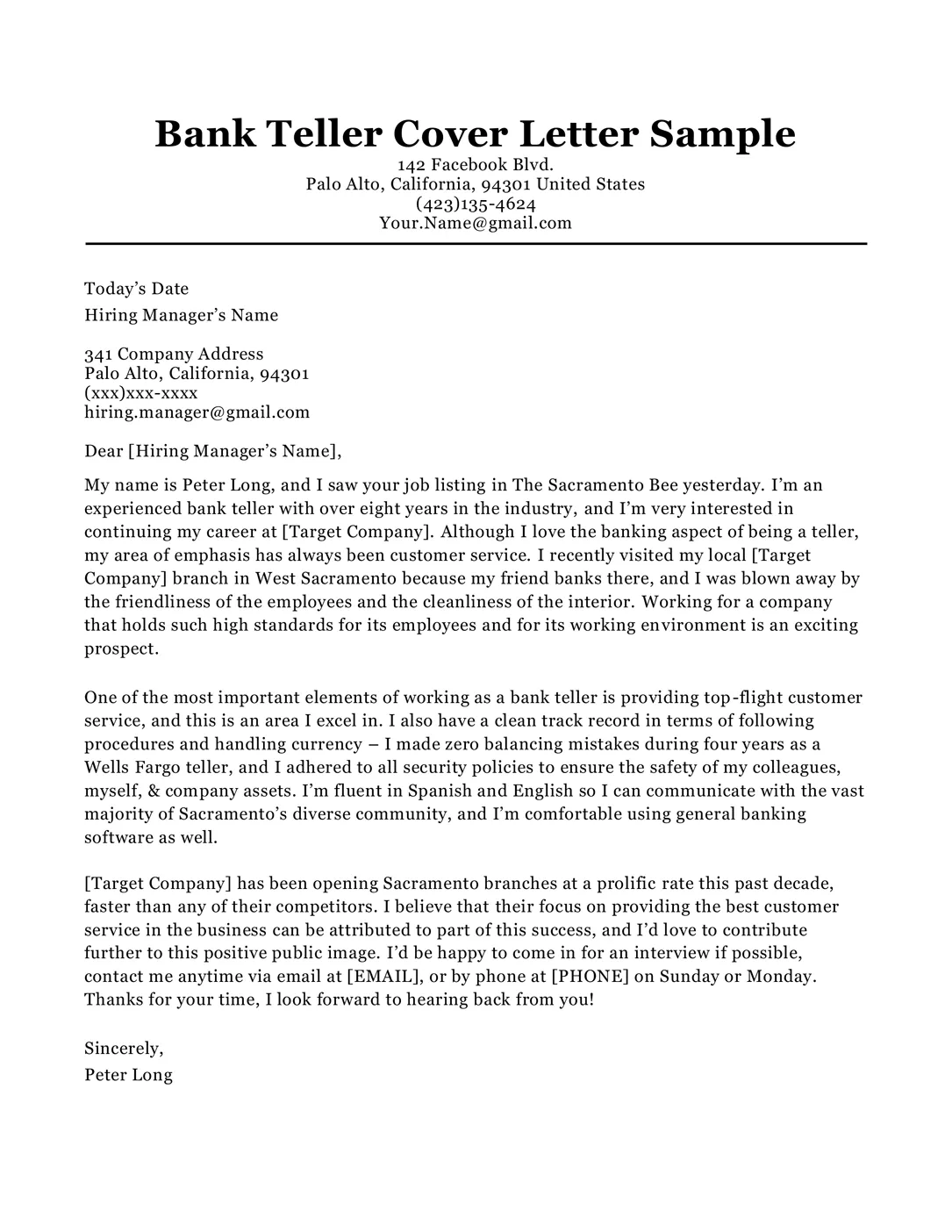
Crafting a Bank Job Cover Letter: The Essentials
A bank job cover letter is your first chance to make a positive impression. It’s not just a formality; it’s a critical tool in your job search arsenal. A well-written cover letter introduces you, showcases your qualifications, and highlights your enthusiasm for the role and the banking industry. Unlike a resume, which is a factual document, a cover letter allows you to demonstrate your personality, communication skills, and understanding of the bank’s needs. To begin, always address the letter to a specific person whenever possible. Research the hiring manager’s name and use it in your salutation. Avoid generic greetings like “To Whom It May Concern.” This shows initiative and attention to detail. The tone should be professional, yet engaging. Avoid overly formal language or slang. The body of the letter should be concise and focused, aiming to capture the reader’s attention quickly. Keep it to one page, if possible, to respect the hiring manager’s time.
Structure and Format
The structure of your bank job cover letter should follow a standard format that is easy to read and navigate. Start with your contact information, the date, and the recipient’s contact information. The body of the letter should consist of an introductory paragraph, two to three body paragraphs, and a concluding paragraph. In the introduction, state the position you are applying for and how you learned about it. Briefly mention your key qualifications and why you are interested in the role. The body paragraphs should elaborate on your skills and experience, providing specific examples of your accomplishments and how they align with the job requirements. Use strong action verbs to describe your achievements. The conclusion should reiterate your interest in the position, express your gratitude for the reader’s time, and state your availability for an interview. Proofread your cover letter thoroughly for any grammatical errors or typos. Use a professional font like Arial or Times New Roman, and ensure the document is well-formatted with appropriate spacing and margins. A well-structured and formatted cover letter is a clear indicator of your professionalism and attention to detail.
Highlighting Your Skills and Experience

When applying for a bank job, you should emphasize skills and experience that are directly relevant to the position. Banks seek candidates with strong analytical abilities, excellent communication skills, and a solid understanding of financial principles. Begin by reviewing the job description carefully and identifying the key skills and qualifications that the employer is seeking. Then, use your cover letter to highlight your relevant experiences and accomplishments. Provide specific examples that demonstrate how you have used these skills in the past. For example, if the job requires strong customer service skills, you might describe a time when you resolved a complex customer issue, exceeding their expectations. If the role requires analytical skills, you could mention your experience with financial analysis, data interpretation, or problem-solving. Quantify your accomplishments whenever possible. Instead of saying “Managed a team,” you could say “Managed a team of five employees, increasing productivity by 15%.”
Transferable Skills
If you are new to the banking industry, it’s important to highlight your transferable skills. These are skills you have developed in other roles that are applicable to a banking environment. These skills include customer service, sales, communication, attention to detail, and problem-solving. Highlight any experiences that demonstrate these skills. For example, if you have experience in retail sales, you can demonstrate your ability to interact with customers, understand their needs, and provide solutions. If you have experience in data entry or administrative roles, you can emphasize your attention to detail and organizational skills. Tailor your cover letter to the specific requirements of the job. Review the job description and identify the key skills and qualifications the employer is seeking. Then, provide specific examples of your experiences to demonstrate that you possess these skills.
Tailoring Your Cover Letter to the Specific Job
Generic cover letters rarely succeed. Hiring managers can easily spot them and will often discard them in favor of applications that demonstrate a genuine interest in the specific role and company. Therefore, customize your cover letter for each bank job you apply for. Start by carefully reading the job description and identifying the key requirements and responsibilities. Then, tailor your letter to address those specific requirements. Highlight the skills and experiences that are most relevant to the role and provide concrete examples of how you have demonstrated those skills in the past. Avoid using a generic template. Instead, rewrite your cover letter for each application, ensuring it aligns with the specific job description. Research the bank and the specific department or team you are applying to. Understand the bank’s mission, values, and culture, and demonstrate your knowledge and appreciation in your cover letter. Show that you have taken the time to learn about the company and are genuinely interested in joining their team. Mentioning the bank’s recent achievements, initiatives, or products can also showcase your research and interest.
Keywords and Phrases

Use keywords and phrases from the job description throughout your cover letter. Applicant Tracking Systems (ATS) often scan cover letters for these keywords. Include relevant terms like “customer service,” “financial analysis,” or “risk management” if the job description emphasizes those skills. However, don’t simply list keywords; integrate them naturally into your sentences and paragraphs. Describe your experiences using these keywords to show how you have applied those skills. For example, instead of just saying “Experienced in customer service,” you could write, “Provided exceptional customer service by resolving complex issues and exceeding customer expectations, resulting in a 95% customer satisfaction rating.” Adapt your language to align with the bank’s culture and values. Use a professional tone and avoid slang or jargon. Demonstrate your understanding of the banking industry by using appropriate terminology and phrasing. Remember that tailoring your cover letter is a crucial step in securing an interview.
Demonstrating Your Understanding of the Banking Industry
Demonstrating your understanding of the banking industry is crucial to making a positive impression. Banks seek candidates who are knowledgeable about the financial sector, including its regulations, trends, and challenges. Your cover letter is an excellent opportunity to showcase your industry knowledge. Mention any relevant certifications or training you have completed, such as the Certified Banking Professional (CBP) or other industry-specific courses. These certifications demonstrate your commitment to professional development and your understanding of banking principles. Stay informed about current banking trends, such as digital banking, cybersecurity, and the impact of fintech. Mentioning these topics in your cover letter can show that you are engaged and aware of the industry’s evolving landscape. Even if you don’t have direct banking experience, you can demonstrate your understanding of banking operations and regulations. You might have volunteered at a credit union, taken relevant coursework, or followed financial news and publications.
Industry Knowledge and Research
Conduct thorough research on the bank you are applying to. Understand its mission, values, products, and services. Visit the bank’s website, read its annual reports, and follow its social media channels. Use this information to tailor your cover letter and demonstrate your knowledge of the bank’s specific operations and achievements. When applying for a specific role, research the department and team you will be working with. Understand their responsibilities and how your skills and experience can contribute to their goals. Highlight how your skills align with the specific needs of the bank. For example, if the bank is expanding its digital banking services, you can emphasize your experience with digital platforms or your understanding of online security. This shows that you are not just applying for a job but are genuinely interested in the bank’s success. By demonstrating your industry knowledge and research efforts, you can significantly increase your chances of making a positive impression and securing an interview.
Showcasing Your Professionalism and Personality

While your cover letter should be professional, it should also allow your personality to shine through. This helps the hiring manager understand who you are beyond your qualifications. Start by adopting a professional tone and using correct grammar and spelling. This demonstrates your attention to detail and respect for the reader. Use a confident and enthusiastic voice that highlights your interest in the role and the bank. However, avoid being overly casual or informal. Showcase your interpersonal skills. Banking jobs often require working with customers and colleagues. Describe your ability to communicate effectively, collaborate with others, and build strong relationships. Provide examples of your teamwork skills and how you have contributed to a positive work environment. Highlight your strengths. Instead of just listing your skills, provide specific examples of your accomplishments and how you have used your strengths to achieve results. For instance, if you are a problem-solver, describe how you tackled a challenging situation and the positive outcome.
Soft Skills and Personality Traits
In addition to highlighting your technical skills and experience, emphasize your soft skills and personality traits. These are equally important in the banking industry. Highlight your communication skills, both written and verbal. Banking professionals must communicate clearly and effectively with customers and colleagues. Mention your ability to active listen, and explain complex financial information in a simple, easy-to-understand manner. Showcase your organizational and time-management skills. Banking jobs often involve managing multiple tasks and deadlines. Demonstrate your ability to prioritize your work, meet deadlines, and stay organized. Demonstrate your ability to work under pressure and handle stressful situations. Show that you remain calm, composed, and focused. By effectively showcasing your professionalism and personality, you will make a memorable impression and increase your chances of securing an interview.
Proofreading and Formatting Your Cover Letter
Before submitting your cover letter, proofreading and formatting are essential steps to ensure it is polished and professional. Errors in grammar, spelling, or formatting can undermine your credibility and damage your chances of being selected. Begin by thoroughly proofreading your cover letter for any grammatical errors, spelling mistakes, or typos. Use a grammar checker and spell checker, but also carefully read the document yourself to catch any errors that these tools might miss. Ensure that your cover letter is easy to read and visually appealing. Use a professional font, such as Arial or Times New Roman, with a font size between 10 and 12 points. Use clear and concise language, and avoid jargon or overly complex sentences. Make sure your cover letter is well-formatted with appropriate margins, spacing, and alignment. Use headings, bullet points, and white space to break up large blocks of text and make your letter more reader-friendly. Be sure to use a consistent format throughout the document. Choose a style and stick to it for your headings, bullet points, and other elements.
Attention to Detail

Pay close attention to details such as the date, the recipient’s name and title, and the bank’s address. Double-check all contact information to ensure it is accurate. Make sure that your cover letter is free from any inconsistencies. Ensure that your cover letter aligns with the job description and your resume. Check that you are using the same keywords, skills, and experiences. Ensure you have all the required information. Include all necessary documents, such as your resume, and references if requested. Before submitting your cover letter, save a copy for your records. Submitting a polished and error-free cover letter demonstrates your professionalism, attention to detail, and respect for the employer, significantly increasing your chances of success. Your cover letter is a critical tool in your job search. It showcases your qualifications, demonstrates your enthusiasm, and highlights your understanding of the banking industry. By following these tips, you can create a cover letter that stands out and helps you land your dream bank job.