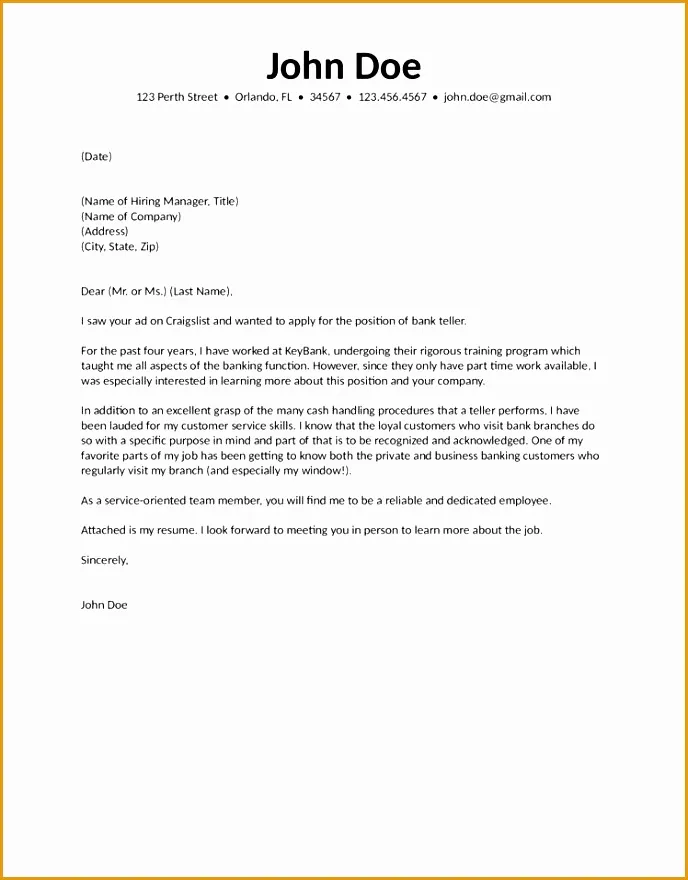
What is a Bank Teller Cover Letter
A bank teller cover letter is a crucial document that accompanies your resume when applying for a bank teller position. It serves as your introduction to the hiring manager, providing a snapshot of your qualifications, skills, and experience. Unlike your resume, which lists your accomplishments, the cover letter allows you to elaborate on why you are a good fit for the specific role and the bank. It provides a chance to showcase your personality, communication skills, and enthusiasm for the opportunity. The letter is an opportunity to connect your skills to the requirements outlined in the job description and to demonstrate your understanding of the bank’s values and culture.
Why is a Bank Teller Cover Letter Important
A well-crafted cover letter can significantly increase your chances of landing an interview. It allows you to personalize your application, demonstrating that you’ve taken the time to understand the role and the company. Many hiring managers use cover letters to initially screen applicants, quickly filtering out those who lack the necessary qualifications or attention to detail. A strong cover letter highlights your key skills and experiences, making your application stand out from the competition. It allows you to explain any gaps in your employment history or to address specific requirements mentioned in the job description. Without a cover letter, your application may get overlooked, even if you have the necessary qualifications. A cover letter is not just a formality; it’s a critical marketing tool.
Essential Components of a Bank Teller Cover Letter

A compelling bank teller cover letter includes several essential components that work together to create a strong impression. These elements should be organized logically and presented professionally to effectively communicate your qualifications. Each component serves a specific purpose, contributing to the overall effectiveness of your application. Adhering to these components ensures that your cover letter is complete, informative, and tailored to the job at hand.
Header Information
The header of your cover letter should include your full name, address, phone number, and email address. This information allows the hiring manager to quickly contact you. Ensure that your contact information is accurate and professional. Use a clear and easy-to-read font and style in your header. The header should be at the top of the document, typically left-aligned.
Contact Information
Below your header, include the date and the hiring manager’s contact information (if known). If you know the hiring manager’s name, address them directly. This shows that you have taken the time to research the company. If the hiring manager’s name is unknown, use a general salutation like “Dear Hiring Manager.”
Salutation

Begin your cover letter with a professional salutation. As mentioned, use the hiring manager’s name if you know it; otherwise, opt for “Dear Hiring Manager.” Avoid generic salutations like “To Whom It May Concern,” which can make your letter appear impersonal. A personalized salutation shows you’ve made an effort to connect with the bank.
Body of the Cover Letter
The body of your cover letter is the core of your application, where you articulate your qualifications and explain why you are the right candidate for the job. It should be well-structured, with each paragraph serving a specific purpose. The body should be concise, clear, and tailored to the job description. It’s essential to highlight your relevant skills, experience, and achievements to make a compelling case for your candidacy. The body of the cover letter is your chance to shine.
First Paragraph Purpose
The first paragraph should state the position you are applying for and how you learned about the opportunity. Briefly mention why you are interested in the role and the bank. This paragraph sets the tone for your letter and captures the reader’s attention. Demonstrate your enthusiasm and genuine interest in the position. Keep this paragraph concise and to the point.
Highlighting Skills and Experience

In the subsequent paragraphs, highlight your skills and experience that are relevant to the bank teller position. Use specific examples to demonstrate your abilities. Mention your customer service skills, experience with cash handling, and any other relevant qualifications, such as experience with banking software or handling confidential information. Refer directly to the job description and tailor your examples to match the requirements. This is where you make your case and explain how your skills match the requirements.
Quantifiable Achievements
Whenever possible, quantify your achievements. Use numbers and data to illustrate your accomplishments. For instance, instead of saying “Improved customer satisfaction,” state “Increased customer satisfaction scores by 15% through proactive problem-solving.” Quantifying your achievements makes them more impactful and shows the value you can bring to the bank. Providing specific metrics demonstrates that you can achieve results.
Demonstrating Soft Skills
Bank tellers need strong soft skills, such as excellent communication, problem-solving, and attention to detail. Mention these skills and provide examples of how you have used them in the past. For example, describe how you resolved a customer’s issue or handled a difficult situation. Demonstrating your soft skills helps the hiring manager understand your ability to work effectively in a customer-facing role and within a team. Illustrate how you apply these skills to achieve positive outcomes.
Tailoring to the Job Description

Carefully review the job description and tailor your cover letter to match the requirements. Use the same keywords and phrases mentioned in the description. This shows the hiring manager that you understand the position and have the necessary qualifications. Addressing the job description directly helps you show the value you can bring to the role. Customize your letter to fit the specifics of the job.
Closing the Letter
The closing paragraph should reiterate your interest in the position and thank the hiring manager for their time and consideration. Express your enthusiasm for the opportunity and state your willingness to discuss your qualifications further in an interview. The closing is an opportunity to leave a lasting positive impression. Keep it concise and professional.
Formal Closing
Use a formal closing, such as “Sincerely,” “Respectfully,” or “Best regards,” followed by your name. Avoid informal closings. Maintain a professional tone throughout your cover letter, reflecting your professionalism and respect for the hiring process.
Signature

If you are submitting a hard copy, sign your name above your typed name. For electronic submissions, you can simply type your name. A signature adds a personal touch and reinforces the professional nature of your application.
Proofreading and Formatting
Proofreading and formatting are crucial steps in creating a professional cover letter. A well-formatted and error-free document shows attention to detail and professionalism, which are essential qualities for a bank teller. Taking the time to proofread and format your letter can significantly improve your chances of making a positive impression.
Common Mistakes to Avoid
Avoid making common mistakes that can negatively impact your application. These errors can make your cover letter appear unprofessional and reduce your chances of getting an interview. Paying attention to detail and avoiding these pitfalls can help you make a strong impression on the hiring manager.
Typos and Grammatical Errors

Typos and grammatical errors can undermine your credibility. Always proofread your cover letter carefully. Use spell-check and grammar-check tools, but don’t rely on them exclusively. Read your letter aloud to catch any mistakes. Having a friend or family member review your letter can also help. Ensure that your cover letter is free of errors.
Generic Cover Letters
Avoid sending generic cover letters that are not tailored to the specific job or bank. Generic letters show a lack of effort and interest. Instead, personalize your cover letter for each application. Research the bank and customize your letter to highlight how your skills and experience align with the specific requirements of the position and the bank’s values. Take the time to demonstrate your genuine interest.
Lack of Specificity
Do not be vague. Use specific examples and quantify your achievements whenever possible. Instead of saying “Good customer service skills,” describe how you resolved a customer issue or exceeded expectations. Providing specific examples makes your claims more credible and shows the value you bring to the bank. Specifics demonstrate your ability to deliver results.
Formatting Issues
Poor formatting can make your cover letter difficult to read. Use a clear and professional font, such as Times New Roman or Arial, and ensure that your letter is well-spaced and easy to scan. Use bullet points to highlight key skills or achievements. Proofread the formatting to make sure everything is aligned and consistent. A well-formatted cover letter shows attention to detail.
Bank Teller Cover Letter Examples
Reviewing bank teller cover letter examples can provide valuable guidance and inspiration. Analyze these examples to understand how to structure your letter, highlight your skills, and effectively communicate your qualifications. Tailor these samples to reflect your unique experience.
Example 1 Focus on Customer Service
This example focuses on customer service skills. It highlights the ability to build rapport, resolve customer issues, and provide excellent service. The letter includes specific examples of positive interactions with customers and instances where the candidate went above and beyond to meet their needs. Such examples demonstrate the candidate’s commitment to customer satisfaction. This approach emphasizes the importance of customer relationships in banking.
bank-teller-cover-letter-customer-service
Example 2 Highlighting Cash Handling Skills
This example focuses on cash handling experience. It emphasizes accuracy, accountability, and the ability to handle large sums of money. The letter includes specific examples of the candidate’s experience with balancing cash drawers, processing transactions, and adhering to financial regulations. Demonstrating these skills and experiences are crucial for bank teller roles as cash handling is a key responsibility. Mention of specific technologies or software used for cash handling can be beneficial.
bank-teller-cover-letter-cash-handling
Example 3 Emphasizing Teamwork
This example showcases teamwork and collaboration. It includes instances where the candidate worked well with colleagues, contributed to team goals, and assisted others. The letter highlights the candidate’s ability to communicate effectively, share information, and support coworkers. Emphasizing teamwork demonstrates your ability to contribute positively to the bank’s work environment. Highlight scenarios where your cooperation led to positive outcomes.
bank-teller-cover-letter-teamwork
Bank Teller Cover Letter Tips for Success
To increase your chances of success, consider these additional tips. These strategies can help you make your application stand out. Following these tips will help you write a compelling cover letter that showcases your qualifications and enthusiasm for the position.
Research the Bank
Before writing your cover letter, research the bank thoroughly. Visit their website, read their mission statement, and learn about their values and culture. Tailor your cover letter to reflect your understanding of the bank and its goals. Demonstrating that you understand the bank’s values shows that you are interested in working at that specific organization. This knowledge helps you to tailor your letter to align with their objectives.
Use Action Verbs
Use action verbs to describe your skills and experience. Start your sentences with strong verbs that highlight your accomplishments. Examples of action verbs include managed, processed, assisted, resolved, and improved. Using action verbs makes your cover letter more dynamic and impactful. Action verbs can make your letter more compelling and persuasive. They demonstrate your abilities and achievements.
bank-teller-cover-letter-action-verbs
Keep it Concise
Keep your cover letter concise and to the point. Aim for one page. Hiring managers often have limited time to review applications, so it is important to make your cover letter easy to read and understand. Focus on the most important information and avoid unnecessary details. Conciseness shows respect for the reader’s time and emphasizes the key information.
Follow Up
After submitting your application, follow up with the hiring manager. A week after submitting your cover letter and resume, send a brief email to reiterate your interest in the position and inquire about the status of your application. Following up demonstrates your enthusiasm and initiative. Be polite and professional in your follow-up communication.