
Understanding the Biotech Cover Letter
A biotech cover letter is more than just a formality it’s your first chance to make a strong impression on a potential employer in the competitive world of biotechnology. It serves as an introduction to your resume, providing context and highlighting why you’re the perfect fit for the specific role. Unlike a resume which is a summary of your experiences and skills, a cover letter allows you to showcase your personality, express your enthusiasm for the position and the company, and demonstrate how your unique qualifications align with their needs. A well-crafted cover letter can significantly increase your chances of landing an interview, while a poorly written one can quickly lead to your application being overlooked. The biotech industry demands precision, attention to detail, and a passion for innovation so your cover letter must reflect these qualities.
Key Components of a Biotech Cover Letter
A successful biotech cover letter is composed of several key elements that work together to create a compelling narrative. Each section plays a crucial role in presenting you as a strong candidate. Begin by carefully structuring your letter with appropriate sections to ensure clarity and professionalism. These components include your contact information and the date, a personalized greeting to the hiring manager, a compelling introduction that captures attention, a body that highlights your relevant skills and experiences and a strong closing that reiterates your interest and includes a call to action. Ensure each section is well-written, concise, and tailored to the specific job and company. The most effective cover letters go beyond simply listing your qualifications, they connect your skills and experiences to the specific requirements of the job and the goals of the company.
Contact Information and Date

Start your cover letter by including your contact information at the top left or right corner. This should include your full name, phone number, professional email address, and optionally, your LinkedIn profile URL. Below your contact information, include the date. This section ensures that the recruiter can easily reach you and that your letter is properly dated. This professional presentation is fundamental, setting the tone for the rest of your letter. Accuracy here is paramount; a typo in your contact details could mean missing out on the opportunity to be contacted. Always double-check this information before sending your cover letter to avoid any inconveniences.
Greeting the Hiring Manager
Addressing the hiring manager by name is a sign of professionalism and shows you’ve taken the time to research the company. Find out the hiring manager’s name by checking the job posting or the company website. If you can’t find a specific name, use a general greeting such as “Dear Hiring Manager” or “Dear [Department Name] Team”. Avoid generic greetings like “To Whom It May Concern” as they lack personalization. Personalizing your greeting demonstrates that you are attentive to detail and are genuinely interested in the position. When you address the hiring manager correctly, you create a more personal and engaging connection.
Highlighting Your Skills and Experience
The body of your cover letter is where you showcase your skills and experience in a way that aligns with the job description. This is your opportunity to demonstrate how your qualifications directly match the employer’s needs. Clearly articulate your relevant skills, such as experience with specific lab techniques (PCR, ELISA, cell culture), data analysis, or software proficiency (GraphPad Prism, R). Provide specific examples of your achievements using the STAR method (Situation, Task, Action, Result) to illustrate your contributions in previous roles. Tailor your letter to each job application, emphasizing the skills and experiences most relevant to the specific position. Ensure to use keywords from the job description to show you understand the requirements of the role. Do not just repeat what’s on your resume, but expand on your achievements and provide context that paints a clear picture of your capabilities and how you can contribute to the company’s success.
Tailoring Your Letter to the Job

A generic cover letter is easily identified and often discarded. Tailoring your letter to each job application is essential. Carefully review the job description, paying close attention to the required skills, experiences, and responsibilities. Identify the key requirements and highlight how your qualifications align with them. Research the company and demonstrate your knowledge of their work, values, and recent achievements. Customize your letter to reflect your understanding of the company’s mission and how you can contribute to its goals. Mention specific projects, technologies, or areas of research that align with the company’s focus. This level of personalization shows the hiring manager that you are genuinely interested in the position and have taken the time to understand their needs.
Showcasing Relevant Skills and Experiences
When showcasing your skills and experiences, be specific and provide concrete examples. Instead of simply stating that you have experience with cell culture, describe the types of cells you’ve worked with, the specific techniques you’ve used, and the results you achieved. If the job requires experience with a particular instrument or software, mention your proficiency and provide examples of how you have used it in the past. Quantify your accomplishments whenever possible. For example, if you improved a lab process, mention the percentage of improvement or the time saved. Include any relevant certifications, awards, or publications that demonstrate your expertise and commitment to excellence. This level of detail allows the hiring manager to quickly assess your qualifications and understand the value you can bring to the role.
Quantifying Achievements
Quantifying your achievements adds significant impact to your cover letter. Use numbers and data to illustrate your accomplishments and demonstrate your value. Instead of saying you “managed a team”, state “Managed a team of 5 scientists, resulting in a 15% increase in project efficiency.” If you’ve improved a process, specify the percentage of improvement. If you’ve reduced costs, mention the dollar amount saved. Providing specific numbers makes your claims more credible and helps the hiring manager understand the tangible benefits you can bring to the company. By quantifying your achievements, you provide concrete evidence of your abilities and set yourself apart from other applicants. Using numbers provides a clear picture of your impact and potential.
Expressing Enthusiasm and Company Knowledge

Expressing your enthusiasm for the position and demonstrating your knowledge of the company are crucial aspects of a successful biotech cover letter. Explain why you are excited about the opportunity and why you are interested in working for that specific company. Research the company’s mission, values, and recent achievements and mention them in your letter. Demonstrate your understanding of the company’s work by referencing specific projects, products, or research areas that align with your interests and expertise. This shows the hiring manager that you have taken the time to learn about the company and that you genuinely want to be a part of their team. Your enthusiasm and knowledge will not only make your letter more engaging but also indicate that you have a strong desire to contribute to the company’s success.
Demonstrating Your Passion for Biotech
Demonstrate your passion for biotechnology by highlighting your interest in the field and how it aligns with the company’s mission. Share what motivates you and excites you about the industry, and the specific areas of biotech that interest you most. Connect your career goals to the company’s goals. For example, if the company is involved in developing new cancer therapies, express your interest in contributing to this area of research and how you can help them achieve their goals. Show that you are driven to learn, innovate, and make a positive impact on the field. The biotech industry requires individuals who are not only skilled but also passionate and dedicated to advancing scientific breakthroughs. Showing your passion can set you apart, as it communicates your drive to excel and contribute.
Closing and Call to Action
Your closing should reiterate your interest in the position and the company. Thank the hiring manager for their time and consideration. End with a clear call to action, such as requesting an interview or expressing your eagerness to discuss your qualifications further. Make it easy for the hiring manager to take the next step. For example, you might say, “I am eager to learn more about this opportunity and discuss how my skills and experience can contribute to your team’s success. Thank you for your time and consideration. I look forward to hearing from you soon.” Ensure your closing reflects your enthusiasm and professionalism. The closing should be concise, confident, and leave a lasting positive impression.
Proofreading and Formatting

Proofreading and formatting are critical steps in ensuring your cover letter is polished and professional. Errors in grammar, spelling, and punctuation can undermine your credibility. Carefully proofread your letter multiple times. Ask a friend, colleague, or career counselor to review it as well, to catch any mistakes you might have missed. Use a clean, easy-to-read font, such as Arial or Times New Roman, and maintain consistent formatting throughout the document. Use headings, bullet points, and white space to make the letter easy to read and visually appealing. Ensure your cover letter is well-organized, with clear sections and a logical flow. A well-formatted and error-free cover letter demonstrates attention to detail and professionalism, which are essential qualities in the biotech industry.
Common Mistakes to Avoid
Avoid common mistakes that can negatively impact your chances of landing an interview. These include errors in grammar and spelling, using generic cover letters, and focusing solely on what you want rather than what you can offer the company. Generic cover letters show a lack of effort and personalization and are unlikely to impress hiring managers. Focus on tailoring your letter to each job and highlighting your relevant skills and experience. A well-written, personalized cover letter greatly increases your chances of success.
Incorrect Grammar and Spelling
Grammatical errors and typos can instantly undermine your credibility. Thoroughly proofread your cover letter before submitting it, and consider using grammar-checking tools. Incorrect grammar and spelling errors reflect poorly on your attention to detail and professionalism, which are critical traits in the biotech industry. Always double-check your work and have a second pair of eyes review your cover letter. Ensuring accuracy in your cover letter reflects your commitment to excellence and attention to detail.
Generic Cover Letters

Submitting a generic, one-size-fits-all cover letter to multiple job applications is a common mistake. Generic cover letters lack personalization and fail to demonstrate your genuine interest in the specific role and company. Tailor each cover letter to the specific job description and the company’s needs. Highlight the skills and experiences that are most relevant to the position and demonstrate your understanding of the company’s work and goals. Personalizing your cover letter makes it more engaging and shows the hiring manager that you have taken the time to understand the opportunity.
Focusing on What You Want
While it’s important to express your career goals, focusing too much on what you want from the job can be detrimental. Instead, concentrate on what you can offer the company. Emphasize your skills, experiences, and how you can contribute to their success. Demonstrate how your qualifications align with the job description. This approach shows the hiring manager that you understand their needs and are focused on helping them achieve their goals. Focus on the value you bring, rather than just what you hope to gain.
Examples of Strong Biotech Cover Letters
Reviewing examples of strong biotech cover letters can provide valuable insights and guidance. These examples demonstrate how to effectively structure your letter, highlight your skills and experiences, and express your enthusiasm for the role. Look at the different ways candidates tailor their letters to specific job descriptions and companies. Study the language they use, how they quantify their accomplishments, and how they express their passion for the field. Use these examples as a starting point to create your own compelling cover letter that effectively showcases your unique qualifications and increases your chances of landing an interview. Tailor the examples to fit your own experiences and the specific requirements of the job you’re applying for.
Example 1 Research Scientist
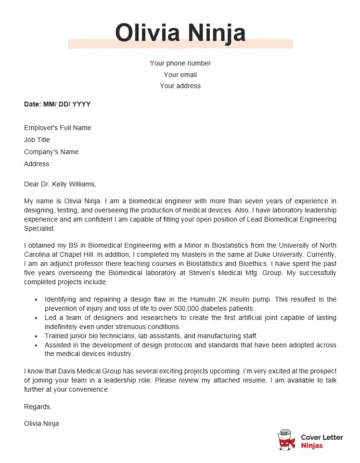
This example highlights the skills and experience of a candidate applying for a Research Scientist position. The cover letter should highlight their experience in designing and executing experiments, analyzing data, and preparing research reports. The candidate will demonstrate proficiency with specific lab techniques, such as PCR, ELISA, or cell culture, and the ability to work independently and as part of a team. The letter may also reference publications or presentations the candidate has given, showing their expertise and commitment to research. The language should be concise, scientific, and results-oriented, with a strong emphasis on specific accomplishments and contributions to previous projects. The candidate should emphasize their understanding of the company’s research focus and their enthusiasm for contributing to their goals. The letter should conclude with a clear call to action, expressing eagerness for an interview.
Example 2 Lab Technician
This example focuses on a candidate applying for a Lab Technician position. The cover letter will emphasize their practical laboratory skills, such as sample preparation, data collection, and equipment maintenance. The letter may include examples of their experience with standard laboratory procedures and their attention to detail. The candidate should highlight any experience with specific technologies or software relevant to the position and demonstrate their ability to follow protocols and work within a team environment. The language used should be clear, concise, and focused on the technical aspects of the role. The cover letter should demonstrate an understanding of lab safety procedures and a commitment to following standard operating procedures. The applicant should express their enthusiasm for the hands-on aspects of laboratory work and their ability to support the research efforts of the team.
Example 3 Project Manager
This example demonstrates the skills of a candidate applying for a Project Manager position within a biotech company. The cover letter will highlight experience in planning, organizing, and overseeing biotech projects, including experience with timelines, budgets, and resource allocation. The candidate will showcase their project management skills, including their ability to manage teams, resolve conflicts, and communicate effectively with stakeholders. Specifics on project achievements, such as completing a project on time and within budget, should be highlighted. The letter should demonstrate an understanding of the biotech industry, including the challenges and opportunities. Proficiency with project management software or other tools should be included. The cover letter should emphasize the ability to coordinate complex projects and a commitment to achieving project goals.
Resources and Further Reading
Several resources can help you craft a compelling biotech cover letter and improve your job application skills. Online guides, career websites, and professional organizations offer templates, tips, and examples. Seek advice from career counselors, mentors, or professionals in the biotech industry. Networking and informational interviews can provide insights into the biotech job market and what employers are looking for. Utilize these resources to gain a deeper understanding of what is expected and increase your chances of landing an interview and securing your desired position. Professional websites can provide valuable examples. Also, consider taking courses or workshops on cover letter writing and job application techniques. These resources can help you develop a competitive edge.
Additional Tips for a Successful Application
In addition to a well-crafted cover letter, there are other steps you can take to enhance your job application. Tailor your resume to each job, highlighting the most relevant skills and experiences. Prepare for your interview by researching the company, practicing common interview questions, and preparing examples of your achievements. Network with professionals in the biotech industry to learn about job openings and gain insights into the field. Follow up with the hiring manager after submitting your application and after your interview. Stay positive, persistent, and proactive throughout the job search process. By combining these strategies with a strong cover letter, you can increase your chances of success in the competitive biotech job market.