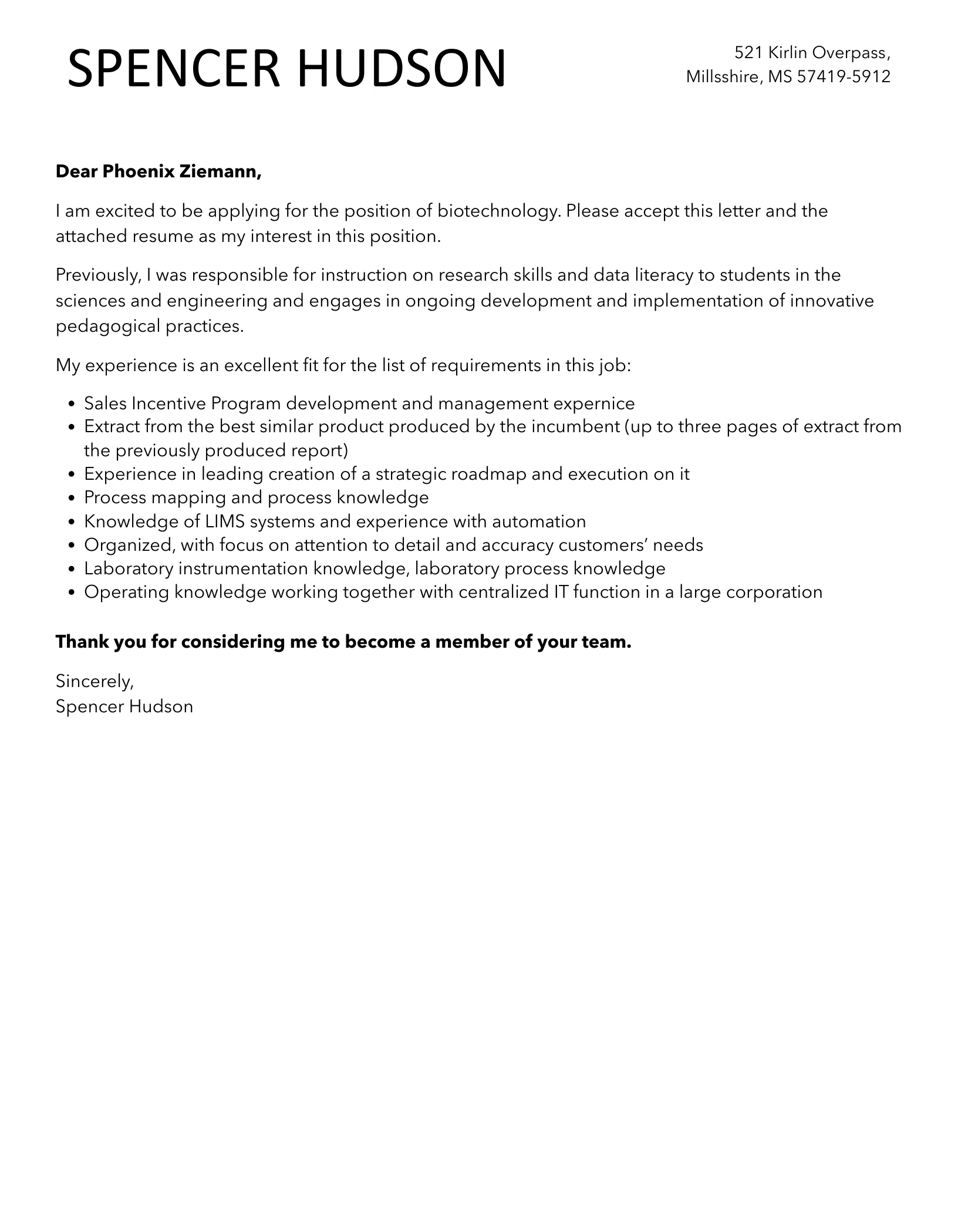
Why a Strong Biotech Cover Letter Matters
In the competitive world of biotechnology, a well-crafted cover letter is your first opportunity to make a lasting impression on potential employers. It’s more than just a formality; it’s a crucial tool for demonstrating your suitability for a specific role and showcasing your unique qualifications. A strong biotech cover letter can significantly increase your chances of securing an interview by highlighting your relevant skills, experience, and passion for the field. It allows you to go beyond the information provided in your resume, providing context, expressing your enthusiasm, and explaining why you are the ideal candidate. This is where you can truly shine and set yourself apart from the competition in a field that demands precision and innovation. A cover letter shows you’re not just sending out generic applications, and that you’ve put in the effort to tailor your message.
Highlighting Relevant Skills and Experience
Your cover letter should serve as a spotlight, illuminating the most relevant aspects of your skills and experience. Begin by carefully reviewing the job description and identifying the key requirements. Then, in your cover letter, clearly and concisely demonstrate how your qualifications align with these requirements. Focus on the skills and experiences that directly relate to the position, providing specific examples whenever possible. This will help the hiring manager quickly understand your capabilities and how you can contribute to their team. Don’t just list your skills; explain how you’ve applied them and the results you achieved. This approach transforms your cover letter from a mere summary of your resume into a compelling narrative of your capabilities and potential contributions to the company. Emphasize how your past experiences have prepared you for the role.
Research and Adapt Your Cover Letter

One of the biggest secrets to a winning biotech cover letter is thorough research. Before you start writing, investigate the company, its mission, and its current projects. Understanding the company’s values and goals allows you to tailor your cover letter to align with their specific needs and priorities. Visit the company’s website, read industry news, and explore their social media profiles to gain insights into their culture and recent achievements. Showcasing this knowledge in your cover letter demonstrates your genuine interest and initiative. Generic cover letters that lack this kind of personalization often get overlooked. Mention specific projects or initiatives the company is involved in and explain how your skills and experience can contribute to their success. This level of detail shows that you are serious about the opportunity.
Tailoring Your Cover Letter to the Job
Every job application is unique, so your cover letter should be too. Avoid sending out a generic cover letter to multiple positions; instead, customize each one to the specific job you’re applying for. Carefully review the job description and identify the key qualifications, skills, and experiences the employer is seeking. Use this information to tailor your cover letter, highlighting how your background aligns with their needs. Mention the specific job title and the specific responsibilities you’re interested in. Address the company’s needs directly and explain how you can contribute to their success. This tailored approach makes your application stand out and demonstrates your genuine interest in the position. By demonstrating an understanding of the role, you increase your chances of getting noticed.
Key Skills to Showcase in Your Biotech Cover Letter
The biotech industry demands a unique blend of technical expertise and soft skills. When crafting your cover letter, make sure to highlight both. Focus on the skills that align directly with the job description and demonstrate your ability to perform the required tasks. A well-rounded candidate will showcase a combination of technical proficiency and interpersonal skills, demonstrating their capacity to excel in a collaborative and innovative environment. Showcasing these key skills in your cover letter gives hiring managers a quick and clear understanding of your abilities and suitability for the role. Make sure you don’t just list these skills, but provide examples of how you have used them in the past.
Technical Skills

Technical skills are the backbone of any biotech role. These include proficiency in specific laboratory techniques, data analysis, and the use of specialized equipment and software. Mention any relevant certifications or training you possess. Some critical technical skills include PCR, cell culture, ELISA, chromatography, and bioinformatics. If the job requires experience with a specific instrument or software, be sure to highlight your familiarity. These skills demonstrate your ability to perform the technical aspects of the job and contribute directly to scientific research and development. Don’t underestimate the importance of mentioning any specific software or equipment you have hands-on experience with; these are often crucial requirements.
Laboratory Techniques
Biotech jobs often involve a wide range of laboratory techniques. Highlight your experience with techniques relevant to the position. This might include experience in molecular biology, genetics, immunology, or biochemistry, as well as experience with specific instruments. Briefly describe your proficiency in each technique, providing specific examples of how you’ve used them in previous projects. The more specific you are, the more you’ll impress the hiring manager. For example, instead of saying you have experience with PCR, state the types of PCR you’ve performed and the projects you applied them to. This specificity paints a clear picture of your capabilities and shows that you can hit the ground running.
Soft Skills
In addition to technical skills, soft skills are crucial for success in the biotech industry. These include communication, teamwork, problem-solving, and adaptability. Emphasize your ability to work effectively in a team, communicate complex scientific information clearly, and adapt to new challenges. These skills are essential for collaboration, innovation, and the successful completion of research projects. Include examples of how you’ve demonstrated these skills in the past. For instance, describe a time you resolved a conflict within a team, presented a research finding to a diverse audience, or adapted to a change in project scope. Soft skills are essential for success in a collaborative and fast-paced environment.
Communication

Effective communication is critical in biotechnology. Whether it’s writing reports, presenting data, or collaborating with colleagues, the ability to communicate complex scientific information clearly and concisely is essential. Showcase your communication skills by describing your experience in writing scientific reports, presenting research findings, and participating in team discussions. Indicate your comfort level with different forms of communication, such as presentations, publications, and informal discussions. Make sure to mention any public speaking engagements or any experience in grant writing. The ability to communicate effectively can help you stand out. Highlight your ability to translate technical jargon into easily understood terms.
Teamwork and Collaboration
The biotech industry is highly collaborative, so teamwork skills are highly valued. Highlight your ability to work effectively in a team environment and to contribute to a positive and productive work atmosphere. Provide examples of how you’ve collaborated with others on research projects, shared knowledge, and supported team goals. If you’ve led a team, describe your leadership style and the outcomes you achieved. Biotech projects often involve a variety of specialists, so demonstrating your ability to work with people from diverse backgrounds is essential. Mention your experience with interdepartmental projects or any experience in managing project teams. Emphasize your ability to contribute to a positive and productive work environment.
Quantifying Achievements in Your Cover Letter
Whenever possible, quantify your achievements. Use numbers and data to illustrate the impact of your work. For example, instead of saying you improved efficiency, say you increased efficiency by 15% through process optimization. Provide concrete evidence of your accomplishments by mentioning any contributions to publications, patents, or presentations. Quantifying your achievements shows that you’re results-oriented and can demonstrate the impact of your work. This helps demonstrate your value and potential contributions to the company. Quantifiable data provides a clear and compelling picture of your capabilities, demonstrating your ability to make a measurable difference.
Providing Specific Examples

Specific examples are key to making your cover letter compelling. Instead of making generic statements, provide concrete examples of your accomplishments. For instance, if you’ve led a research project, describe your role, the challenges you faced, and the results you achieved. Use the STAR method (Situation, Task, Action, Result) to structure your examples. This method helps you create a clear and concise narrative of your achievements. Include details about your contributions and the positive outcomes you produced. Specific examples bring your cover letter to life and demonstrate your ability to apply your skills effectively. Give concrete examples of how you have applied your skills in previous projects.
Using Action Verbs
Use strong action verbs to describe your accomplishments and responsibilities. Action verbs convey energy and dynamism, making your cover letter more engaging. Begin each bullet point or sentence with a powerful verb that highlights your actions and achievements. For example, use verbs like ’led’, ‘developed’, ‘managed’, ‘analyzed’, ‘implemented’, ‘improved’, or ‘achieved’. This makes it easier for hiring managers to quickly understand your key contributions. Action verbs transform your cover letter from a passive description of your experience to a dynamic showcase of your skills. This will help you to stand out from other candidates who may use more passive language.
Formatting Your Biotech Cover Letter for Impact
The format of your cover letter can significantly impact its readability and overall impression. A well-formatted cover letter is easy to read, visually appealing, and professional. Make sure the content is well-organized, and your message is clear. Choose a clean, professional font and use clear headings and spacing to separate the different sections. This will ensure the hiring manager can easily scan your cover letter and quickly identify the key information. Proper formatting shows attention to detail, a quality highly valued in the biotech industry. Consistent formatting also creates a polished and professional appearance.
Header and Contact Information

Start your cover letter with a professional header that includes your name, contact information, and the date. Also, include the hiring manager’s name and title if you know it. This personal touch adds a touch of professionalism and shows that you have done your research. Ensure your contact information is accurate and up-to-date. Include your phone number, email address, and, if applicable, your LinkedIn profile. Always use a professional email address. Including the hiring manager’s name shows you are taking the time to research the company. It shows that you take initiative, which is valued in the biotech industry.
Professional Font and Layout
Choose a professional font that is easy to read, such as Times New Roman, Arial, or Calibri. Use a font size of 11 or 12 points for the body of the text and slightly larger for headings. Keep your layout clean and uncluttered with sufficient white space between paragraphs and sections. Use clear headings and bullet points to organize information and make it easy to scan. A well-designed layout ensures your cover letter is easy to read, and the essential information is immediately accessible. Aim for a balance between content and white space. A well-structured layout makes a positive first impression.
Proofreading and Editing for Perfection
Before submitting your cover letter, proofread it carefully for any errors in grammar, spelling, or punctuation. Even small mistakes can create a negative impression and undermine your credibility. Consider having a friend or mentor review your cover letter as well. They may catch errors that you’ve missed. A polished and error-free cover letter demonstrates your attention to detail and professionalism. Take the time to edit your cover letter. This attention to detail demonstrates your commitment to excellence and will improve your chances of getting an interview. Proofreading is a crucial step in the application process.
Common Biotech Cover Letter Mistakes to Avoid

Avoid these common mistakes to ensure your cover letter leaves a positive impression. These mistakes can significantly reduce your chances of getting an interview. Awareness of these pitfalls can help you avoid them and present yourself in the best possible light. Pay close attention to detail and be thorough in your review.
Generic Cover Letters
Submitting a generic cover letter that could apply to any job is a surefire way to get your application rejected. Hiring managers want to see that you’ve taken the time to understand their company and the specific role. Avoid using generic phrases and instead, tailor your cover letter to the specific job description and the company’s values. Research the company, identify its key goals, and explain how your skills and experience align with its needs. Personalize each cover letter, and address the specific requirements of the job.
Typos and Grammatical Errors
Typos and grammatical errors can create a negative impression and make you appear unprofessional. Proofread your cover letter carefully before submitting it. Always use a grammar checker. Have someone else review your cover letter to catch errors that you might have missed. Ensure that the letter is well-written, easy to read, and free of any mistakes. A well-written cover letter will always be more impressive than one that is riddled with errors. Attention to detail is a valuable asset in the biotech field, and proofreading is a demonstration of this skill.
Failing to Address the Specific Job Requirements

A cover letter should directly address the key requirements outlined in the job description. Failing to do so can make your application appear unfocused and irrelevant. Analyze the job description and identify the skills, experience, and qualifications the employer is seeking. Use these requirements as a framework for your cover letter, highlighting how your background aligns with their needs. Emphasize your experience with the specific techniques, equipment, or software mentioned in the job description. Always ensure that your cover letter clearly answers the needs stated in the job posting. Tailor your letter to match the specific needs of the position.
Making Your Biotech Cover Letter Stand Out
To stand out from the crowd, go beyond the basic requirements and demonstrate your passion for biotechnology. Highlight your unique strengths and experiences. Showcase your enthusiasm for the field and explain why you are excited about the specific opportunity. Your cover letter is a chance to express your genuine interest in the role and the company. Make your cover letter a reflection of your personality. Demonstrate your eagerness to contribute to the company’s success, and this will help you make a lasting impression.
Showcasing Your Passion for Biotechnology
Your cover letter is the perfect place to showcase your passion for biotechnology. Discuss why you are excited about the specific opportunity and how you envision yourself contributing to the company’s goals. Show enthusiasm for their projects, products, or research. Mention any relevant industry trends or advancements that excite you. Your genuine passion will resonate with hiring managers and make you more memorable. Mention your long-term career goals. Expressing your passion makes your application more compelling and demonstrates your genuine interest in the field.
Following Up After Submitting Your Cover Letter

After submitting your cover letter, follow up with the hiring manager. This demonstrates your continued interest in the position and shows initiative. Send a brief email a week or two after the application deadline to inquire about the status of your application. Reference the job title and express your continued enthusiasm. This shows your commitment to the application and reinforces your interest in the role. This small step can leave a positive impression and may increase your chances of getting an interview.