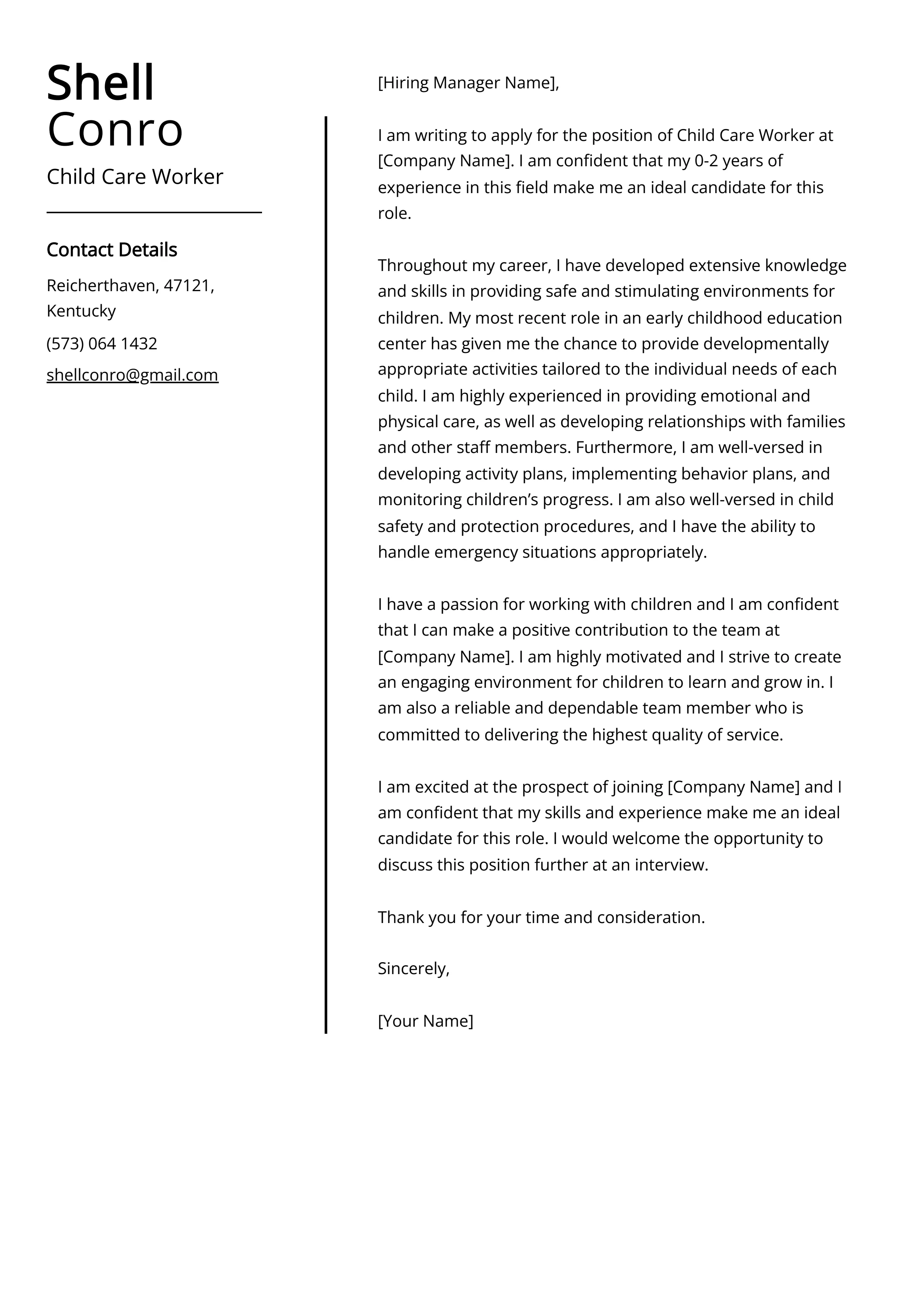
Understanding the Child Development Cover Letter
A child development cover letter is your first opportunity to make a positive impression on a potential employer. It serves as a crucial introduction, providing insight into your qualifications, experience, and passion for working with children. Unlike a resume, a cover letter allows you to showcase your personality and elaborate on your skills, making it a vital component of your job application. A well-crafted cover letter can significantly increase your chances of landing an interview. It’s not just a formality; it’s a tool to demonstrate your suitability for the specific role and the organization. Therefore, investing time in creating a compelling cover letter is an investment in your career aspirations within the field of child development.
Key Components of a Child Development Cover Letter
A strong cover letter is composed of several key elements that collectively present a comprehensive view of your capabilities. Each section plays a pivotal role in conveying your suitability for the position. From the initial greetings to the closing statements, every word should be carefully considered to create a lasting positive impression. Understanding these essential components is the first step in crafting a cover letter that resonates with hiring managers and sets you apart from other applicants. These elements are the building blocks of a successful job application in the child development field.
Header Information

Begin your cover letter with a professional header. This section should include your full name, address, phone number, and email address. This provides the necessary contact information for the employer to reach you easily. Ensure your contact details are accurate and up-to-date, as this is the primary way the employer will communicate with you. The header sets the tone for the rest of the letter; a clean and organized header reflects your attention to detail and professionalism. This section is essential for any formal communication, ensuring the recipient knows who you are and how to contact you. (Image: child-development-cover-letter-header.webp)
Contact Information
Following the header, include the date and the employer’s contact information. This should consist of the hiring manager’s name (if known), their title, the company name, and the company’s address. Addressing the letter to a specific person, rather than a generic title like “Hiring Manager,” shows that you’ve taken the time to research the organization and demonstrates your initiative. This personalized touch can make your application stand out. Accurate contact information is critical for both the employer and yourself, helping to ensure that your application reaches the right person and is considered promptly.
Professional Summary or Objective
Start your cover letter with a concise summary or objective statement. This is your chance to immediately capture the reader’s attention. If you have significant experience, a professional summary that highlights your key skills and achievements is suitable. If you are early in your career, a clear objective statement that outlines your career goals and what you hope to achieve in the role is more appropriate. The summary or objective should be specific, tailored to the job, and convey your enthusiasm for the opportunity. This is a brief but impactful statement that sets the tone for the rest of the letter, piquing the interest of the hiring manager from the outset. The goal is to make the reader want to learn more about you.
Highlighting Skills and Experience

This is the core of your cover letter where you showcase your skills and experience. Provide specific examples that demonstrate your ability to excel in the role. Focus on the skills and experiences that align with the job requirements. Use action verbs to describe your accomplishments and quantify your achievements whenever possible. By highlighting your relevant skills and experiences, you provide the employer with concrete evidence of your qualifications. This section is your opportunity to demonstrate why you are the best candidate for the position by providing a clear connection between your abilities and the needs of the job. (Image: child-development-cover-letter-skills.webp)
Relevant Experience
Describe your relevant experience in detail. For each previous role or experience, briefly outline your responsibilities and the specific tasks you performed related to child development. Focus on experiences that demonstrate your proficiency in the skills mentioned in the job description. Mention the types of programs or settings you’ve worked in, like preschools, daycare centers, or home-based care. Showcase any specializations or areas of expertise, such as early childhood education, special needs support, or curriculum development. This section allows you to paint a picture of your capabilities and suitability for the role, giving the employer a clear understanding of what you bring to the table.
Quantifiable Achievements
Wherever possible, quantify your achievements to demonstrate your impact. Instead of saying “Improved classroom management,” say “Improved classroom management by 20%, resulting in a more focused learning environment.” Use numbers and data to illustrate your successes and contributions. This helps the employer understand the value you bring to the table. When discussing achievements, use metrics such as the number of children impacted, the percentage of improvement in a particular area, or specific outcomes you helped achieve. Quantifiable achievements provide concrete evidence of your abilities, helping you stand out from other applicants. It shows your results-oriented approach.
Tailoring Your Letter to the Job

It’s crucial to tailor your cover letter to each specific job you apply for. A generic cover letter that is sent to multiple employers is unlikely to make a strong impression. Customizing your letter shows the employer that you have taken the time to understand their specific needs and the requirements of the role. The ability to tailor a cover letter demonstrates your genuine interest in the position and your attention to detail. It also allows you to directly address the requirements outlined in the job description, making it clear that you are a suitable candidate. (Image: child-development-cover-letter-tailoring.webp)
Researching the Employer
Before writing your cover letter, research the employer. Visit their website, read about their mission and values, and understand their approach to child development. Find out about the specific programs they offer, and how they support children’s development. Show that you have taken the initiative to learn about the organization. Demonstrate your understanding of their goals and values. Refer to specific aspects of their programs or mission that resonate with you. This shows that you are genuinely interested in the organization. This personalized approach will make a positive impression, differentiating you from other candidates and increasing your chances of securing an interview.
Matching Skills to Requirements
Carefully review the job description and identify the skills and qualifications the employer is seeking. Then, in your cover letter, explicitly address each requirement. Use the same keywords and phrases that appear in the job description to show that you meet their criteria. Provide concrete examples of how you have demonstrated these skills and qualifications in your previous experience. Connect your skills to the employer’s needs, making it clear how you can contribute to their organization. This direct alignment shows the employer that you are an ideal fit for the role.
Formatting and Tone

Formatting and tone are crucial in creating a professional impression. Ensure your cover letter is well-formatted, easy to read, and reflects your professionalism. This includes choosing a readable font, using clear and concise language, and maintaining a positive and enthusiastic tone throughout the letter. Avoid errors and typos, as these can create a negative impression. A well-formatted and well-written cover letter communicates respect for the employer and a commitment to detail. Your cover letter is the first impression, make sure that it’s positive and professional. (Image: child-development-cover-letter-formatting.webp)
Professional Formatting Tips
Use a professional, easy-to-read font such as Times New Roman, Arial, or Calibri. Maintain a font size between 10 and 12 points. Use standard 1-inch margins. Keep your letter concise, ideally no more than one page. Break up large blocks of text with short paragraphs and bullet points. Proofread your letter carefully to eliminate any typos or grammatical errors. Use consistent formatting throughout, including consistent spacing and alignment. This attention to detail creates a professional and polished appearance, which reflects your commitment to quality and your professionalism.
Appropriate Tone and Language
Use a professional yet friendly tone throughout your cover letter. Avoid overly casual language, slang, or jargon. Focus on using clear, concise, and direct language. Maintain a positive and enthusiastic tone, showing your genuine interest in the position. Be respectful and polite in your communication. Avoid sounding desperate. Your tone should reflect your passion for child development and your commitment to providing excellent care and education. The tone and language you use should be professional and enthusiastic, reflecting your personality and commitment to working with children and families. (Image: child-development-cover-letter-tone.webp)
Closing the Letter

Your closing is as important as the introduction and body of your cover letter. It provides an opportunity to summarize your interest in the position and to express your desire for an interview. A strong closing can leave a lasting positive impression and increase the chances of your application moving forward. It should be concise, enthusiastic, and professional, reiterating your interest and availability. It’s your last chance to make a positive impact on the reader. This section should be well-crafted, leaving the employer with a positive and enthusiastic impression.
Expressing Enthusiasm
Reiterate your enthusiasm for the opportunity and your genuine interest in the position. Express your excitement about the possibility of contributing to the organization’s mission. Show that you are eager to learn more about the role and the organization. This enthusiastic tone can make your cover letter more engaging. Use phrases like “I am very enthusiastic about the opportunity” or “I am excited about the prospect of joining your team.” This demonstrates your commitment and makes a positive final impression on the employer, showing your genuine interest in the role and the company.
Call to Action
End your cover letter with a clear call to action. This could be a request for an interview or a statement about your availability. Provide your contact information again, making it easy for the employer to reach you. Thank the employer for their time and consideration. Express your willingness to discuss your qualifications further. The call to action should be direct and straightforward, making it easy for the employer to take the next step. Provide your contact information again. A clear and concise call to action can prompt the employer to move forward with your application, increasing your chances of getting an interview. (Image: child-development-cover-letter-closing.webp)