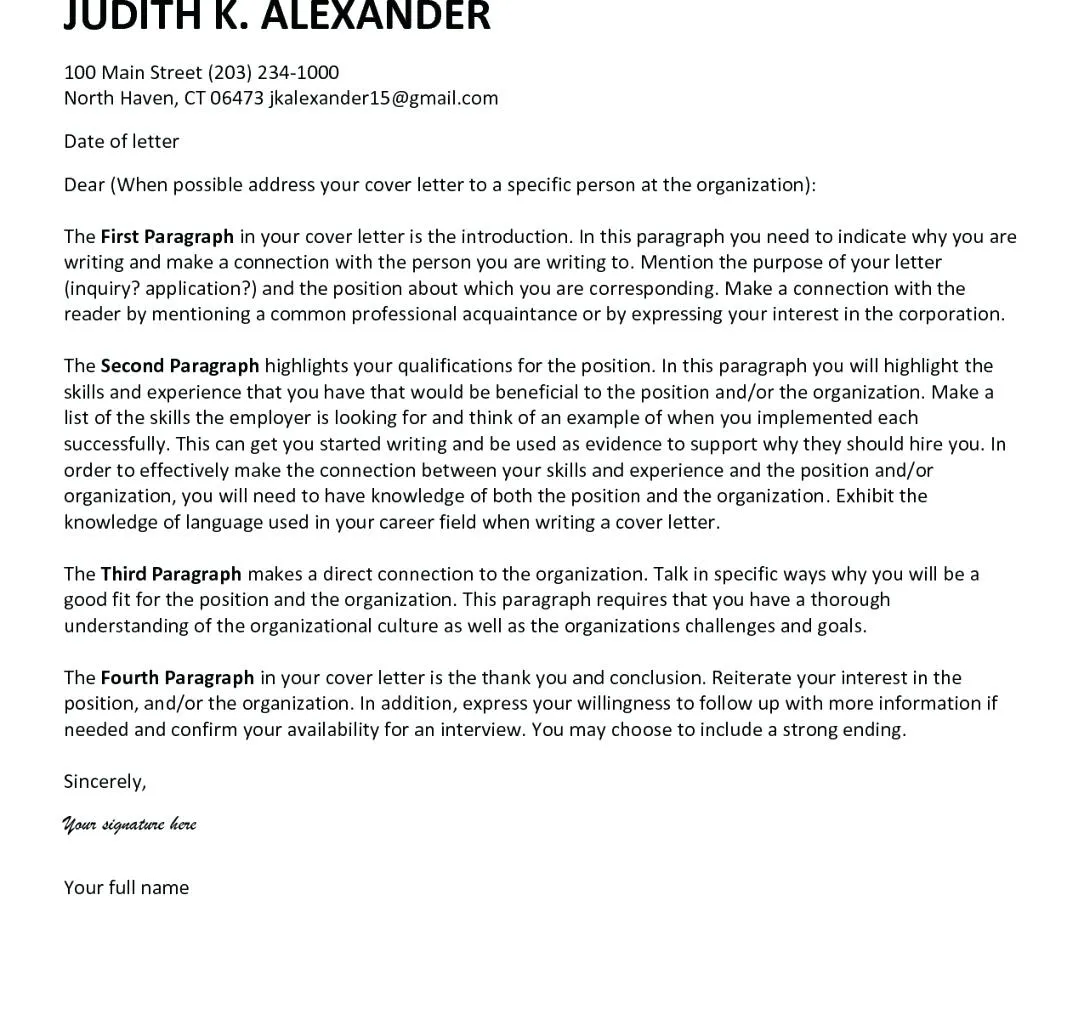
What is a Conclusion Cover Letter
A conclusion cover letter is the final part of your job application, serving as a summary of your key qualifications and expressing your interest in the position. It’s your last chance to make a positive impression on the hiring manager and reiterate why you are the best candidate for the job. This letter is usually the last paragraph of your main cover letter, but the importance remains the same: to leave a lasting, positive impression and encourage the employer to take the next step, which is often an interview. It’s about reinforcing your value proposition and making a memorable impact that sets you apart from other applicants. A well-written conclusion can significantly increase your chances of getting noticed.
The Purpose of a Conclusion Cover Letter
The primary purpose of a conclusion cover letter is to summarize your main points and reiterate your enthusiasm for the job. It reinforces your qualifications, reminding the reader of your key skills and experiences as they relate to the job requirements. This part also provides an opportunity to express gratitude for the reader’s time and consideration, showing respect and professionalism. Furthermore, it is the place to prompt the reader to take action, such as scheduling an interview. The goal is to leave a strong, positive final impression that encourages the hiring manager to move your application to the next stage in the hiring process. Think of it as the final, persuasive push to convince them you are the right fit.
Essential Elements of a Conclusion Cover Letter

A strong conclusion cover letter includes several key elements. First, a concise summary of your most relevant skills and experiences. Second, a clear expression of your interest in the specific role. Third, a statement of gratitude for the reader’s time. And lastly, a call to action, inviting them to contact you for an interview or to discuss your application further. You should also ensure that your tone is professional and enthusiastic, reflecting your genuine interest in the position. The language should be clear and easy to understand, and the content should be tailored to match the specific requirements of the job and the company’s values. Your aim is to leave a lasting impression, and a well-crafted conclusion is key to achieving this.
Formatting Your Conclusion Cover Letter
Proper formatting is essential for ensuring your conclusion cover letter is easy to read and professional in appearance. Begin by using a standard business letter format, including your contact information, the date, and the hiring manager’s name and address. The conclusion should be a concise paragraph, typically three to five sentences long. Maintain a consistent font style and size throughout the entire letter to enhance readability. Keep your language clear and avoid overly complex sentence structures. The tone should be professional and enthusiastic. Ensure you proofread carefully for any errors in grammar or spelling. The overall layout should be neat, well-organized, and easy on the eyes, reflecting your attention to detail.
Tips for Writing a Compelling Conclusion Cover Letter
To write a compelling conclusion, start by summarizing your key qualifications and skills in a way that directly relates to the job requirements. Express your genuine enthusiasm for the position and the company. Be specific about why you are interested in the role and what you hope to achieve. Include a call to action, clearly stating your availability for an interview or further discussion. Personalize your letter by referencing the company’s values, mission, or a specific aspect that resonates with you. Proofread your letter carefully to ensure there are no errors. The goal is to leave a lasting positive impression that encourages the hiring manager to take the next step. A well-written conclusion can significantly enhance your chances of being selected for an interview.
Proofreading and Editing Your Conclusion Cover Letter

Proofreading and editing are crucial steps in ensuring your conclusion cover letter is polished and error-free. Read your letter carefully for any grammatical errors, spelling mistakes, or typos. Check the structure and flow of your paragraph, making sure the points are clear and concise. Ensure your language is professional and appropriate for the job. Consider having someone else review your letter to provide a fresh perspective. Pay close attention to the tone and make sure it reflects your enthusiasm and professionalism. Correct any inconsistencies in formatting or style. A well-edited conclusion cover letter demonstrates your attention to detail, which can significantly boost your chances of making a positive impression on the hiring manager.
Conclusion Cover Letter: Examples and Templates
Using examples and templates can be extremely helpful when writing your conclusion cover letter. Many resources provide templates for different industries and roles, giving you a solid structure to start with. These templates can guide you on what to include and how to format your conclusion. You can find examples of effective conclusions that emphasize different skills or experiences. Remember to customize the templates to fit your specific qualifications and the requirements of the job. Tailoring the content makes your conclusion more authentic and demonstrates your genuine interest in the position. There are numerous online platforms offering these resources, making it easier to create a professional and impactful cover letter.
Common Mistakes to Avoid in Your Conclusion Cover Letter
Several common mistakes can weaken your conclusion cover letter. Avoid generic statements that don’t reflect your specific interest in the role. Do not simply repeat what you have already said; instead, offer a fresh perspective or a concise summary. Don’t include irrelevant information that does not pertain to the job requirements. Refrain from making demands or sounding presumptuous. Do not use overly casual or informal language; maintain a professional tone throughout. Also, avoid making errors in grammar and spelling; proofread carefully. By avoiding these common pitfalls, you can ensure your conclusion is impactful and makes a positive impression on the hiring manager. Remember, the conclusion is your last opportunity to influence their decision.