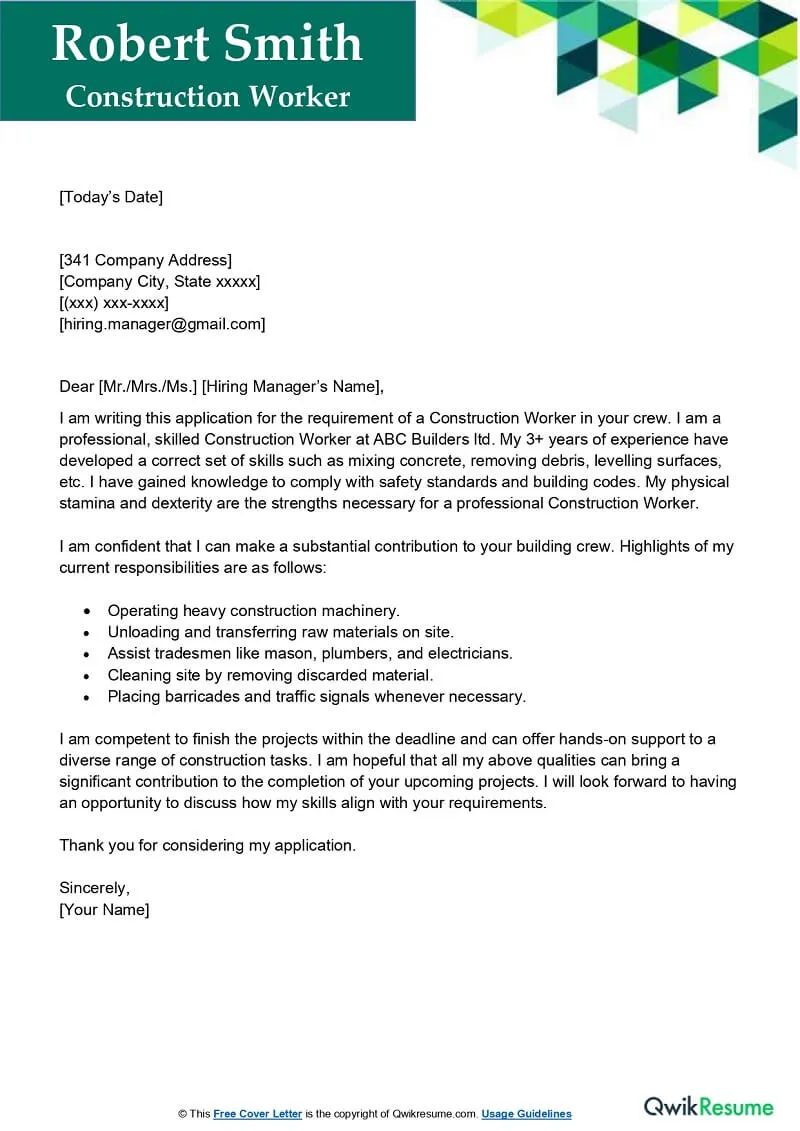
What is a Construction Cover Letter?
A construction cover letter is a crucial document that accompanies your resume when applying for jobs in the construction industry. It serves as your introduction to the hiring manager and provides an opportunity to highlight your skills, experience, and qualifications in a way that a resume alone cannot. Think of it as your personalized sales pitch, designed to persuade the employer that you’re the perfect candidate for the position. A well-crafted cover letter can significantly increase your chances of getting an interview and ultimately landing your dream job. It is your first impression, so make it count. It should be tailored to each job application, showing a genuine interest in the specific role and company. The goal is to make a positive and lasting impression, showcasing your professionalism and commitment to the field.
Why is a Cover Letter Important for Construction?
In the competitive construction industry, a cover letter provides a vital advantage. It allows you to go beyond the basic details of your resume and demonstrate your personality, passion, and specific suitability for the role. It’s an opportunity to explain how your skills align with the job requirements and company culture. Construction projects demand teamwork, problem-solving abilities, and a strong work ethic, all of which can be showcased effectively in a cover letter. By highlighting your achievements and relevant experience, you set yourself apart from other applicants. A strong cover letter shows that you’ve taken the time to understand the job and are genuinely interested in the opportunity. It showcases your communication skills and attention to detail, which are highly valued in construction. Remember, many hiring managers will review cover letters before even looking at the resume, making it a critical tool in the job search process.
Key Components of a Construction Cover Letter

A well-structured construction cover letter includes several key components that work together to create a compelling narrative. Each section plays a vital role in showcasing your qualifications and suitability for the job. Focusing on these aspects ensures your letter is clear, concise, and effectively communicates your value to the employer. Your construction cover letter should be well-organized and easy to read. This organization reflects professionalism and attention to detail. By following these components, you can create a cover letter that effectively highlights your skills and increases your chances of landing an interview.
Header and Contact Information
Start your cover letter with a professional header that includes your full name, address, phone number, and email address. This information should be clear and easy to find. If you have a LinkedIn profile, include the URL. This ensures the hiring manager can easily contact you and learn more about your professional background. The header establishes your identity and provides essential contact details. Consistency and accuracy in your contact information are critical. Double-check for any errors to ensure the recruiter can reach you. Presenting yourself professionally from the outset is paramount.
Address the Hiring Manager Directly
Whenever possible, address your cover letter to a specific person. Research the company and identify the hiring manager or the individual responsible for reviewing applications. Addressing your letter to a specific person shows that you’ve taken the time to learn about the company and are genuinely interested in the role. If you cannot find the name of the hiring manager, use a professional greeting such as “Dear Hiring Manager” or “Dear [Department Name] Team.” Avoid generic greetings like “To Whom It May Concern,” as they can make your letter seem impersonal. Personalization makes a significant impact and helps build a connection with the reader. If you are unsure, a quick phone call to the company can sometimes provide the name.
Opening Paragraph and Hook

The opening paragraph is your chance to grab the hiring manager’s attention. Start with a strong hook that highlights your enthusiasm for the position or the company. Briefly mention where you saw the job posting and express your interest in the role. You could state your specific interest in a project, company achievement, or area of construction that aligns with your skills. Keep it concise and focused on making a positive first impression. This is where you set the tone and create an immediate connection. Your opening should be engaging and make the reader want to continue reading. Show your passion for construction and what makes you unique.
Highlight Your Skills and Experience
The body of your cover letter should focus on showcasing your skills and experience. Tailor your content to the specific requirements of the job description. Mention relevant skills, such as project management, blueprint reading, knowledge of construction codes, or proficiency in specific software. Give examples of how you’ve used these skills in previous roles. Describe your experience in different types of construction projects, such as residential, commercial, or industrial. Explain how your experience aligns with the needs of the hiring company. Ensure your writing style is clear and easy to understand, and the information is well-organized. This section should demonstrate your competence and value to the organization.
Quantify Your Achievements
Whenever possible, quantify your achievements with specific numbers and data. Instead of saying “Managed construction projects,” say “Managed construction projects with budgets up to $5 million, completing projects on time and within budget.” Use metrics to demonstrate your accomplishments. For example, mention how you improved project efficiency, reduced costs, or improved safety records. Quantifying your accomplishments provides concrete evidence of your capabilities and makes a stronger impact. It shows the tangible results you’ve achieved in previous roles. Use numbers to back up your claims and make your cover letter more persuasive.
Showcase Relevant Certifications and Training

Highlight any relevant certifications, licenses, and training you have obtained. Mention credentials like OSHA certifications, project management professional (PMP) certifications, or any specialized training in areas like welding, plumbing, or electrical work. Include any specific software or equipment you are proficient in, such as AutoCAD, Revit, or heavy machinery operation. If you have any ongoing training or professional development, mention this as well. This demonstrates your commitment to continuous learning and your dedication to staying current with industry best practices. Ensure you tailor the list of certifications and training to match the job description’s requirements. This will make your application more appealing to employers.
Express Your Enthusiasm and Interest
Throughout your cover letter, express your genuine enthusiasm and interest in the position and the company. Show that you’ve researched the company and understand its mission, values, and projects. Explain why you are excited about the specific opportunity and how it aligns with your career goals. Mention any aspects of the company that appeal to you, such as its reputation, culture, or commitment to innovation. Express your eagerness to contribute to the team and make a positive impact. Your enthusiasm will make your letter more engaging and memorable, demonstrating your passion for the construction industry.
Call to Action Request an Interview
Conclude your cover letter with a clear call to action. Express your interest in an interview and make it easy for the hiring manager to contact you. State that you are available for an interview at their earliest convenience. Reiterate your contact information and thank the hiring manager for their time and consideration. Keep your call to action concise and professional. Avoid sounding too demanding or overly assertive. Make it clear that you are eager to discuss your qualifications further. A strong call to action encourages the hiring manager to take the next step.
Proofread and Edit Your Cover Letter
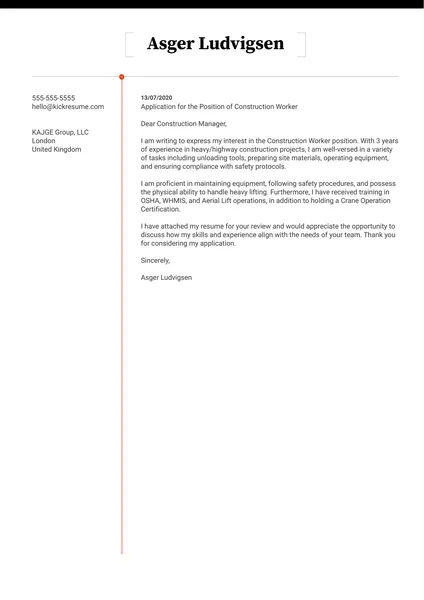
Before submitting your cover letter, carefully proofread and edit it for any errors. Check for grammatical errors, typos, and inconsistencies in formatting. Ensure your writing is clear, concise, and easy to read. Ask a friend, family member, or career counselor to review your cover letter for feedback. A second pair of eyes can often catch mistakes you might miss. Proper spelling and grammar make a significant impact. Ensure the language is professional and free of jargon. A polished cover letter demonstrates your attention to detail and professionalism, which are essential in the construction industry. Proofreading is a critical step in the job application process.
Tailoring Your Cover Letter to the Job
One of the most important aspects of writing a successful cover letter is tailoring it to each job application. Avoid using a generic template for all applications. Review the job description carefully and identify the key skills, experience, and qualifications the employer is seeking. Customize your cover letter to align with these requirements. Highlight the specific skills and experience that match the job’s needs. Mention projects, tools, or software the employer uses, if applicable. If you have prior experience in similar roles, be sure to emphasize those skills. Customization shows the employer you’ve taken the time to understand the role and are genuinely interested in the opportunity. It makes your cover letter more relevant and increases your chances of getting noticed.
Use Keywords from the Job Description
Incorporate keywords from the job description into your cover letter. This helps your application pass through Applicant Tracking Systems (ATS) and ensures the hiring manager can easily identify your relevant skills and experience. Identify the key skills, qualifications, and responsibilities mentioned in the job posting. Naturally integrate these keywords into your cover letter. Be sure to use these keywords appropriately, without overusing them. Make sure they fit smoothly into the text and don’t sound forced. Using keywords demonstrates that you understand the requirements of the role and are a good fit. It helps to improve your chances of your application being reviewed.
Demonstrating Soft Skills

While technical skills are essential in construction, employers also look for candidates with strong soft skills. These are interpersonal and personal attributes that influence how well you work with others. Highlight skills like communication, teamwork, problem-solving, leadership, and time management. Provide examples of how you’ve demonstrated these soft skills in previous roles. For example, describe a situation where you successfully resolved a conflict or led a team to complete a project on time and within budget. Showcase these qualities by using real-world examples and emphasizing their value in the construction environment. Soft skills are important for building relationships and handling challenges on construction sites. Demonstrating soft skills makes you a more well-rounded and desirable candidate.
Common Mistakes to Avoid in Construction Cover Letters
Avoid these common mistakes to ensure your construction cover letter stands out for the right reasons. Be aware of the pitfalls and take steps to avoid them. By learning from the common pitfalls, you can create a more effective cover letter. It enhances your chances of securing an interview and ultimately landing a construction job. Paying attention to detail and avoiding these common errors shows your professionalism and dedication.
Length and Formatting Issues
Keep your cover letter concise and to the point. Aim for a single page, as hiring managers often have limited time to review applications. Ensure your formatting is clean, consistent, and easy to read. Use a professional font, such as Times New Roman or Arial, and a standard font size (11 or 12 points). Avoid using excessive formatting, such as bolding or underlining, as it can make your letter look cluttered. Ensure your margins are consistent and your text is properly aligned. A well-formatted cover letter is more likely to be read and appreciated. A cover letter that is too long or poorly formatted may lead the recruiter to reject your application before it is read.
Typos and Grammatical Errors

Typos and grammatical errors can undermine your credibility and make you look unprofessional. Carefully proofread your cover letter for any spelling mistakes, punctuation errors, or grammatical issues. Use a spell checker, but don’t rely on it entirely. Read your cover letter aloud to catch any awkward phrasing or errors you might miss when reading silently. Ask someone else to review your cover letter for additional feedback. A mistake-free cover letter demonstrates your attention to detail and professionalism, which are essential qualities in the construction industry. Double-checking your work is a simple but effective way to enhance your chances of getting a job.
Generic Cover Letters
Avoid sending generic cover letters that are not tailored to the specific job or company. Generic letters show a lack of interest and effort. Tailor your cover letter to each job application by mentioning the company’s name, the specific role, and the skills and experience they are seeking. Research the company and highlight why you are interested in working for them. This customization shows you’ve taken the time to understand the job requirements and are genuinely interested in the opportunity. Avoid using phrases such as “To Whom It May Concern” or generic opening lines. Replace those with a personalized greeting, such as, “Dear Mr. Smith,” where appropriate. Make sure to demonstrate how your qualifications align with the job description.
Best Practices for Sending Your Cover Letter
Follow these best practices when sending your construction cover letter to ensure it’s received and reviewed effectively. Pay attention to these details to maximize your chances of making a positive impression. Following the best practices can ensure your cover letter stands out.
File Format and Naming Conventions
Save your cover letter as a PDF file. This format preserves your formatting and ensures your document looks the same on any device. Use a professional file name, such as “Your Name_Cover Letter_Job Title.” Avoid using generic file names like “coverletter.doc.” Double-check that your PDF document opens correctly before sending it. This prevents any potential issues with formatting or compatibility. These are essential steps in making sure the recipient receives and can open your cover letter correctly. A PDF format ensures your document looks professional.
Follow-up Strategies
After submitting your cover letter and resume, consider following up with the hiring manager. Send a brief, polite email or make a phone call a week or two after submitting your application. Thank the hiring manager for their time and express your continued interest in the position. Reiterate your qualifications and highlight any key skills. Following up demonstrates your interest and initiative, but avoid being overly persistent. If you do not hear back within a reasonable time, you may follow up again. Ensure to maintain a professional and courteous tone throughout your communications. The goal of following up is to stay top-of-mind and show your dedication.
Conclusion and Final Thoughts
Writing a compelling construction cover letter is a crucial step in your job search. By following the guidelines in this guide, you can create a cover letter that showcases your skills, experience, and qualifications effectively. Remember to tailor your cover letter to each job, highlight your achievements, and express your genuine enthusiasm for the opportunity. Proofread your cover letter carefully and use best practices when sending it. By investing time and effort in your cover letter, you significantly increase your chances of landing an interview and launching a successful career in the construction industry. Use all the tips, and you will get the job.