Why Your Cover Letter Matters
In the competitive landscape of job applications, your cover letter is a crucial tool. It’s your first introduction to a potential employer, providing a chance to make a strong first impression and showcase your personality, skills, and enthusiasm. A well-crafted cover letter complements your resume, offering more context and demonstrating why you’re the ideal candidate. It’s an opportunity to tell your story, highlight your accomplishments, and explain how your experience aligns with the job requirements. Without a compelling cover letter, your application may be overlooked, as it’s often the cover letter that secures an interview and lands you your dream job. Employers frequently use the cover letter to screen candidates, making it an indispensable element of your job application strategy.
The Importance of a Strong Cover Letter Last Sentence
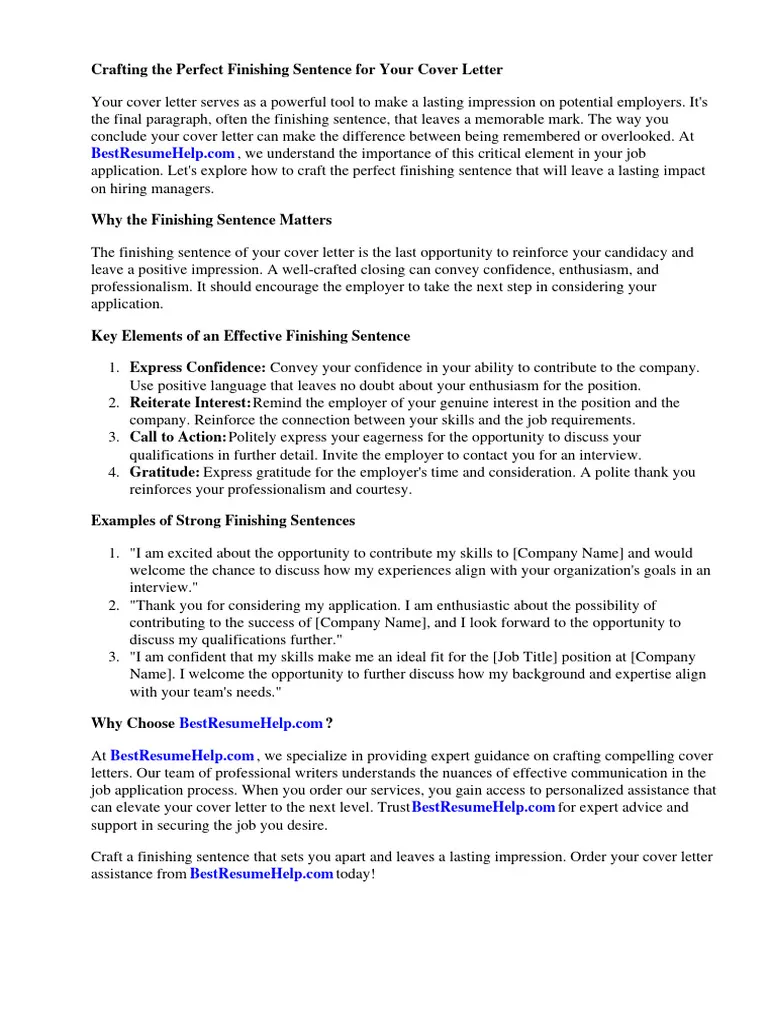
The last sentence of your cover letter is a pivotal moment. It’s the final opportunity to leave a lasting impression and encourage the hiring manager to take action. A well-written closing sentence can elevate your application, motivating the reader to move your application forward. Conversely, a weak or generic closing can diminish the impact of your entire letter, leaving the employer indifferent. This last sentence should be carefully crafted to be memorable, action-oriented, and reflective of your enthusiasm for the role. It should act as a call to action, prompting the reader to consider you for an interview and setting the stage for the next step in the hiring process. A well-executed final sentence is a key component of a successful cover letter strategy.
Tip 1 Showcase Enthusiasm in Cover Letter Last Sentence

Expressing genuine enthusiasm for the position and the company is paramount. Your closing sentence should convey your eagerness to contribute and your belief in your fit for the role. This can be achieved by using positive and energetic language. Mentioning specific aspects of the role that excite you or referencing the company’s mission can go a long way. This approach not only shows your interest but also demonstrates that you’ve researched the company and are invested in their success. The goal is to leave the reader with a sense that you are passionate and that you genuinely want the job. A well-crafted enthusiastic closing will make you more memorable.
How to Express Excitement
Expressing your excitement can be as simple as using dynamic verbs and positive adjectives. Avoid generic phrases and instead, opt for statements that clearly articulate your enthusiasm. For example, instead of saying ‘I am interested,’ try ‘I am eager to contribute to…’ or ‘I am thrilled by the opportunity to…’ Referencing a specific aspect of the job or the company further personalizes your expression. If there is a specific project or initiative that you find appealing, make a point of mentioning it. Ensure that your enthusiasm sounds authentic. This will not only make your application more appealing but also reflect your proactivity, demonstrating that you have thought carefully about the opportunity and that you are serious about the role.
Tip 2 Include a Clear Call to Action
A clear call to action in your closing sentence can significantly increase your chances of getting an interview. This means directly requesting the next step in the process. Specify what you would like the hiring manager to do – to contact you for an interview, or to discuss the role further. Be direct, but professional, ensuring your request is both clear and courteous. Avoid vague phrases that do not encourage specific action. Make it easy for the hiring manager to respond by including your contact information, if it isn’t already present. By including a call to action, you actively guide the reader, increasing the likelihood that they will act on your application. This shows you are not only interested but also proactive in advancing your candidacy.
What a Call to Action Is

A call to action (CTA) is a statement or phrase that prompts the reader to take a specific action. In a cover letter, a CTA encourages the hiring manager to proceed to the next step in the hiring process. This typically means requesting an interview or suggesting further discussion about the opportunity. A good CTA is concise, direct, and clearly states what the applicant wants the reader to do. For example, it could be as simple as, ‘I look forward to the opportunity to discuss my qualifications in an interview.’ The objective is to be direct and help guide the reader toward making a favorable decision, ensuring they know precisely what the next step is. By using a clear and concise CTA, you improve the chances of receiving a positive response and moving forward in the selection process.
Types of Call to Action Examples
There are several types of effective CTAs you can use in your cover letter. A direct request for an interview is one of the most common and effective. An example might be, ‘I am available for an interview at your earliest convenience and welcome the chance to elaborate on my skills and experience.’ Other options involve suggesting a discussion or meeting, such as, ‘I would welcome the chance to discuss how my skills align with the requirements of this role.’ You may also express gratitude and reiterate your interest, such as, ‘Thank you for your time and consideration; I am eager to learn more about this opportunity.’ The specific CTA you choose should align with the company’s culture and your personal preference.
Tip 3 Reiterate Your Value Proposition
In your closing, reiterate your key strengths and how they align with the job’s requirements. This is your last chance to emphasize the value you bring to the role, reminding the hiring manager why you are a great fit. Summarize your skills and accomplishments briefly, using language that reflects the keywords and phrases from the job description. This will reinforce the connection between your qualifications and the specific needs of the role, making it easier for the hiring manager to see you as a potential asset. Ensure your value proposition is concise, relevant, and directly addresses the needs outlined in the job posting. Reiteration strengthens your position and increases the likelihood of a favorable response, ensuring that your value is top of mind.
How to Summarize Your Skills

Summarizing your skills effectively involves identifying the key requirements of the job and highlighting your most relevant qualifications. Focus on the skills and experiences that directly match the employer’s needs, ensuring to incorporate keywords from the job description. Use action verbs to showcase your achievements and quantify your results whenever possible. Avoid listing skills; instead, weave them into brief statements that demonstrate your abilities and experience. For instance, instead of just stating ‘proficient in project management,’ you might say ‘Managed multiple projects simultaneously, delivering results on time and within budget.’ This approach will underscore the key value you bring to the role, making your application more compelling and memorable.
Tip 4 Personalize Your Closing
Personalizing your closing shows that you’ve invested time and effort into your application. Generic endings can make your cover letter feel impersonal, but a personalized closing can differentiate you from other applicants. Research the company and the specific role, and then tailor your final sentence to reflect your understanding of the organization and the requirements of the job. This can include mentioning a specific project, referencing the company’s values, or expressing admiration for their work. Even a small, thoughtful reference can make a significant difference. This attention to detail demonstrates your interest and dedication, making a more lasting impression. The more you can tailor your closing, the more you are likely to stand out to the hiring manager.
How to Customize to the Specific Job
Customizing your cover letter to the specific job starts with a thorough review of the job description. Identify the key requirements, skills, and values the employer is seeking. Use these elements to inform your closing, ensuring your final sentence reflects a solid understanding of the role and the organization. Mention specific aspects of the job or the company that resonate with you. You could express excitement about a particular project, compliment the company’s mission, or refer to recent news related to the organization. This personalized approach shows that you’ve taken the time to understand the company. This will improve your chances of making a positive impression and securing an interview.
Tip 5 Show Gratitude

Expressing gratitude is an important step in ending your cover letter on a positive note. Thank the hiring manager for their time and consideration. This small gesture is a sign of respect and professionalism, and it leaves a favorable impression. Showing gratitude not only acknowledges the effort the hiring manager has put into reviewing applications but also demonstrates your appreciation for the opportunity. It adds a touch of warmth and courtesy to your letter, making it more likely to resonate with the reader. A simple ‘Thank you for your time and consideration’ is a respectful closing statement.
Expressing Thankfulness
Expressing thankfulness should be sincere and relevant. Avoid generic phrases. Instead, tailor your expression to the specific role and company. You might acknowledge their time by saying, ‘Thank you for considering my application,’ or you could go further by thanking them for the opportunity to apply. If the job description mentions a specific aspect of the role or the company’s values, you can connect your gratitude to that. ‘Thank you for the opportunity to learn more about this role, and your commitment to [company value] is very inspiring.’ This approach shows you not only appreciate their time but also appreciate their work and values. Genuine thankfulness is always noticed and appreciated.
Tip 6 Proofread Carefully
Before sending your cover letter, proofread it meticulously. Errors in grammar, spelling, or punctuation can detract from your professionalism and undermine your credibility. Proofreading is vital to ensure your letter is polished and reflects your attention to detail. Read your cover letter multiple times, slowly, and ideally, have someone else review it. This can help catch errors that you might miss on your own. A well-proofread cover letter shows respect for the hiring manager and demonstrates your commitment to quality. A cover letter that is free of errors reflects your professional values and attention to detail.
Common Proofreading Mistakes

Common proofreading mistakes include grammatical errors, spelling mistakes, and punctuation issues. Ensure that your sentences are well-structured and your punctuation is correct. Misspelled words can completely change the meaning of a sentence, so double-check all unfamiliar words. Pay attention to the details such as commas, periods, and apostrophes. It’s often useful to read your letter aloud, as this can help you catch awkward phrasing or missing words. Also, review the use of ’there,’ ’their,’ and ’they’re,’ and ‘your’ and ‘you’re,’ as these are common sources of errors. Finally, ensure that the tone of your cover letter remains professional and consistent throughout, avoiding jargon or informal language.
Tip 7 End With Confidence
Ending your cover letter with confidence leaves a strong impression on the reader. Projecting confidence will help reinforce your value and your suitability for the role. This is achieved by using assertive language, avoiding tentative statements, and clearly expressing your readiness for the next step. Avoid qualifiers like ‘I think’ or ‘I believe.’ Instead, use stronger statements that show conviction. Your final sentence should reflect your confidence and your belief in your skills. A confident close will leave a lasting impression and increase the likelihood of a positive response. Demonstrating confidence is a key component of effective job application strategy.
How to Project Confidence
Projecting confidence involves using direct, assertive language. Your closing should reflect that you are not only qualified but also enthusiastic about the opportunity. Avoid hesitant phrases or self-deprecating statements. Instead, use statements that exude self-assurance. For example, rather than saying ‘I hope to hear from you,’ try ‘I am confident that my skills and experience align well with this role, and I look forward to the opportunity to discuss my qualifications.’ Expressing your enthusiasm with conviction shows that you believe in your value and increases your chances of moving forward in the hiring process. A confident closing will make your cover letter memorable.