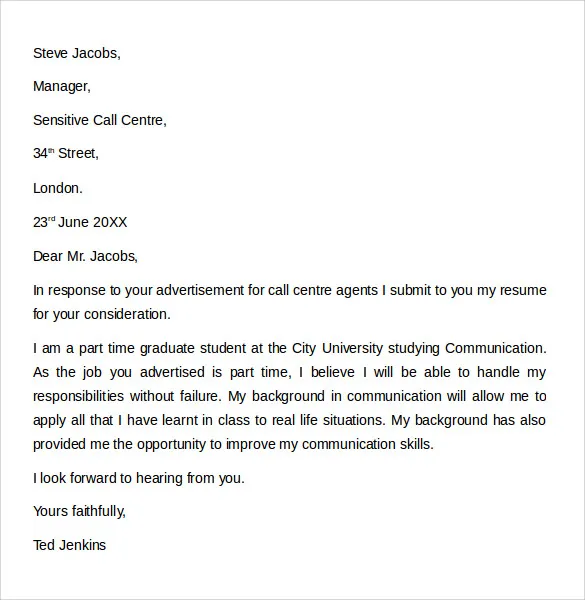
Understanding the Importance of Customer Service Cover Letters
A well-crafted customer service cover letter is your first opportunity to make a positive impression on a potential employer. It’s not just a formality; it’s a vital tool that allows you to showcase your personality, highlight your relevant skills, and demonstrate your genuine interest in the role and the company. In a competitive job market, a compelling cover letter can be the deciding factor in whether you get an interview or not. A strong cover letter complements your resume by providing context, elaborating on your experiences, and explaining how your qualifications align with the specific requirements of the job. It’s also a chance to express your enthusiasm and passion for customer service, qualities that are highly valued in this field. The best customer service cover letter examples go beyond simply restating your resume; they tell a story and make a compelling case for why you’re the ideal candidate.
Highlighting Relevant Skills and Experience
When crafting your customer service cover letter, it’s essential to focus on the skills and experiences that are most relevant to the job description. Carefully review the job posting and identify the key requirements. Then, provide specific examples from your past roles where you demonstrated those skills. Use action verbs to describe your accomplishments and responsibilities. For instance, instead of saying “I was responsible for handling customer inquiries,” you could say “Resolved over 50 customer inquiries daily via phone and email, consistently exceeding customer satisfaction targets.” This approach provides concrete evidence of your abilities and demonstrates your value to the employer. Remember to tailor your examples to the specific needs of the role, emphasizing the skills and experiences that are most important for success. The more specific and relevant your examples, the more impactful your cover letter will be.
Showcasing Soft Skills

Customer service is heavily reliant on soft skills, which are the interpersonal and emotional intelligence abilities that enable effective communication and problem-solving. Your cover letter should highlight these qualities. Include examples of your ability to communicate clearly and empathetically, actively listen to customer concerns, and remain calm under pressure. Detail instances where you successfully resolved customer issues, handled difficult situations with grace, and built positive relationships. Soft skills often make the difference between a satisfactory interaction and an exceptional one. Examples of relevant soft skills include communication, empathy, patience, active listening, problem-solving, and conflict resolution. Illustrate how you’ve used these skills to improve customer satisfaction, reduce complaints, or enhance team performance. By showcasing your soft skills, you demonstrate that you possess the fundamental qualities needed to excel in customer service.
Demonstrating Technical Proficiency
In today’s digital world, technical proficiency is increasingly important for customer service roles. Indicate your familiarity with relevant software, tools, and platforms. This includes CRM systems, ticketing software, live chat applications, and knowledge management systems. If the job description mentions specific software, make sure to highlight your experience with those particular tools. If you’ve used multiple CRM systems, specify which ones, and briefly describe your proficiency level. For example, you might say “Proficient in Salesforce, Zendesk, and HubSpot, utilizing these platforms to manage customer interactions, track issues, and generate reports.” If you’ve worked with live chat software, explain how you used it to improve response times or handle customer inquiries effectively. Showing your technical proficiency reassures employers that you can quickly adapt to their systems and contribute effectively from day one.
Quantifying Achievements and Results
One of the most effective ways to make your cover letter stand out is to quantify your achievements and results. Instead of making general statements about your skills, provide concrete data that demonstrates your impact. Use numbers and percentages to illustrate your accomplishments. For instance, instead of saying “Improved customer satisfaction,” say “Increased customer satisfaction scores by 15% through proactive issue resolution.” Similarly, if you reduced call times, improved first-call resolution rates, or lowered customer complaint rates, quantify these results. Employers are more impressed by evidence of your past successes. Include any awards or recognition you received for your performance. When quantifying your achievements, always provide context and explain how you achieved those results. This helps the employer understand your value and the potential impact you could have in their organization. The more you can demonstrate your past successes, the more likely you are to convince them you are the right candidate.
Tailoring Your Cover Letter to the Job Description

Avoid using a generic cover letter. Tailoring your letter to each job application is a must. Generic cover letters come across as impersonal and show that you haven’t put in the effort to understand the specific needs of the role. Start by carefully reading the job description and identifying the key requirements and qualifications. Then, customize your cover letter to address those specific points. Match your skills and experience to the job requirements, providing examples that demonstrate your abilities. Research the company and its values. Show that you understand their mission and what they’re looking for in a customer service representative. Tailoring your cover letter shows that you’re genuinely interested in the role and the company, which significantly increases your chances of getting an interview. Always customize each cover letter to the specific job and company to maximize its impact. This customization demonstrates your attention to detail and your genuine interest.
Researching the Company and the Role
Before you start writing your cover letter, take the time to research the company and the specific role. Understand the company’s mission, values, and culture. Look at their website, social media profiles, and any recent news or press releases. This will provide you with valuable insights into what the company values and what qualities they are looking for in a candidate. Examine the job description carefully. Identify the specific skills, experiences, and qualifications the employer is seeking. Research the role itself. Understand the daily responsibilities, the team you would be working with, and the expectations of the position. This information allows you to customize your cover letter and demonstrate that you understand the company’s needs and that you’re a good fit for the role. Tailor your letter to address the company’s specific requirements and values.
Matching Skills and Experience to Requirements
Once you’ve researched the company and the role, you can start matching your skills and experience to the job requirements. Analyze the job description and create a list of the key skills and experiences the employer is seeking. Then, review your own skills and experience and identify the instances where you’ve demonstrated those skills. Provide specific examples from your past roles where you successfully used those skills to achieve positive results. These examples should be relevant to the specific requirements of the job. Use action verbs to describe your accomplishments and focus on the results you achieved. Tailoring your examples to the requirements shows the employer that you understand the job’s needs and that you have the skills and experience to excel in the role. By making a direct connection between your skills and the job requirements, you prove your value to the hiring manager.
Using Keywords Effectively

Keywords are crucial in today’s job market, especially with the use of applicant tracking systems (ATS). These systems scan cover letters and resumes for specific keywords and phrases. Failing to include the right keywords can result in your application being overlooked. Read the job description carefully and identify the key skills, qualifications, and phrases. Incorporate these keywords naturally into your cover letter. Don’t simply stuff keywords into your letter; make sure they fit contextually and enhance your message. Use variations of the keywords to avoid repetition and keep your writing engaging. For example, instead of repeatedly using “customer service,” you can also use “customer support,” “client relations,” or “customer experience.” By strategically incorporating relevant keywords, you increase your chances of passing through the ATS and having your application reviewed by a human recruiter. Remember, it is about striking the right balance, ensuring you can be found while sounding natural and engaging.
Formatting and Structure for Impact
The formatting and structure of your customer service cover letter can significantly impact its effectiveness. A well-formatted letter is easy to read, visually appealing, and makes a positive first impression. Use a professional font, such as Times New Roman, Arial, or Calibri, and keep the font size between 10 and 12 points. Use standard margins (1 inch on all sides) and single-space the text. Break up the text with paragraphs to make it easier to read. Use bullet points to highlight key skills, accomplishments, and responsibilities. This helps the reader quickly scan your letter and grasp the most important information. Make sure your letter has a clear structure, with an introduction, body paragraphs, and a conclusion. The introduction should state the position you are applying for and express your interest. The body paragraphs should highlight your skills and experience, with specific examples. The conclusion should reiterate your interest and include a call to action. Well-structured and formatted cover letters demonstrate professionalism and enhance readability.
Choosing the Right Tone and Language
The tone and language you use in your cover letter should be professional, enthusiastic, and tailored to the company’s culture. Research the company and understand its values. If the company has a more formal culture, use a formal tone in your letter. If the company has a more relaxed and casual culture, you can use a more conversational tone. Maintain a positive and enthusiastic tone throughout your letter. Show your passion for customer service and your interest in the role. Use clear, concise language and avoid jargon or overly complex sentences. Proofread your letter carefully to ensure that there are no grammatical errors or typos. Grammatical errors and typos can undermine your credibility. Choosing the right tone and language helps you connect with the hiring manager and present yourself in the best possible light. Adapt your communication style to suit the company’s preferences.
Structuring Your Letter for Readability

A well-structured cover letter is easy to read and effectively conveys your message. Start with a clear and concise introduction that states the position you’re applying for and expresses your interest in the role. In the body paragraphs, highlight your relevant skills and experiences, providing specific examples to support your claims. Use a logical flow of information, organizing your points in a way that makes sense. Use clear topic sentences to introduce each paragraph and transition smoothly between ideas. Avoid long blocks of text; break up your paragraphs to make them easier to read. Use bullet points to highlight key accomplishments and responsibilities, making it easier for the reader to scan your letter. In the conclusion, reiterate your interest in the role and thank the hiring manager for their time and consideration. End with a strong call to action, such as requesting an interview. A well-structured cover letter ensures that your key points are clear, concise, and easy to understand. A well-structured cover letter ensures that your key points are clear, concise, and easy to understand, enhancing your chances of making a positive impression.
Proofreading and Editing for Perfection
Proofreading and editing are essential steps in the cover letter writing process. Errors in grammar, spelling, and punctuation can undermine your credibility and make a negative impression on the hiring manager. Before submitting your cover letter, carefully proofread it for any errors. Use a spell checker and grammar checker, but don’t rely on them completely. Manually review your letter to catch any errors that the software might miss. Read your letter out loud to catch any awkward phrasing or sentence structure issues. Ask a friend or family member to read your letter and provide feedback. A fresh pair of eyes can often catch errors you might have missed. Pay close attention to detail, ensuring that your contact information is correct and that your formatting is consistent throughout the letter. Proofreading and editing demonstrate your attention to detail, professionalism, and commitment to producing high-quality work. A perfect cover letter speaks volumes about your work ethic and your ability to pay attention to detail.
Writing a Compelling Closing
Your closing paragraph is your final opportunity to leave a lasting impression. It should reiterate your interest in the role and the company and include a strong call to action. Reiterate your enthusiasm for the opportunity and express your confidence that you’re a good fit for the position. Thank the hiring manager for their time and consideration. This shows respect and appreciation. End with a clear call to action, such as requesting an interview or offering to provide additional information. For example, you could say “I am eager to discuss my qualifications in more detail and would welcome the opportunity to interview for this position.” Make sure your contact information is readily available. A compelling closing leaves the hiring manager with a positive and memorable impression. It encourages them to take the next step and invite you for an interview. A well-crafted closing strengthens your overall application and increases your chances of landing the job.