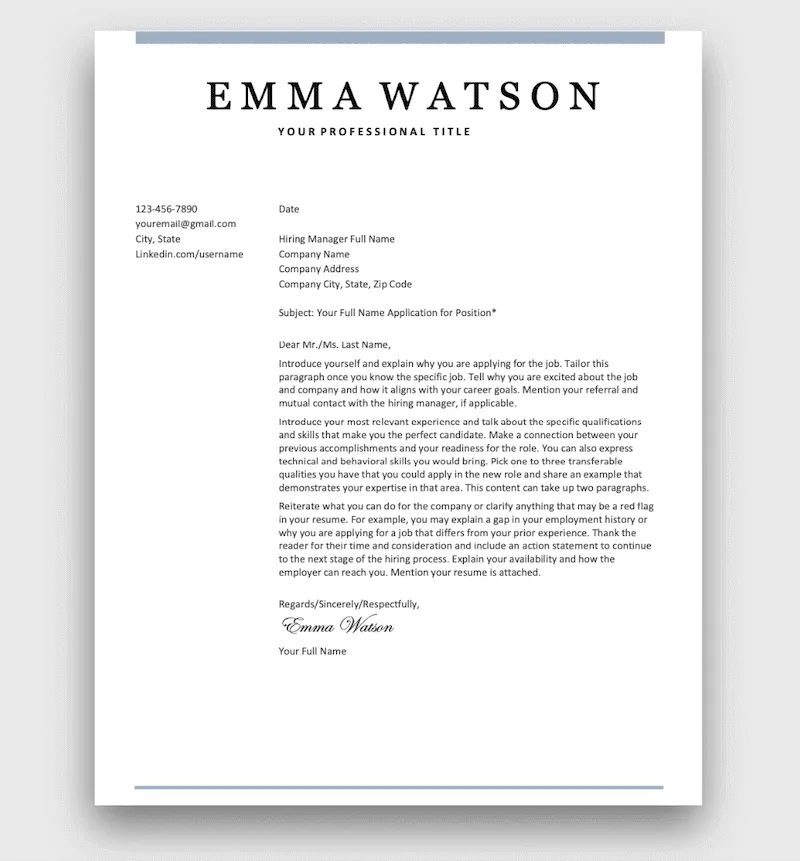
What is a Cover Letter?
A cover letter is a crucial document accompanying your resume, serving as your first introduction to a potential employer. It’s a chance to expand on the information in your resume, showcasing your personality, skills, and enthusiasm for the specific job. Unlike a resume, which provides a concise overview of your experience, a cover letter allows you to tell your story, explain why you’re the perfect fit for the role, and demonstrate your understanding of the company and its needs. Think of it as a personalized sales pitch highlighting your relevant qualifications and expressing your genuine interest in the opportunity. A well-crafted cover letter can significantly increase your chances of getting noticed and securing an interview, setting you apart from other applicants.
Why Use Cover Letter Examples?
Cover letter examples provide a valuable starting point for crafting your own compelling letter. They offer structured templates and model language that can help you effectively communicate your qualifications and interest in a job. Using examples can save you time and effort by providing a framework to build upon, ensuring you include all the essential components of a successful cover letter. They can also expose you to different writing styles and approaches, helping you tailor your letter to the specific industry, company, and role. Furthermore, examples often incorporate industry-specific keywords and phrases, making your letter more relevant and appealing to recruiters. By studying these examples, you can learn how to structure your letter, highlight your key skills, and create a strong opening and closing that leaves a lasting impression.
Top 5 Free Cover Letter Examples

Below are five free cover letter examples tailored for different professional scenarios. Each example is designed to help you understand how to adapt your letter to various situations and highlight the skills and experiences most relevant to the job you’re applying for. Remember to customize these examples with your own information to make them truly reflect your unique qualifications and personality. These templates serve as a solid foundation, allowing you to build a cover letter that effectively captures the attention of hiring managers and increases your chances of landing an interview.
Example 1 The Enthusiastic Professional
This cover letter example is ideal for experienced professionals who want to showcase their passion and commitment to their field. It emphasizes accomplishments and quantifiable results. The tone is confident and enthusiastic, highlighting the applicant’s proactive approach and eagerness to contribute to the company’s success. The letter uses strong action verbs and focuses on demonstrating how the candidate’s skills and experience align with the job requirements. It’s a good option for those with a proven track record of achievement and a clear understanding of their career goals. The focus is on demonstrating value and making a compelling case for why the candidate is the perfect fit.
Key Elements of This Example
This example often includes a strong opening statement that immediately grabs the reader’s attention, followed by concise paragraphs that highlight key accomplishments and quantify results whenever possible. The closing reiterates the applicant’s enthusiasm and expresses a clear call to action, inviting the hiring manager to review the resume and schedule an interview. The key is to demonstrate how the candidate’s skills and experience directly address the needs of the employer. The use of professional language, combined with specific examples of success, creates a powerful narrative that positions the candidate as a valuable asset.
Example 2 The Recent Graduate

This cover letter is designed for recent graduates or those with limited work experience. It focuses on academic achievements, relevant coursework, internships, volunteer work, and transferable skills. The tone is optimistic and eager, emphasizing the candidate’s potential and willingness to learn. It highlights skills gained through education and extracurricular activities. It focuses on the applicant’s enthusiasm for the role and their ability to quickly adapt and contribute to a team. The cover letter helps bridge the gap between academic experience and the requirements of a professional position.
Key Elements of This Example
This example typically includes a strong emphasis on the candidate’s academic background, including their major, GPA (if impressive), and any relevant coursework or projects. It highlights any internships, volunteer experiences, or extracurricular activities that demonstrate skills such as teamwork, leadership, or problem-solving. The language is professional, but also reflects the candidate’s eagerness to learn and grow. The conclusion reiterates the candidate’s enthusiasm for the opportunity and expresses a desire to contribute to the company’s goals. This example makes sure that the lack of experience isn’t a disadvantage.
Example 3 The Career Changer
For individuals seeking to transition to a new career, this cover letter focuses on transferable skills and experiences from previous roles. It emphasizes how skills and experiences from their past roles are relevant to the new field. The tone is adaptable and determined, highlighting the candidate’s commitment to their career change and their willingness to acquire new skills. It addresses any potential gaps in experience and demonstrates a clear understanding of the new industry. The letter showcases the candidate’s adaptability, resilience, and enthusiasm for the new opportunity. It is a good way to prove that your skills are more valuable than your industry experience.
Key Elements of This Example

This example will include a skills-based approach, focusing on transferable skills that are relevant to the new role. It highlights any training, certifications, or education the candidate has acquired to support their career change. It provides a clear explanation for the career shift and demonstrates a genuine interest in the new industry. The language is professional and adaptable, emphasizing the candidate’s ability to learn quickly and contribute effectively. The closing reaffirms the candidate’s commitment to the new career path and expresses a strong desire to succeed in the role. The letter emphasizes value regardless of experience.
Example 4 The Skills-Focused Cover Letter
This type of cover letter prioritizes the skills and abilities that match the job requirements. The tone is direct and results-oriented, emphasizing the candidate’s ability to perform the tasks required by the role. It’s a great choice when applying for a position that emphasizes specific technical skills or competencies. It directly addresses the key requirements of the job description, providing concrete examples of how the candidate’s skills align with the needs of the employer. The candidate’s value is defined by what they can do, which is perfect for job roles that require the knowledge of a specific software.
Key Elements of This Example
This example includes a clear breakdown of the skills the candidate possesses, directly referencing the keywords and requirements listed in the job description. It provides specific examples of how these skills have been applied in past roles and the results achieved. The language is concise and focused, highlighting the candidate’s ability to quickly understand and execute the job responsibilities. It uses strong action verbs and quantifiable achievements to demonstrate the candidate’s proficiency. The conclusion restates the candidate’s qualifications and expresses a strong interest in the role. The use of the skills-focused approach is perfect to land a job that has high standards.
Example 5 The Networking Cover Letter

The networking cover letter is used when you have a personal connection to the company or someone within the organization. The tone is professional yet personable, acknowledging the connection and expressing gratitude. It references the individual who provided the introduction or referral. The focus is on demonstrating how the candidate’s skills and experience align with the company’s needs, while also leveraging the personal connection to enhance credibility. The networking cover letter helps you go straight to the hiring manager and increase the chances of getting an interview.
Key Elements of This Example
This example starts by mentioning the person who referred the candidate, establishing a connection with the hiring manager. It highlights the candidate’s qualifications and experience, relating them to the company’s needs. The language is friendly yet professional, reflecting the personal connection. It closes with a thank-you to the person who provided the referral and a clear call to action. It expresses the candidate’s enthusiasm for the opportunity and their desire to contribute to the company’s success. The networking cover letter has the ability to make you stand out.
Where to Find More Free Cover Letter Examples
There are numerous online resources offering free cover letter examples and templates. Websites like Indeed, Resume.com, and The Muse provide a wide range of examples tailored to various industries, job titles, and experience levels. These sites often allow you to filter examples based on your specific needs, making it easy to find a template that fits your situation. You can also find examples on university career services websites, professional organization websites, and even company blogs. When reviewing these examples, pay close attention to the structure, language, and tone to see how they are suited to different types of roles and companies. Remember to customize any example with your own information to create a unique and impactful cover letter.
Tips for Customizing Cover Letter Examples

Customizing cover letter examples is crucial for making your application stand out. While examples provide a valuable framework, simply copying and pasting will not suffice. To create a compelling cover letter, you must personalize it to reflect your unique qualifications and experiences. Always replace generic information with your own details, including your specific skills, accomplishments, and career goals. Tailor the letter to the specific job you’re applying for by highlighting the skills and experiences that align with the job requirements and using keywords from the job description. Proofread meticulously to ensure there are no grammatical errors or typos. Always proofread several times.
Highlight Your Skills
Carefully review the job description and identify the key skills and requirements. Then, use your cover letter to highlight the skills you possess that match those requirements. Provide concrete examples of how you’ve used those skills in past roles or projects. Quantify your accomplishments whenever possible, using numbers and data to demonstrate your impact. Make sure your skills are relevant to the job. The idea is to give a clear picture of your abilities and your value.
Tailor to the Job Description
Thoroughly analyze the job description and tailor your cover letter to address the specific requirements and responsibilities. Use the same keywords and phrases from the job description throughout your letter. Focus on the aspects of your experience that are most relevant to the role. Show the hiring manager that you’ve carefully researched the position and understand what they’re looking for. Your goal is to show them that you’re the perfect candidate. Tailoring will show a genuine interest, increasing your chances to be interviewed.
Proofread Carefully

Before submitting your cover letter, proofread it meticulously for any grammatical errors, typos, or inconsistencies. A poorly written cover letter can create a negative impression and undermine your chances of getting an interview. Always have someone else review your letter as well. Fresh eyes can often catch errors that you may have missed. Ensure that the tone and language are professional and appropriate for the job. Also, make sure all the information is correct. Proofreading is essential for professionalism.
Final Thoughts
Cover letter examples provide a valuable resource for job seekers, offering structured templates and model language that can streamline the writing process. By utilizing these examples and customizing them to reflect your unique qualifications and the specific job requirements, you can create a compelling cover letter that captures the attention of hiring managers. Remember to always tailor your cover letter to each job, highlighting your relevant skills and experiences, and proofread it carefully. A well-crafted cover letter can significantly increase your chances of landing an interview and ultimately securing your dream job. Use these free resources to your advantage and approach your job search with confidence. Good luck!