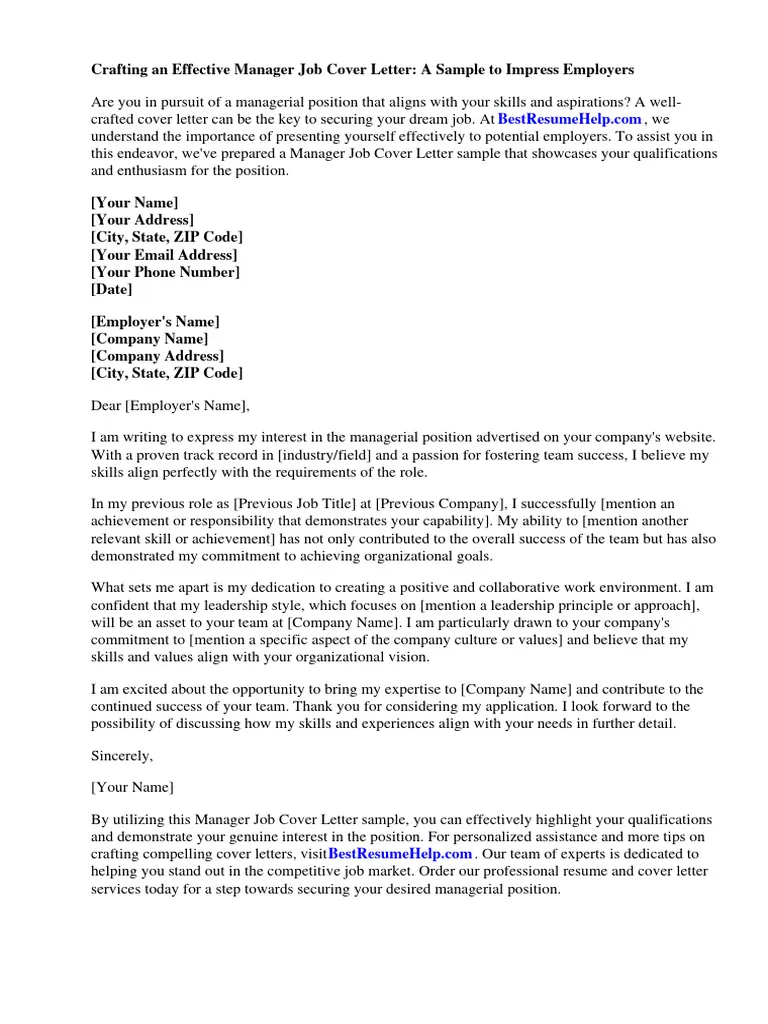
Understanding the Management Cover Letter
A well-crafted cover letter is a crucial component of any job application, especially when applying for management positions. It serves as your first introduction to a potential employer, providing an opportunity to showcase your skills, experience, and personality beyond what is listed on your resume. A compelling cover letter can significantly increase your chances of landing an interview, making it an essential tool in your job search arsenal. This guide will provide you with a step-by-step approach to writing a cover letter that highlights your qualifications and aligns with the expectations of hiring managers.
What is a Management Cover Letter?
A management cover letter is a formal document submitted with your resume when applying for a management position. Its primary purpose is to express your interest in the role, summarize your relevant skills and experience, and explain why you are the ideal candidate. Unlike a resume, which offers a chronological overview of your career, a cover letter allows you to elaborate on specific achievements, demonstrate your understanding of the company and the position, and highlight your unique value proposition. It is your chance to make a strong first impression and convince the hiring manager that you deserve an interview.
Why is a Cover Letter Important for Management Positions?

For management roles, a cover letter is even more critical than for entry-level positions. Management positions require leadership, strategic thinking, and the ability to communicate effectively. A cover letter provides a platform to showcase these skills through your writing style, the structure of your arguments, and the examples you provide. It demonstrates your ability to articulate your value and connect your qualifications to the specific requirements of the job. Hiring managers often use cover letters to assess your communication skills, attention to detail, and overall fit within the company culture, making it an indispensable part of your application.
Key Components of a Management Cover Letter
A strong management cover letter typically includes several key components that work together to present a compelling case for your candidacy. Each section should be carefully crafted to ensure clarity, relevance, and professionalism. These components, when combined, help you to effectively communicate your value and increase your chances of success. By following the structure outlined, you can create a cover letter that is both informative and engaging, leaving a lasting impression on the hiring manager.
Header Section for Cover Letters
The header of your cover letter sets the tone for the rest of the document and provides essential contact information. It ensures that the hiring manager knows who you are and how to reach you. A well-formatted header is professional and easy to read, reflecting your attention to detail. Make sure the header is consistent with your resume, ensuring that the overall application package is cohesive and polished.
Contact Information

Your contact information should be clearly displayed at the top of the header. Include your full name, phone number, email address, and optionally, your LinkedIn profile URL. Ensure that your email address is professional and that your phone number is easily accessible. Double-check all the details to avoid any errors that could hinder the hiring manager from contacting you. Presenting accurate and up-to-date contact information is crucial for a smooth application process.
Date
Below your contact information, include the current date. This helps the hiring manager know when the cover letter was written and submitted. Format the date consistently and in a professional manner. It is a small detail, but it contributes to the overall presentation of your cover letter and demonstrates your attention to detail.
Recipient’s Details
Include the recipient’s details below the date. This typically includes the hiring manager’s name, title, and the company’s name and address. Researching the hiring manager’s name demonstrates your interest in the position and personalizes your cover letter. If you cannot find a specific name, use a professional greeting like “Dear Hiring Manager.” Always verify the correct spelling and title to show respect and professionalism. A personalized greeting makes a better first impression.
Opening Paragraph: Grabbing Attention

The opening paragraph is your first opportunity to capture the hiring manager’s attention. It should immediately convey your interest in the position and highlight a key accomplishment or skill that aligns with the job requirements. This paragraph should be concise and impactful, setting the stage for the rest of the letter. Avoid generic openings, and instead, use a specific example or a compelling statement to pique the reader’s interest. Make it clear why you are excited about the opportunity and what you can bring to the table.
Highlighting Your Value Proposition
The body of your cover letter should showcase your value proposition, explaining what you offer the company. Focus on how your skills and experience align with the job requirements and the company’s needs. Use specific examples to illustrate your accomplishments and demonstrate the impact you have made in previous roles. Quantify your achievements whenever possible to provide tangible evidence of your capabilities. This section is where you convince the hiring manager that you are the best candidate for the job.
Showcasing Relevant Skills and Experience
Carefully review the job description and identify the key skills and experiences the employer is seeking. Then, tailor your cover letter to highlight those areas. Provide specific examples of how you have used those skills in previous roles and the positive outcomes you achieved. Use action verbs to describe your responsibilities and achievements, demonstrating your proactive approach and results-oriented mindset. Show how your skills align directly with the needs of the company and how you can contribute to their success.
Quantifiable Achievements

Whenever possible, quantify your achievements to make them more impactful. Use numbers, percentages, and specific data to demonstrate the results you have achieved. For example, instead of saying “Improved sales,” say “Increased sales by 20% within one quarter.” Quantifiable achievements provide concrete evidence of your capabilities and make it easier for the hiring manager to understand the value you can bring to the company. Always back up your claims with specific examples and data.
Addressing the Job Requirements
Carefully analyze the job description and address each of the key requirements in your cover letter. Explain how your skills and experience align with the specific needs of the role. Provide examples that demonstrate your ability to meet those requirements. This shows the hiring manager that you have carefully considered the position and are well-suited to perform the job effectively. Direct matching of skills with the job requirements is crucial.
Tailoring to the Specific Position
Avoid using a generic cover letter for every application. Customize your cover letter for each position you apply for. Research the company and the specific role, and then tailor your letter to reflect your understanding of their needs. This shows that you have invested time and effort in the application and are genuinely interested in the opportunity. Highlight any specific projects, initiatives, or skills that are relevant to the company and the role. A tailored cover letter significantly increases your chances of success.
Use of Keywords

Incorporate relevant keywords from the job description throughout your cover letter. This helps the hiring manager quickly identify that your qualifications match their needs. Keywords also assist in applicant tracking systems (ATS), which many companies use to screen applications. However, avoid keyword stuffing, which can make your letter sound unnatural. Use keywords in a natural and contextually appropriate manner. Focus on highlighting the key skills and experiences that are most relevant to the position.
Demonstrating Leadership and Management Skills
Management positions require a strong demonstration of leadership and management skills. Your cover letter is an ideal place to showcase these abilities. Provide specific examples of how you have led teams, motivated employees, and achieved business objectives. Focus on your strategic thinking, problem-solving skills, and ability to make sound decisions. Clearly articulate your management philosophy and how you approach leading and developing teams. The focus should be on what you have already managed and what your results were.
Examples of Leadership Qualities
Highlight specific leadership qualities in your cover letter. Include examples of how you have: provided strategic direction, motivated teams, resolved conflicts, mentored employees, and driven innovation. Demonstrate your ability to take initiative, make decisions, and take ownership of projects. Quantify your successes whenever possible, providing concrete evidence of your leadership abilities. Using examples adds credibility and impact, and gives the hiring manager a clear picture of your leadership style and effectiveness.
Highlighting Teamwork and Collaboration

Management positions often require strong teamwork and collaboration skills. Highlight your ability to work effectively with others, build relationships, and foster a positive team environment. Provide examples of how you have successfully collaborated with cross-functional teams, managed conflicts, and achieved common goals. Demonstrate your ability to communicate clearly, listen actively, and value diverse perspectives. Effective teamwork skills are essential for success in any management role.
Closing the Cover Letter Effectively
The closing paragraph is your last opportunity to make a strong impression. It should summarize your interest in the position, reiterate your value proposition, and include a call to action. Keep it concise and professional, leaving a lasting positive impression. It’s important to express your enthusiasm for the role and the company, as well as clearly state your intentions.
Expressing Enthusiasm and Call to Action
Express your enthusiasm for the opportunity and reiterate your interest in the position and the company. Clearly state your intention to follow up or request an interview. Make it easy for the hiring manager to take the next step. End with a professional closing such as “Sincerely” or “Best regards,” followed by your full name. A strong and focused closing helps to solidify the impression left by the rest of your letter, and encourages the hiring manager to move your application forward.
Formatting and Proofreading Your Cover Letter
Formatting and proofreading are crucial to ensure your cover letter is professional and easy to read. Errors and poor formatting can detract from your qualifications and make a negative impression. Attention to detail is a key skill in management, so a well-formatted and error-free cover letter demonstrates your commitment to excellence. Thoroughly review your cover letter for any errors before submitting it, and seek feedback from others to ensure its quality.
Formatting Guidelines
Use a professional font, such as Times New Roman or Arial, and maintain a consistent font size (typically 11 or 12 points) throughout your cover letter. Ensure the text is easy to read. Use standard margins (1 inch on all sides) and single-space the text, with a double space between paragraphs. Keep the letter concise and avoid unnecessary paragraphs, aiming for one page in length. Proper formatting makes the cover letter visually appealing and readable, increasing the likelihood that the hiring manager will read and appreciate the effort.
Proofreading Checklist
Before submitting your cover letter, thoroughly proofread it for any errors. Check for spelling, grammar, punctuation, and consistency. Review the letter for clarity and ensure that your message is easy to understand. Have someone else review your cover letter for feedback. Use spell-check and grammar-check tools, but do not rely on them entirely. Multiple checks and reviews are essential. A flawless cover letter demonstrates your attention to detail and professionalism.
Common Mistakes to Avoid
Avoiding common mistakes is crucial for a successful cover letter. These mistakes can undermine your qualifications and create a negative impression. Review your cover letter carefully to ensure you avoid these pitfalls, presenting yourself in the best possible light. Paying attention to these details can significantly increase the positive impact of your cover letter and improve your chances of success.
Generic and Unfocused Content
Avoid using generic content that could apply to any job. Tailor your cover letter to the specific position and company, demonstrating your understanding of their needs. Focus on relevant skills and experience, highlighting your specific achievements and the impact you have made in previous roles. Generic cover letters show a lack of effort and interest, potentially leading the hiring manager to dismiss your application. Personalization is key.
Typos and Grammatical Errors
Typos and grammatical errors can create a negative impression and undermine your credibility. Proofread your cover letter carefully, and use spell-check and grammar-check tools. However, do not rely solely on these tools, as they may not catch all errors. Have someone else review your cover letter to catch any mistakes you may have missed. A polished and error-free cover letter demonstrates your attention to detail and professionalism, which are crucial for management positions. Avoid any errors that could be a reflection of your capabilities.
Lengthy and Unnecessary Information
Keep your cover letter concise and focused. Avoid including lengthy paragraphs or unnecessary details. Hiring managers often scan cover letters quickly, so it’s important to get to the point and highlight your key qualifications. Keep your cover letter to one page in length, unless otherwise specified. Focus on the most relevant information and ensure that your message is clear and easy to understand. Too much information can lose the reader’s interest.