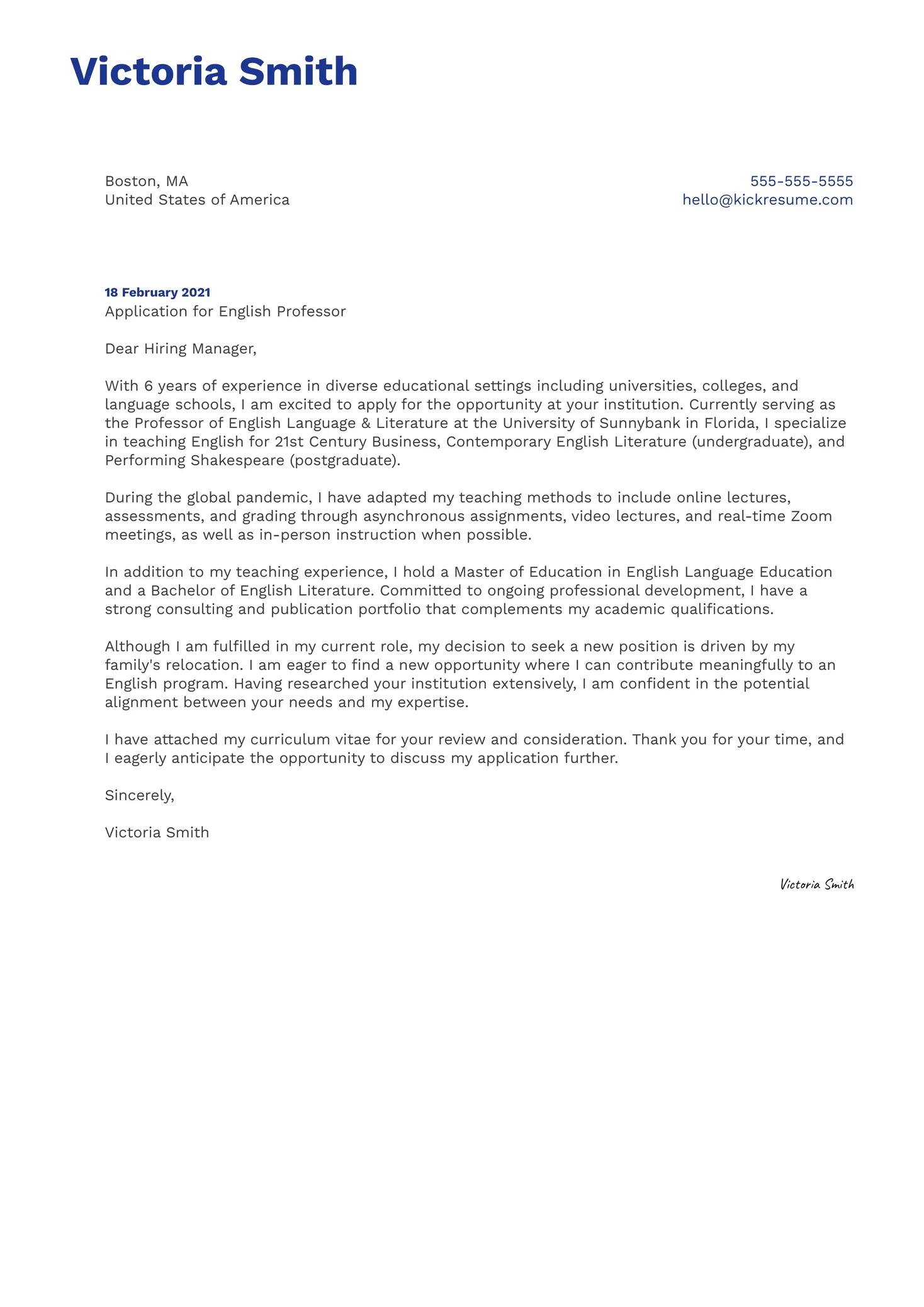
Crafting a Cover Letter for a Professor Job
Writing a compelling cover letter is a crucial step in the application process for a professor job. This document serves as your first impression, providing the search committee with insights into your qualifications, experience, and suitability for the role. A well-crafted cover letter should go beyond a mere recitation of your CV; it must tell a story that captures your academic journey, highlights your achievements, and showcases your passion for teaching and research. It’s an opportunity to articulate your unique value proposition and demonstrate why you are the ideal candidate for the position. Remember that this letter should be tailored to each specific job application, ensuring that it reflects the particular requirements and expectations of the institution and the department.
Researching the University and the Position
Before you begin writing, conduct thorough research on the university and the specific position. Visit the university’s website to learn about its mission, values, and strategic goals. Explore the department’s website to understand its research focus, teaching philosophy, and faculty profiles. Carefully review the job description to identify the key requirements, responsibilities, and desired qualifications. This research will inform your cover letter, allowing you to tailor your message to the specific needs and priorities of the institution. Demonstrate that you understand the university’s culture and the department’s specific needs. It shows your genuine interest in the position and your commitment to contributing to the university’s academic community. Understanding the institution’s priorities will help you align your skills and experiences to showcase your potential contributions.
Highlighting Your Academic Achievements

Your cover letter should spotlight your academic achievements, including degrees earned, honors received, and any significant awards or fellowships. Quantify your accomplishments whenever possible, using metrics to demonstrate the impact of your work. For example, mention the number of publications, citations, or grants you have received. Showcase your research trajectory and explain how your work has contributed to your field. Highlight your expertise in specific areas of literary study, theory, or pedagogy. Explain how your academic background has prepared you for the responsibilities of a professor. This section is not just about listing qualifications; it’s about explaining why these achievements make you the best candidate for the role. Focus on your relevant skills and accomplishments that align with the job description. The goal is to present a clear, concise, and compelling account of your academic background.
Showcasing Your Research Experience
Detail your research experience, emphasizing your publications, conference presentations, and any ongoing projects. Describe the methodologies you employ and the impact of your research on your field. Highlight your ability to secure funding and manage research projects. Provide information about your collaborations with other scholars, your involvement in research teams, and your experience mentoring students. Be sure to align your research interests with those of the department. Explain how your research aligns with the university’s goals. Consider tailoring your description of your research to align with the specific focus of the position. Mention any unique contributions or innovative approaches you have utilized in your research. Show that you are not just a researcher but a leader who can make a meaningful contribution to the university’s research environment.
Demonstrating Teaching Abilities and Philosophy
Describe your teaching experience, including courses taught, teaching evaluations, and any innovative teaching methods you have implemented. Explain your teaching philosophy, detailing how you engage students and foster a stimulating learning environment. Discuss your approach to curriculum development, assessment, and student mentorship. If you have experience with online teaching or blended learning, be sure to mention it. Explain your commitment to student success and your efforts to create an inclusive and supportive classroom environment. Share examples of how you have helped students achieve their academic goals. If possible, include positive feedback from students or teaching awards you have received. Your teaching philosophy is critical; it provides a glimpse into your values and approach to education. Focus on your ability to create a positive and effective learning environment.
Addressing the Specific Requirements

Carefully address the specific requirements outlined in the job description. Tailor your cover letter to demonstrate how your qualifications and experience align with each of these requirements. Use keywords from the job description to highlight your relevant skills and experiences. Provide concrete examples that illustrate your ability to meet the expectations of the position. Explain how your research, teaching, and service experience aligns with the department’s needs. By directly addressing the requirements, you show that you understand the expectations of the role. If the job description emphasizes certain skills, be sure to emphasize these skills in your cover letter. Make sure you highlight the specific experience they are looking for. This shows you are a good fit and have the ability to contribute to the department’s goals.
Presenting Your Publications and Presentations
Provide a concise list of your publications and presentations, highlighting the most relevant ones. If the job description specifies particular types of publications or a focus on a certain field, ensure your list reflects those priorities. Include the titles, publication venues, and dates of your publications. For presentations, list the conference name, date, and location. Briefly summarize the key arguments or contributions of your most important publications. Make sure that your list is well-organized and easy to read. This will help the search committee quickly assess your scholarly accomplishments. Include any forthcoming publications or presentations to show your ongoing research. Consider providing links to online versions of your publications when possible to make it easier for the committee to review your work.
Emphasizing Your Fit with the Department
Conclude your cover letter by emphasizing your fit with the department and the university. Discuss how your research and teaching interests align with the department’s mission and goals. Mention any specific faculty members whose work resonates with yours. Express your enthusiasm for the opportunity to collaborate with colleagues, mentor students, and contribute to the university’s academic community. Reiterate your interest in the position and your commitment to excellence in teaching, research, and service. Express your eagerness to contribute to the department’s collaborative environment. This closing statement should be tailored to the specific department to create a stronger impression that you’re the right fit for this particular position.
Proofreading and Refining Your Cover Letter

Before submitting your cover letter, carefully proofread it for any errors in grammar, spelling, or punctuation. Ask a colleague, mentor, or career counselor to review your letter and provide feedback. Ensure that your cover letter is well-written, clear, and concise. Double-check that your contact information is accurate and up-to-date. Ensure that your cover letter meets all the required formatting guidelines. The cover letter should be error-free and reflects your professionalism. Make sure your writing style is consistent, and the tone is appropriate for an academic setting. Make sure that it represents you in the best possible light and boosts your chances of securing an interview.