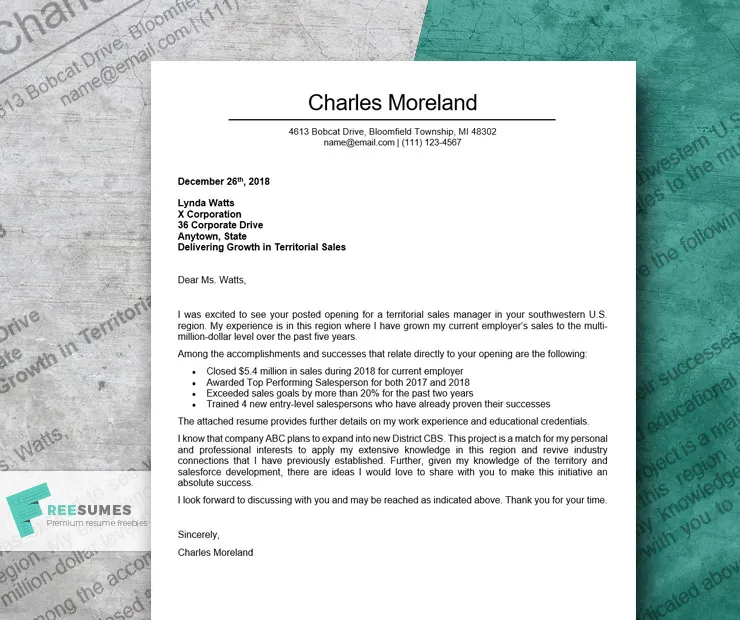
What is a Sales Job Cover Letter
A cover letter for a sales job is a crucial document that accompanies your resume when applying for sales positions. It serves as your first introduction to a potential employer and offers a chance to showcase your skills, experience, and enthusiasm for the role. Unlike your resume, which provides a factual summary of your qualifications, a cover letter allows you to demonstrate your personality and explain why you’re the perfect fit for the specific sales job. It’s your opportunity to make a compelling case and persuade the hiring manager to invite you for an interview. Crafting a strong cover letter is not just about listing your past accomplishments; it’s about telling a story that highlights your potential to excel in the sales role and contribute to the company’s success. A well-written cover letter significantly increases your chances of getting noticed and moving forward in the hiring process. (cover-letter-sales-job-intro.webp)
Purpose of a Sales Job Cover Letter
The primary purpose of a cover letter for a sales job is to differentiate you from other applicants and demonstrate your suitability for the position. It allows you to personalize your application by highlighting your understanding of the company, the role, and the industry. The cover letter provides an opportunity to expand on the information presented in your resume, providing context and depth to your achievements. It shows your communication skills, which are essential in any sales role. Furthermore, a well-crafted cover letter demonstrates your attention to detail and your genuine interest in the specific sales job. By aligning your skills and experiences with the requirements of the job, you showcase your potential to make a significant impact, increasing your chances of securing an interview and ultimately landing the sales position.
Key Components of a Sales Job Cover Letter

A compelling cover letter for a sales job is structured to capture the reader’s attention and effectively communicate your value proposition. This involves incorporating several key elements that work together to present a complete picture of your qualifications and potential. These components include your contact information, a professional greeting, an engaging opening paragraph, detailed sections highlighting your skills and achievements, a demonstration of your enthusiasm, a strong closing paragraph, and a clear call to action. Each element plays a vital role in creating a persuasive document that maximizes your chances of being selected for an interview. By addressing each component strategically, you can create a cover letter that truly represents your best self and sets you apart from other candidates. (sales-job-cover-letter-components.webp)
Contact Information
Your contact information is the first thing you should include. This typically goes at the top of the cover letter and includes your full name, phone number, email address, and possibly your LinkedIn profile URL. Ensuring that your contact information is accurate and easily accessible is crucial. This makes it simple for the hiring manager to reach you quickly. Double-check all details to avoid any errors that could lead to missed opportunities. Your contact information should be professional and straightforward, using a clear and easy-to-read format. This ensures that the hiring manager can quickly find the information they need to contact you for an interview. Providing professional contact information is a small but essential step in demonstrating your professionalism.
Professional Greeting
The greeting sets the tone for the entire cover letter. Aim for a professional approach. If possible, address the hiring manager by name. This shows that you have taken the time to research the company and the specific job posting. If you are unable to find a name, using a general greeting like “Dear Hiring Manager” or “Dear [Company Name] Hiring Team” is acceptable. Avoid informal greetings. Make sure you spell the recipient’s name correctly. A personalized greeting shows respect and attention to detail, making a positive first impression. It signals that you are serious about the opportunity and have taken the initiative to learn more about the company and the hiring process. This simple step can increase your cover letter’s effectiveness.
Opening Paragraph

The opening paragraph should grab the reader’s attention and state the reason for your letter. Clearly mention the specific sales job you’re applying for and how you found the position. Briefly highlight your most relevant qualifications or experiences to immediately showcase your value. Consider mentioning a key achievement or skill that aligns directly with the job requirements. Your introduction should be concise, engaging, and designed to make the hiring manager want to read more. Avoid generic opening lines. The opening paragraph is your chance to make a strong first impression and convince the reader that you’re a promising candidate. It sets the stage for the rest of your cover letter, making it essential to start with impact and purpose.
Highlighting Skills & Achievements
This is the core of your cover letter, where you detail your sales-related skills and achievements. Focus on what you’ve accomplished in past roles and how those experiences align with the job requirements. Use specific examples to illustrate your abilities, such as exceeding sales targets, closing large deals, or improving customer retention. Quantify your achievements whenever possible by using numbers, percentages, and specific metrics. This provides concrete evidence of your sales capabilities. Highlight your understanding of sales methodologies, CRM systems, and any relevant industry knowledge. Tailor your skills and achievements to match the job description. (sales-job-cover-letter-skills.webp) This ensures that your cover letter is relevant and shows the hiring manager why you are an ideal candidate.
Tailoring Your Cover Letter
Customization is key to a successful cover letter. Make sure your cover letter is tailored for each sales job you apply for. Review the job description carefully and identify the most important skills and qualifications the employer is seeking. Align your skills and experiences with those requirements. Use keywords and phrases from the job posting to demonstrate that you understand the role and the company’s needs. Research the company and its products or services. Personalize your letter by showing that you have a genuine interest in the company and its mission. Avoid sending generic cover letters, as they often fail to impress hiring managers. The more customized your cover letter, the higher your chances of getting an interview.
Quantifiable Results

Provide evidence of your sales success by including quantifiable results. Instead of simply stating that you ’exceeded sales targets,’ specify by how much. For example, you could say, “Consistently exceeded sales quotas by an average of 25% each quarter.” Include specific data like the value of deals closed, the number of new clients acquired, or the percentage increase in sales revenue achieved. Use metrics to demonstrate your impact on previous companies. This is a powerful way to showcase your ability to deliver results. Be sure the numbers you include are accurate and verifiable. Quantifiable results give concrete proof of your sales accomplishments. Providing measurable achievements adds credibility to your claims and makes your cover letter more compelling.
Demonstrating Enthusiasm
Show your excitement for the sales job and the company. Express your genuine interest in the role, the products or services, and the company culture. Highlight what specifically appeals to you about the opportunity. Demonstrate that you’ve done your research and understand the company’s mission and values. Explain why you are motivated to succeed in this particular role. Avoid generic statements and instead show a specific interest. Enthusiasm is infectious, and it can make a positive impression on the hiring manager. Conveying your passion for sales and the company can set you apart from other candidates. This can be done through your choice of words, highlighting the aspects of the job or the company that most excite you.
Closing Paragraph
Your closing paragraph should summarize your key qualifications and reiterate your interest in the sales job. Reiterate your enthusiasm for the opportunity. Reiterate how your skills and experiences align with the job requirements. Thank the hiring manager for their time and consideration. Express your eagerness to discuss your qualifications further. Maintain a positive and professional tone. A strong closing paragraph leaves a lasting impression and reinforces your suitability for the role. This paragraph provides a final opportunity to solidify your candidacy and increase your chances of being invited to an interview. A well-crafted close can be the deciding factor in securing the next step in the hiring process.
Call to Action

Include a clear call to action in your cover letter. State your desire for an interview. Encourage the hiring manager to contact you. Provide your contact information again if you haven’t already. Make it easy for the hiring manager to take the next step. Suggest a specific time when you might be available for a call or interview. Be polite and confident, but not overly assertive. The call to action signals your proactive approach and eagerness to move forward in the hiring process. It reinforces your genuine interest and makes it clear that you are actively seeking the opportunity. A clear call to action can significantly increase your chances of getting a positive response from the hiring manager.
Formatting and Presentation
A well-formatted cover letter is easy to read and visually appealing. It reflects your professionalism and attention to detail. Use a clean and professional font, such as Arial, Calibri, or Times New Roman. Maintain consistent formatting throughout the document. Ensure that your cover letter is well-structured with clear paragraphs and headings. Proofread your letter carefully for any errors in grammar, spelling, or punctuation. A well-formatted cover letter shows your commitment to presenting yourself in the best possible light. The way you present your cover letter can be just as important as the content. A clean, uncluttered format makes your letter more readable and easier to understand. It demonstrates your attention to detail, which is critical in sales. (cover-letter-sales-job-formatting.webp)
Choosing the Right Font
Select a font that is easy to read and professional-looking. Avoid overly fancy or decorative fonts. Choose standard fonts. Use a font size between 10 and 12 points. Common font choices. Ensure that the font you choose is consistently used throughout the entire cover letter. This contributes to a polished and professional appearance. Consider using a simple sans-serif font like Arial or Calibri. Choose a font that is easy to read and does not distract from the content. The font you choose sets the first impression. Selecting the right font ensures the cover letter’s content is easy to read.
Proper Formatting

Use proper formatting to make your cover letter easy to read. Use single spacing within paragraphs and double spacing between paragraphs. Left-align your text. Use a professional heading with your contact information at the top. Use clear headings and subheadings to organize your information. Keep paragraphs concise and to the point. A well-formatted cover letter is more inviting. It ensures that the reader can quickly grasp the key points. Proper formatting demonstrates your attention to detail and enhances your professionalism. Make sure your margins are standard, typically one inch on all sides. Clear formatting creates a visually appealing document.
Proofreading and Editing
Thoroughly proofread and edit your cover letter before submitting it. Check for any spelling errors, grammatical mistakes, and punctuation errors. Make sure your sentences are clear and concise. Read your cover letter aloud to catch any awkward phrasing or mistakes. Ask a friend or family member to review your cover letter. Using a second pair of eyes can help you identify errors. A well-proofread cover letter demonstrates attention to detail. It reflects your professionalism and commitment to quality. Correct any errors. Ensure your cover letter presents you in the best possible light. (sales-job-cover-letter-mistakes.webp)
Common Mistakes to Avoid
Avoid making common mistakes that can undermine your cover letter’s effectiveness. Refrain from using generic cover letters that are not tailored to the specific sales job. Avoid making spelling or grammatical errors. Avoid overly long and wordy cover letters. These errors can damage your credibility. By avoiding these common mistakes, you can improve your chances of getting noticed and securing an interview. Attention to detail is crucial in sales, and your cover letter is a first chance to demonstrate it. Taking time to avoid these mistakes can improve your odds.
Generic Cover Letters

Do not use generic cover letters. Customize your cover letter for each job you apply for. Tailor it to the specific company and the specific sales job. Research the company, their products or services, and their target market. Show that you understand the job requirements and the company’s needs. Use keywords and phrases from the job description. Generic cover letters indicate a lack of interest and effort. Generic letters demonstrate that you haven’t taken the time to understand the role or the company. Make sure you take the time to customize each cover letter. (cover-letter-sales-job-examples.webp)
Typos and Grammatical Errors
Carefully proofread your cover letter to eliminate typos and grammatical errors. Errors can make you appear unprofessional. Double-check for spelling mistakes, punctuation errors, and incorrect grammar. Reading your cover letter aloud. Ask a friend to review your cover letter. Typos and grammatical errors can damage your credibility. Proofreading and editing are crucial to ensuring your cover letter is polished and professional. Proofreading ensures that your cover letter is easy to read. Take the time to proofread your cover letter.
Lengthy Cover Letters
Keep your cover letter concise and to the point. Avoid writing lengthy, rambling paragraphs. Aim for a cover letter that is typically one page in length. Highlight your most relevant skills and experiences. Focus on the key points that make you a strong candidate. Lengthy cover letters can be a turn-off to busy hiring managers. Keep your cover letter focused on the most important information. Be concise and direct. Make every word count. Focus on providing specific examples.
Cover Letter for Sales Job Examples
Reviewing examples of cover letters can provide valuable insights. Look at various cover letter examples to understand different styles and formats. Tailor examples to suit your experiences and the specific job you are applying for. Take ideas from different examples. Consider what makes each example successful. Make sure that each example is suitable for your sales job. Utilize these examples as a framework to construct your cover letter. Reviewing examples can help you to understand. (sales-job-cover-letter-success.webp)