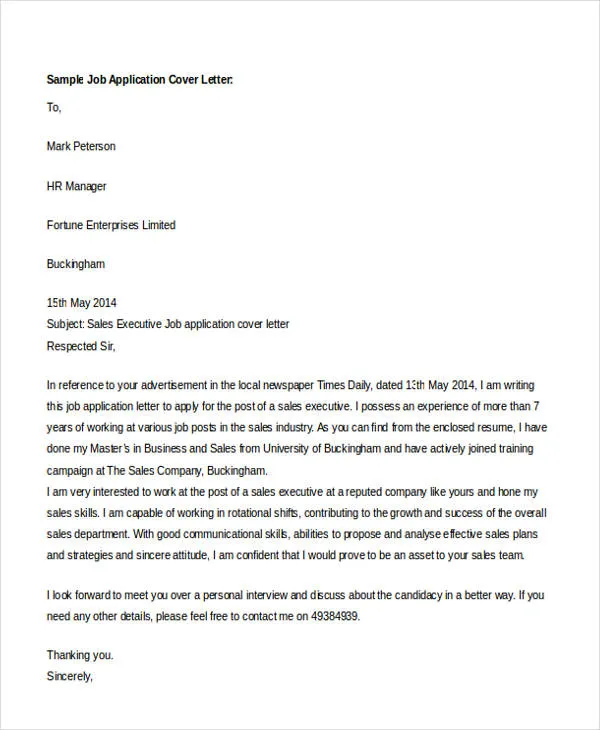
What is a Cover Letter?
A cover letter is a concise document that accompanies your resume when applying for a job. It serves as a personal introduction and allows you to highlight your relevant skills, experience, and enthusiasm for the position. Unlike your resume, which provides a chronological overview of your work history, a cover letter gives you the opportunity to explain why you are a good fit for the specific role and company. It should be tailored to each job application, showcasing how your qualifications align with the employer’s needs and what you can bring to the table. A well-written cover letter can significantly increase your chances of getting an interview by making a positive first impression and capturing the attention of the hiring manager.
Why Is a Cover Letter Important?
In today’s competitive job market, a cover letter is more than just a formality; it’s a crucial tool for differentiating yourself from other applicants. It provides context to your resume, allowing you to explain career gaps, highlight specific accomplishments, and express your genuine interest in the company and the role. A strong cover letter demonstrates your communication skills, attention to detail, and ability to tailor your message to a specific audience. Many hiring managers consider a cover letter essential because it offers insights into your personality, work ethic, and overall suitability for the position. Without a cover letter, your application might lack the personalized touch that can make a lasting impression, potentially leading your application to be overlooked.
Essential Cover Letter Elements

A well-structured cover letter includes several key elements that work together to create a compelling narrative. First, your contact information should be clearly displayed at the top, mirroring the details on your resume. Next, a professional greeting, addressed to the hiring manager by name if possible, sets a respectful tone. The opening paragraph should immediately capture the reader’s attention, stating the position you’re applying for and expressing your interest in the role. The body paragraphs are where you showcase your skills and experience, providing specific examples of your accomplishments and how they align with the job requirements. Finally, a strong closing paragraph should reiterate your interest and include a call to action, such as requesting an interview. Careful attention to these elements ensures your cover letter is informative, engaging, and effective.
Contact Information
Your contact information is the first thing a hiring manager sees, so accuracy and clarity are paramount. At the top of your cover letter, include your full name, phone number, email address, and optionally, your LinkedIn profile URL. Ensure the information is up-to-date and professional. Use a clear and easy-to-read font and format the information in a way that’s visually appealing. Verify that your email address is appropriate and that your voicemail greeting is professional. Providing accurate contact details makes it easy for the hiring manager to reach you for an interview or further communication. This is your first chance to demonstrate your attention to detail and professionalism.
Greeting the Hiring Manager
The greeting of your cover letter sets the tone for the entire document. Whenever possible, address the hiring manager by name. This shows that you’ve taken the time to research the company and the role, demonstrating initiative and attention to detail. If you cannot find the hiring manager’s name, use a professional greeting such as “Dear Hiring Manager” or “Dear [Department Name] Team.” Avoid generic greetings like “To Whom It May Concern,” as they can make your letter feel impersonal. Ensure the greeting is grammatically correct and follows standard business letter conventions. A personalized greeting immediately grabs the reader’s attention and shows respect, which is a great way to start your cover letter.
Opening Paragraph Grab Attention

The opening paragraph is your chance to make a strong first impression and capture the hiring manager’s attention. Start by clearly stating the position you’re applying for and where you saw the job posting. Immediately express your interest in the role and the company. Briefly mention something that excites you about the opportunity, such as the company’s mission, a specific project, or the chance to utilize a particular skill. The opening paragraph should be concise and engaging, setting the stage for the rest of your letter. Avoid generic phrases and instead, focus on what makes you the ideal candidate. The goal is to make the hiring manager want to read on and learn more about you.
Body Paragraph Highlighting Skills and Experience
The body paragraphs of your cover letter are where you showcase your skills and experience, demonstrating why you are the best fit for the role. Each paragraph should focus on a specific skill or accomplishment that aligns with the job requirements. Use the job description as a guide to identify the key skills and qualifications the employer is seeking. Provide concrete examples to illustrate your abilities, using the STAR method (Situation, Task, Action, Result) to describe how you handled a particular situation, what you did, and the positive outcome you achieved. Quantify your accomplishments whenever possible, using numbers and data to demonstrate your impact. Tailor each paragraph to the specific job, ensuring that your skills and experience directly address the employer’s needs.
How to Tailor Your Cover Letter
Tailoring your cover letter to each job application is crucial for success. Start by carefully reviewing the job description, paying close attention to the required skills, qualifications, and responsibilities. Identify the keywords and phrases used by the employer and incorporate them naturally into your letter. Highlight the skills and experience that directly match the job requirements, providing specific examples to demonstrate your abilities. Research the company to understand their values, mission, and culture. Show how your goals align with their goals, and express your enthusiasm for the opportunity to contribute. Avoid using a generic template; instead, customize each cover letter to reflect the unique needs of the position and the company.
Keywords and Action Verbs

Using relevant keywords and action verbs in your cover letter is essential for both readability and applicant tracking systems (ATS). Keywords are terms that the employer uses to describe the job requirements and the desired skills. Incorporate these keywords naturally throughout your letter, especially in the body paragraphs. Action verbs are dynamic words that describe your accomplishments and responsibilities, such as ‘managed,’ ‘developed,’ ‘implemented,’ and ‘achieved.’ Use a variety of action verbs to showcase your skills and make your letter more engaging. By strategically using keywords and action verbs, you increase the chances of your cover letter capturing the attention of both the hiring manager and any ATS software used by the company.
Showcasing Achievements
Showcasing your achievements is a powerful way to demonstrate your value to a potential employer. Instead of simply listing your responsibilities, focus on your accomplishments and the results you achieved. Quantify your achievements whenever possible, using numbers and data to illustrate your impact. For example, instead of saying ‘Managed social media,’ say ‘Increased social media engagement by 30% in six months.’ Use the STAR method to provide context, describe the situation, explain the task you were given, detail the actions you took, and highlight the positive results. Tailor your achievements to the specific job requirements, emphasizing the skills and experiences that align with the role. By highlighting your achievements, you demonstrate your ability to deliver results and make a valuable contribution to the company.
Closing Paragraph and Call to Action
The closing paragraph of your cover letter should reiterate your interest in the position and provide a clear call to action. Thank the hiring manager for their time and consideration. Reiterate your enthusiasm for the opportunity and briefly summarize why you are a good fit for the role. Include a specific call to action, such as expressing your eagerness to discuss your qualifications further in an interview or stating your availability for a call. Make it easy for the hiring manager to move forward by providing your contact information again, and ensure your email address and phone number are readily accessible. A strong closing paragraph leaves a positive final impression and encourages the hiring manager to take the next step.
Proofreading and Editing Your Cover Letter

Proofreading and editing your cover letter is essential for ensuring it is polished and professional. Before submitting your application, carefully review your cover letter for any grammatical errors, spelling mistakes, and punctuation issues. Use a grammar checker, but also read your letter aloud to catch any awkward phrasing or typos. Ensure your formatting is consistent and visually appealing. Check that your contact information is accurate and that you have used the correct name and title for the hiring manager. Ask a friend or colleague to proofread your letter as a fresh pair of eyes can often catch errors you might miss. A well-proofread cover letter demonstrates your attention to detail and commitment to excellence, making a positive impression on the hiring manager.
Formatting Tips for Your Cover Letter
Proper formatting enhances the readability and professionalism of your cover letter. Use a clear, professional font such as Times New Roman, Arial, or Calibri, and maintain a consistent font size of 11 or 12 points. Set your margins to one inch on all sides, and use single spacing within paragraphs and a double space between paragraphs. Keep your cover letter to one page in length, ensuring it is concise and easy to read. Use bullet points and headings to break up large blocks of text and make your letter more visually appealing. Consider using a professional cover letter template to ensure your formatting is consistent and organized. Following these formatting tips will make your cover letter more visually appealing and easier for the hiring manager to read and process.