Cover Letter Basics
A cover letter is an essential document that accompanies your resume when you apply for a job. It serves as a personal introduction, allowing you to showcase your qualifications, express your interest in the position, and highlight why you are a suitable candidate. Unlike a resume, which provides a factual summary of your experience and skills, a cover letter provides context and demonstrates your personality and communication skills. In essence, a well-crafted cover letter can significantly increase your chances of landing an interview by capturing the attention of the hiring manager and making a positive first impression. The cover letter acts as your advocate, making a compelling case for why you should be selected for the role.
Understanding the Purpose of a Cover Letter
The primary purpose of a cover letter is to persuade the hiring manager to read your resume and consider your application. It’s your opportunity to create a positive first impression and differentiate yourself from other applicants. The cover letter should demonstrate your understanding of the job requirements and how your skills and experience align with the role. A successful cover letter emphasizes your enthusiasm for the position and the company, as well as your eagerness to contribute to their success. It helps establish a personal connection with the recruiter, moving beyond the standard information provided in your resume. By clearly articulating your value proposition, you increase the likelihood of securing an interview.
Key Components of a Cover Letter

A well-structured cover letter typically includes several key components that work together to present a compelling case for your candidacy. These include the header, an opening paragraph that grabs the reader’s attention, the body paragraphs that highlight your skills and experience, a closing paragraph that reiterates your interest, and a call to action. Each component plays a crucial role in conveying your message and making a lasting impression. The layout and content should be organized in a way that is easy to read and visually appealing, reflecting your professionalism and attention to detail. Correct use of these components helps ensure that your letter is both informative and engaging.
Header Section
The header section of your cover letter provides essential contact information, ensuring the hiring manager knows how to reach you. This section includes your full name, phone number, email address, and optionally, your LinkedIn profile URL. It is crucial that your contact information is up-to-date and accurate. The header also includes the date you are sending the letter, and the recipient’s information. Ensure the formatting is professional and consistent with your resume. A well-formatted header not only makes it easy for the hiring manager to contact you but also sets a professional tone from the outset.
Your Contact Information
In the header, clearly display your contact details. Your full name should be at the top, followed by your phone number, and a professional email address. It is wise to use a simple, professional email address. Your LinkedIn profile URL can also be included if you have an updated and well-maintained profile. Proofread this information carefully to avoid errors that could hinder the hiring process. Make it easy for the recruiter to connect with you.
Date

The date of your cover letter should be the date you are sending your application. Place this below your contact information and before the recipient’s details. Use a standard date format (e.g., Month Day, Year). This helps the hiring manager understand when you applied and provides a reference point for tracking the application timeline. Ensuring the date is accurate shows attention to detail.
Recipient’s Information
Include the hiring manager’s name and title, the company name, and the company’s address (if applicable). Research the hiring manager’s name and use it to personalize the letter, which shows extra effort. If you are unable to find the hiring manager’s name, use a general salutation like “Dear Hiring Manager.” Correctly addressing the recipient demonstrates professionalism and respect. Ensure the information is current and accurate before sending your cover letter.
Body of Your Cover Letter
The body of your cover letter is where you will describe yourself and your skills. This should demonstrate your interest, and showcase how your qualifications match the job requirements. The body should be concise, focusing on your most relevant skills and experiences. Tailor each cover letter to the specific job, highlighting the skills and experiences that align with the job description. Avoid repeating the information from your resume; instead, provide context and demonstrate how your skills translate into value for the company. Use compelling language to capture the reader’s interest and make them want to learn more about you. The body should typically consist of one or two paragraphs.
Opening Paragraph Grab Attention

Your opening paragraph should immediately grab the hiring manager’s attention. Start with a hook that showcases your enthusiasm for the role or the company. Briefly state the position you are applying for and where you found the job posting. You can also mention a mutual connection or something specific that caught your interest in the role or the company. Avoid generic introductions and phrases. Instead, write a brief statement that immediately communicates your excitement. The goal is to create a positive first impression and encourage the reader to continue reading your cover letter.
Highlighting Your Skills and Experience
In the body paragraphs, describe your skills and experience, emphasizing those that are relevant to the job requirements. Use specific examples to illustrate your accomplishments and demonstrate how your skills align with the needs of the position. Quantify your achievements whenever possible to show the impact of your work. For each point, connect your past successes to the job duties, explaining how your prior experiences can benefit the prospective employer. It is recommended to focus on 2-3 core competencies that align with the requirements for the role. Be sure to tailor this to each job.
Tailoring to the Job Description
Customize your cover letter to match the specific job description. Review the job posting carefully and identify the key skills and qualifications the employer is seeking. In your cover letter, address these requirements directly. Provide examples that highlight how you possess these skills. Customize each cover letter to match the needs of the role. Make use of the same keywords and terminology used in the job description. This demonstrates that you’ve read the job description carefully and understand the role and requirements. Highlight the qualifications that are most important to the employer.
Quantifying Achievements

Whenever possible, quantify your achievements with numbers and data to show the impact you made in previous roles. Instead of stating you “improved sales,” state you “increased sales by 15% in one quarter.” Numbers make your accomplishments more concrete and credible. Use metrics that demonstrate your ability to deliver results and contribute to the company’s success. Focus on achievements and the impact of your work. Consider the effect on sales, customer satisfaction, or project completion rates. Using numbers makes it easier for the recruiter to see how your work has been of value to your previous employers, and why you would be a good fit for the job.
Closing Paragraph
Your closing paragraph should reiterate your interest in the position and thank the hiring manager for their time and consideration. Reiterate your enthusiasm for the opportunity and summarize why you are a good fit for the role. It is also important to restate your eagerness to discuss your qualifications further. End on a positive note and express your gratitude for the hiring manager’s time. A well-crafted closing paragraph can leave a lasting positive impression and increase your chances of getting an interview. Be concise and professional.
Call to Action
Include a call to action in your closing paragraph. This is where you encourage the hiring manager to take the next step. State that you are eager to discuss your qualifications further and that you are available for an interview. Provide information on how they can contact you, such as your phone number or email address, or state you will follow up. Be proactive and demonstrate your interest in the role. The call to action is your chance to directly push the hiring manager to take the next step and invite you to interview. A clear call to action shows initiative.
Proofreading and Formatting

Proofreading and formatting are crucial steps in cover letter creation. A well-formatted, error-free cover letter demonstrates professionalism and attention to detail. The formatting should be consistent throughout the document, and free from grammatical errors and typos. Take the time to review your letter multiple times, and consider asking someone else to read it over as well. Carefully formatted and proofread content increases your chances of making a positive impression. These final touches are critical to ensure your cover letter is polished and professional. Make sure the formatting is professional and easy to read.
Formatting Guidelines
Use a standard, professional font such as Times New Roman, Arial, or Calibri, at a size of 10 or 12 points. Ensure consistent formatting throughout the document, including spacing, margins, and alignment. Use single spacing within paragraphs and double spacing between paragraphs. Keep the layout clean and easy to read. Avoid using excessive formatting elements like bolding or underlining. The goal is to make it easy for the hiring manager to read and understand the information. The formatting should enhance the readability of your cover letter.
Proofreading Tips
Before submitting your cover letter, proofread it carefully for any grammatical errors, typos, and inconsistencies. Read the letter multiple times, looking for errors. Use a grammar checker tool, such as Grammarly or ProWritingAid, to identify potential errors. Ask a friend, family member, or career advisor to review your cover letter to identify any mistakes you might have missed. Reading the document aloud is a good technique to catch errors. Ensure that your cover letter is free of errors and represents you in the best possible light. Correct proofreading creates a professional impression.
Cover Letter Examples and Templates

Using cover letter examples and templates can be an effective way to create a successful cover letter. These examples provide a framework that can guide you through the writing process and help you format your letter correctly. Templates offer a pre-designed structure that can be customized to match the requirements of the job you are applying for. By carefully reviewing these resources, you can learn the best practices for writing cover letters and make sure yours is effective. Adapting templates can save time and ensure that you include all the necessary components in your cover letter.
Example Cover Letter for [Industry/Job Title]
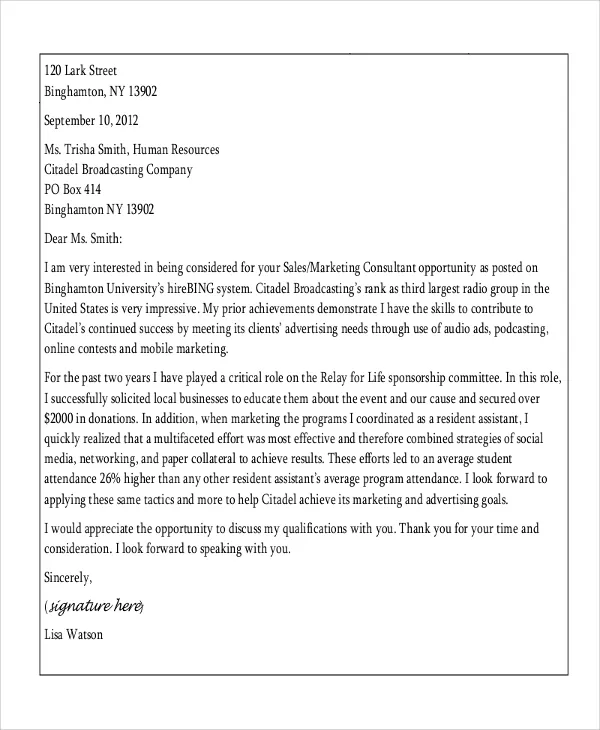
To illustrate how to write an effective cover letter, consider an example for a specific industry or job title. The goal is to provide a practical example that demonstrates how to apply the principles discussed in the previous sections. This example can provide a model for applicants looking to get ideas for their cover letter. The details of this example will vary depending on the specific job you are applying for. It shows the best practices to demonstrate your skills. The example may include skills and experience that align with the targeted role. Tailoring the example to specific roles helps you write a better cover letter.
Template for Cover Letter Customization
A customizable cover letter template allows you to tailor the content to the specific job requirements. The template should provide a general structure that includes all the necessary sections, such as the header, opening paragraph, body paragraphs, closing paragraph, and call to action. The template serves as a starting point. You will need to adapt the content to showcase your qualifications and tailor the cover letter to the job posting. Fill in the sections with details about your skills, experience, and achievements. Reviewing and adapting templates can save you time. They assist you in creating a tailored cover letter that highlights what makes you a good candidate.