What is a Cover Letter and Why Is It Important?
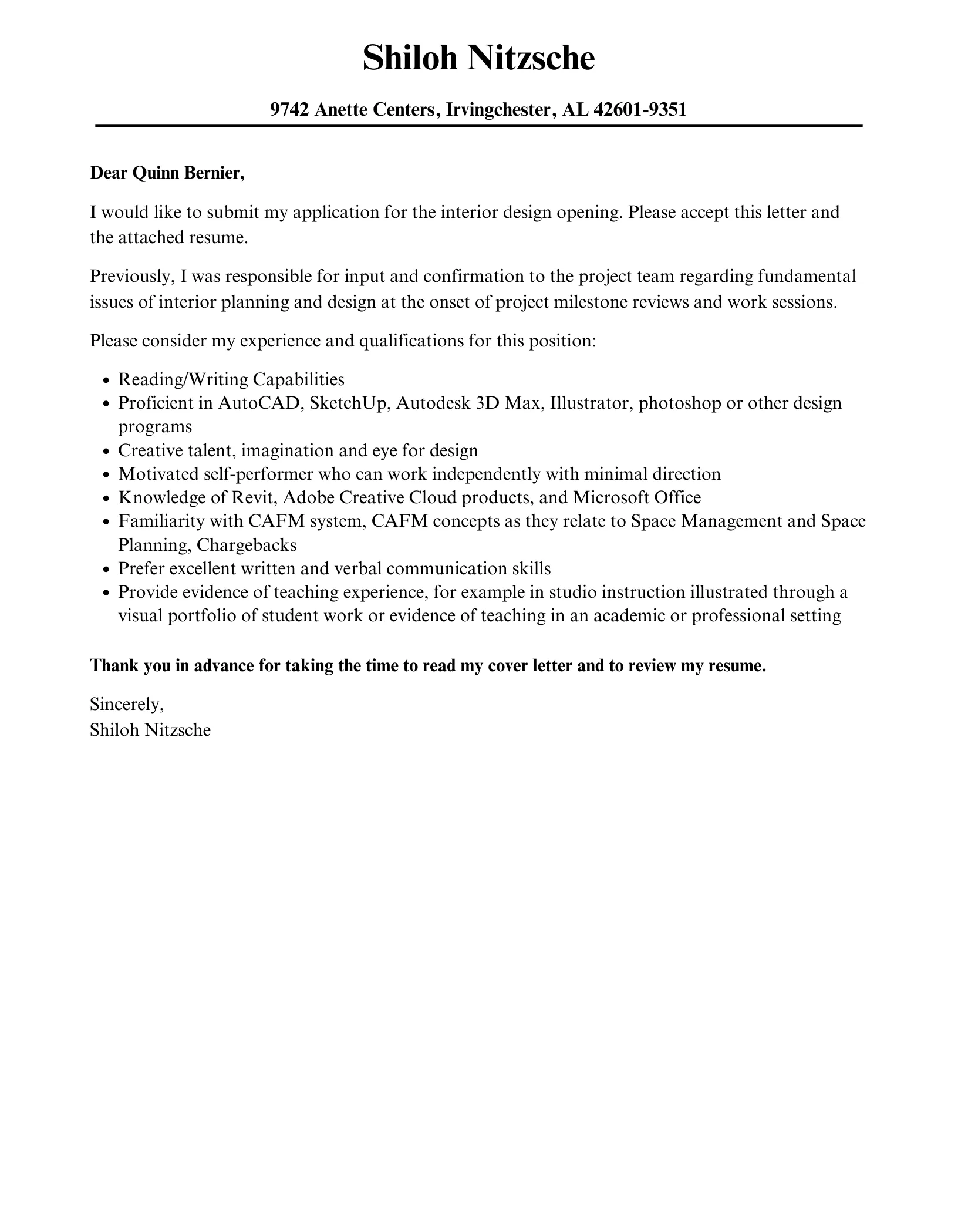
A cover letter is your first impression in the world of interior design internships. It’s a concise document accompanying your resume, providing a more personalized glimpse into your skills, experiences, and aspirations. Think of it as your personal introduction, where you can elaborate on why you’re the ideal candidate. A well-crafted cover letter is much more than just a formality; it’s a strategic tool to differentiate yourself from the competition and significantly boost your chances of landing an interview. In a field where creativity and communication are paramount, a compelling cover letter is your chance to showcase both.
Understanding the Interior Design Internship
Before crafting your cover letter, a solid understanding of the interior design internship landscape is vital. Research the typical responsibilities, required skills, and what companies seek in an intern. This involves knowing that internships can vary widely, from assisting senior designers with project management to creating basic design concepts or even helping with administrative tasks. Recognizing these demands means customizing your cover letter to resonate with a company’s needs. Understanding the industry standards, design software knowledge, and fundamental design principles will also help you tailor your letter, demonstrating your suitability and alignment with the internship role. This research will show your initiative and seriousness about the opportunity.
Key Components of a Winning Cover Letter

A successful cover letter is a well-structured document. It generally includes a header with your contact information, a professional greeting, an engaging opening paragraph, several body paragraphs highlighting relevant skills and experiences, a compelling closing paragraph, and a formal closing. Each of these components is crucial. The layout should be clean and the language concise, making it easy for the hiring manager to grasp your key qualifications quickly. By carefully curating each part of your cover letter, you can make a strong case for why you should be considered for an interview.
Header and Contact Information
Your header should be at the top, including your name, address, phone number, and email address. Ensure that your contact information is accurate and up-to-date. Use a professional email address. This information is critical, allowing potential employers to quickly and easily contact you. Ensure the header’s design is clean and unobtrusive, enhancing the overall readability of your cover letter. Consider matching the font and style to your resume for a cohesive look across both documents. Correct formatting and attention to detail in this section set a tone of professionalism.
Professional Greeting
Start your cover letter with a professional greeting. Whenever possible, address the hiring manager by name. Doing so shows you’ve taken the time to research and personalize your letter. If the hiring manager’s name isn’t available, use a general but still polite salutation, like ‘Dear Hiring Manager’. Avoid generic greetings, such as ‘To Whom It May Concern,’ as these can give the impression of a mass-produced application. A personalized greeting demonstrates respect and a proactive approach, suggesting that you are genuinely interested in the specific internship.
Opening Paragraph Grab Their Attention

Your opening paragraph must immediately grab the reader’s attention. Start by stating the position you’re applying for and where you saw the listing. Then, briefly mention your enthusiasm and a key qualification that makes you suitable. Focus on what you can contribute to the company rather than what you hope to gain. A compelling opener showcases your personality and demonstrates your initiative and interest in the role. Keep it concise, around three to four sentences, making sure to communicate your purpose clearly and concisely.
Body Paragraphs Showcasing Your Skills
The body paragraphs are where you present your skills and experience. Provide concrete examples that align with the internship’s requirements. Mention relevant coursework, projects, or experiences you’ve had that showcase your design skills, software proficiency, and understanding of interior design principles. Use the STAR method (Situation, Task, Action, Result) to describe your experiences; this makes it easier for the employer to understand your contributions. Remember to highlight skills that are essential for the internship, such as design software proficiency, communication skills, and knowledge of materials and construction.
Highlighting Relevant Skills and Experience
In your cover letter, emphasize the skills and experiences that align with the job description. For example, if the internship emphasizes proficiency in AutoCAD, make sure you highlight this. Discuss any projects where you utilized this software, specifying the scope and your responsibilities. This may include discussing your understanding of design principles, the ability to create drawings, or the skills necessary for 3D modeling. Make it clear why your skills make you the best candidate, and provide concrete examples to back up your claims.
Quantifying Your Achievements

Quantify your achievements whenever possible. Using numbers gives the employer concrete evidence of your capabilities. For instance, instead of saying, ‘I improved project efficiency,’ say, ‘I improved project efficiency by 15% by implementing a new workflow system.’ This kind of specific detail demonstrates your ability to make a tangible difference. Providing numbers makes your claims more compelling and easier for the employer to understand your impact on past projects.
Expressing Your Enthusiasm
Show genuine enthusiasm for the internship and the company. Express your excitement for the opportunity and what you can learn. Research the company’s values, projects, or design philosophy, and explain how your goals align with theirs. Conveying your passion for interior design and showcasing your desire to contribute can make you stand out. Enthusiasm should be genuine, so reference specific aspects of the company that appeal to you. This will make your letter more personalized and demonstrate your genuine interest.
Closing Paragraph and Call to Action
Your closing paragraph should summarize your interest in the internship and reiterate your enthusiasm. State how your skills and experiences align with the company’s needs, and thank the hiring manager for their time and consideration. Restate your eagerness to discuss your qualifications further. The closing should also include a clear call to action, such as requesting an interview, to encourage the next step in the hiring process. Make sure your tone remains professional and enthusiastic, leaving a positive impression.
Formal Closing

The formal closing should be professional and appropriate for the tone of your cover letter. Options include ‘Sincerely,’ ‘Best regards,’ or ‘Thank you for your consideration.’ Use the same font and style as the rest of your letter to maintain a cohesive look. The formal closing sets a tone of respect and professionalism. Make sure you spell the closing correctly and add a signature if you are sending a physical copy.
Call to Action (Request an Interview)
Include a clear call to action to encourage the employer to take the next step. State your interest in an interview and make it easy for them to contact you. You can mention your availability or willingness to provide additional information. Making it easy for the employer to respond increases your chances of receiving a call for an interview. This demonstrates confidence in your abilities and a proactive approach to the hiring process.
Formatting and Design
The formatting of your cover letter is as important as its content. A clean and well-structured layout is essential. Choose a professional font, such as Times New Roman, Arial, or Calibri, at a readable size (11 or 12 points). Use one-inch margins and align your text to the left, making it easier for the reader to scan. The goal is to make your cover letter visually appealing and easy to read, making a favorable impression on the hiring manager. Poor formatting can be a distraction, and it can negatively impact your chances of landing an interview.
Formatting Guidelines

Adhere to standard formatting guidelines to create a professional appearance. Ensure there is proper spacing between paragraphs, and use bullet points when highlighting key skills or experiences. Avoid excessive use of bolding or underlining, which can be distracting. Keep your cover letter to one page, so the employer can quickly review your qualifications. Make sure to proofread your letter carefully for any formatting inconsistencies. Consistency shows attention to detail and is vital in creating a positive impression.
Proofreading and Editing
Proofreading and editing are essential steps in the cover letter writing process. Errors in grammar, spelling, or punctuation can damage your credibility and make you appear unprofessional. Thoroughly review your cover letter for any errors, and ideally, have someone else read it for a fresh perspective. Using grammar-checking software can help you identify potential issues, but always double-check the suggestions. Take the time to ensure your cover letter is polished and error-free, as this reflects your attention to detail and professionalism.
Tailoring Your Cover Letter
Personalization is essential for your cover letter to stand out. Generic cover letters are often immediately discarded. Tailor your letter to the specific internship you are applying for. Research the company and role thoroughly, understanding their design philosophy, projects, and needs. Tailor the letter’s language, skills, and experiences to align with the internship’s requirements. This shows that you’ve taken the time to understand the role and are genuinely interested, increasing your chances of success. Always adapt your cover letter to the particular job and company.
Researching the Company

Thoroughly research the company you are applying to. Visit their website, browse their social media, and learn about their projects, values, and design style. If possible, learn about the company’s recent projects and any specific software they use. Understanding the company’s culture and design approach will allow you to tailor your cover letter. Use this information to showcase how your skills and aspirations align with the company’s mission and values. Personalizing your cover letter will show your genuine interest.
Customizing for Each Internship
Every internship is unique, so customize your cover letter for each application. Do not use the same cover letter for every job. Review the internship description carefully and identify the key skills, experiences, and qualifications they are looking for. Modify your cover letter to highlight the relevant aspects of your background and demonstrate how you meet those requirements. Customize the letter to emphasize your understanding of the role and your alignment with the company’s goals. This will set you apart from other candidates and significantly improve your chances of securing an interview.
Common Mistakes to Avoid
Avoiding common mistakes can significantly improve the effectiveness of your cover letter. Many applicants make errors that can immediately disqualify them from consideration. Be aware of these pitfalls and take steps to avoid them. These include both content and formatting issues. Addressing these common mistakes will show your professionalism, and increase your chances of making a great first impression.
Grammar and Spelling Errors

Grammar and spelling errors can damage your credibility and make you appear unprofessional. Proofread your cover letter carefully for any mistakes. Use grammar-checking software and ask a friend or mentor to review it for a fresh perspective. Ensure the language is clear, concise, and error-free. Taking the time to correct grammatical errors will demonstrate your professionalism and attention to detail. Poor grammar reflects badly on your overall presentation.
Generic Cover Letters
Avoid sending generic cover letters. Customize each letter to the specific internship and company. Generic letters often show a lack of interest and preparation. Instead, research the company and role and tailor your language, skills, and experiences. Make sure your qualifications align with the internship requirements. Personalizing your letter makes it clear that you’re genuinely interested in the specific opportunity. Specific, tailored cover letters stand out and highlight your understanding of the role.
Length and Tone
Keep your cover letter concise and professional. Aim for one page in length, ensuring you cover all the essential points without rambling. Maintain a professional tone. Avoid slang, overly casual language, or informal phrasing. Use clear and direct language to express your qualifications and enthusiasm. The tone of your cover letter reflects your professionalism, so maintaining a balance between enthusiasm and professionalism is key to making a positive impression.
Tools and Resources
Use available tools and resources to improve your cover letter. Many resources are available to help you craft a winning cover letter. Utilizing these tools can assist you in every step of the process, from formatting and grammar to tailoring your message. Employing these resources can provide you with helpful insights to make your cover letter stand out, thereby improving your chances of getting the internship.
Cover Letter Templates
Cover letter templates provide a great starting point for your application. You can find templates online or within word processing software. Templates can offer pre-formatted layouts and suggestions for content. Adapt a template to fit your specific needs and customize it. Make sure you personalize the template with your information and tailor it to the role you are applying for. Templates can save time and provide a professional framework, so be sure to use a well-designed template.
Online Resources for Interior Design Internships
Many online resources can help you find interior design internships and improve your cover letter. Websites such as Indeed, LinkedIn, and specialized design job boards provide internship listings. Use these resources to research companies, discover opportunities, and learn about industry trends. You can also find articles, guides, and advice on writing cover letters and resumes. Take advantage of these resources to gain a competitive edge. Participating in industry forums or networking groups can also boost your search.
Reviewing and Getting Feedback
Before submitting your cover letter, get feedback from others. A second opinion can help you identify any errors or areas for improvement. Ask a mentor, career counselor, or friend to review your cover letter for content, grammar, and formatting. They can provide constructive criticism and offer suggestions to make your letter more effective. Getting feedback is a crucial step in perfecting your cover letter and maximizing your chances of getting hired. Ensure the feedback you get is honest and unbiased, and use it constructively to polish your application.
Final Checklist
Before submitting your cover letter, review a final checklist. This checklist will help ensure your cover letter is complete, accurate, and ready for submission. Ensure that all the necessary elements are included, such as the header, greeting, body paragraphs, and closing. Verify that the content is relevant, the formatting is clean, and there are no grammatical errors. Make sure your cover letter is tailored to the internship and company. A thorough final review can prevent errors and increase your chances of making a great impression. Doing this will help you to feel confident as you send out your application.