What is a Cover Letter?
A cover letter is a concise document that accompanies your resume when applying for a job. It serves as an introduction to your qualifications and an opportunity to express your interest in the specific position. Think of it as your personal marketing tool, designed to capture the hiring manager’s attention and encourage them to delve deeper into your resume. It provides a space to highlight your skills, experiences, and enthusiasm, setting you apart from other applicants and making a compelling case for why you’re the ideal candidate. It also helps contextualize your resume, showing how your past experiences align with the specific requirements of the job.
Why is a Cover Letter Important?
Cover letters are incredibly important because they offer a chance to make a great first impression and demonstrate your communication skills. It’s a chance to go beyond the bullet points of your resume and show your personality, passion, and how you’ll add value to the company. Many hiring managers look at cover letters as a crucial part of the application process. A well-crafted cover letter can significantly increase your chances of getting an interview. It also shows your attention to detail, your writing skills, and your understanding of the job and the company.
Key Differences Between a Cover Letter and a Resume

While both are essential components of a job application, resumes and cover letters serve different purposes. A resume is a summary of your skills, experience, and education, presented in a concise, factual manner. It provides a quick overview of your professional background. A cover letter, on the other hand, is a more personalized document. It allows you to explain why you’re a good fit for the role, highlight relevant skills and experiences, and express your enthusiasm for the opportunity. Think of the resume as ‘what’ you’ve done and the cover letter as ‘why’ you’re the right person.
Cover Letter Essentials
Contact Information
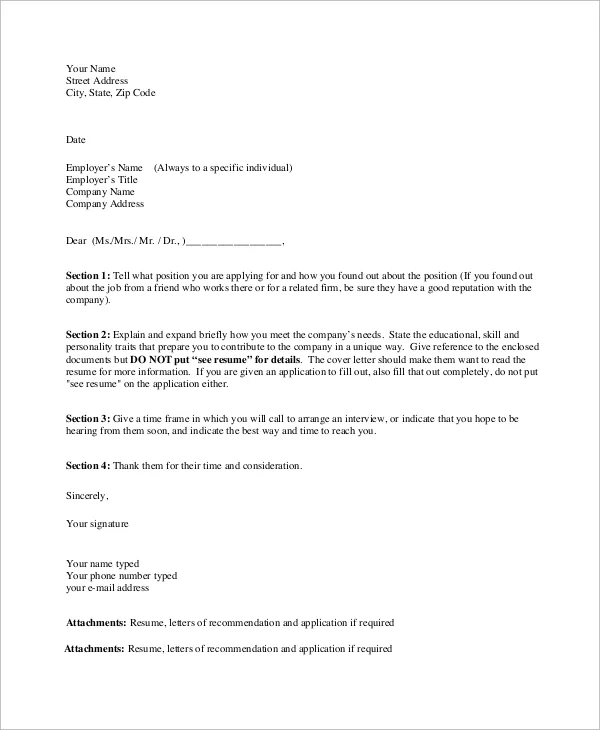
At the top of your cover letter, include your contact information. This usually includes your full name, address, phone number, and email address. Ensure that the email address you use is professional and appropriate for job applications. It is important that your contact information is easy to read and up-to-date, so the hiring manager can reach you easily.
Date

Directly below your contact information, include the date. This is the date you are writing the cover letter. This allows the reader to know when your letter was written, and keeps your application organized. It is standard practice to include the date on the cover letter and it provides a professional touch.
Employer’s Contact Information
Below the date, include the employer’s contact information. If possible, address the letter to a specific person (e.g., the hiring manager or the recruiter). If you can’t find a name, use a general salutation like ‘Dear Hiring Manager’. This shows you’ve done your research and are attentive to details. Include the name of the company and their address if you are mailing the letter. This section helps ensure your letter reaches the intended recipient.
Salutation
Begin your cover letter with a professional salutation. ‘Dear Mr./Ms./Mx. [Last Name]’ is a formal option, if you know the name of the hiring manager. If you don’t know their name, use a general greeting like ‘Dear Hiring Manager’ or ‘Dear [Company Name] Team’. Avoid overly casual greetings; a professional tone is always the best choice.
Body Paragraphs of a Cover Letter

First Paragraph Crafting a Strong Opening
The first paragraph is your chance to grab the reader’s attention. State the position you’re applying for and how you found the job opening (e.g., through a job board, company website, or a referral). Briefly mention why you’re interested in the role and the company. Your goal is to show enthusiasm and capture their interest immediately.
Highlighting Your Enthusiasm and Interest
Demonstrate genuine enthusiasm for the position and the company. Explain what excites you about the opportunity and why you want to work there. Your passion will show the hiring manager that you are serious about the job.
Mentioning the Specific Job

Make sure to clearly state the specific job title you are applying for in your first paragraph. This helps the hiring manager understand at a glance what position you are interested in. Reference the job posting or company website to confirm the name is correct.
Second Paragraph Showcasing Your Skills and Experience
In the second paragraph, highlight your relevant skills and experience. Focus on the qualifications that align with the job description, providing specific examples of how you’ve demonstrated those skills in the past. This is where you connect your skills with the employer’s needs.
Quantifying Achievements and Results
Whenever possible, quantify your achievements. Use numbers to show the impact of your work. For example, instead of saying ‘Improved customer service,’ say ‘Increased customer satisfaction scores by 15% within six months.’ Quantifiable results make your accomplishments more impactful and credible.
Using Action Verbs to Describe Accomplishments

Start your sentences with strong action verbs to describe your accomplishments. Action verbs make your writing more dynamic and engaging. Examples include ‘Managed,’ ‘Led,’ ‘Developed,’ ‘Implemented,’ ‘Achieved,’ and ‘Improved.’ They help illustrate what you did and achieved in previous roles.
Third Paragraph Explaining Why You are a Good Fit
The third paragraph is about connecting your skills and experiences to the job requirements and showing that you understand what the company does. Explain why you are a good fit for the position, how your skills align with the job duties, and what you bring to the table. This demonstrates your knowledge of the job requirements.
Connecting Your Skills with the Job Requirements
Carefully review the job description and identify the key skills and qualifications the employer is seeking. Then, in your cover letter, directly address how your skills and experiences align with those requirements. Provide examples to back up your claims.
Demonstrating Your Understanding of the Company

Show that you’ve researched the company. Mention something specific about their mission, values, or recent projects that resonates with you. This shows that you are genuinely interested in the company and that you understand their goals.
Closing the Cover Letter
Expressing Gratitude and Next Steps
In the closing paragraph, express your gratitude for the reader’s time and consideration. Indicate your enthusiasm for the opportunity and state your availability for an interview. Make it clear that you are eager to discuss your qualifications further.
Formal Closing
Use a professional closing, such as ‘Sincerely,’ ‘Regards,’ or ‘Best regards.’ Then, type your full name below the closing. If you are submitting a physical copy, leave space for your signature above your typed name.
Proofreading and Formatting
Tips for Proofreading
Proofreading is crucial. Check for any spelling, grammar, and punctuation errors. Read your cover letter multiple times and consider having someone else review it. Errors can make a bad impression and demonstrate a lack of attention to detail.
Formatting Guidelines
Use a professional and easy-to-read font, such as Times New Roman, Arial, or Calibri, in a 10-12 point size. Use standard margins (1 inch on all sides) and align your text to the left. Ensure that your cover letter is well-organized and easy to read.
Cover Letter Examples
Cover Letter Example for a Marketing Position
A cover letter for a marketing position should highlight your understanding of marketing principles, your experience with marketing tools, and your ability to drive results. It should showcase your creativity, analytical skills, and knowledge of marketing trends. Use examples from your past roles that display your successes in marketing campaigns.
Cover Letter Example for a Software Engineer Position
A cover letter for a software engineer should highlight your technical skills, your experience with programming languages, and your ability to solve complex problems. Mention specific projects you’ve worked on and any relevant certifications. Be sure to emphasize your problem-solving abilities.
Cover Letter Example for a Project Manager Position
A cover letter for a project manager should demonstrate your project management skills, your experience in leading teams, and your ability to deliver projects on time and within budget. Provide examples of successful projects you have managed and highlight your organizational and communication skills.
Final Thoughts
Writing a perfect cover letter takes time and effort, but the results are worth it. A well-written cover letter is the key to opening doors to new job opportunities. By following these guidelines and tailoring your letter to each specific job, you will increase your chances of making a positive first impression and landing an interview. Use a cover letter as a tool to show off your skills, enthusiasm, and fit for the role.