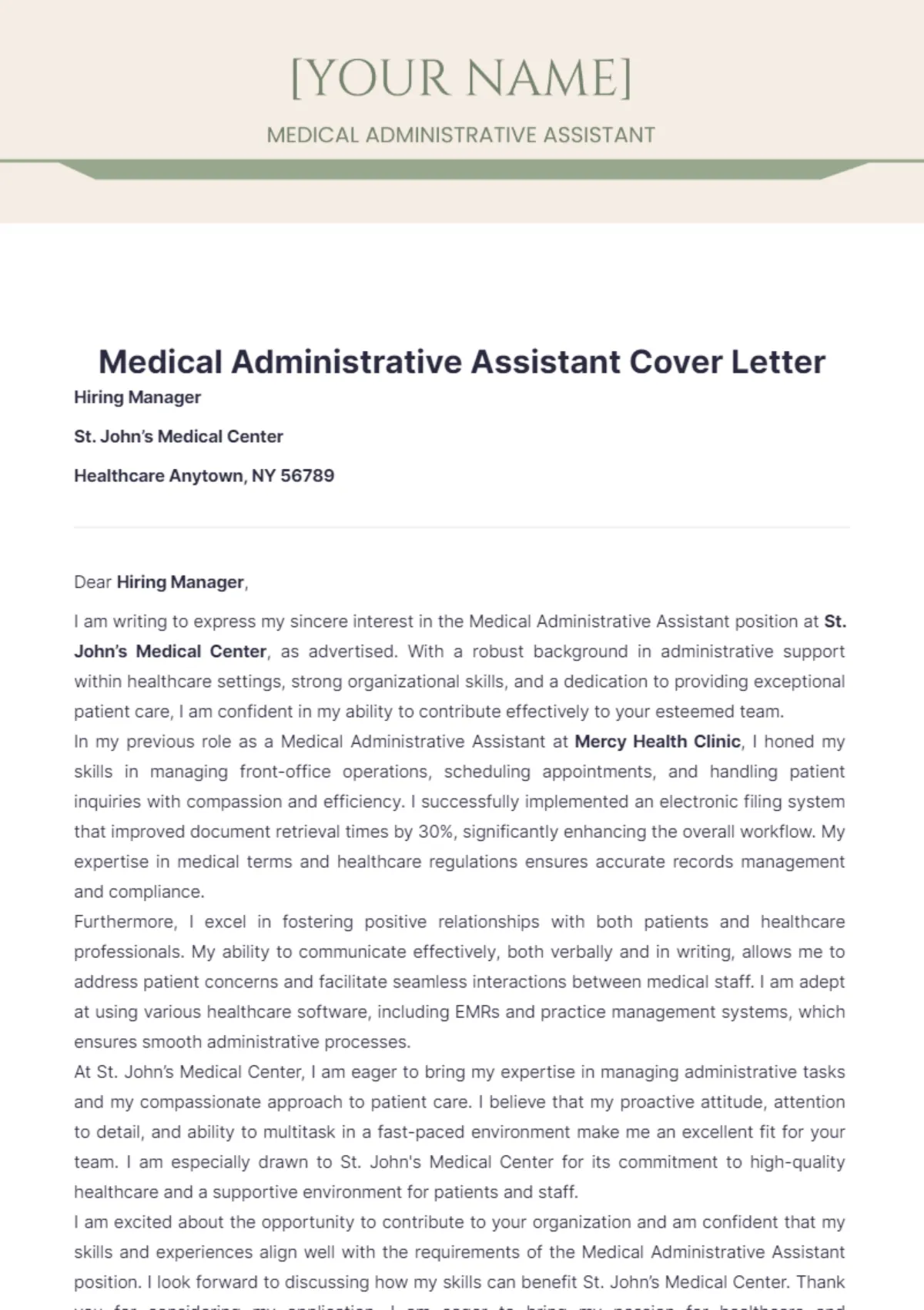
Cover Letter for Medical Office Administrator: Key Sections
A well-crafted cover letter is a crucial element in landing your dream job as a Medical Office Administrator. It serves as your first introduction to potential employers, offering a glimpse into your skills, experience, and personality. This guide provides expert tips to help you create a compelling cover letter that stands out from the competition and gets you noticed. Mastering the art of the cover letter can significantly increase your chances of securing an interview and ultimately, the position. Let’s delve into the key sections that will make your cover letter shine.
Contact Information
Accuracy and clarity are paramount when providing contact information. Ensure that both you and the hiring manager can easily reach each other. This section is your opportunity to make a professional first impression by presenting a polished and organized layout.
Applicant’s Contact Details

At the top left of your cover letter, include your full name, address, phone number, and professional email address. Use a professional email address and avoid using nicknames. Ensure your phone number is up-to-date and checked regularly. Double-check the accuracy of all details to prevent any communication mishaps. This section provides the necessary information for the hiring manager to easily reach you.
Hiring Manager’s Contact Information
If possible, address your cover letter to a specific person, such as the hiring manager or the office manager. Research their name and title by using LinkedIn, the company website, or calling the office. Include their name, title, the company name, and the company’s address. Personalizing your cover letter shows that you’ve taken the time to research the company and are genuinely interested in the position.
Professional Summary or Objective
This is your opportunity to grab the reader’s attention immediately. Craft a compelling professional summary or objective that highlights your key skills and career goals. This brief paragraph should provide a snapshot of your experience and why you are the perfect fit for the role. Tailor this section to match the job description and emphasize your most relevant qualifications.
Highlighting Relevant Skills

The skills section is a crucial part of your cover letter where you can showcase your abilities. Identify the skills most relevant to the Medical Office Administrator role. Focus on both soft and hard skills and provide specific examples to demonstrate your capabilities. It’s important to ensure you present a well-rounded picture of your professional expertise.
Patient Interaction and Communication
Medical Office Administrators must possess excellent communication skills. Highlight your ability to interact professionally with patients, explain medical procedures, and handle sensitive information with empathy and discretion. Mention any experience you have with patient intake, appointment scheduling, or addressing patient concerns. Give examples of when you used these skills effectively.
Administrative and Organizational Abilities
Demonstrate your administrative and organizational prowess by highlighting your experience with managing schedules, handling medical records, and coordinating office operations. Mention any software or systems you are proficient in, such as electronic health records (EHR) systems, practice management software, or Microsoft Office Suite. Showcase your ability to multitask and manage your time effectively.
Technical Proficiency

In today’s digital age, technical proficiency is essential. List the software and systems you are familiar with, such as electronic health records (EHR) systems, billing software, and Microsoft Office Suite. Mention any experience with data entry, data analysis, or other technical tasks. Showcase your ability to quickly learn new software and adapt to technological changes.
Quantifying Achievements
Instead of just listing your responsibilities, quantify your achievements whenever possible. This section demonstrates your impact and value to previous employers. Use numbers and data to showcase your accomplishments, illustrating the positive results you’ve delivered. This approach makes your cover letter more compelling and memorable.
Boosting Efficiency and Reducing Costs
Provide examples of how you have improved office efficiency or reduced operational costs. Did you implement a new scheduling system that decreased wait times? Did you streamline billing processes that reduced errors? Quantify these achievements by providing specific data, such as the percentage of wait time reduction or the amount of cost savings achieved. The more specific you are, the more impactful your accomplishments will be.
Improving Patient Satisfaction

Highlight how you have contributed to improving patient satisfaction. Did you implement new procedures for better communication or improve patient flow? Quantify your achievements by providing data such as the increase in patient satisfaction scores or the reduction in patient complaints. Providing concrete examples proves that you understand the importance of patient-centric care and can implement effective strategies to improve it.
Showcasing Experience
The experience section of your cover letter provides a detailed look at your professional history. This is where you can elaborate on your previous roles and responsibilities, showcasing how your experience aligns with the requirements of the Medical Office Administrator position. Focus on the most relevant experience, and tailor your descriptions to match the specific job description.
Previous Roles and Responsibilities
List your previous roles, including the job title, the name of the company, and the dates of employment. For each role, describe your main responsibilities and achievements. Use action verbs to make your descriptions dynamic and engaging. Highlight experiences that are most relevant to the Medical Office Administrator position. This will immediately catch the attention of the hiring manager.
Medical Office Experience

If you have worked in a medical office before, this section is crucial. Describe your experience in the healthcare setting, including the types of medical offices you have worked in, and the responsibilities you held. Mention any experience with patient intake, appointment scheduling, insurance verification, billing, or medical records management. Be as detailed as possible to demonstrate your experience.
Administrative Tasks Proficiency
Highlight your proficiency in administrative tasks, such as managing schedules, handling correspondence, and organizing office operations. Mention any software or systems you have used, such as electronic health records (EHR) systems or practice management software. Mention any experience with data entry, data analysis, or other technical tasks. Emphasize your organizational skills, time management abilities, and multitasking skills.
Education and Certifications
Include a section dedicated to your education and certifications. List your degrees, diplomas, and any relevant certifications. This section is important for showcasing your qualifications and demonstrating that you meet the required educational and professional standards for the Medical Office Administrator role.
Relevant Degrees and Diplomas

List your highest level of education, including any degrees or diplomas relevant to the medical field or office administration. Include the name of the institution, the degree earned, and the dates of attendance or graduation. If you have any specializations or honors, include them here. Make sure that you order them reverse-chronologically, with the most recent educational achievement first.
Medical Office Certifications
If you have any relevant certifications, such as Certified Medical Office Manager (CMOM) or Certified Medical Assistant (CMA), include them in this section. List the name of the certification, the certifying organization, and the date you earned the certification. Certifications often demonstrate a commitment to professional development and can greatly enhance your application.
Closing and Call to Action
End your cover letter with a strong closing statement and a clear call to action. Express your enthusiasm for the position and the opportunity to contribute to the company. This is your last chance to make a positive impression and encourage the hiring manager to contact you for an interview.
Expressing Enthusiasm and Gratitude
In your closing paragraph, reiterate your interest in the position and express your gratitude for the hiring manager’s time and consideration. Show your excitement for the opportunity to contribute to the company’s success. A positive and enthusiastic tone can leave a lasting impression and make the hiring manager more inclined to contact you.
Requesting an Interview
Conclude your cover letter with a clear call to action. State that you are available for an interview and provide your contact information again, if needed. Make it easy for the hiring manager to reach out to you. End the letter with a professional closing, such as “Sincerely,” or “Best regards,” followed by your typed name.