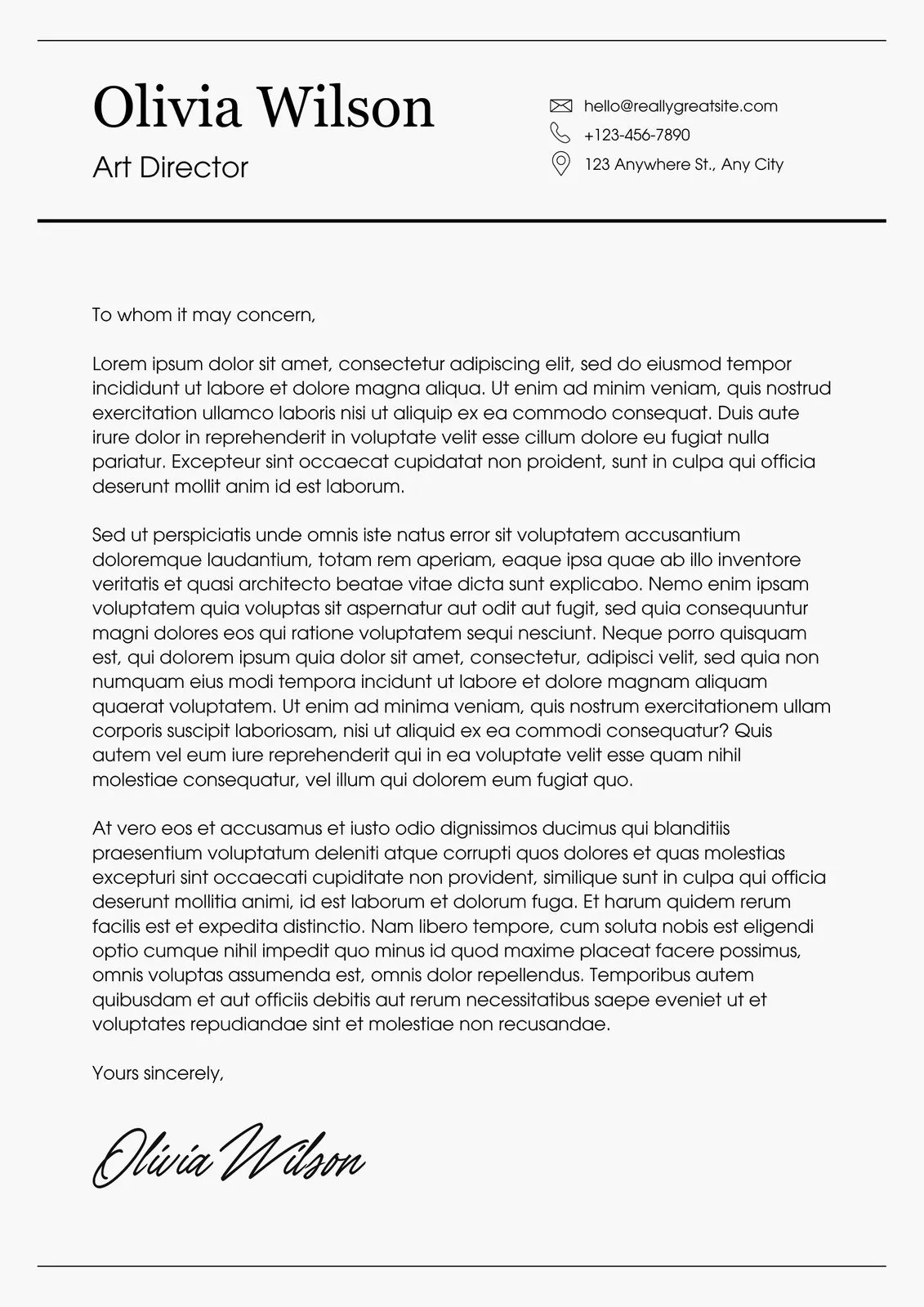
In the competitive world of job searching, a well-crafted cover letter can be your golden ticket to landing an interview. This document is more than just a formality; it’s your first opportunity to make a lasting impression on a potential employer. A cover letter provides context to your resume, allowing you to showcase your personality, skills, and enthusiasm for the position. With a cover letter sample free, you can start your job application process without breaking the bank and increase your chance to get hired.
Why You Need a Cover Letter
A cover letter serves several crucial purposes. It highlights your key qualifications and experiences, demonstrating how they align with the job requirements. It allows you to address any gaps or weaknesses in your resume, such as career changes or limited experience. Furthermore, a cover letter lets you express your passion for the company and the specific role, setting you apart from other applicants. Cover letters are also often required by employers, and failing to submit one can immediately disqualify your application.
What is a Cover Letter
A cover letter is a one-page document that you submit along with your resume when applying for a job. It provides additional information about your skills and experience, and explains why you are a suitable candidate for the position. The primary aim of a cover letter is to encourage the hiring manager to read your resume and consider you for an interview. Think of it as a personal introduction, where you can demonstrate your communication skills and articulate your career goals. A well-written cover letter can significantly improve your chances of getting an interview.
Key Elements of a Cover Letter

A cover letter should follow a standard format that includes several key elements. These elements work together to create a professional and persuasive document. The following sections are generally included in a cover letter, and each one has a specific purpose. Properly formatting these sections is key to the effectiveness of your cover letter. Following the standard format is key to your cover letter to be professional and impressive.
Your Contact Information
At the top of your cover letter, include your full name, phone number, email address, and optionally, your LinkedIn profile URL. This information ensures the employer can easily contact you. This section should be concise and clearly presented, making it easy for the hiring manager to find your contact details.
Date
Beneath your contact information, include the date you are submitting your application. This is a standard element and helps the employer know when you applied. The date should be formatted correctly, typically using the month, day, and year.
Recipient Information

Include the name of the hiring manager, their title, the company name, and the company address. If you can’t find the hiring manager’s name, use a general salutation like “Dear Hiring Manager.” Addressing the letter to a specific person shows that you have done your research and are genuinely interested in the position. Finding the right person to address to shows you put in the extra effort in your job application.
Salutation
Use a professional salutation such as “Dear Mr./Ms. [Last Name]” or “Dear Hiring Manager.” Avoid using generic salutations like “To Whom It May Concern,” as they can make your letter seem impersonal. Tailoring your salutation to the specific recipient helps create a positive first impression.
The Body of Your Cover Letter
The body of your cover letter should consist of three or four paragraphs. Each paragraph should focus on a specific aspect of your qualifications and why you are a good fit for the role. The goal is to capture the reader’s attention and convince them to learn more about you and consider you for an interview. Make sure to show off your skill sets in the most attractive way possible, so your resume will attract the recruiter’s attention. Here’s a breakdown of what each paragraph should generally include.
First Paragraph

Start with a strong opening statement that captures the reader’s attention. State the position you are applying for and where you found the job posting. Briefly mention why you are interested in the role and the company. This paragraph should provide a quick overview of your intent and set the stage for the rest of your letter. Make sure to show your enthusiasm when applying for the job.
Second Paragraph
In this paragraph, highlight your key skills and experiences that align with the job requirements. Use specific examples to demonstrate your accomplishments and how you have contributed to previous employers. Quantify your achievements whenever possible to showcase the impact of your work. This is where you sell yourself and show why you are the best candidate.
Third Paragraph
In the final body paragraph, reiterate your interest in the position and the company. Explain why you believe you are a good fit and what you hope to achieve in the role. Mention your understanding of the company’s goals and how you can contribute to them. Express your eagerness to learn more in an interview.
Formatting Your Cover Letter

Proper formatting is essential for creating a professional and easy-to-read cover letter. A well-formatted document shows attention to detail and makes a positive impression on the reader. Consistency is key, so follow these guidelines to ensure your letter is visually appealing and clear.
Font and Size
Choose a professional and legible font such as Times New Roman, Arial, or Calibri. Use a font size between 10 and 12 points for the body text. Ensure the font is consistent throughout the entire document to avoid a cluttered look. The font you choose should be easy to read, as this helps the recruiter focus on your content.
Margins and Spacing
Set the margins to one inch on all sides of the page. Use single-spaced lines within paragraphs and double-spaced lines between paragraphs. This creates a clean and organized layout, allowing the reader to easily scan the information. Correct spacing enhances readability and makes your letter more appealing.
Proofreading Your Cover Letter

Before submitting your cover letter, carefully proofread it for any errors in grammar, spelling, and punctuation. Typos and grammatical errors can undermine your credibility and make you appear unprofessional. It’s a good practice to have a friend or family member read your letter as well. A second pair of eyes can often catch mistakes that you might miss. Pay close attention to details to make sure you catch all possible mistakes.
Common Mistakes to Avoid
Several common mistakes can make your cover letter less effective. Being aware of these pitfalls can help you create a stronger and more compelling document. Avoiding these mistakes ensures your cover letter is polished and professional.
Overusing “I”
While it’s acceptable to use “I” in your cover letter, avoid overusing it. Focus on the value you bring to the company rather than solely on your personal experience. Instead of “I have experience,” consider “My experience allows me to…” or “I am skilled at…” The goal is to highlight your skills in the best way possible.
Typos and Grammatical Errors

Typos and grammatical errors can damage your credibility. Always proofread your letter carefully before submitting it. Use spell-check and grammar-check tools, but don’t rely on them entirely. Read your letter out loud to catch any awkward phrasing or mistakes. If possible, ask someone else to review it.
Generic Content
Avoid using a generic cover letter that you send to every company. Tailor your letter to each specific job and company. Research the company and the role, and customize your letter to reflect your understanding of their needs. Show that you have put effort into your application.
Cover Letter Samples Free
Numerous free cover letter samples are available online to help you create a compelling cover letter. These samples provide excellent examples of how to structure your letter and highlight your skills. Here are a couple of examples.
Sample 1 Entry-Level Applicant
A sample cover letter for an entry-level applicant should emphasize skills and any relevant experiences, such as internships or volunteer work. Focus on academic achievements and extracurricular activities to demonstrate your potential. Use this sample to highlight your abilities and the skills you have learned. Adapt the sample to your specific situation, and always tailor it to the job description.
Sample 2 Experienced Professional
An experienced professional’s cover letter should showcase accomplishments and quantify achievements. Highlight specific results you have achieved in previous roles. Tailor the letter to demonstrate how your experience aligns with the new job’s requirements. Use this sample to demonstrate the benefits of your experience.
Where to Find Free Cover Letter Templates
Many online resources offer free cover letter templates to help you get started. These templates provide a basic structure that you can customize to fit your needs. Using a template can save you time and ensure your letter follows a professional format.
Online Resources
Websites like Resume.io, Zety, and Canva offer a wide variety of cover letter templates that are easily customizable. These resources provide a starting point for crafting your cover letter. Review these resources and find the right template.
Microsoft Word Templates
Microsoft Word also provides many free cover letter templates. Open Microsoft Word, search for “cover letter templates,” and choose a design that suits your needs. Customize the template to reflect your personal brand. Consider this great resource to begin your job application.
By following these guidelines and using free cover letter samples, you can create a compelling cover letter that showcases your skills and experience. A well-written cover letter significantly increases your chances of landing an interview and ultimately getting hired. Take advantage of the resources available and start crafting your cover letter today. Good luck with your job search!
Conclusion
A cover letter is a powerful tool in your job search arsenal, and utilizing cover letter sample free resources can significantly boost your chances of success. By understanding the key elements, formatting your letter correctly, and avoiding common mistakes, you can create a document that makes a lasting impression on potential employers. Always customize your cover letter for each job application, and use available resources to create a document that highlights your unique skills and experiences. With a well-crafted cover letter, you can effectively communicate your value and increase your odds of landing your dream job.