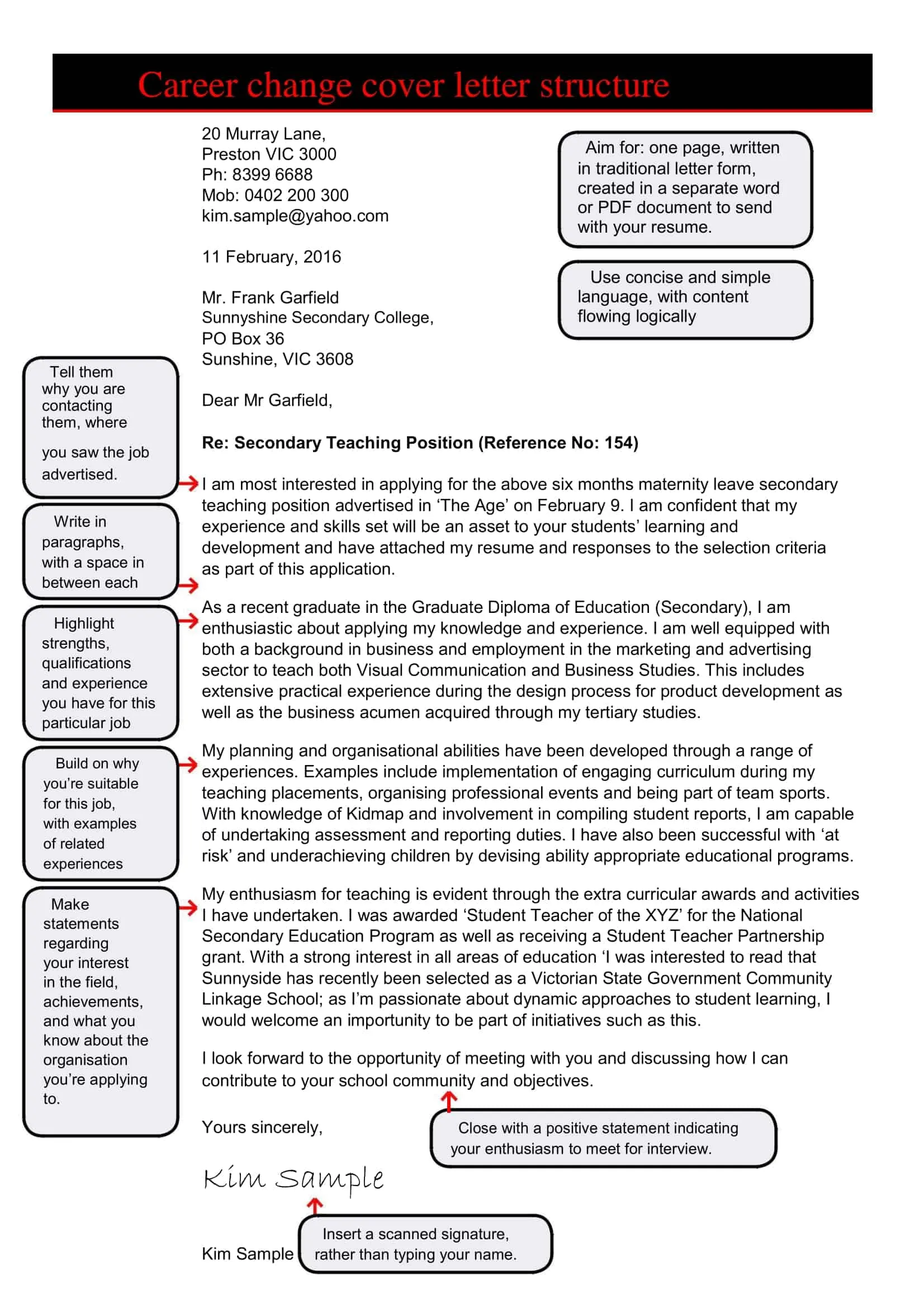
Understanding the Importance of a Career Change Cover Letter
Embarking on a career change is a significant undertaking, and your cover letter is your first impression. It’s your opportunity to explain your rationale for the switch and showcase your suitability for the new role. A well-crafted cover letter for a career change bridges the gap between your past experiences and your aspirations, demonstrating your potential to employers. Unlike a standard cover letter, a career change cover letter needs to address the elephant in the room: why the change? It needs to articulate your transferable skills, your genuine interest in the new field, and how your past experiences, even if seemingly unrelated, have equipped you for success. The best cover letter samples will help guide you to success, emphasizing a positive transition.
Highlighting Transferable Skills
One of the most crucial aspects of a career change cover letter is highlighting your transferable skills. These are the skills you’ve gained in your previous roles that are applicable to the new position. Identifying these skills and explicitly stating how they will benefit the employer is critical. Consider communication, problem-solving, leadership, time management, and teamwork. Think about how your previous roles helped you develop these core skills. When writing your cover letter, make sure that you select the skills that most closely match the job description, emphasizing how they align with the requirements of the new role. A strong emphasis on transferable skills demonstrates to the hiring manager that you can quickly adjust and succeed in the new position.
Identifying Relevant Skills

Before you start writing, take some time to analyze the job description carefully. Look for keywords and requirements that align with your existing skillset. Make a list of these skills and then find examples from your past roles where you have successfully demonstrated those skills. The goal is to showcase the skills that are needed to perform the role, even if your previous experience differs from it. Consider what the employer is looking for. Think about what tasks are involved, what tools will be used, and what are the key responsibilities. By matching the skill set to those requirements, the cover letter will clearly demonstrate your suitability for the role and your potential to make an immediate contribution.
Quantifying Achievements
Whenever possible, quantify your achievements. Instead of simply stating that you ‘managed projects,’ provide details such as, ‘Managed projects, resulting in a 15% reduction in costs and a 10% increase in efficiency.’ Quantifiable results show the impact you have had in previous roles and can be a compelling way to demonstrate the value you can bring to the new position. Using numbers and percentages is a powerful way to make your cover letter more impactful and memorable. Whether it’s about saving money, increasing sales, or improving productivity, be as specific as you can. Providing evidence of your accomplishments will strengthen your application and set you apart from other candidates.
Addressing the Career Change
Be upfront and honest about your career change. Avoid vague language. Instead, clearly state your reason for the change and how it aligns with your long-term goals. Many candidates are afraid to directly address a career change but it is better to address the issue directly rather than letting the reader guess or formulate a possible assumption. Explain what sparked your interest in this new field and how your past experiences have prepared you for this transition. A well-written explanation can make your application more compelling, because you are showing confidence, and you are showing that you have a plan and a clear path. Showing that you have researched and planned the change will give the hiring manager more confidence.
Explaining Your Motivation

One of the most critical sections of your career change cover letter is the section where you explain why you want to change careers. Share your passions and interests, and what motivates you. Are you looking for a new challenge, a better work-life balance, or perhaps you are looking for the opportunity to contribute to something that aligns with your values? Whatever the reason, be genuine and specific. Avoid generic statements; instead, articulate your motivation in a way that reflects your personality and goals. Demonstrate a clear understanding of what you’re seeking and how this new role aligns with your ambitions. Make sure to show your understanding of the role and the industry.
Showing Enthusiasm
Let your enthusiasm shine through. Your cover letter should convey your eagerness to learn and contribute to the new role. Expressing excitement is important, as it shows your true interest. This can be done through your writing style, but also through research. Demonstrate your knowledge of the company and the industry. Indicate your willingness to take on new challenges and to learn new things. This enthusiasm is often the difference between an interview and a rejection. When you convey passion, you signal that you are ready to work hard and eager to be a valuable member of the team. Your tone is an important factor, so keep it positive and engaging.
Tailoring Your Cover Letter
A generic cover letter will likely end up in the trash. Tailoring your letter to each specific job is one of the most critical tips to follow. Customize your cover letter for each position you apply for. This means reviewing the job description carefully and addressing the specific requirements and needs of the role and company. Demonstrate that you have taken the time to understand their business and their values. Referencing the company’s goals, the industry trends, and any recent news or projects they have undertaken can illustrate your knowledge. By showing that you have done your homework and that you are genuinely interested in working for that organization, you will set your application apart from the competition.
Researching the Company

Before writing, take the time to research the company and the role. Visit the company website, read their ‘About Us’ section, and check out their social media profiles. Understand their mission, values, and recent projects. This research will help you tailor your cover letter to demonstrate how your skills and experiences align with the company’s specific needs. Understanding the company culture is also very important. For example, you can talk about the values of the company, and reference recent projects that they have completed. Mentioning recent accomplishments by the company can help in demonstrating that you are serious about the role.
Customizing for the Role
Once you have a good understanding of the company, customize your cover letter to match the job description. Highlight the skills and experiences that are most relevant to the position and address the specific requirements outlined in the job posting. Use the same keywords and phrases that are used in the job description. Focus on showing that you have the skills and experience that they are looking for. Make sure to show, rather than just tell the hiring manager what you can do. Provide examples of how you have used those skills in the past and the positive results you achieved. Customization is key, since a generic letter won’t resonate.
Showcasing Your Value
Your cover letter needs to showcase your value and demonstrate how you can contribute to the company’s success. This involves highlighting your achievements, emphasizing your relevant skills, and expressing your enthusiasm for the role. Focusing on these key aspects will help you stand out from other candidates. Use your cover letter to illustrate your unique strengths and what you can bring to the table. The more you can make it clear what you have to offer, the better your chances are of getting an interview.
Emphasizing Accomplishments

Focus on your accomplishments. Instead of listing your responsibilities, describe what you have achieved in your previous roles. Quantify your successes whenever possible. Use metrics to demonstrate your impact. For example, instead of saying, ‘Managed social media,’ you can state, ‘Increased social media engagement by 30% in six months.’ By highlighting accomplishments, you will provide tangible evidence of your skills and demonstrate your value to the potential employer. Specific examples and numbers are better than vague statements.
Using Action Verbs
Use strong action verbs to describe your experiences and accomplishments. Action verbs make your cover letter more dynamic and engaging. Start sentences with words like ‘managed,’ ‘developed,’ ‘achieved,’ ’led,’ or ‘implemented.’ Action verbs bring your achievements to life and grab the reader’s attention. This is especially important in a career change cover letter, where you need to quickly and effectively convey your skills and expertise. Avoid passive voice and instead use active, descriptive language. Using action verbs is a great way to bring out the best aspects of your profile.
Providing Evidence of Skills
Don’t just state that you have certain skills; provide evidence to back up your claims. For each skill you mention, provide a specific example of how you have used that skill in a previous role and what the results were. This could include a project you completed, a problem you solved, or an achievement you made. Including evidence can help in convincing the hiring manager that you possess the necessary qualifications. Support your claims with specific examples that showcase your skills and capabilities. Use the STAR method (Situation, Task, Action, Result) to structure your examples and provide clear, concise evidence of your abilities.
Formatting and Presentation

Your cover letter’s formatting and presentation are just as important as its content. A well-formatted cover letter is easy to read, professional, and reflects attention to detail. Ensure your letter is properly formatted, proofread, and free of errors. A clean, professional design will make your application stand out. You want to make a good first impression, and your cover letter is your chance to do that.
Professional Formatting
Use a professional font such as Times New Roman, Arial, or Calibri. Use a font size between 10 and 12 points for body text. Maintain consistent margins and spacing. Avoid using overly stylized fonts or excessive formatting that could distract the reader. Keep the layout clean and uncluttered, with clear headings and bullet points to break up the text. Ensure that your letter is easy on the eye and accessible to the reader. A well-formatted cover letter demonstrates your professionalism and attention to detail, while making it easy for the hiring manager to read and understand your qualifications.
Proofreading and Editing
Proofread and edit your cover letter meticulously before sending it. Check for any grammatical errors, spelling mistakes, and typos. A cover letter with errors makes you look unprofessional and could undermine your chances of getting the job. Have a friend or colleague review your letter as well to catch any mistakes you may have missed. Proofreading is a critical step, as a well-written letter will give you credibility. Make sure that the writing is clear, concise, and free of errors. Also, check that you are using the correct formatting.
Call to Action

End your cover letter with a strong call to action. Clearly state your interest in the role and reiterate your enthusiasm for the opportunity. Include a statement inviting the hiring manager to contact you for an interview. You can also express your excitement about the prospect of discussing how your skills and experiences can contribute to their team. Ending on a positive note can leave a lasting impression. Be proactive and express your desire to move forward in the hiring process, which can motivate the hiring manager to contact you.