Cover Letter Science: 5 Tips to Grab Attention!
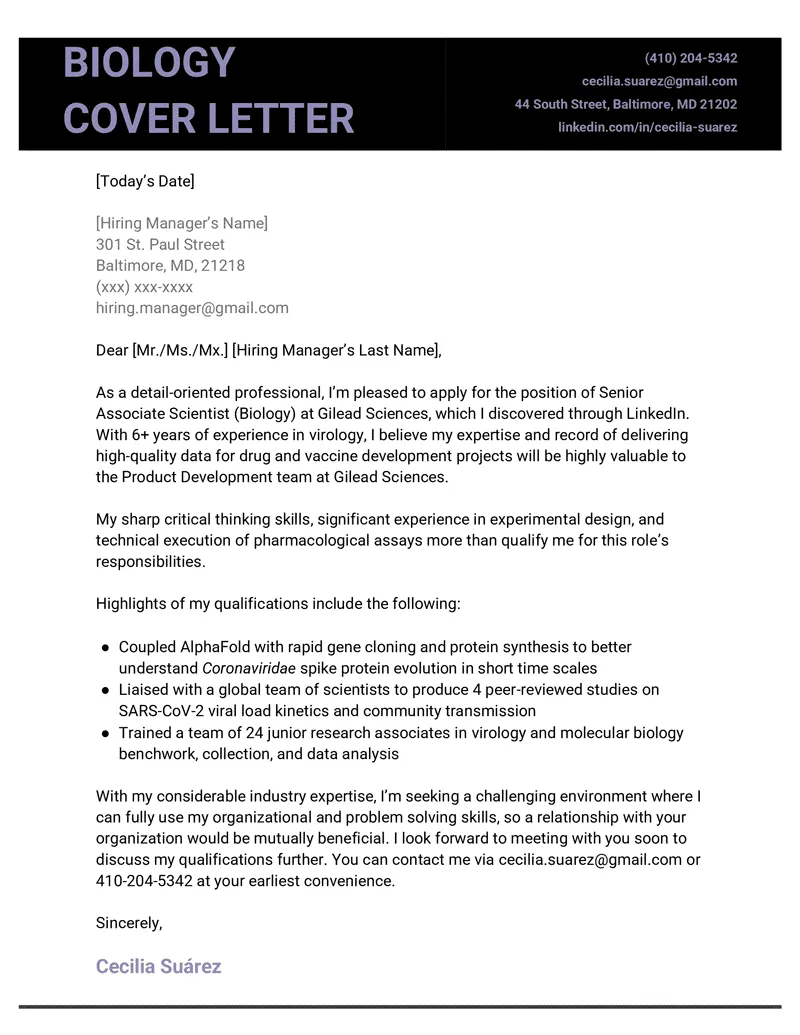
In the competitive world of scientific research, a well-crafted cover letter is your first opportunity to make a strong impression. It’s not just a formality; it’s your chance to showcase your skills, passion, and suitability for the position. A compelling cover letter grabs attention and sets you apart from other candidates. This guide provides five essential tips to help you craft a cover letter that captivates and gets you noticed by potential employers, increasing your chances of landing that coveted research position. By focusing on key elements such as highlighting your skills, quantifying achievements, tailoring your message, showcasing your personality, and ensuring flawless presentation, you can significantly boost your application.
Highlighting Your Skills and Experience
Your cover letter should immediately draw attention to your relevant skills and experience. Instead of simply listing them, demonstrate how these skills align with the specific requirements of the job. Analyze the job description carefully and identify the key skills and qualifications the employer is seeking. Then, use your cover letter to provide concrete examples of how you’ve utilized those skills in past research projects or professional roles. This could involve discussing the methodologies you’ve mastered, the software you’re proficient in, or the types of experiments you’ve conducted. By aligning your skills with the job description and providing specific examples, you clearly show that you possess the expertise needed to excel in the role. This approach helps hiring managers quickly recognize your value and potential contributions.
Quantify Your Achievements

Vague statements about your achievements are easily overlooked. To make your cover letter truly stand out, quantify your accomplishments whenever possible. Instead of saying “Improved research efficiency,” specify by how much you improved it. For example, you might state, “Increased research efficiency by 15% through the implementation of a new data analysis protocol.” Similarly, if you’ve contributed to publications or presentations, provide the number and the impact. Did you publish papers in high-impact journals? Did you present at prestigious conferences? These details add credibility and provide tangible evidence of your contributions. Quantifying your achievements gives the hiring manager concrete evidence of your impact and capabilities, making your application more compelling and memorable.
Tailor to the Job and Institution
Generic cover letters are easily recognized and often discarded. To grab attention, you must tailor your cover letter to the specific job and the institution. Begin by researching the organization and the specific research group or lab you’re applying to. Understand their current projects, their research interests, and their values. Then, demonstrate your knowledge by mentioning specific projects or publications from the lab. Explain why their work resonates with you and how your skills and interests align with their goals. This personalization shows that you’ve taken the time to understand the opportunity and that you’re genuinely interested in joining their team. By aligning your application with the specific needs and values of the employer, you significantly increase your chances of making a positive impression.
Showcase Your Personality and Enthusiasm
Scientific research requires more than just technical skills; it also demands passion, curiosity, and a genuine interest in the field. Let your personality and enthusiasm shine through in your cover letter. While maintaining a professional tone, inject your personality by expressing your excitement about the research area, the specific project, or the opportunity to work with the team. Share a brief anecdote or a personal statement that reflects your motivation and interest. This can make your application more engaging and memorable. Additionally, show enthusiasm by highlighting your eagerness to learn, collaborate, and contribute to the scientific community. This will help the hiring manager see you not just as a qualified candidate, but as someone who is passionate about their work and a great fit for the team.
Proofread and Perfect

Errors in a cover letter can immediately detract from your credibility and make a negative impression. Before submitting your application, meticulously proofread your cover letter for any grammatical errors, spelling mistakes, or inconsistencies. Use a grammar checker and, if possible, have a colleague or mentor review it as well. Ensure that your formatting is consistent and professional. The language should be clear, concise, and appropriate for a scientific context. A polished, error-free cover letter demonstrates attention to detail and professionalism, qualities that are highly valued in scientific research. Taking the time to perfect your cover letter can make a significant difference in how your application is perceived and the impression it makes on potential employers.
Formatting Your Cover Letter
Choosing the Right Font and Style
The visual appearance of your cover letter plays a crucial role in making a positive impression. Choose a professional and easy-to-read font such as Times New Roman, Arial, or Calibri, and ensure that the font size is between 11 and 12 points. Maintain consistent formatting throughout the document, including font style, size, and spacing. Use clear headings and subheadings to organize the information and guide the reader. A well-formatted cover letter demonstrates professionalism and attention to detail. It makes it easier for the reader to scan and digest the information, which is crucial for grabbing their attention in a short amount of time. Avoid excessive use of bolding, italics, or unusual fonts, as they can detract from the overall appearance and make your letter look cluttered.
Structuring Your Letter for Impact

Structure your cover letter to highlight your key strengths and make a strong impact. Start with a compelling opening that captures the reader’s attention and clearly states your purpose. In the body paragraphs, showcase your skills and experience, providing specific examples and quantifying your achievements. Organize your content logically, grouping similar information together to create a smooth and coherent flow. Use clear topic sentences to introduce each paragraph and guide the reader through your arguments. Conclude with a strong closing that reiterates your interest in the position and includes a call to action. Structure your letter in a way that highlights your qualifications and makes you a compelling candidate from the very first sentence to the last.
Essential Cover Letter Elements
Contact Information and Salutation
Begin your cover letter with your contact information, including your name, address, phone number, and email address. This makes it easy for the hiring manager to reach you. Always address your letter to a specific person, if possible. Research the hiring manager’s name and use a formal salutation, such as “Dear Dr. [Last Name]” or “Dear [Hiring Manager Name],” depending on the context and your familiarity. Avoid generic greetings like “To Whom It May Concern” or “Dear Sir/Madam,” as they can make your letter appear impersonal. Addressing the letter to a specific person shows that you have taken the time to research the opportunity and are genuinely interested in the position.
Opening Statement

Your opening statement is critical for grabbing attention. Start with a concise and impactful sentence that immediately captures the reader’s interest. State the position you’re applying for and, if possible, mention how you learned about the opportunity. Briefly highlight your most relevant skills or experiences that align with the job requirements. You can also express your enthusiasm for the specific research area or the institution. The opening statement should set the tone for the rest of the letter, establishing your interest and demonstrating your suitability for the role. Keep it focused and relevant to the specific job application.
Body Paragraphs
The body paragraphs are where you showcase your qualifications in detail. Organize these paragraphs strategically to demonstrate your skills and experience. Use one paragraph to highlight your key skills and explain how they align with the job description, providing specific examples from your past research. Another paragraph should focus on your research accomplishments, quantifying your achievements whenever possible. Mention publications, presentations, and any significant contributions you have made. A third paragraph could be used to express your enthusiasm for the research area and the institution, explaining why you are a good fit for their team. Ensure that each paragraph has a clear topic sentence and that the content flows logically.
Closing and Call to Action
Conclude your cover letter with a strong closing that summarizes your interest in the position. Reiterate your key qualifications and express your enthusiasm for the opportunity. Include a call to action, such as inviting the hiring manager to review your resume or schedule an interview. Thank the hiring manager for their time and consideration, and express your anticipation for hearing from them. Keep your closing concise and professional. A well-crafted closing leaves a lasting impression and increases your chances of receiving a positive response. Make sure to include your contact information once again.
Understanding the Science Job Market

Researching the Employer and Position
Thoroughly research the employer and the specific position you’re applying for. Visit the organization’s website and review their mission, values, and recent publications. Look into the research group or lab you’re interested in joining. Understand the types of projects they are working on, the methodologies they use, and the team’s culture. This research is crucial for tailoring your cover letter to the specific job requirements and demonstrating your genuine interest. Understanding the employer’s needs and goals allows you to highlight your qualifications effectively. It also helps you identify the aspects of your experience and skills that are most relevant to the position.
Keywords and ATS Systems
Many organizations use Applicant Tracking Systems (ATS) to screen applications. These systems scan cover letters and resumes for specific keywords related to the job requirements. To increase your chances of passing through the ATS, carefully review the job description and identify the key skills, qualifications, and terminology that are emphasized. Then, incorporate these keywords naturally throughout your cover letter. However, avoid keyword stuffing, which makes your letter sound unnatural. Integrate the keywords seamlessly into the context of your writing. Additionally, ensure that your cover letter is formatted in a way that is easily parsed by the ATS, using a standard font and clear headings.
Examples of Strong Cover Letter Sections

Skills and Experience Paragraph
“In my previous role as a Research Associate at [Previous Institution], I gained extensive experience in [Specific Skill 1], [Specific Skill 2], and [Specific Skill 3], which directly align with the requirements outlined in the job description. For example, I utilized my expertise in [Skill 1] to develop a novel [Project], resulting in a [quantifiable result]. Furthermore, I have successfully applied [Skill 2] in the analysis of [Data type], leading to the discovery of [Finding]. I am proficient in various laboratory techniques, including [Technique 1] and [Technique 2], and I am adept at data analysis using software such as [Software].”
Research Accomplishments Paragraph
“My research contributions include [Number] publications in peer-reviewed journals, including [Journal Name], where I served as the first author on a paper focused on [Research Area]. I also presented my research findings at [Conference Name], where my poster was awarded [Award]. Moreover, I have been involved in securing [Grant Amount] in funding for research projects. My work in the field has helped establish [Project] to improve the scientific community.”
Enthusiasm and Fit Paragraph
“I am particularly drawn to the work being conducted in your lab on [Specific Project or Research Area]. My passion for [Research Area] aligns perfectly with your team’s focus on [Specific Goal]. I am eager to contribute my skills and expertise to this innovative research and to collaborate with the highly talented team at [Institution Name]. I am confident that my strong work ethic and enthusiasm would make me a valuable asset to your research group. I’m also really excited about the prospect of helping to make our world better through this kind of research.”