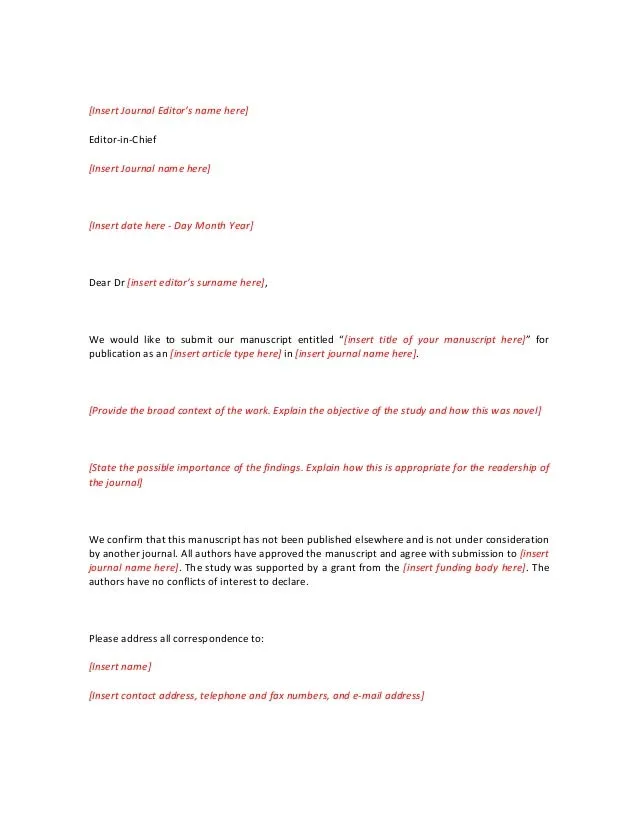
Understanding the Cover Letter’s Crucial Role
The cover letter is more than just a formality; it’s your first and often only chance to make a positive impression on the editor of a journal. It serves as your introduction, a concise summary of your work, and a compelling argument for why your manuscript deserves to be published. A well-crafted cover letter is vital for manuscript submission success. It’s your opportunity to showcase your research, highlight its importance, and demonstrate your understanding of the journal’s scope and audience. Without a strong cover letter, your manuscript could be overlooked, regardless of the quality of your research. Think of the cover letter as your personal advocate, advocating for your research to be considered for publication, therefore, the cover letter is important. A great cover letter shows the editor that you understand the importance of your research and that you have followed all the instructions.
Key Elements of a Compelling Cover Letter
A compelling cover letter should incorporate specific key elements to capture the editor’s attention and make a strong first impression. Begin by clearly stating the manuscript’s title and the type of submission (e.g., original research article, review). Identify the target journal, ensuring you’ve followed their specific guidelines. Briefly state the main findings and the significance of your work. Emphasize the originality and impact of your research, highlighting how it contributes to the existing body of knowledge. Explain why your manuscript is a good fit for the journal, showcasing an understanding of the journal’s scope and audience. Address any special requirements or conflicts of interest transparently. A well-structured letter that includes these elements significantly increases the likelihood of your manuscript being considered favorably. The goal is to make the editor excited about reading your work.
Contact Information and Submission Details

Start your cover letter with your contact information, including your full name, affiliation, address, email, and phone number. This makes it easy for the editor to reach you if they have any questions. Clearly state the manuscript’s title and the journal you are submitting to. Double-check the journal’s specific guidelines for cover letter formatting. Most journals have specific requirements, such as the preferred font style, font size, and the inclusion of a date. Mention any co-authors, their affiliations, and their roles in the research. Provide the corresponding author’s contact information if different from your own, ensuring a smooth communication process. The contact details make sure the author’s information is current and accurate for easy communication and to make sure there are no issues. Always include the date of submission and ensure the information is updated.
Personalizing Your Letter for the Target Journal
Generic cover letters are easily recognized and often discarded. To increase your chances of acceptance, always personalize your letter for the specific journal. Research the journal’s focus, readership, and recent publications. In the letter, explain why your manuscript is a good fit for the journal’s scope. Cite relevant articles published in the journal to demonstrate your understanding of their interests. Tailor your language and tone to align with the journal’s style. Mention any specific guidelines or requirements of the journal that you have followed. By demonstrating that you’ve taken the time to understand the journal and its preferences, you show that you value their work and increase the likelihood of your submission being considered seriously. This personalization signifies your respect for the journal and can set your submission apart. Show the editor that you have researched the journal’s specific focus.
Highlighting Your Manuscript’s Significance
The cover letter provides an excellent opportunity to emphasize the significance and impact of your research. Briefly summarize your key findings and their implications. Explain how your work contributes to the existing body of knowledge and what new insights it offers. Highlight the originality and novelty of your research. Consider stating the practical applications or real-world relevance of your findings. If your research has the potential to change the field or influence policy, make sure to mention it. Clearly state the significance of your research and make it stand out. By clearly articulating the importance of your work, you capture the editor’s attention and make a strong case for publication. Focus on what makes your research stand out and why it’s important.
Summarizing Your Research and Findings

Provide a concise summary of your research, including the methodology, key findings, and conclusions. This should be a brief overview, not a detailed repetition of your abstract. Focus on the main points and the most important results. Explain the study design, the sample size, and the main analytical methods used. Clearly state the key findings, using concise and impactful language. Highlight any unexpected or particularly interesting results. Briefly mention the limitations of your study, showing that you are aware of the study’s shortcomings. End with a brief statement of the conclusions and the overall implications of your findings. The summary of your research should be clear, concise, and effectively present the key findings and conclusions to the editor. Keep the summary brief and focused.
Showcasing Your Relevant Expertise and Credentials
Briefly introduce yourself and your co-authors, highlighting your relevant experience and credentials. Mention your institutional affiliation and any key positions you hold. Briefly describe your research background and expertise in the area of study. If you have previously published in the same journal or in related fields, mention this to show your understanding of the publication. If you have received any relevant awards, grants, or recognition, mention them. This helps to establish your credibility and demonstrate your understanding of the research field. By showcasing your relevant expertise, you establish trust, which can significantly enhance the editor’s confidence in your manuscript. This section should highlight the expertise and show why the author is knowledgeable in the field of study. Make sure to add all relevant information.
Proper Formatting and Tone for Manuscript Submission
Adhere to the journal’s specific formatting requirements for cover letters, including font style, font size, and spacing. Use a professional and respectful tone throughout your letter. Avoid using overly casual or informal language. Keep the letter concise and to the point. The letter should be easy to read and avoid grammatical errors. Use clear and straightforward language. The tone should reflect professionalism and seriousness, which is critical for making a good impression. By following the specific guidelines, your work will make a good impression, showing respect for the journal, and increasing the chances of positive consideration. A well-formatted letter shows respect for the journal and makes a great first impression. Double-check the formatting to avoid any issues.
Proofreading and Editing Your Cover Letter Meticulously

Proofreading and editing are essential steps in the manuscript submission process. Before submitting your cover letter, carefully proofread it for any grammatical errors, spelling mistakes, or typos. Ensure that your language is clear, concise, and free of ambiguities. Use a grammar checker, but also read the letter aloud to catch any awkward phrasing. Have a colleague or co-author review your cover letter for feedback. Make sure that there are no errors that would make the author lose credibility. A polished, error-free cover letter demonstrates professionalism and attention to detail. Thorough proofreading minimizes the risk of errors that might negatively impact the impression made by the editor. Take your time when proofreading and editing.
Making a Strong Closing and Expressing Gratitude
End your cover letter with a professional and respectful closing. Thank the editor for their time and consideration. Reiterate your interest in publishing your manuscript in the journal. Include a statement confirming that the manuscript has not been submitted elsewhere. If you have any additional information that the editor might find helpful, briefly mention it. Provide your contact information again for easy access. Consider providing any relevant supplementary materials, such as data or supporting documents. Conclude the letter with a formal closing, such as “Sincerely” or “Respectfully,” followed by your full name and contact details. By expressing gratitude and making a strong closing, the letter will end on a positive note. The closing is your last chance to leave a positive impression on the editor.