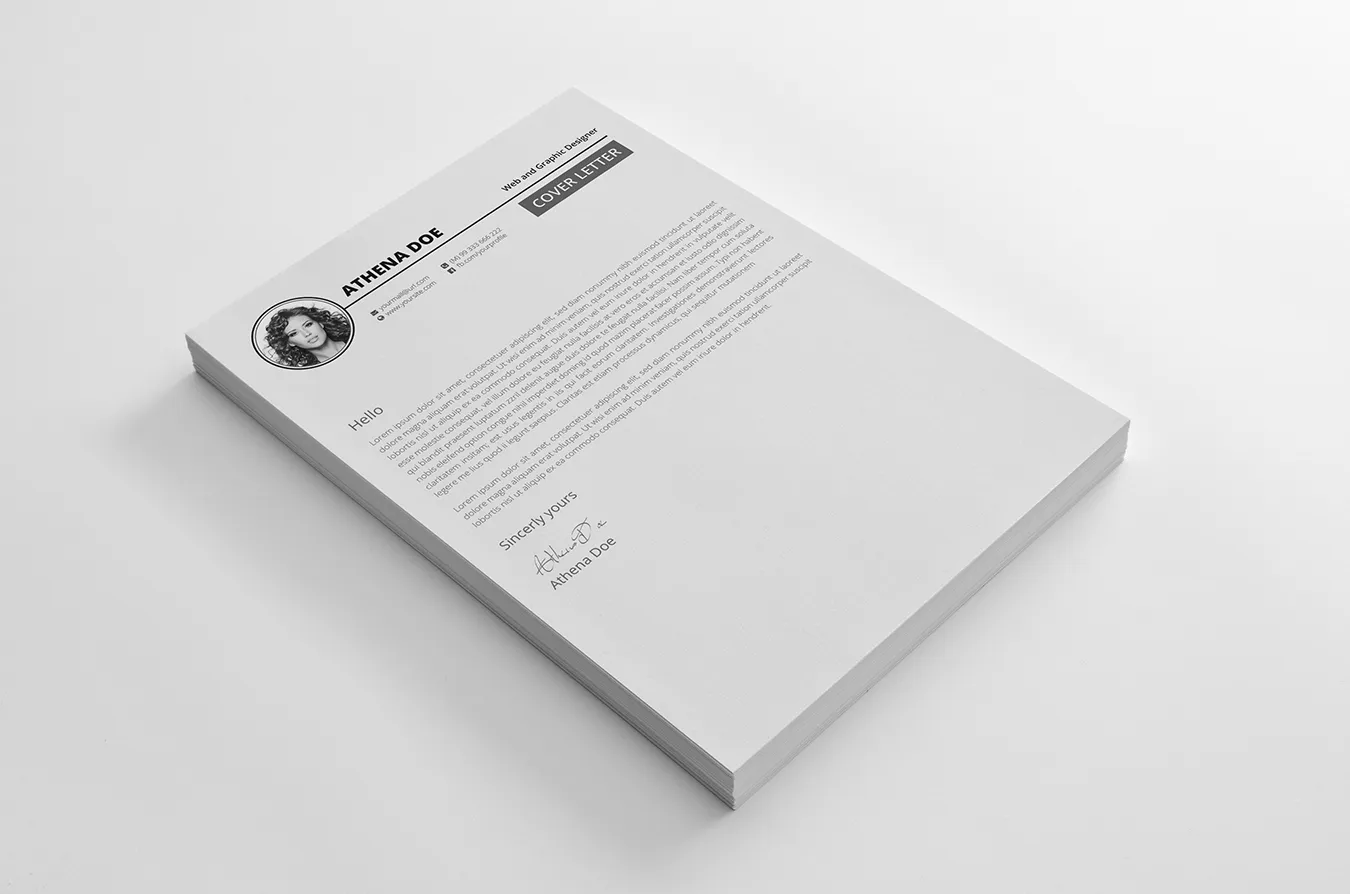
What is a Cover Letter for a Writing Portfolio?
A cover letter for a writing portfolio is more than just a formality; it’s your first introduction to a potential client or employer. Think of it as the opening act, setting the stage for the main performance – your writing samples. Unlike a resume, which provides a factual overview of your experience, a cover letter allows you to showcase your personality, writing style, and enthusiasm for the specific role or project. It’s your chance to connect with the reader on a more personal level, demonstrating your understanding of their needs and your ability to meet them. This letter should act as a bridge between your skills and their requirements, clearly stating why you are the ideal candidate. The cover letter is an invaluable tool when sending over your writing portfolio.
Why is a Cover Letter for Your Portfolio Important?
A well-crafted cover letter provides context for your writing samples. It helps the recipient understand the purpose behind your work, the skills you bring to the table, and your passion for the field. It’s a chance to narrate the story behind your experience. It helps you stand out from the competition by highlighting your unique value proposition. Without a cover letter, your portfolio might appear as a collection of unrelated pieces. The cover letter also demonstrates your communication skills – an essential asset for any writer. It showcases your ability to write clearly, concisely, and persuasively. It allows you to tailor your message to the specific needs of the recipient. A generic cover letter can appear less impressive than a personalized one.
Cover Letter Secrets Tip 1 Showcase Your Best Work

Selecting the right pieces is crucial. Your portfolio should be a curated collection that reflects the breadth and depth of your writing abilities. Choose samples that are relevant to the job or project you are applying for. Focus on quality over quantity; a few exceptional pieces are more impactful than a large number of mediocre ones. Make sure the selected pieces demonstrate your ability to write in different styles, formats, and for diverse audiences. Highlight your most impressive work. It is important to demonstrate how the pieces align with the needs of the prospective client or employer. Ensure each piece in your portfolio is free from errors and reflects your best work.
How to Effectively Highlight Your Top Pieces
In your cover letter, briefly describe each piece, emphasizing what it showcases about your abilities. Mention the context in which you wrote the piece, the audience it was intended for, and the results you achieved. Quantify your achievements whenever possible (e.g., ‘Increased website traffic by 20%’). Mention the challenges you overcame while writing it, it is important to provide context. Use strong verbs to describe your actions (e.g., ‘developed’, ‘created’, ‘managed’). Tailor the description of each piece to align with the job requirements. Ensure your descriptions are concise, engaging, and highlight your key strengths as a writer. You should always provide a link for a potential employer to access your writing.
Cover Letter Secrets Tip 2 Tailor to the Role
A generic cover letter is a missed opportunity. Always customize your cover letter to match the specific requirements of the job or project. Research the company or client you are targeting, understand their needs, and tailor your letter to address them. Highlight the skills and experiences that are most relevant to their needs. Demonstrate that you have taken the time to understand their business and are genuinely interested in the opportunity. Use keywords from the job description to show you understand their requirements. Address the hiring manager by name if possible. When you tailor your letter, you show a level of interest and attention to detail that sets you apart.
Understanding the Job and Company

Thoroughly review the job description to understand the required skills, experience, and responsibilities. Research the company’s mission, values, and target audience. Visit their website, read their blog, and check their social media profiles. Identify the company’s challenges and opportunities. Analyze their writing style and tone. Understand the company culture. This research will help you tailor your cover letter to their specific needs and demonstrate your genuine interest. Demonstrate in your letter how your skills and experience align with their needs. Tailor your letter to show how you can contribute to their success. Make sure to always know the company and understand what they do.
Customizing Your Letter for Specific Requirements
Once you understand the job requirements and company culture, tailor your cover letter to address them. Use the keywords from the job description. Highlight the skills and experiences that are most relevant. Provide specific examples of how you have used those skills in the past. Show, don’t just tell. Mention how your skills align with the company’s values and mission. Explain how you can help the company achieve its goals. Showcase your understanding of their challenges and opportunities. Customize your letter to demonstrate your genuine interest in the specific role and company. If you have a lot of experience, it is ok to remove some irrelevant ones.
Cover Letter Secrets Tip 3 Quantify Your Accomplishments
Numbers and data add credibility to your claims. Whenever possible, quantify your accomplishments to make them more impactful. Instead of saying ‘Improved website traffic,’ say ‘Increased website traffic by 30% in six months.’ Instead of saying ‘Managed social media accounts,’ say ‘Managed social media accounts for five clients, resulting in a 25% increase in follower engagement.’ Use metrics and data to demonstrate your effectiveness and impact. Providing data shows you pay attention to detail. This approach provides concrete evidence of your skills and abilities. By quantifying your accomplishments, you make a compelling case for why you are the best candidate.
Using Numbers and Data to Impress

When describing your experience, use numbers and data to support your claims. Include percentages, statistics, and specific figures to quantify your achievements. For example, mention the number of articles you have written, the number of clients you have worked with, or the revenue you have generated. Always provide context for your numbers. Use numbers to back up your claims. It is important to mention any awards or recognition. This will show the company you can create content that generates results.
Providing Context for Your Achievements
While numbers are important, always provide context to explain their significance. Explain the impact of your achievements. Did your work increase sales, improve customer engagement, or boost brand awareness? Describe the challenges you overcame. Give the reader the reason why your achievement is important. Explain the tools and strategies you used to achieve your results. Provide the reader with a clear understanding of the situation, your actions, and the outcome. This will make your achievements more relatable and impactful. Context is important to show how you came to the end result.
Cover Letter Secrets Tip 4 Show, Don’t Just Tell
Rather than simply stating your skills, demonstrate them through concrete examples. Bring your writing to life by showcasing your ability to create engaging content. Use specific examples from your portfolio to illustrate your abilities. Describe the context, your approach, and the results. Make your cover letter a mini-portfolio. Use your cover letter to demonstrate your writing skill. Show the hiring manager that you can generate the desired results. This approach makes your claims more credible and memorable. The more specific you are, the better.
Bringing Your Writing to Life with Examples

Instead of saying ‘I am a versatile writer,’ provide an example of the different types of content you have written. Describe the target audience, the writing style, and the results of each piece. Highlight the impact of your writing. If your writing increased traffic, mention that. If your writing generated leads, mention that. If your writing helped the company get clients, mention that. Use anecdotes or brief stories to illustrate your skills. Let your writing speak for itself, demonstrating your unique voice and style.
Adding Personality and Voice
Infuse your cover letter with your personality and unique voice. Let your enthusiasm for the role shine through. Avoid sounding generic or robotic. Write in a natural, engaging tone. Let your personality and voice come through. While maintaining professionalism, feel free to add a touch of humor. Show that you are a real person, not just a collection of skills and experiences. This will help you connect with the reader on a more personal level and make a lasting impression. Adding personality is one of the easiest ways to get noticed.
Cover Letter Secrets Tip 5 Perfect the Presentation
Presentation matters. Ensure your cover letter is well-formatted, easy to read, and free from errors. Use a professional font, such as Arial or Times New Roman. Keep the font size at a readable level. Use clear headings and subheadings. Use bullet points to highlight key information. Proofread your cover letter carefully for grammar, spelling, and punctuation errors. Ask someone else to proofread it as well. A polished cover letter demonstrates your attention to detail and professionalism. Make sure your document is well-organized and visually appealing.
Formatting and Proofreading Your Cover Letter

Choose a professional font and maintain a consistent format throughout your cover letter. Use clear headings and subheadings to organize your content. Use white space effectively to improve readability. Proofread your cover letter carefully for any typos, grammatical errors, or punctuation mistakes. Get a second pair of eyes to review it for you. Make sure all of your links work. Ensure your cover letter is easy to read and visually appealing. Proofreading is as important as the content. Ensure you can send the correct document to your client.
Ensuring Readability and Professionalism
Write in a clear, concise, and engaging tone. Use active voice and avoid jargon. Keep your paragraphs short and to the point. Tailor your language to the audience. Proofread every word. Make sure your cover letter reflects your professionalism and attention to detail. Avoid slang. It is important to have a well-formatted document. A cover letter is the first impression, so make it count. Following these tips will significantly increase your chances of landing an interview and getting hired.
Final Thoughts and Next Steps
A well-crafted cover letter is an essential component of a successful writing portfolio. By following these five tips, you can create a cover letter that showcases your skills, experience, and personality, and grabs the attention of potential clients or employers. Remember to tailor your letter to each specific opportunity, highlight your best work, quantify your accomplishments, demonstrate your skills, and perfect your presentation. A good cover letter is what gets you the interview. Now that you have a solid foundation, start crafting your cover letter and watch your portfolio shine. Good luck, and happy writing!