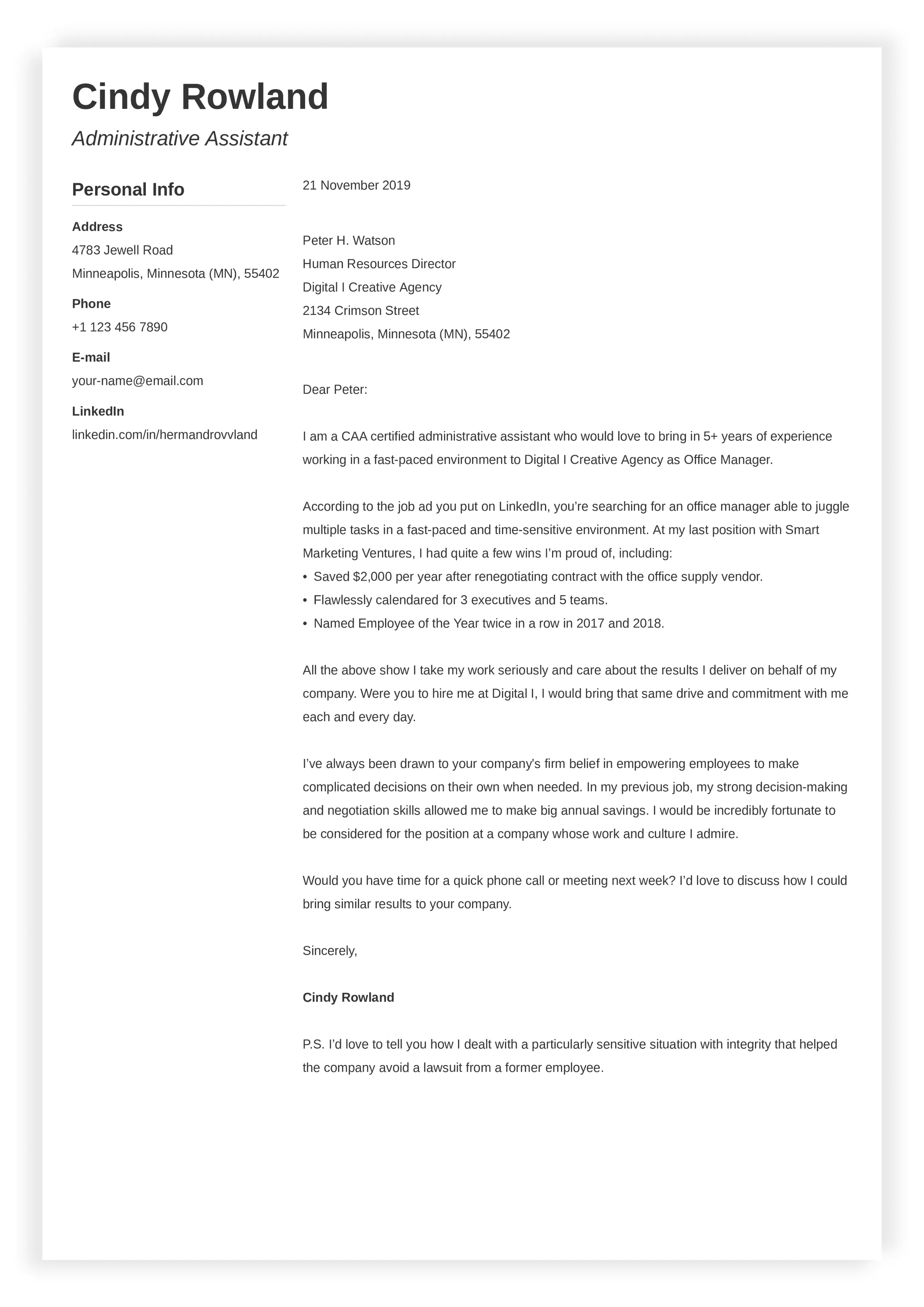
Understanding the Importance of a Cover Letter
In the competitive landscape of modern job applications, a well-crafted cover letter is more than just a formality; it’s a critical tool that can significantly impact your chances of landing an interview. It serves as your first introduction to a potential employer, offering you the opportunity to showcase your personality, skills, and enthusiasm in a way that a resume alone cannot. Many hiring managers consider a cover letter a mandatory part of the application process, using it as a screening tool to assess a candidate’s communication skills, attention to detail, and genuine interest in the position and the company. Failing to provide a cover letter, or submitting a poorly written one, can immediately disqualify you from consideration, highlighting the importance of investing time and effort into crafting a compelling and personalized document.
Why a Cover Letter Matters
A cover letter provides a platform to elaborate on your resume and connect your qualifications to the specific requirements of the job. Unlike a resume, which presents a snapshot of your experience and skills, a cover letter allows you to tell a story, explaining why you are the perfect fit for the role. It enables you to address any potential gaps in your resume, such as career changes or periods of unemployment, providing context and demonstrating your proactive approach. Furthermore, it gives you the chance to demonstrate your understanding of the company’s values, mission, and goals, signaling your genuine interest and research efforts. This personalized approach can set you apart from other applicants and make a memorable impression on the hiring manager.
How a Cover Letter Complements Your Resume

While your resume presents the ‘what’ of your professional history – your experiences, skills, and education – your cover letter explains the ‘why’ and ‘how’. It connects the dots between your past experiences and the requirements of the job, offering a narrative that clarifies how your skills align with the position’s demands. It can highlight specific achievements, provide examples of your work ethic, and showcase your problem-solving abilities. A cover letter allows you to provide context for your resume entries, such as explaining the scope of your responsibilities in a particular role or detailing the results of a specific project. By complementing your resume, a well-written cover letter can make your application more persuasive and increase the likelihood of securing an interview.
Key Components of a Compelling Cover Letter
Header and Contact Information
The header of your cover letter should include your name, address, phone number, and email address. Ensure this information is accurate and professional. Directly below this, on the same side, include the date and the hiring manager’s name, title, and the company’s address. If you can’t find the hiring manager’s name, research the company’s website or LinkedIn to find out, or use a general salutation like ‘Dear Hiring Manager’. Proper formatting and attention to detail in the header convey professionalism and respect for the recipient.
Salutation and Addressing the Hiring Manager

Start your cover letter with a professional salutation. ‘Dear Mr./Ms./Mx. [Last Name]’ is a good starting point if you know the hiring manager’s name. Always address the hiring manager by their last name to show respect. If you are unsure of the hiring manager’s name, use a general salutation such as ‘Dear Hiring Manager’ or ‘Dear [Department Name] Team’. Avoid generic greetings like ‘To Whom It May Concern’ or ‘Dear Sir/Madam’, as they can come across as impersonal and lack the attention to detail. The salutation sets the tone for the entire letter, so make sure it’s courteous and relevant.
Opening Paragraph and Hook
The opening paragraph is your chance to grab the reader’s attention. Start with a strong statement that highlights your enthusiasm for the position or the company. Briefly state the position you are applying for and how you learned about it. You might mention a shared connection, a specific project the company is working on that interests you, or a recent achievement that aligns with the job requirements. The goal is to create a compelling hook that encourages the reader to continue. Avoid generic openings, such as simply restating the job title, and aim for a statement that showcases your understanding of the role and the company’s needs.
Body Paragraphs Highlighting Skills and Experience
The body paragraphs are where you showcase your skills and experience. Select key skills and accomplishments from your resume and elaborate on them, providing specific examples. Use the STAR method (Situation, Task, Action, Result) to structure your responses, illustrating your skills in context. For each skill or experience you highlight, explain the situation, the task you were assigned, the actions you took, and the positive results you achieved. Quantify your achievements whenever possible. For example, instead of saying ‘Improved sales,’ say ‘Increased sales by 15% within six months.’ This section should be customized to match the job description, emphasizing the skills and experiences that the employer values most.
Tailoring Your Cover Letter to the Job Description

Carefully review the job description and identify the key requirements, skills, and qualifications that the employer is seeking. Use the keywords and phrases from the job description throughout your cover letter to demonstrate that you possess the necessary qualifications. Structure your body paragraphs to address these requirements directly. For example, if the job description emphasizes project management skills, provide examples of successful projects you’ve managed, highlighting your ability to plan, organize, and execute tasks. The more closely you align your cover letter with the job description, the more likely you are to make a strong impression.
Quantifying Achievements and Using Action Verbs
Use action verbs to start your sentences and describe your accomplishments, such as ‘Managed,’ ‘Led,’ ‘Developed,’ ‘Implemented,’ or ‘Achieved.’ These verbs make your cover letter more dynamic and engaging. Whenever possible, quantify your achievements. For instance, rather than stating ‘Improved customer satisfaction,’ specify the percentage increase or other measurable results. Quantifying your accomplishments provides concrete evidence of your skills and abilities. Numbers and metrics provide tangible proof of your value and impact, helping to create a compelling narrative that sets you apart.
Closing Paragraph and Call to Action
The closing paragraph should reiterate your interest in the position and the company. Express your enthusiasm for the opportunity and briefly summarize why you are a strong candidate. Include a call to action, such as requesting an interview or expressing your availability for further discussion. Thank the hiring manager for their time and consideration. Maintain a professional and confident tone. A well-crafted closing paragraph reinforces your interest, showcases your professionalism, and encourages the next step in the hiring process.
Formatting and Design Best Practices

Font and Style Choices
Choose a professional, readable font such as Times New Roman, Arial, Calibri, or Helvetica. Use a font size between 10 and 12 points for easy readability. Maintain consistent formatting throughout the document, including font size, line spacing, and margins. Avoid using overly decorative fonts or unusual styles, as they can appear unprofessional. Ensure your cover letter is easy to scan and read. A clean and simple design shows respect for the hiring manager’s time and attention.
Length and Structure
Keep your cover letter concise and to the point, ideally fitting on a single page. Break up large blocks of text with paragraphs, bullet points, and white space to improve readability. Use a clear and logical structure that follows the standard cover letter format, with a header, salutation, opening paragraph, body paragraphs, closing paragraph, and closing. Maintain a professional and organized presentation, as this reflects well on your attention to detail. Prioritize the most important information to create a compelling and informative document.
Proofreading and Editing Your Cover Letter

Before submitting your cover letter, carefully proofread it for any errors in grammar, spelling, and punctuation. Errors can undermine your credibility and demonstrate a lack of attention to detail. Use a spell checker and grammar checker, but don’t rely on them entirely. Read the document aloud to catch any awkward phrasing or sentence structure. If possible, have a friend or colleague review your cover letter for clarity and accuracy. A fresh pair of eyes can often spot errors you might miss. Thorough proofreading ensures your cover letter presents a polished and professional image.
Common Mistakes to Avoid
Generic and Uninspired Content
Avoid using a generic cover letter that you send to every company. Tailor your letter to each job application, demonstrating your specific interest in the company and the position. Research the company and the role, and personalize your content accordingly. Generic cover letters often fail to capture the hiring manager’s attention and highlight your unique qualifications. Show that you’ve taken the time to understand the role and what the company seeks. Customization is key to creating a memorable and impactful cover letter.
Typos and Grammatical Errors

Typos and grammatical errors can immediately disqualify your application. Carefully proofread your cover letter multiple times before submitting it. Use spell-check and grammar-check tools, but also read through the document yourself. A single error can create a negative impression, making you appear careless and inattentive to detail. Ensure that your writing is clear, concise, and free of errors. A well-edited cover letter demonstrates your professionalism and respect for the hiring process.
Ignoring the Job Description
Failing to address the requirements outlined in the job description is a major mistake. Always refer to the job description when writing your cover letter and tailor your content to match the skills, experience, and qualifications that the employer is seeking. Show how your skills and experiences align with the job requirements. Include relevant keywords and phrases from the job description. By directly addressing the employer’s needs, you increase your chances of being selected for an interview.
Tips for Different Job Applications
Cover Letters for Entry-Level Positions

When applying for entry-level positions, highlight your relevant coursework, internships, volunteer experiences, and any projects you’ve completed. Emphasize your skills and enthusiasm. If you have limited work experience, focus on transferable skills, such as communication, teamwork, and problem-solving abilities. Tailor your cover letter to showcase your potential and willingness to learn and grow within the company. Consider including a brief summary of your career goals and how the position aligns with them. Show your eagerness to begin your career.
Cover Letters for Experienced Professionals
Experienced professionals should showcase their track record of achievements, using quantifiable results and action verbs. Highlight how your previous roles and accomplishments align with the job requirements. Provide examples of how you have made a significant impact in past roles. Mention any awards or recognitions received. Focus on demonstrating your leadership skills and expertise. Include detailed information that supports your claims of competence and value. Show that you are a valuable candidate who can add to the bottom line.
Cover Letters for Career Changes
When changing careers, explain your reasons for the transition and highlight the transferable skills from your previous roles that are relevant to the new position. Show how your past experiences have prepared you for this new role. Emphasize your adaptability and willingness to learn new things. Be proactive in addressing any potential concerns about your lack of direct experience in the new field. Showcase your enthusiasm and dedication to making a successful career change. Focus on building a narrative to link your skills and experiences to the desired role.
Final Thoughts on Writing a Perfect Cover Letter
Writing a perfect cover letter is an ongoing process, but the investment of time is well worth it. By following these guidelines, tailoring your content to each specific job, and meticulously proofreading your work, you can significantly improve your chances of landing an interview. Your cover letter should be a dynamic and engaging tool that presents your skills and experience in a clear and compelling manner. Remember that your cover letter is your first impression. It’s the key to opening doors to a job. Good luck with your job search.