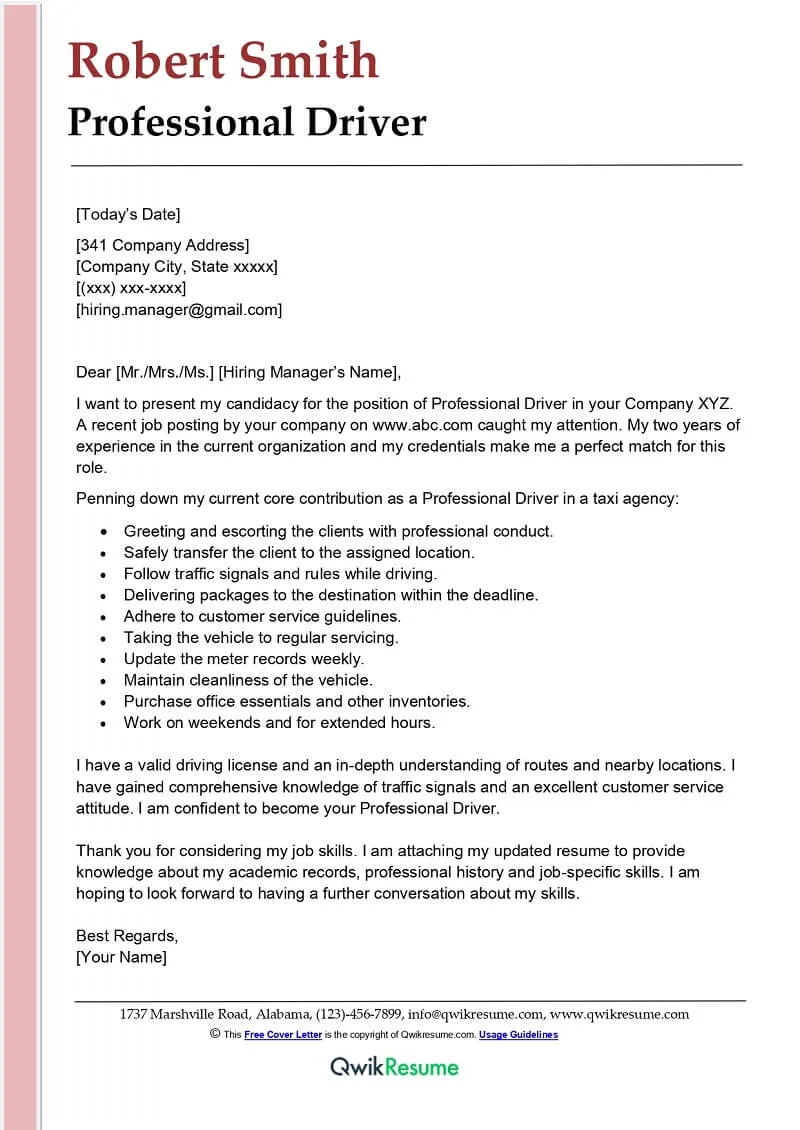
Crafting a Driver Cover Letter
A well-crafted driver cover letter is your first impression. It’s your opportunity to showcase why you’re the perfect fit for the job. It should be more than just a summary of your resume; it’s where you demonstrate your personality, passion, and suitability for the role. When crafting your cover letter, remember that it’s a formal document, therefore proper grammar, spelling, and punctuation are crucial. Start with a professional heading, including your contact information and the date. Then, address the hiring manager directly, if possible. Researching the company and the specific role will help you tailor your letter and demonstrate genuine interest. The goal is to grab the reader’s attention immediately and encourage them to read further. The cover letter should be concise, compelling, and focused on the requirements of the job.
Highlighting Your Driving Experience
Your driving experience is the cornerstone of your cover letter. Detail the types of vehicles you’ve driven, such as semi-trucks, delivery vans, or passenger vehicles. Specify the number of years you’ve been driving professionally and the total miles driven. Include details about the types of routes you’ve handled – local, regional, or over-the-road. Mention any experience with specialized equipment or cargo, such as hazardous materials, refrigerated goods, or oversized loads. Quantify your achievements whenever possible, for example, stating the number of accident-free miles or the percentage of on-time deliveries. Highlight any experience with specific industries, such as construction, transportation, or logistics. This will paint a clear picture of your capabilities and suitability for the role. Always ensure that the experience you mention is verifiable and aligns with the job description.
Detailing Your Qualifications

Clearly state your qualifications, starting with your Commercial Driver’s License (CDL). Include the class of your CDL (A, B, or C) and any endorsements you possess, such as Hazmat, Tanker, or Doubles/Triples. Mention any other certifications or licenses you hold, such as a Transportation Worker Identification Credential (TWIC). Provide details about your education or training related to driving, such as completion of a professional driving school. Note any awards or recognitions you’ve received for safe driving or excellent performance. Mention your knowledge of regulations, such as hours of service (HOS) rules and Department of Transportation (DOT) guidelines. Ensure all information is accurate and up-to-date. Also, be sure to highlight your ability to handle unexpected situations, such as inclement weather or mechanical issues, showing your resourcefulness and problem-solving skills.
Emphasizing Safety and Compliance
Safety and compliance are paramount in the driving profession, and you must demonstrate your commitment to both. Highlight your accident-free driving record. Explain your understanding and adherence to all safety regulations, including pre-trip inspections, vehicle maintenance, and safe driving practices. Mention any safety training you have completed, such as defensive driving courses or specific industry-related training. Showcase your knowledge of and compliance with Hours of Service (HOS) regulations, ensuring you emphasize your ability to manage your time effectively and adhere to all legal requirements. Emphasize your commitment to following company policies and procedures related to safety and compliance. Demonstrating your commitment to safety is crucial and will give the hiring manager confidence in your ability to handle responsibilities safely and professionally.
Showcasing Relevant Skills
Besides driving skills, highlight other relevant skills. Include your skills in vehicle maintenance and inspection. Mention your proficiency with electronic logging devices (ELDs) and other technology used in the industry. Discuss your communication skills, including your ability to communicate effectively with dispatchers, customers, and other drivers. Highlight your ability to read maps, use GPS navigation systems, and plan routes efficiently. Mention your experience with loading and unloading cargo, securing loads, and handling paperwork. If you possess any customer service skills, emphasize these as well, as drivers often interact with customers. Demonstrate your ability to work independently and as part of a team. By clearly illustrating your skills, you highlight your value and set yourself apart from other applicants.
Demonstrating Your Professionalism

Professionalism is a key attribute for any driver. Showcase your professionalism by demonstrating your strong work ethic, reliability, and punctuality. Mention your commitment to arriving on time and meeting deadlines. Show your ability to handle stressful situations with poise and maintain a positive attitude. Highlight your willingness to follow instructions and adhere to company policies. Mention your experience with customer service, including your ability to communicate politely and resolve issues effectively. Discuss your ability to represent your company in a positive manner and maintain a professional image. Use a formal tone, appropriate language, and avoid slang or unprofessional language. By exhibiting professionalism, you give the hiring manager confidence in your ability to succeed in the role and represent the company well.
Customizing Your Cover Letter
A generic cover letter is unlikely to make a strong impression. Always customize your cover letter for each job you apply for. Research the company to understand their mission, values, and needs. Tailor your letter to specifically address the requirements and preferences outlined in the job description. Use keywords from the job description throughout your letter to demonstrate your alignment with the position. Customize your examples and experiences to show that you understand the role and can meet its demands. Show how your skills and experience align with the company’s specific needs. When tailoring your letter, show why you are the best fit for that specific job at that specific company.
Researching the Company
Before writing your cover letter, conduct thorough research on the company you’re applying to. Visit their website and social media profiles to learn about their operations, culture, and values. Understand their mission and vision, and how they relate to the driving profession. Identify any recent news or developments about the company. If possible, research the hiring manager or the person you’ll be reporting to. This level of detail shows genuine interest. Use the information you gather to customize your cover letter, demonstrating your knowledge of the company and showing why you’re a good fit for their team. If you understand their values, you will highlight how your experience aligns with their goals. This kind of effort can help you stand out among the other applicants.
Tailoring to the Job Description

The job description is your guide. Carefully review the job description and identify the key requirements, skills, and qualifications the company is looking for. Use the same language and keywords from the job description throughout your cover letter. Address each of the requirements listed in the job description directly. Provide specific examples from your experience that demonstrate your ability to meet those requirements. Highlight any unique skills or experiences that are relevant to the job. Make sure your letter clearly shows how your qualifications align with the specific needs of the role. Tailoring your cover letter to the job description increases your chances of getting noticed by the hiring manager and getting an interview.
Proofreading and Editing
Proofreading and editing are essential steps in crafting a professional cover letter. Before submitting your cover letter, carefully proofread it for any errors in grammar, spelling, and punctuation. Read the letter aloud to catch any awkward phrasing or sentence structure. Use spell-check and grammar-check tools, but don’t rely on them entirely. Ask a friend or family member to review your letter for a fresh perspective. Make sure your formatting is consistent and easy to read. Ensure that your contact information is accurate and up-to-date. A well-written and error-free cover letter reflects your attention to detail and professionalism, increasing your chances of getting the job.