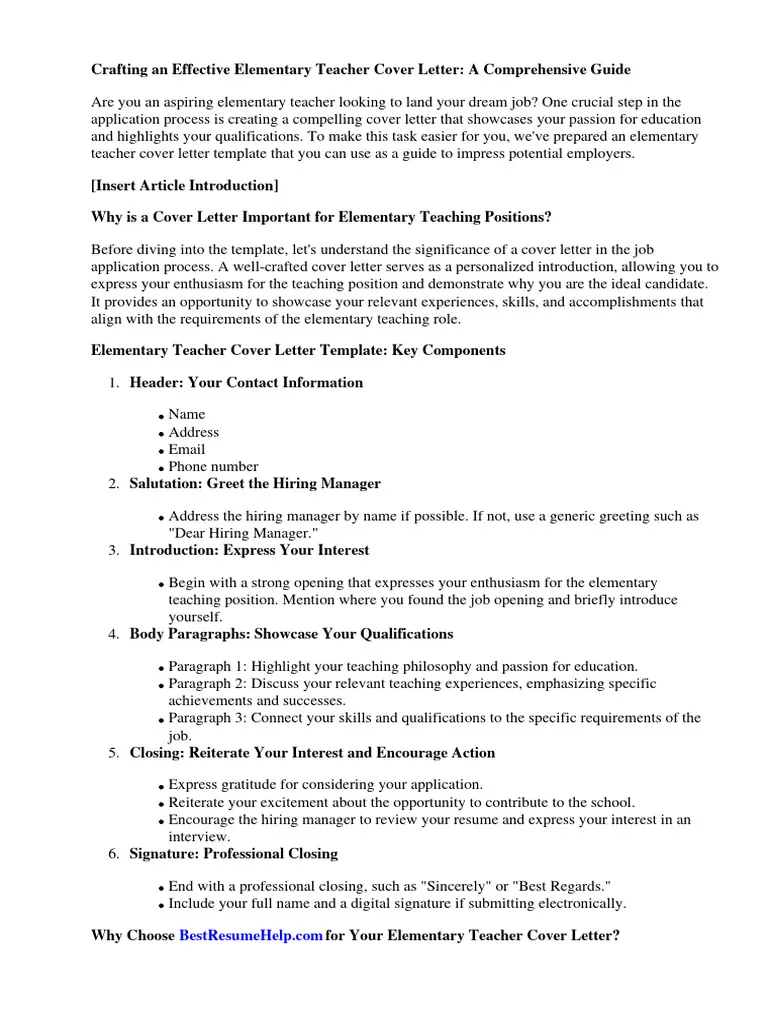
What is a Cover Letter for Elementary Teacher
A cover letter for an elementary teacher position is a crucial document that accompanies your resume when applying for teaching jobs. It serves as your introduction to the hiring committee, providing an opportunity to showcase your personality, skills, and qualifications in a way that a resume alone cannot. It’s your chance to make a strong first impression and persuade the school to consider you for an interview. Think of it as a personal advertisement, highlighting what makes you the ideal candidate for the position.
Why is a Cover Letter Important for Elementary Teacher Positions
In the competitive field of elementary education, a well-crafted cover letter can significantly increase your chances of landing an interview. It allows you to provide context to your resume, explain your career goals, and demonstrate your passion for teaching. Many hiring managers use cover letters as a screening tool, and a poorly written one can lead to your application being immediately rejected. The cover letter provides a platform to connect with the school on a more personal level.
Key Components of an Elementary Teacher Cover Letter

A strong cover letter should consist of several key components to effectively communicate your qualifications and suitability for the role. These elements work together to paint a picture of your capabilities and your genuine interest in the position. The order and emphasis you place on each part will ultimately depend on your personal style and the specific needs of the job.
Header and Contact Information
The header of your cover letter should be clean and professional. It should clearly display your contact information and the date. This ensures the hiring manager can easily reach you if they are interested in your application. Accuracy is key here, so be sure to double-check all contact details.
Applicant’s Contact Information
Include your full name, phone number, email address, and optionally, your LinkedIn profile URL. Make sure your email address is professional. Use a simple format like firstname.lastname@email.com. This is the basic information a recruiter will need to connect with you.
Recipient’s Contact Information

If possible, address your cover letter to a specific person, such as the principal or hiring manager. Research the school’s website or use LinkedIn to find the correct contact. Include the recipient’s name, title, and school address. This personalization can make your application stand out and shows you’ve taken the time to do your homework.
Greeting
Begin your cover letter with a professional greeting. If you know the hiring manager’s name, use “Dear Mr./Ms./Dr. Last Name.” If you don’t know the name, use “Dear Hiring Committee” or “Dear Principal.” Avoid overly casual greetings.
Writing a Compelling Opening Paragraph
The opening paragraph is your opportunity to grab the reader’s attention. Clearly state the position you are applying for and how you learned about it. Express your enthusiasm for the role and the school. Consider including a brief statement about your teaching philosophy or a standout achievement that immediately grabs the reader’s attention. The goal is to create a positive first impression.
Showcasing Your Passion and Enthusiasm

Elementary teaching is more than just a job; it’s a calling. Show the hiring committee your genuine love for working with children. Share why you are passionate about education and what motivates you to be a teacher. Mentioning specific aspects of teaching that you find particularly fulfilling can set you apart. Your passion should shine through in your writing.
Highlighting Relevant Experience
Focus on the teaching experiences that are most relevant to the position. This includes student teaching, volunteer work, and any other experience working with children. Quantify your achievements whenever possible, using numbers to demonstrate your impact. Even if you don’t have extensive experience, highlight any transferable skills from other roles.
Mentioning Teaching Experience
Detail any classroom experience you have. Include the grade level, the number of students, and the responsibilities you held. Briefly describe the teaching methods you used and the successes you achieved. Focus on experiences that showcase your ability to manage a classroom and engage students. This section gives the hiring manager a clearer sense of what you can do.
Focusing on Achievements and Results

Rather than just listing responsibilities, focus on your accomplishments. Use action verbs to describe your actions and the outcomes. For instance, instead of saying “Tutored students,” say “Improved student test scores by 15% through targeted tutoring sessions.” Quantifiable results make your achievements more impactful and demonstrate your ability to make a difference.
Demonstrating Skills and Qualifications
Highlight the skills and qualifications that make you a strong candidate. Carefully review the job description and identify the key skills the school is seeking. Provide examples of how you have demonstrated these skills in the past. Demonstrate that you meet or exceed the criteria outlined in the job posting.
Mentioning Key Skills
Emphasize skills such as classroom management, lesson planning, differentiation, communication, and collaboration. Provide specific examples of how you have used these skills in your teaching practice. Tailor these skills to the specific grade level or subject the position requires. Demonstrating proficiency in these core skills is critical.
Highlighting Relevant Qualifications

Mention your educational qualifications, teaching certifications, and any relevant coursework or professional development. Briefly describe any specializations or areas of expertise, such as special education or early childhood development. Ensure your qualifications meet the requirements of the position.
Tailoring Your Letter to the Specific School
A generic cover letter will not impress. Show the school you’ve taken the time to learn about their unique culture and values. Demonstrating this commitment will set you apart from other candidates. Tailoring your letter shows you are genuinely interested in working at their school.
Researching the School’s Mission and Values
Visit the school’s website and review its mission statement, values, and any special programs. Show that you understand the school’s priorities and how your teaching aligns with them. This will help you demonstrate that you are a good fit for the school’s culture.
Referencing Specific Programs or Initiatives

If the school has specific programs or initiatives, such as a focus on STEM education or a particular teaching method, mention them in your letter. Explain how your skills and experience align with these programs and how you can contribute to their success. Highlighting these connections shows your genuine interest.
Closing the Letter Effectively
Your closing paragraph is your final opportunity to make a positive impression. Express your enthusiasm for the opportunity, reiterate your interest in the position, and thank the hiring manager for their time and consideration. Make sure you include a call to action, and show confidence.
Expressing Gratitude
Thank the hiring manager for considering your application. Express your appreciation for their time and the opportunity to be considered for the position. A simple expression of gratitude shows professionalism and respect.
Providing Contact Information
Reiterate your contact information, including your phone number and email address, in the closing paragraph. This ensures that the hiring manager can easily reach you to schedule an interview. Make it easy for them to contact you and move forward with your application.
Proofreading and Formatting
Before submitting your cover letter, carefully proofread it for any errors in grammar, spelling, and punctuation. Ensure the formatting is consistent and professional. A polished cover letter demonstrates attention to detail and professionalism, which are essential qualities for an elementary teacher.
Reviewing for Grammar and Spelling
Errors in grammar and spelling can undermine your credibility. Carefully review your cover letter for any mistakes. Use a grammar checker, and have a friend or colleague proofread it as well. Ensure every sentence is clear, concise, and free from errors.
Formatting Guidelines
Use a standard, easy-to-read font, such as Times New Roman or Arial, in a 10-12 point size. Keep the letter concise, ideally within one page. Use consistent formatting throughout the document. Maintain a professional tone and layout.
Cover Letter Examples for Elementary Teachers
Reviewing examples of cover letters for elementary teachers can give you valuable insights into the structure and content. Look for examples online or in career guides. Study how successful applicants have presented their skills, experience, and passion for teaching. Adapt these examples to create a cover letter that showcases your unique strengths.
Cover Letter Templates
Many online resources offer cover letter templates for elementary teachers. These templates can provide a framework for your letter, making it easier to organize your thoughts and structure your content. However, remember to customize the template to reflect your specific skills, experience, and the requirements of the job you are applying for.
Common Mistakes to Avoid
Be aware of common mistakes that can weaken your cover letter. These mistakes can cost you an interview opportunity. Understanding and avoiding these pitfalls is crucial for creating a cover letter that effectively highlights your strengths.
Using Generic Language
Avoid using generic phrases that could apply to any candidate. Instead, tailor your language to the specific requirements of the job and the school. Showcase your individuality and unique qualifications. Generic language fails to differentiate you from other applicants.
Focusing Too Much on Yourself
While it’s important to highlight your skills and experience, avoid making the letter all about you. Balance your accomplishments with your understanding of the school’s needs and how you can contribute to their mission. Emphasize what you can offer the school, not just what the school can do for you.
Failing to Proofread
As mentioned, grammatical errors and typos can damage your credibility. Always proofread your letter carefully, and consider having someone else review it. Sloppy writing reflects poorly on your attention to detail and professionalism. Proofreading is critical for showing you care about the details.
Tips for a Standout Cover Letter
To truly stand out, consider these tips to make your cover letter memorable. These strategies will help your application grab the attention of hiring managers. Use these tips to create a cover letter that makes an impact.
Adding a Personal Touch
Inject your personality into the cover letter. Let your enthusiasm and passion for teaching shine through. Share a brief anecdote or a personal story that reflects your teaching philosophy. Personal touches make your cover letter more memorable and create a stronger connection with the reader.
Using Action Verbs
Use strong action verbs to describe your accomplishments and skills. This will make your letter more dynamic and engaging. Words like “developed,” “implemented,” “managed,” and “achieved” create a more compelling narrative. Action verbs draw the reader’s attention and highlight your active role.
Showcasing Your Personality
Let your personality shine through in your writing style. Be authentic and genuine. If you have a particular teaching philosophy or a unique approach to education, share it. Your personality is one of your biggest assets.
FAQ
Frequently Asked Questions provide clarification. Here are some common questions about cover letters.
How Long Should an Elementary Teacher Cover Letter Be
Keep your cover letter concise and to the point. Aim for one page, unless the job posting specifically asks for a longer letter. A well-written one-page letter is more effective than a lengthy one.
Should I Include References in My Cover Letter
Generally, it is not necessary to include references in your cover letter. You can state that references are available upon request. You can create a separate document with your references.
What if I Have No Teaching Experience
If you are a recent graduate or have limited teaching experience, focus on your coursework, student teaching, volunteer work, and transferable skills. Highlight your passion for teaching and your willingness to learn. Emphasize any experience you have with children, such as tutoring, mentoring, or coaching. Emphasize relevant skills.