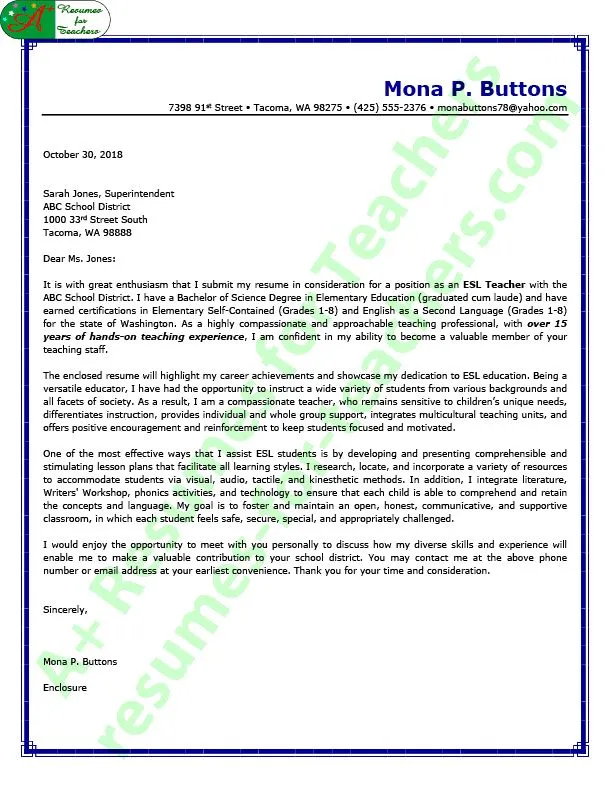
Understanding the ESL Teacher Cover Letter
An ESL teacher cover letter is your first introduction to a potential employer. It’s a crucial document that accompanies your resume, providing a detailed view of your qualifications, skills, and experiences as an ESL (English as a Second Language) teacher. Unlike a resume, which is a summary of your professional history, a cover letter allows you to express your personality, demonstrate your passion for teaching, and explain why you are the perfect fit for the specific ESL teaching position. The goal is to go beyond the facts and statistics of your resume, showcasing your enthusiasm and making a compelling case for why you should be interviewed.
Why is a Cover Letter Important?
A well-crafted cover letter is not just an optional formality; it is a vital part of your job application package. It serves multiple purposes. Firstly, it gives you the opportunity to highlight the key skills and experiences that are most relevant to the specific job you are applying for. Secondly, it allows you to demonstrate your writing skills, which are essential for an ESL teacher. Thirdly, it shows your genuine interest in the position and the school or institution. Many employers use cover letters as a screening tool. A strong cover letter can set you apart from other applicants and increase your chances of getting an interview. Therefore, invest time and effort into crafting a cover letter that effectively showcases your qualifications and enthusiasm.
Key Elements of a Successful ESL Teacher Cover Letter

A successful ESL teacher cover letter incorporates several key elements. The structure typically includes contact information, a greeting, an opening paragraph, a body highlighting your skills and experience, and a closing paragraph. Each section plays a specific role in conveying your suitability for the position. Attention to detail, a professional tone, and a clear, concise writing style are essential. Moreover, you should tailor your cover letter to each job application. Avoid generic cover letters; instead, customize your letter to reflect the specific requirements and values of the school or organization. Proofread your cover letter meticulously to ensure there are no grammatical errors or typos.
Contact Information
Your contact information should be at the top of your cover letter. This typically includes your full name, address, phone number, and email address. Ensure that the email address you provide is professional; avoid using nicknames or informal language. The contact information allows the hiring manager to easily reach you. Make sure this information is accurate and up-to-date. Consider including a link to your online professional profile, such as LinkedIn, if you have one. This provides the employer with additional information about your background and professional experience.
Greeting
The greeting should be formal and professional. If possible, address the hiring manager by name. Research the school’s website or LinkedIn to find the name of the person in charge of hiring. A personalized greeting shows that you have taken the time to learn about the school and the hiring process. If you cannot find a specific name, use a general salutation like Dear Hiring Manager or Dear [Department Name]. Avoid generic greetings like To Whom It May Concern, as they can appear impersonal. Ensure the spelling of the name is correct, as this demonstrates attention to detail.
Opening Paragraph

The opening paragraph should capture the reader’s attention and state the purpose of your letter. Clearly state the specific ESL teaching position you are applying for and where you found the job posting. Briefly mention why you are interested in the position and what makes you a suitable candidate. Highlight one or two key qualifications or experiences that make you stand out. The opening paragraph sets the tone for the rest of the letter and encourages the hiring manager to continue reading. Make sure your opening is concise and directly addresses the job requirements.
Highlighting Your Skills and Experience
The body of your cover letter should provide detailed information about your skills and experience. This section is where you connect your qualifications with the job requirements. Use specific examples to demonstrate your teaching abilities and achievements. Focus on skills and experiences that align with the job description. For example, if the job requires experience with a specific curriculum or age group, highlight your relevant experience. Use action verbs to describe your accomplishments and responsibilities. Avoid simply listing your duties; instead, show how you made a positive impact in your previous roles. This section should be clear, concise, and tailored to the specific job.
Tailoring Your Letter
Customizing your cover letter for each job application is crucial for demonstrating your genuine interest and suitability for the position. Start by carefully reviewing the job description. Identify the key skills, qualifications, and experiences that the employer is seeking. Then, tailor your letter to address these requirements. Use the language and keywords from the job description to show that you understand the needs of the school. Explain how your skills and experiences align with the specific requirements. This shows that you have taken the time to understand the position and are not just sending a generic application. Tailoring your letter increases your chances of making a positive impression.
Emphasizing Relevant Experience

When describing your experience, focus on the responsibilities and accomplishments that are most relevant to the ESL teaching position. Briefly describe your previous roles, highlighting the key duties and achievements that demonstrate your teaching skills. Provide specific examples of how you have successfully taught English to non-native speakers. Include details about the age groups, proficiency levels, and teaching methods you have used. If you have experience with curriculum development, classroom management, or assessment, be sure to mention it. Emphasize experiences that showcase your ability to create engaging lessons, motivate students, and achieve positive learning outcomes.
Showcasing Your Skills
Clearly articulate the skills that make you a successful ESL teacher. These skills can include lesson planning, classroom management, communication, cultural sensitivity, and curriculum development. Provide examples of how you have utilized these skills in your previous teaching roles. Explain how you adapt your teaching methods to meet the needs of diverse learners. Showcase your ability to create a positive and inclusive learning environment. Mention any specific teaching methodologies or technologies you are proficient in. Demonstrate your commitment to ongoing professional development and your willingness to learn and grow as a teacher.
Quantifying Achievements
Whenever possible, quantify your achievements to demonstrate your impact. Use numbers, percentages, and specific data to support your claims. For example, instead of saying you improved student test scores, state that you increased student scores by a certain percentage. If you developed a new curriculum, mention how many students benefited from it. Quantifying your achievements provides concrete evidence of your effectiveness as an ESL teacher. It also helps the hiring manager assess your contributions more easily. Use data and metrics to make your cover letter more impactful and persuasive.
Expressing Enthusiasm and Passion

Throughout your cover letter, express your enthusiasm for teaching and your passion for helping students learn English. Share why you are drawn to ESL teaching and what motivates you. Mention any specific aspects of the school or the position that excite you. Show that you have researched the school and understand its mission and values. This demonstrates your genuine interest in the opportunity and your willingness to contribute to the school community. Your enthusiasm can make a lasting impression on the hiring manager and set you apart from other candidates. Let your passion shine through.
Closing the Letter
The closing paragraph should reiterate your interest in the position and thank the hiring manager for their time and consideration. Briefly summarize your key qualifications and express your enthusiasm for the opportunity. Include a call to action, such as expressing your availability for an interview. Maintain a professional tone and keep the closing concise. This is your final chance to make a positive impression and reiterate your suitability for the position. Ensure your closing paragraph leaves a lasting positive impression.
Call to Action
Include a clear call to action in your closing paragraph. This could be a request for an interview or a statement that you are available to discuss your qualifications further. Make it easy for the hiring manager to take the next step. Provide your phone number or email address if you have not already done so. Show your eagerness to learn more about the position and the school. A well-crafted call to action can significantly increase your chances of getting an interview. Make it clear and easy for the employer to contact you.
Proofreading and Formatting

Before submitting your cover letter, proofread it carefully for any errors in grammar, spelling, and punctuation. Errors can detract from your professionalism and make a negative impression. Use a spell checker and grammar checker, but also read the letter yourself to catch any mistakes that automated tools might miss. Ensure your cover letter is well-formatted and easy to read. Use a standard font like Times New Roman, Arial, or Calibri. Use clear headings and subheadings to organize your content. Keep the letter concise and focused; aim for a maximum of one page. Proofreading is essential; it shows you pay attention to detail.
Reviewing and Refining Your Cover Letter
After writing your cover letter, review and refine it to ensure it is as effective as possible. Ask a friend, colleague, or career counselor to read your cover letter and provide feedback. Consider their suggestions and revise your letter accordingly. Make sure your cover letter aligns with your resume and accurately reflects your qualifications. Ensure that your cover letter is tailored to the specific job and the school or institution. Refine your letter by clarifying your points, adding supporting details, and eliminating any unnecessary information. A well-refined cover letter significantly increases your chances of securing an interview. This final step can make a big difference.