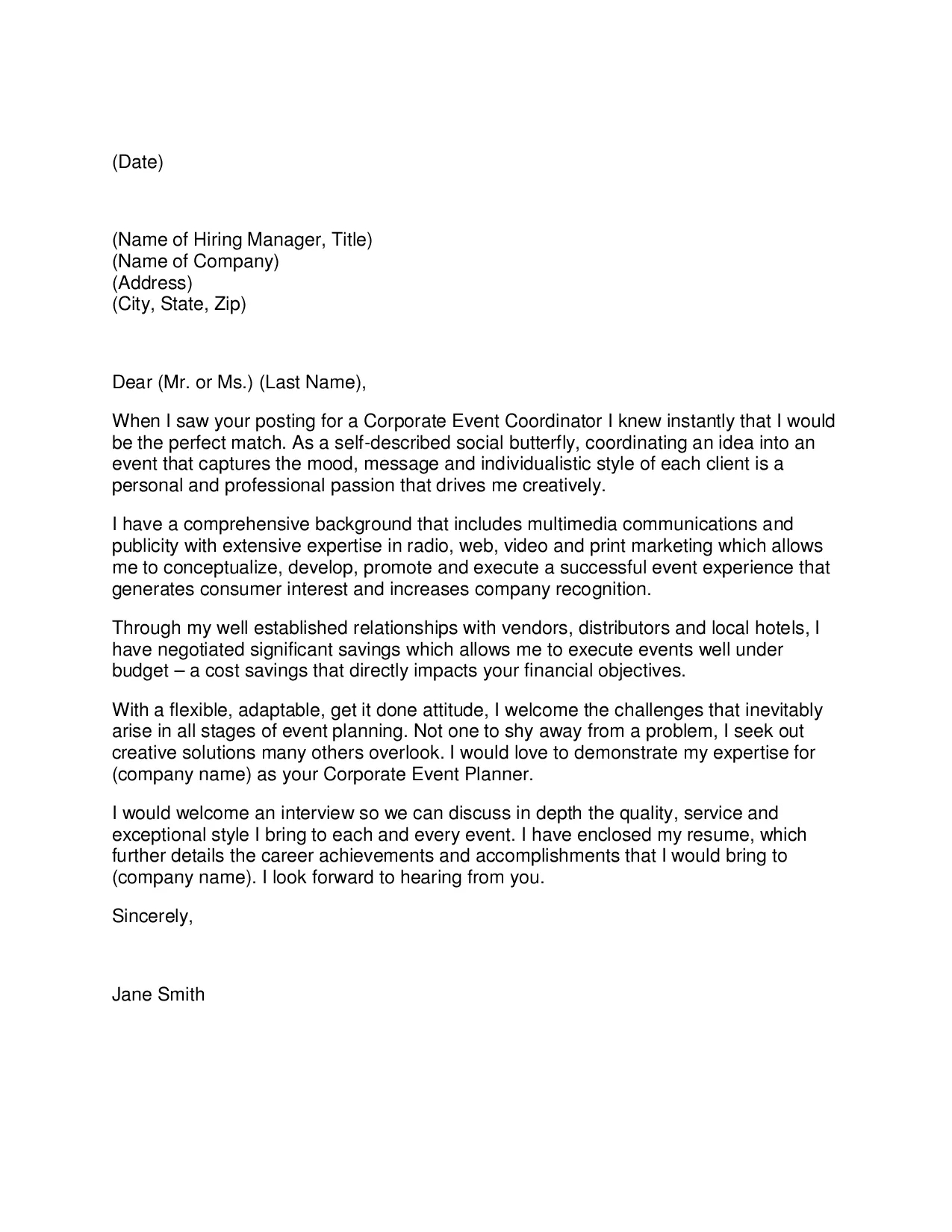
Event Coordinator Cover Letter How-To Guide
Landing your dream event coordinator role starts with a compelling cover letter. This guide provides a comprehensive overview of crafting a cover letter that highlights your skills, experience, and passion for event planning. We’ll cover everything from the essential sections to the common pitfalls to avoid. Whether you’re a seasoned professional or just starting, this guide will equip you with the knowledge and tools to make a lasting impression on potential employers. A well-written cover letter is your first opportunity to showcase your personality and enthusiasm, setting the stage for a successful application. Let’s dive in and create a cover letter that gets you noticed!
Crafting a Compelling Event Coordinator Cover Letter
Crafting a cover letter is more than just listing your qualifications; it’s about storytelling. It’s your chance to demonstrate your understanding of the role, the company, and how your skills align with their needs. A compelling cover letter grabs the reader’s attention, keeps them engaged, and ultimately convinces them to call you for an interview. Think of it as your personal pitch, where you highlight your unique strengths and achievements. Begin by understanding the job description inside and out. Identify the key skills and experience the employer seeks, and ensure your letter directly addresses these requirements. Tailoring each cover letter to the specific job is essential, showing that you’ve taken the time to understand the organization and its needs. Remember, the goal is to make yourself stand out from the crowd.
Understanding the Purpose of an Event Coordinator Cover Letter

The primary purpose of an event coordinator cover letter is to introduce yourself and persuade the hiring manager to read your resume. It provides context to your resume, allowing you to highlight relevant skills, experience, and achievements. Unlike a resume, which is a factual record, a cover letter is your opportunity to showcase your personality, communication style, and enthusiasm for the role and the company. Think of your cover letter as a carefully curated snapshot of your professional self, designed to make you stand out. It should provide a compelling narrative that convinces the hiring manager you are the ideal candidate. This is where you demonstrate your genuine interest in the position and your ability to contribute to the organization’s success.
Key Sections to Include in Your Event Coordinator Cover Letter
A well-structured cover letter follows a clear format, making it easy for the hiring manager to understand your qualifications. The key sections include contact information, a personalized greeting, a captivating opening paragraph, the body where you highlight relevant skills and experience, a strong closing paragraph, and a professional sign-off. Each section plays a crucial role in making a positive impression. Ensuring these sections are well-written and aligned with the job requirements demonstrates your attention to detail and commitment to the application process, showcasing your readiness for the event coordinator role. The following sections offer a detailed guide to constructing each section.
Contact Information & Header
Your cover letter should begin with your contact information, clearly displayed at the top. This includes your full name, phone number, email address, and optionally, your LinkedIn profile URL. Ensure this information is accurate and up-to-date, as this is how the hiring manager will reach you. The header should be clean and professional, reflecting your attention to detail. Consistency is key; your contact information should match the format used on your resume. Use a font that is easy to read and a layout that is visually appealing. Keep the header simple, yet informative, providing all the necessary details in a concise manner. This section lays the foundation for a professional presentation.
Personalized Greeting

Avoid generic greetings like “To Whom It May Concern.” Instead, research the hiring manager’s name and address your cover letter directly to them. This shows that you’ve taken the time to learn about the company and the role, making your application more personal. If you can’t find the hiring manager’s name, try contacting the company’s HR department or searching on LinkedIn. Using a personalized greeting makes your cover letter stand out and demonstrates your initiative. A well-placed ‘Dear [Hiring Manager’s Name]’ immediately grabs the reader’s attention and sets a positive tone, showing respect and professionalism. This simple step can significantly increase the impact of your application.
Opening Paragraph: Captivating the Reader
Your opening paragraph is crucial for grabbing the hiring manager’s attention. Start with a hook that immediately conveys your enthusiasm for the role and the company. Briefly state the position you are applying for and where you found the listing. Consider mentioning something specific that attracted you to the role or the organization. This demonstrates genuine interest and shows you’ve done your research. Avoid generic statements; instead, personalize the opening to make it memorable. The opening paragraph should create a positive first impression, enticing the reader to continue through your cover letter. Make sure to state why you’re excited about the opportunity to make the best first impression.
Highlighting Relevant Skills & Experience
The body of your cover letter is where you showcase your skills and experience. Focus on the skills and experiences most relevant to the event coordinator role. Use specific examples and quantify your achievements whenever possible. This section is your chance to demonstrate how your experience aligns with the job requirements. Use action verbs to describe your responsibilities and achievements. Tailor this section to each job application, highlighting the specific skills the employer is seeking. Be concise and to the point. Avoid simply restating your resume; provide additional context and elaborate on your achievements, demonstrating how your past successes align with the current opportunity. This demonstrates your value to the organization.
Showcasing Event Planning Experience

Provide detailed examples of your event planning experience. Mention the types of events you’ve managed, such as conferences, weddings, corporate events, or fundraising galas. Describe your role in each event, highlighting your responsibilities and the outcomes achieved. Quantify your achievements by including metrics like the number of attendees, budget management, or improvements in event success. This shows your ability to deliver results. Discuss the challenges you faced and how you overcame them. Demonstrating your problem-solving skills is crucial. Always focus on your achievements and the positive impact of your work, demonstrating your ability to contribute to the company’s success. Be specific and provide concrete examples of your accomplishments.
Demonstrating Organizational Abilities
Event coordinators must have exceptional organizational skills. Showcase your ability to manage multiple tasks simultaneously, prioritize deadlines, and stay organized. Provide examples of how you’ve used project management tools or created event schedules and timelines. Mention any experience in budget management, vendor negotiations, or contract management. Highlight your ability to handle logistics, coordinate with different teams, and ensure everything runs smoothly. Detail your methods for staying organized, such as using project management software, creating detailed checklists, or implementing effective communication strategies. Providing specific examples will prove you have the necessary skills to excel in the event coordinator role. (organizational-skills.webp)
Exemplifying Communication Skills
Effective communication is vital for event coordinators. Illustrate your ability to communicate clearly and professionally, both verbally and in writing. Share examples of how you’ve communicated with vendors, clients, and team members. Mention any experience in public speaking, presentation skills, or conflict resolution. Highlight your ability to adapt your communication style to different audiences. Include examples of how you’ve used communication to resolve issues, manage expectations, or build relationships. Emphasize your active listening skills and your ability to convey information accurately and concisely. Showcase how you’ve used communication to ensure that events run smoothly and efficiently. (communication-skills.webp)
Quantifying Achievements & Results

Whenever possible, quantify your achievements. Use numbers, percentages, and data to demonstrate the impact of your work. For example, mention the number of events you’ve coordinated, the budget you’ve managed, or the percentage increase in attendance or satisfaction. Instead of saying “managed successful events,” say “coordinated 15 successful events with an average attendance of 300 people.” This is how you demonstrate the value you bring to the table. Provide specific examples of how you’ve improved efficiency, reduced costs, or increased revenue. Quantifying your achievements gives the hiring manager concrete evidence of your capabilities, making your application more compelling and memorable. Use metrics to show your achievements, and demonstrate your value.
Tailoring Your Letter to the Specific Job
Each cover letter should be tailored to the specific job you are applying for. Generic cover letters are easily spotted and often discarded. Customizing your letter demonstrates your interest in the role and the company. Review the job description carefully and identify the key skills and experiences the employer is seeking. Use these keywords and phrases throughout your cover letter to show that you have what they’re looking for. Research the company to understand its values, culture, and recent projects, and then show how your skills and experience align with their goals. This level of personalization will make your application stand out and increase your chances of landing an interview. Make sure to include relevant skills and show you have done your research.
Researching the Company & the Role
Before writing your cover letter, research the company thoroughly. Visit their website, read about their mission, and browse their social media profiles. Understand the types of events they organize and their target audience. This knowledge will allow you to tailor your letter to their specific needs and demonstrate your genuine interest. Also, carefully analyze the job description. Identify the required skills, experience, and responsibilities. This will help you highlight the most relevant aspects of your background. Knowing the company’s culture and values will enable you to align your cover letter accordingly. Demonstrating your understanding of the company’s needs increases the chances of the employer choosing you. The more effort you put into researching, the better your cover letter will be.
Matching Skills and Experience to the Job Description

The job description is your roadmap for crafting a successful cover letter. Carefully review the job requirements and identify the key skills and experiences the employer is seeking. Match your skills and experience to these requirements by using specific examples from your past. If the job requires strong organizational skills, provide examples of how you’ve successfully managed projects, budgets, or vendor relationships. If the job emphasizes communication skills, share instances where you’ve effectively communicated with clients, team members, or vendors. Show, don’t just tell; provide evidence to support your claims. This targeted approach will highlight your qualifications and demonstrate your suitability for the role. Ensure your cover letter addresses the main skills. (event-planning-skills.webp)
Using Keywords from the Job Posting
Incorporating keywords from the job posting is crucial for getting your cover letter noticed. Many companies use Applicant Tracking Systems (ATS) to screen resumes and cover letters. These systems scan for keywords and phrases, and if your application doesn’t contain the right ones, it may be automatically rejected. Carefully review the job description and identify the key terms and phrases used. Naturally integrate these keywords into your cover letter, especially in the skills and experience sections. Ensure the keywords accurately reflect your skills and experience. Using relevant keywords increases the chances of your application passing through the ATS and reaching the hiring manager. Strategically weaving keywords into your letter can drastically improve your chances.
Writing a Strong Closing Paragraph
Your closing paragraph is your last chance to make a positive impression. Reiterate your interest in the role and the company. Summarize your key qualifications and why you are the ideal candidate. Express your enthusiasm for the opportunity and your eagerness to learn more. Avoid generic phrases like “Thank you for your time and consideration.” Instead, tailor your closing to the specific job and company. This is where you want to summarize your best qualities. Make your closing memorable, leaving a lasting impression on the hiring manager. A strong closing demonstrates your professionalism, interest, and readiness for the role.
Expressing Enthusiasm and Availability

Express your enthusiasm for the opportunity and the company in your closing paragraph. Let the hiring manager know you are genuinely excited about the prospect of joining their team. Briefly mention what aspects of the role or company particularly appeal to you. Be sure to include a statement of availability. Clearly state that you are available for an interview and eager to discuss your qualifications further. Mention your availability by stating, “I am available for an interview at your earliest convenience,” or “I look forward to hearing from you soon.” Demonstrating your enthusiasm and availability shows your commitment and willingness to move forward in the application process. You want to make it easy for the hiring manager to take the next step.
Including a Call to Action
Include a clear call to action in your closing paragraph. Tell the hiring manager what you want them to do next, such as “I welcome the opportunity to discuss my qualifications in an interview.” Or “I am available to speak with you at your earliest convenience.” This encourages the hiring manager to take action. Make it easy for them to contact you. Include your phone number and email address again, just in case. A strong call to action can significantly increase your chances of getting an interview. Do not let the opportunity to invite the next step go unnoticed.
Formatting and Proofreading Your Cover Letter
Proper formatting and proofreading are critical for creating a professional cover letter. Ensure your cover letter is easy to read and free of errors. Poor formatting and typos can undermine your qualifications and leave a negative impression. Take the time to ensure everything is perfect. Pay close attention to the following points for the best results.
Choosing the Right Font and Formatting
Use a professional and easy-to-read font like Times New Roman, Arial, or Calibri. The font size should be between 10 and 12 points. Ensure your cover letter has a clear and consistent format. Use single-spaced lines with a blank line between each paragraph. Use a standard margin of one inch on all sides. Keep the layout clean and uncluttered, making it easy for the reader to scan and absorb the information. A well-formatted cover letter reflects attention to detail and professionalism. Proper formatting demonstrates that you are invested. (cover-letter-format.webp)
Proofreading for Errors in Grammar and Spelling
Proofreading is essential. Errors in grammar and spelling can undermine your credibility. Carefully proofread your cover letter multiple times. Use spell check and grammar check tools, but don’t rely on them entirely; they often miss errors. Read your cover letter aloud to catch mistakes you might miss when reading silently. Ask a friend or family member to proofread your cover letter for a fresh perspective. A mistake-free cover letter shows attention to detail and professionalism. Make sure everything is perfect before you submit. (professional-resume.webp)
Reviewing the Overall Tone and Style
Review the overall tone and style of your cover letter. Ensure that it is professional, enthusiastic, and reflects your personality. Use a positive and confident tone, but avoid sounding arrogant. Make sure your cover letter is written in a clear and concise manner. Avoid jargon or overly complex language. Tailor your writing style to match the company culture and the nature of the role. A well-written cover letter reflects your professionalism and ability to communicate effectively. Ensure the tone is professional and enthusiastic. Always review your letter. (event-coordinator-cover-letter.webp)
Event Coordinator Cover Letter Samples and Templates
Reviewing cover letter samples and templates is a great way to learn best practices. These resources provide examples of how to structure your cover letter, highlight your skills, and tailor your message to the employer. Use them as a guide to ensure your cover letter meets professional standards. Choose templates relevant to your experience level and the types of events you have coordinated. These provide a solid starting point for your own cover letter, allowing you to customize them to your unique experiences and skills.
Example Cover Letter 1
This example could highlight experience in managing large-scale corporate events. Focus on skills like budget management, vendor coordination, and team leadership. Use quantifiable achievements, such as the number of events managed, cost savings achieved, or improvements in event success metrics. The focus of the letter could be on demonstrating the ability to handle complex logistics and deliver exceptional results within budget and on time. Show strong leadership and negotiation skills. Highlight any special event expertise.
Example Cover Letter 2
This example might showcase experience in coordinating weddings and social events. Highlight skills such as client relationship management, attention to detail, and creative event planning. Include quantifiable achievements, like the number of weddings planned, positive client feedback, and revenue generated. Demonstrate the ability to create memorable experiences, manage client expectations, and coordinate various event elements. Detail experience in designing events from start to finish. Show good client relationship management.
Example Cover Letter 3
This example could demonstrate experience in managing fundraising events. The focus should be on your ability to coordinate event logistics, manage donor relationships, and meet fundraising goals. Include quantifiable achievements, such as funds raised, donor participation, and event attendance. This letter could showcase skills in event promotion, volunteer management, and community outreach. Detail your ability to plan and execute successful fundraising events. Show your experience with donor relations and event promotion. Include all relevant experience. (cover-letter-mistakes.webp)
Adapting the Samples to Your Situation
While cover letter samples are helpful, it’s important to adapt them to your situation. Avoid simply copying and pasting from a template. Customize the samples to reflect your skills, experience, and the specific job requirements. Replace the generic language with specific details about your experiences. Highlight your unique accomplishments and tailor your letter to the company and role. Remember to modify the sample to match your particular background and the requirements of the job you are applying for. Your cover letter should be authentic and a reflection of your professional journey.
Common Mistakes to Avoid
Avoid these common mistakes to ensure your cover letter makes a positive impression. Paying attention to these issues can help you make the best first impression. Make sure you review these common mistakes.
Generic Language
Avoid using generic language that could apply to any job. Tailor your cover letter to the specific role and company. Replace generic phrases with specific details about your experience and achievements. Show the hiring manager that you have the skills and experience needed for the specific role. Avoid phrases like “I am a team player” or “I am a hard worker.” Instead, provide specific examples that demonstrate these qualities. Be original and unique in your approach to the cover letter. Make sure the language and information you provide are original and unique.
Focusing on Duties Instead of Achievements
Don’t just list your job duties. Focus on your accomplishments and the results you achieved. Provide specific examples of how you’ve made a positive impact in past roles. Use action verbs and quantify your achievements whenever possible. Instead of saying “Managed events,” say “Managed and successfully executed over 20 events, resulting in a 15% increase in attendance.” Highlighting your achievements will demonstrate the value you bring to the table and impress the hiring manager. Always make sure you’re including details that show achievements. (event-coordinator-cover-letter.webp)
Typos and Grammatical Errors
Typos and grammatical errors can undermine your credibility and show a lack of attention to detail. Always proofread your cover letter carefully before submitting it. Use spell check and grammar check tools, but don’t rely on them entirely. Read your cover letter aloud to catch mistakes you might miss when reading silently. Ask a friend or family member to proofread your cover letter for a fresh perspective. A well-proofread cover letter demonstrates professionalism and respect for the application process. Never submit a letter without proofreading it.
Submitting Your Cover Letter
Once you’ve crafted your perfect cover letter, ensure you submit it correctly. Always follow the application instructions provided by the employer. Check the application guidelines for the required file format. Usually, a PDF format is best because it preserves your formatting. Name your file clearly with your name and the job title (e.g., “JaneDoe_EventCoordinatorCoverLetter.pdf”). Submit your cover letter and resume together, unless instructed otherwise. Make sure everything looks professional. Following these guidelines helps your application stand out. (cover-letter-format.webp)
Best Practices for Submitting Your Cover Letter
Ensure that your contact information is accurate and up-to-date. Double-check the email address you use for submitting your application. Always use a professional email address. If you’re submitting your cover letter online, follow the instructions provided. If you’re mailing your cover letter, use a high-quality paper and envelope. Always proofread your application materials before submitting. By following these best practices, you’ll make a positive impression and increase your chances of landing an interview. Prepare to hear back from the employer.
Following up on Your Application
After submitting your cover letter and resume, follow up to demonstrate your interest. Send a brief, polite email to the hiring manager or the contact person listed in the job posting, typically within one to two weeks. Briefly reiterate your interest in the role and mention that you’ve submitted your application. Inquire about the timeline for the hiring process. This shows your enthusiasm and initiative. Express gratitude for their time and consideration. If you don’t hear back, you can send a second follow-up email after another week or two. Following up politely can help you stay top-of-mind with the hiring manager. The follow-up demonstrates your level of interest.
In conclusion, writing a compelling event coordinator cover letter is crucial for showcasing your skills and landing your dream job. By following this guide, you can craft a cover letter that highlights your relevant experience, quantifies your achievements, and demonstrates your enthusiasm for the role. Remember to tailor each cover letter to the specific job requirements, research the company, and avoid common mistakes. Good luck with your job search, and we hope this guide helps you succeed!