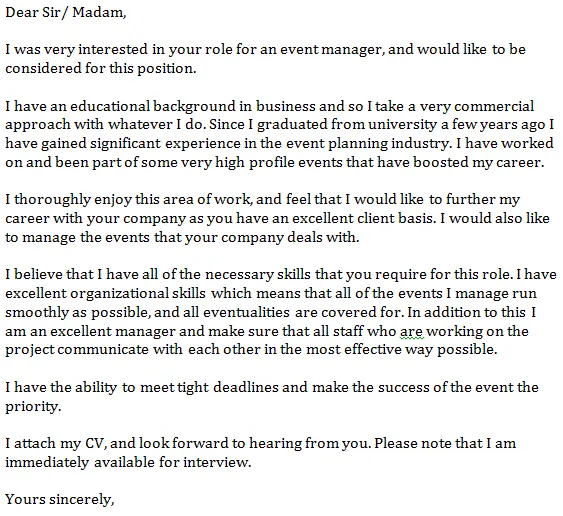
Crafting Your Event Manager Cover Letter
A well-crafted cover letter is your first opportunity to impress a potential employer and secure an interview. For an event manager, this document is especially crucial, as it showcases not only your experience and skills, but also your personality and attention to detail. This guide will walk you through the essential steps to write an effective event manager cover letter that captures attention and gets you noticed. Learn how to highlight your strengths, demonstrate your achievements, and present yourself as the ideal candidate for the role. Whether you’re a seasoned professional or just starting out, these tips will help you create a cover letter that stands out.
Research the Role and Company
Before you begin writing, thoroughly research the company and the specific event manager position. Understanding the company’s values, mission, and the types of events they host will help you tailor your cover letter to their needs. Visit the company’s website, read recent news articles, and explore their social media profiles. Pay close attention to the job description, identifying the key skills and qualifications the employer is seeking. This preparation will enable you to demonstrate how your qualifications align with their specific requirements. Showing that you understand their event portfolio and organizational culture will show that you took the time to do the research, and will impress the hiring manager.
Highlight Relevant Event Management Experience

Your cover letter should clearly articulate your event management experience. Focus on the experiences that directly relate to the job you are applying for. Provide specific examples of the events you have planned or managed, the scope of your responsibilities, and the outcomes. If you have experience with different types of events, such as corporate, social, or fundraising events, be sure to mention them. Highlight any special skills or experience, such as negotiating with vendors, managing budgets, or coordinating logistics. Tailor the experience that best fits the type of role and company you are targeting. Be specific and ensure your accomplishments are clearly evident from your writing.
Quantify Achievements with Data
Whenever possible, quantify your achievements with data. Use numbers and metrics to showcase your impact. For example, instead of saying “Managed successful events,” say “Managed events with an average of 500 attendees, resulting in a 15% increase in client satisfaction.” Or, “Negotiated contracts with vendors, saving the company 10% on event costs.” This approach adds credibility to your claims and provides concrete evidence of your capabilities. Be sure your information is both accurate and truthful. Highlighting specific, measurable results demonstrates your ability to deliver tangible value and positions you as a results-oriented candidate.
Showcase Key Event Management Skills
Event management requires a diverse set of skills. Your cover letter should highlight the skills that are most relevant to the job description. Make sure that your writing reflects your skill set. Some of the most valuable skills include communication, organization, problem-solving, and adaptability. Give the hiring manager examples from your past roles. Do not simply list the skills, but provide examples that show how you have applied them in real-world scenarios. Focus on the skills that align with the job description and demonstrate how you can contribute to the success of the organization.
Communication and Interpersonal Skills

Event managers must possess excellent communication and interpersonal skills. This involves effective communication with clients, vendors, and team members. In your cover letter, emphasize your ability to communicate clearly and professionally, both in writing and verbally. Provide examples of how you have successfully managed relationships, resolved conflicts, and built rapport with different stakeholders. Showcase your active listening skills, your ability to understand needs, and your knack for collaborating with others. Highlight your ability to convey information effectively and lead a team.
Organizational and Time-Management Skills
Event management demands exceptional organizational and time-management skills. Demonstrate your ability to manage multiple tasks simultaneously, prioritize effectively, and meet deadlines. Provide specific examples of how you have successfully planned and executed events on time and within budget. Mention any tools or techniques you use to stay organized, such as project management software or detailed checklists. Being able to keep things on track is key to event management and these skills will impress the hiring manager.
Adaptability and Problem-Solving Skills
Events often present unexpected challenges. Highlight your adaptability and problem-solving skills. Share instances where you have successfully navigated difficult situations, such as last-minute changes, technical issues, or unforeseen circumstances. Demonstrate your ability to remain calm under pressure, think creatively, and find effective solutions. Emphasize your proactive approach and your ability to anticipate potential problems and develop contingency plans. Show the hiring manager that you are resilient and resourceful, and can overcome obstacles with success.
Address the Hiring Manager Directly

Whenever possible, address the hiring manager by name. This shows that you have taken the time to research the company and the role, and that you are genuinely interested in the opportunity. If you are unable to find the hiring manager’s name, use a professional salutation such as “Dear Hiring Team.” Avoid generic greetings like “To Whom It May Concern.” Addressing the hiring manager directly adds a personal touch and shows that you are proactive and attentive to detail. This small step can help make your cover letter stand out and get you noticed.
Structure Your Cover Letter Effectively
The structure of your cover letter is just as important as the content. Use a clear and logical format that is easy to read and understand. Your cover letter should typically include an introduction, a body, and a conclusion. The introduction should state the purpose of your letter and express your interest in the position. The body should highlight your relevant experience, skills, and achievements. The conclusion should summarize your key qualifications and express your enthusiasm for the opportunity. Always provide the hiring manager with your contact information and thank them for their time and consideration.
Use a Professional Tone
Maintain a professional tone throughout your cover letter. Use formal language, avoid slang or jargon, and proofread carefully for any grammatical errors or typos. Present yourself as a polished professional who understands the importance of effective communication. Your writing should reflect your attention to detail, your respect for the company, and your overall professionalism. Make sure that your tone aligns with the company culture and the event industry standards.
Keep it Concise and Focused

Keep your cover letter concise and focused. Hiring managers often have a large volume of applications to review, so make every word count. Aim for a cover letter that is no more than one page in length. Focus on the most relevant information and avoid providing unnecessary details. Highlight your most impressive qualifications and tailor the content to the specific job description. Ensure that every sentence serves a purpose and contributes to your overall message. Brevity and clarity will increase the likelihood that your cover letter is read thoroughly.
Proofread and Edit Carefully
Before submitting your cover letter, proofread and edit it carefully. Check for any grammatical errors, spelling mistakes, or typos. Ensure that your writing is clear, concise, and easy to understand. Ask a friend or colleague to review your cover letter for a second opinion. A polished and error-free cover letter demonstrates your attention to detail and professionalism. These details are often the difference between getting an interview and getting overlooked. Proofreading is one of the final steps and must be done carefully.
Finalizing and Submitting Your Cover Letter
Once you are satisfied with your cover letter, finalize it and submit it along with your resume. Review the application instructions carefully to ensure that you are following the required format and procedures. Pay attention to any specific guidelines regarding file types, file names, or submission deadlines. Send the cover letter and resume as a PDF to maintain the original formatting. Submitting a well-crafted and error-free cover letter is your final opportunity to make a positive impression. Make sure everything is ready and complete and submit your application.
In conclusion, crafting a compelling event manager cover letter is an important step in your job search. By researching the role and company, highlighting your experience and skills, and structuring your letter effectively, you can create a cover letter that captures attention and secures an interview. Be sure to address the hiring manager directly, maintain a professional tone, and proofread carefully before submitting your application. Good luck with your job search!