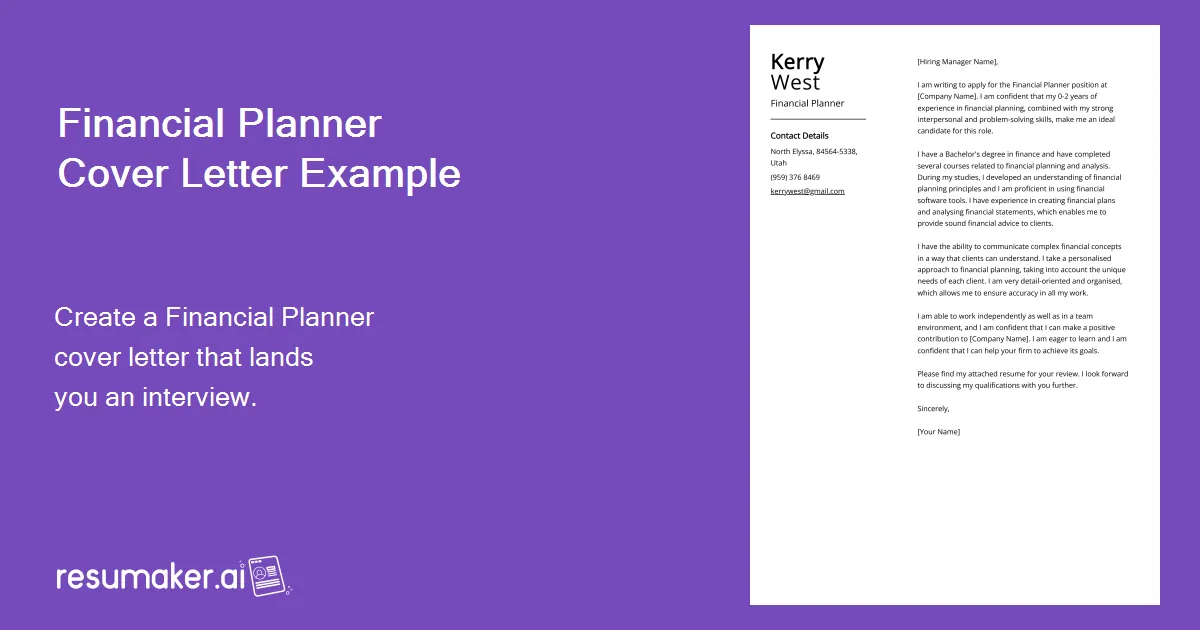
Understanding the Financial Planning Cover Letter
A financial planning cover letter is a crucial document in your job application. It’s your first impression on potential employers. Think of it as your personal marketing brochure, showcasing your skills, experience, and enthusiasm for the role. This document isn’t merely a formality; it’s a strategic tool to distinguish yourself from other applicants. A well-crafted cover letter can significantly increase your chances of landing an interview. It demonstrates your understanding of the company, your passion for financial planning, and your ability to communicate effectively. By highlighting your relevant qualifications and achievements, you can make a compelling case for why you’re the ideal candidate. This is your opportunity to shine, providing a personalized narrative that complements your resume and captures the attention of hiring managers. Therefore, creating a impactful cover letter is an essential step in the job search process.
Purpose of a Cover Letter
The primary purpose of a financial planning cover letter is to introduce yourself and express your interest in a specific financial planning position. It allows you to connect with the hiring manager on a more personal level. Cover letters provide a platform to elaborate on your qualifications and demonstrate how your skills align with the job requirements. They are also used to showcase your understanding of the company’s values and mission. By tailoring your letter to each specific role, you can effectively communicate why you’re a great fit for the organization. They give you the chance to tell a story. Instead of just listing facts, you can paint a picture of your career goals and aspirations. A well-written cover letter creates a lasting impression and encourages the reader to delve deeper into your resume and consider you for an interview. This helps you showcase your unique qualifications and tailor your approach to the specific job and company, thus maximizing your chances of success.
Key Components of a Cover Letter

A strong cover letter comprises several key components that work together to create a compelling narrative. Each element plays a vital role in conveying your qualifications and enthusiasm. A well-structured cover letter immediately grabs the reader’s attention and ensures your message is clear and impactful. It should include a header with your contact information, a personalized greeting, a clear opening paragraph, a section highlighting relevant skills and experience, quantifiable achievements, a tailored approach to the job description, an expression of passion, a strong closing, a call to action, and a careful proofread. Properly organizing these elements is essential, as it allows you to present yourself as a well-organized and detail-oriented candidate. By including these key components, you demonstrate professionalism and create a persuasive document that increases your chances of securing an interview.
Header
The header of your cover letter is essential for providing essential contact information. It includes your full name, address, phone number, and professional email address. Consistency is key; the header should match the one on your resume. Use a clear, easy-to-read font and ensure your information is up-to-date. Including the date and the recipient’s information (name, title, company, address) adds professionalism. The header establishes a formal tone and makes it easy for the hiring manager to contact you. Ensuring all your contact details are correct and easy to find is critical, minimizing any potential barriers to communication. With a well-formatted header, you present a polished and professional image. This gives you a distinct edge by showing you pay attention to detail and that you’re prepared and easy to reach for an interview.
Personalized Greeting
Always personalize your greeting. If possible, address the hiring manager by name. This shows you’ve done your research and are genuinely interested in the position. If you can’t find the hiring manager’s name, use a professional greeting like “Dear Hiring Manager.” Avoid generic greetings such as “To Whom It May Concern,” as they lack impact. This is an excellent chance to establish a positive first impression. By demonstrating the effort to find the hiring manager’s name, you show your commitment to the opportunity. A personalized greeting makes your application stand out and signals your attention to detail. Take the time to research and find the right contact person, as this small step can significantly influence the hiring manager’s perception of your application. Therefore, show that you are dedicated by finding the correct person to address your cover letter to.
Opening Paragraph

The opening paragraph is your chance to grab the reader’s attention. Clearly state the position you are applying for and how you found the job listing. Briefly mention your interest in the role and the company. A strong opening should highlight your most relevant qualification or your key selling point. Keep it concise and engaging. Use a confident and enthusiastic tone to immediately capture the reader’s interest. This paragraph sets the tone for the rest of your letter. An effective opening sets the stage for the rest of the letter and encourages the hiring manager to continue reading. It shows that you can clearly and quickly communicate your intentions, which is a critical skill in financial planning. This also helps the hiring manager to see your enthusiasm for the role and learn more about your relevant experiences.
Highlighting Relevant Skills and Experience
This section is where you showcase how your skills and experience align with the job requirements. Review the job description carefully and identify the key skills and qualifications the employer is seeking. Provide specific examples from your past experiences. Quantify your achievements whenever possible. Tailor your examples to the specific needs of the role. Use keywords from the job description to show your understanding of the role. This section allows you to make a compelling case for why you are the ideal candidate. Highlight skills relevant to financial planning, such as financial analysis, investment management, client relationship management, and regulatory compliance. Show how your experience translates into value for the company. By clearly and concisely showcasing your relevant skills and experience, you increase your chances of getting an interview. This section is your primary opportunity to showcase how you can perform the job.
Quantifiable Achievements
Quantifying your achievements adds credibility to your claims. Use numbers to demonstrate the impact of your work. For example, “Increased client portfolio value by 15% within one year” or “Managed a portfolio of over $X million.” Use specific metrics to showcase your success. Quantifiable results make your claims more tangible and impressive. These facts make your achievements easier to understand and validate. This is an excellent way to prove your ability to deliver results. Including quantifiable achievements also helps you show a pattern of success. This adds a degree of authority to your claims. Provide strong examples of what you have done in the past and how you did them to show that you can do the job.
Tailoring to the Job Description

Always tailor your cover letter to each job description. This means carefully reviewing the job posting and addressing the specific requirements and keywords. Identify the key skills and qualifications the employer is seeking and highlight how your experience matches them. Don’t just send a generic cover letter. Each role should have a tailored cover letter. Showing your commitment to the role will help you get the job. By demonstrating that you understand the company’s needs and values, you significantly increase your chances of getting an interview. Take the time to customize your cover letter for each position and ensure that you address the specific needs of each role. Also, you will showcase your attention to detail and your genuine interest in the position, helping you stand out from other applicants.
Demonstrating Passion and Enthusiasm
Show your passion for financial planning and your enthusiasm for the role and the company. Express your genuine interest in the industry and your eagerness to contribute to the team. This can be achieved by sharing why you’re excited about the specific position or company. Your enthusiasm is one of your most important selling points. Expressing enthusiasm helps you establish a personal connection with the hiring manager and show you’re genuinely interested. Passion also sets you apart from other applicants. Make sure to research the company’s values and mission to show your interest. Convey your genuine interest, this will make a positive impression. You’ll also increase your chances of being remembered by the hiring manager. By sharing your enthusiasm, you show the hiring manager your interest in joining the company.
Closing the Letter
The closing of your cover letter is your last opportunity to leave a lasting impression. Thank the hiring manager for their time and consideration. Reiterate your interest in the position and briefly summarize your key qualifications. Avoid clichés and aim for a professional and confident tone. Keep it concise and positive. This part gives you the last opportunity to express your interest. A well-crafted closing reinforces your interest and creates a sense of closure. The closing should be a natural conclusion that emphasizes your key qualifications and your excitement about the opportunity. When you close your letter, you will also want to include a call to action. This is your last opportunity to make a powerful impact.
Call to Action

A call to action prompts the reader to take the next step. Request an interview and express your availability. Make it easy for the hiring manager to contact you. Ensure that the call to action is clear, concise, and professional. This is your chance to encourage the hiring manager to act. A strong call to action demonstrates your confidence and initiative. Include your contact information again for easy reference. Make it easy for the hiring manager to take action by clearly stating what you want them to do. A call to action will help ensure you get the job. Including a call to action ensures you have done everything necessary to land an interview.
Proofreading and Editing
Proofreading and editing are essential steps in creating a successful cover letter. Proofread for typos, grammatical errors, and formatting issues. Review your letter for clarity and coherence. Have someone else review your letter. Eliminate any errors, as they can undermine your credibility. Ensure that your letter is polished and professional. A well-proofread cover letter demonstrates your attention to detail and professionalism. Taking the time to proofread and edit your cover letter increases your chances of making a positive impression. Do this because hiring managers often view errors negatively. Before sending your cover letter, be sure to take a few minutes to edit and proofread your letter for any possible errors. This will allow you to create a powerful impact.
Common Mistakes to Avoid
Avoiding common mistakes is crucial for creating a compelling cover letter. Pay attention to the details and avoid pitfalls that can diminish your chances of success. By avoiding these common errors, you can create a more impactful and professional cover letter. Avoid generic content that doesn’t showcase your qualifications. Proofread your cover letter to avoid typos and grammatical mistakes. Always ensure that you have tailored the cover letter to the job description. By doing these things, you can avoid these common mistakes. Therefore, you should also make sure you check your formatting.
Generic and Vague Language

Avoid generic and vague language in your cover letter. Use specific examples and concrete details to demonstrate your skills and experience. Avoid clichés and overly general statements. Tailor your language to the specific job and company. Use action verbs and quantify your achievements to make your claims more compelling. Replace vague statements with specific examples. Don’t just say you’re a good communicator; provide an example of how you’ve effectively communicated in a financial planning context. Provide specific details and you will create a more compelling case for why you’re the ideal candidate. Showing rather than telling can have a powerful effect on the hiring manager. Ensure you have tailored the language to the job to show you understand what the role is about.
Typos and Grammatical Errors
Typos and grammatical errors can significantly damage your credibility. Proofread your cover letter carefully. Use spell-check and grammar-check tools. Have someone else review your letter for errors. Errors make you appear careless and unprofessional. Errors reflect poorly on your attention to detail and your overall professionalism. A polished and error-free cover letter demonstrates your commitment to quality and attention to detail. Review your cover letter a few times to make sure there are no errors. Then get a second opinion to ensure that the document is perfect. By doing these things, you can have confidence in your work.
Ignoring the Job Description
Don’t ignore the job description when writing your cover letter. Carefully read the job posting and identify the key requirements and keywords. Tailor your cover letter to address the specific needs and qualifications outlined in the job description. Highlight your relevant skills and experiences. Demonstrate how your qualifications align with the employer’s needs. This shows you’ve done your research and are genuinely interested in the role. By aligning your cover letter with the job description, you demonstrate your understanding of the role. This shows you are the right fit for the role. It’s essential to show you are the right match. This can be a great way to show your interest in the job.
Formatting Issues

Ensure your cover letter is well-formatted and easy to read. Use a professional font and clear formatting. Keep your letter concise and well-structured. Avoid using dense blocks of text. Use bullet points and headings to break up the content. Proper formatting enhances readability and professionalism. Your formatting makes a big impact on the hiring manager. This also helps to quickly scan the document. Formatting is also a critical part of the entire process. Pay attention to the formatting of your cover letter and make it easy to read.
Finalizing and Submitting Your Cover Letter
After writing and editing your cover letter, it’s important to finalize it and submit it correctly. Choose the appropriate format for your cover letter. Also, submit your cover letter electronically or in print. These are the final steps that ensure your application is polished and professional. Ensure you have formatted your cover letter so that it can be read. Therefore, be sure to choose the proper format.
Choosing the Right Format
Choose the right format for your cover letter to ensure it looks professional. If you’re submitting your cover letter electronically, save it as a PDF to preserve the formatting. A PDF format ensures that the layout and formatting remain consistent across different devices. If submitting a hard copy, use high-quality paper and ensure your print is clear and legible. This is the best way to present yourself. By following these best practices, you ensure your cover letter looks polished and professional. This step makes it much easier for the hiring manager to read and process the document. With the right format, you’ll be sure to make a good first impression.
Submitting Electronically or in Print
Follow the employer’s instructions for submitting your cover letter. Most applications are submitted electronically. Ensure your cover letter and resume are properly attached. If submitting by mail, follow the instructions. Double-check to make sure you’re submitting everything correctly. This ensures your application is reviewed and that you’re considered for the position. Submitting your cover letter, this way shows your attention to detail and ability to follow instructions. Following instructions is very important when submitting a cover letter. This allows you to get your application submitted on time and allows the hiring manager to review your application.