What is a Cover Letter
A cover letter is a one-page document that you submit as part of your job application alongside your resume. It serves as a formal introduction and provides you with the opportunity to elaborate on your skills, experiences, and why you are a suitable candidate for the specific position. Unlike a resume, which provides a summary of your qualifications, a cover letter allows you to showcase your personality and express your enthusiasm for the role and the company. A well-crafted cover letter can significantly increase your chances of getting an interview and landing your dream job.
Purpose of a Cover Letter
The primary purpose of a cover letter is to introduce yourself to the hiring manager and demonstrate your interest in the position and the company. It’s an opportunity to highlight your key skills and experiences that align with the job requirements, providing specific examples of how you have achieved success in the past. A cover letter should also explain why you are interested in the specific role and what you hope to achieve within the company. Ultimately, the goal is to persuade the hiring manager to read your resume and consider you for an interview.
Key Components of a Cover Letter

A well-structured cover letter typically includes several key components that work together to create a compelling narrative. Each part plays a crucial role in conveying your message effectively and making a positive impression on the hiring manager. Ensuring that each component is thoughtfully crafted and tailored to the specific job and company is essential for maximizing your chances of success.
Contact Information
Begin your cover letter with your contact information. This should include your full name, address, phone number, and email address. Make sure your email address is professional. It’s best to use a combination of your first and last name. Place your contact information at the top left or right corner of the page.
Date
Following your contact information, include the date you are writing the letter. This helps the reader know when the letter was written. The date should be formatted in a standard way, such as month, day, year, for instance, March 8, 2024.
Recipient Information

Address the letter to the hiring manager or the specific person mentioned in the job posting. If you are unsure of the hiring manager’s name, you can often find it by researching the company online or by checking the company’s website. If you are unable to find a specific name, use a general greeting like “Dear Hiring Manager.”
Salutation
Use a professional salutation to address the recipient. ‘Dear Mr./Ms. Last Name’ is a good way to go. If you don’t know the hiring manager’s name, ‘Dear Hiring Manager’ is an acceptable alternative. Avoid using informal greetings.
Body Paragraphs
The body paragraphs are the core of your cover letter, where you elaborate on your skills, experiences, and your interest in the position. The body is typically divided into three or four paragraphs, each serving a specific purpose.
First Paragraph

The first paragraph should grab the reader’s attention. State the position you are applying for and where you saw the job posting. Briefly mention your key skills or experiences that make you a strong candidate. Show your enthusiasm for the role and the company. Keep it concise and to the point.
Second Paragraph
The second paragraph is where you highlight your relevant skills and experience. Provide specific examples of how you have demonstrated these skills in previous roles. Quantify your achievements whenever possible to show the impact you have made. Tailor this section to match the requirements of the job description. Explain how your skills align with the company’s needs.
Third Paragraph
In the third paragraph, explain why you are interested in the company and the specific role. Show that you have researched the company and understand their mission, values, and goals. Connect your personal career goals with the company’s objectives. Express your excitement about the opportunity to contribute to the company’s success.
Closing Paragraph

In the closing paragraph, reiterate your interest in the position and express your gratitude for their time and consideration. Mention that you have attached your resume and are available for an interview. Include a call to action, such as, ‘I look forward to hearing from you soon’.
Complimentary Close
Use a professional closing to end your cover letter, such as “Sincerely,” “Best regards,” or “Thank you.” Choose a closing that reflects the tone of your letter and is appropriate for the industry.
Signature
If you are submitting a physical cover letter, sign your name above your typed name. For digital submissions, type your full name after the complimentary close.
Formatting Your Cover Letter

Proper formatting is crucial for making your cover letter easy to read and visually appealing. A well-formatted cover letter demonstrates professionalism and attention to detail. Pay close attention to font, margins, line spacing, and overall length.
Font and Font Size
Choose a professional and readable font, such as Times New Roman, Arial, or Calibri. The font size should be between 10 and 12 points for easy reading. Ensure consistency throughout the document.
Margins
Set standard margins of one inch on all sides of the page. This provides enough white space to make the document look clean and uncluttered. Avoid using margins that are too narrow or too wide.
Line Spacing

Use single or 1.15 line spacing throughout your cover letter. This helps the reader to navigate the content easily. Double-spacing can be used between paragraphs to create visual breaks.
Length
Keep your cover letter to one page. Hiring managers are busy, and they don’t have time to read lengthy documents. Be concise and focused, and get to the point. Use clear and straightforward language.
Cover Letter Examples and Templates
Reviewing examples and using templates can be helpful when writing a cover letter, but it’s important to personalize them to fit your specific situation. Use these resources as a guide, but make sure to adjust the content to match your unique skills and the job requirements.
Where to Find Examples
Several online resources provide cover letter examples and templates. Websites like Indeed, Resume.com, and LinkedIn offer a variety of templates that you can download and adapt. Search for examples related to your industry and the type of role you’re seeking. Review multiple examples to get a better understanding of different styles and approaches.
Tailoring Your Cover Letter
Customizing your cover letter for each job application is essential for demonstrating your genuine interest and qualifications. Generic cover letters are often dismissed by hiring managers. Tailoring your letter shows that you’ve taken the time to understand the role and the company. Do your research and provide specific examples that match the job requirements.
Researching the Company
Before writing your cover letter, research the company thoroughly. Visit the company’s website, read their “About Us” page, and explore their social media profiles. Understanding their mission, values, and recent activities will help you tailor your letter to align with their needs and demonstrate your interest in their organization.
Highlighting Relevant Skills and Experience
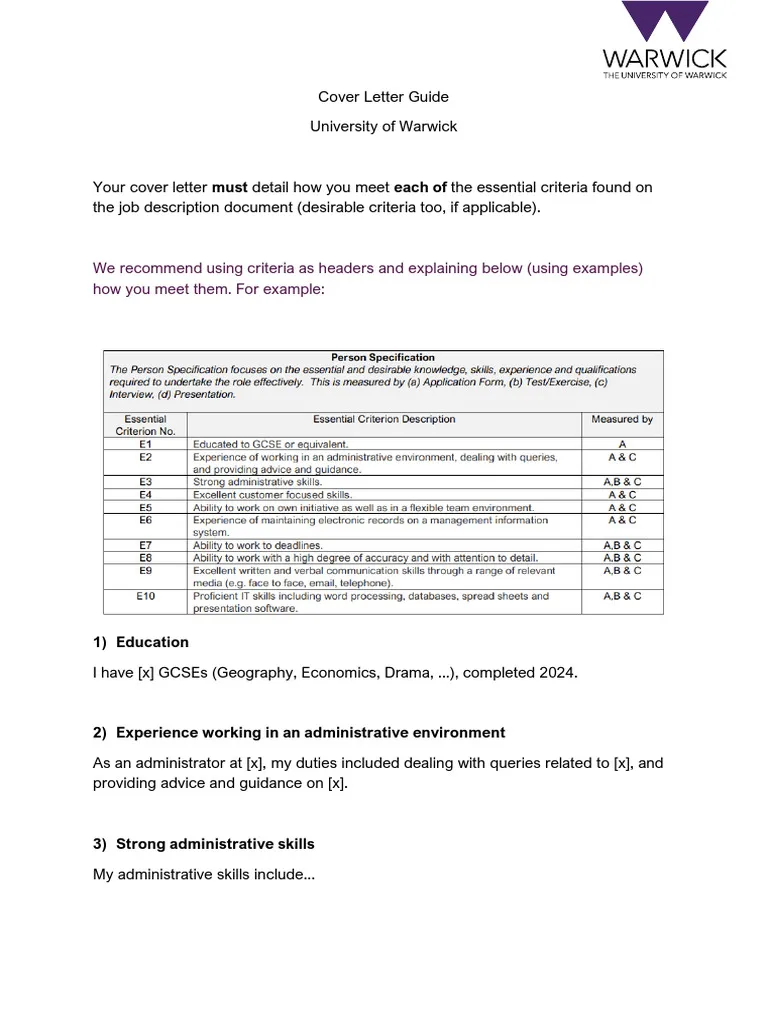
Carefully review the job description and identify the key skills and experiences the employer is seeking. Highlight those skills and experiences in your cover letter, providing specific examples of your achievements. Use keywords from the job description to demonstrate that you meet the requirements.
Matching Skills to Job Requirements
In your cover letter, directly address the skills and requirements listed in the job description. Provide specific examples of how you have demonstrated these skills in your previous roles. Quantify your achievements whenever possible, using numbers and data to illustrate your impact. This helps the hiring manager see the value you would bring to the company.
Proofreading and Editing Your Cover Letter
Proofreading and editing your cover letter is essential for ensuring that it is free of errors and presents you in a professional light. Typos, grammatical errors, and inconsistencies can create a negative impression and undermine your credibility. Carefully review your letter multiple times, and consider seeking feedback from others.
Common Mistakes to Avoid
Be aware of common mistakes to avoid in your cover letter. These include using generic language, not tailoring the letter to the specific job, using excessive jargon, including irrelevant information, and having grammatical errors. Double-check your letter for any of these issues before submitting it.
Seeking Feedback
Ask a trusted friend, family member, or career advisor to review your cover letter. They can provide valuable feedback on clarity, grammar, and overall effectiveness. Having a second pair of eyes can help you catch errors you might have missed and identify areas for improvement. Consider asking for feedback from someone familiar with the industry you are applying for. A fresh perspective can significantly enhance your cover letter and increase your chances of success.
Final Thoughts
Writing a compelling cover letter takes time and effort, but it is a crucial step in the job application process. By following these guidelines, you can create a cover letter that showcases your skills, experiences, and enthusiasm for the position and the company. Remember to tailor your letter to each job application, proofread carefully, and seek feedback. Good luck with your job search!