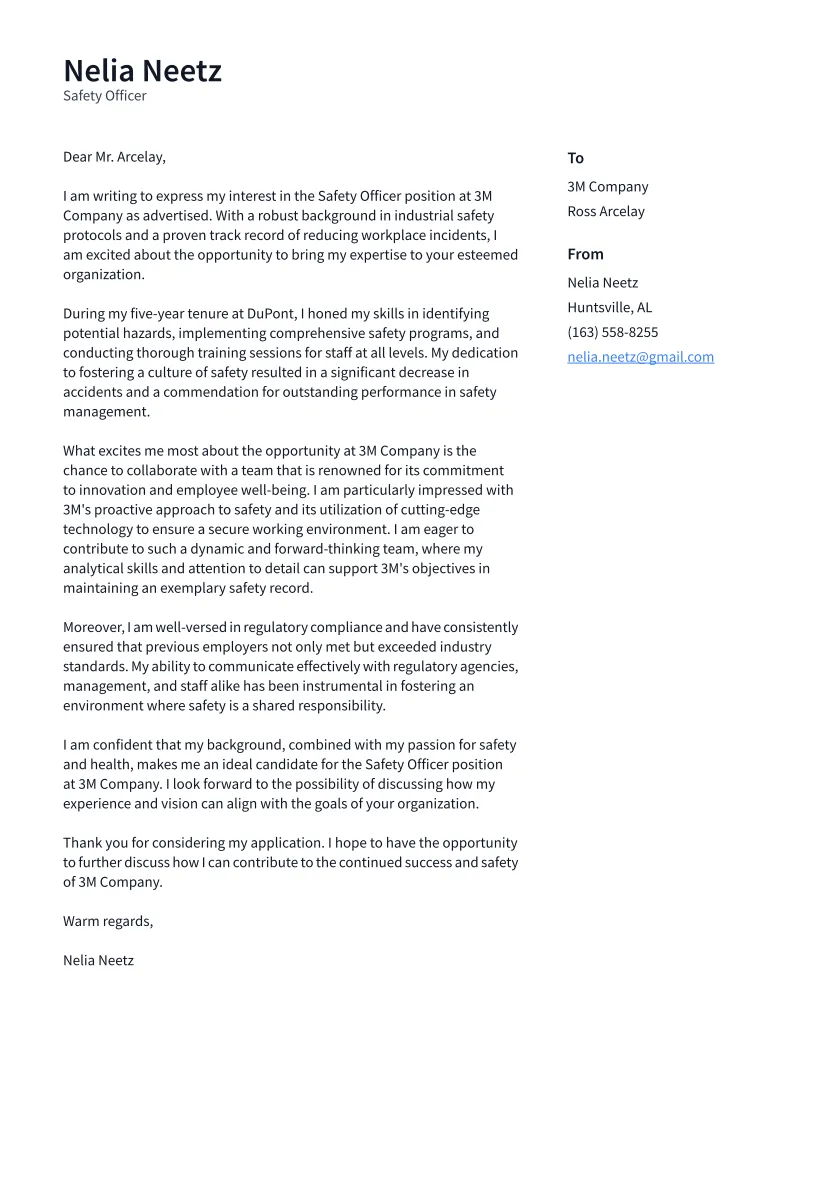
Understanding the Health & Safety Officer Role
A Health & Safety Officer plays a critical role in ensuring a safe and healthy work environment. They are responsible for implementing and maintaining health and safety policies, conducting risk assessments, investigating accidents, and providing training to employees. The role demands a proactive approach to identify potential hazards and implement preventative measures. The Health & Safety Officer also collaborates with various departments to ensure compliance with health and safety regulations. The ultimate goal is to minimize workplace accidents, injuries, and illnesses, protecting both employees and the organization from legal and financial repercussions. Understanding this comprehensive scope of work is vital before writing your cover letter, as it sets the stage for demonstrating your suitability for the role. This understanding also allows you to tailor your application to match the specific needs and priorities of the prospective employer, increasing your chances of success.
Key Responsibilities of a Health & Safety Officer
The core responsibilities encompass a range of tasks. Firstly, they are tasked with developing and enforcing health and safety policies and procedures that adhere to relevant legislation. Conducting regular workplace inspections and risk assessments to identify hazards and potential areas of concern is another key duty. Additionally, Health & Safety Officers investigate accidents, incidents, and near-misses, preparing detailed reports and implementing corrective actions to prevent recurrence. They are often responsible for providing health and safety training to employees, ensuring everyone understands and complies with safety protocols. Maintaining accurate records of safety inspections, training, and incidents is essential. Furthermore, they stay updated on new regulations and best practices, adapting policies and procedures accordingly. By clearly outlining these responsibilities in your cover letter, you demonstrate your understanding of the role and can highlight how your skills align with these requirements. This will help you stand out and showcase your preparedness for the role.
Essential Skills for a Health & Safety Officer

While experience is valued, a strong foundation of skills is crucial, especially for entry-level positions. Excellent communication skills, both written and verbal, are paramount for explaining safety protocols and communicating effectively with all levels of employees. Analytical skills are necessary for conducting risk assessments, identifying hazards, and analyzing incident data. Problem-solving skills are critical for investigating accidents and implementing corrective actions. Attention to detail is essential for ensuring compliance with regulations and maintaining accurate records. Knowledge of relevant health and safety legislation and regulations is a must. The ability to work independently and as part of a team is also important. Finally, strong organizational skills are vital for managing multiple tasks and priorities effectively. Highlighting these skills, even without direct experience, can significantly boost your chances of getting noticed. Focus on situations where you’ve demonstrated these skills in any setting, be it academic, volunteer, or previous work experience.
Crafting Your Cover Letter for Health & Safety Officer
The cover letter is your opportunity to make a strong first impression. It’s a chance to showcase your understanding of the role, highlight relevant skills, and express your enthusiasm for the position. Even without direct experience, a well-crafted cover letter can demonstrate your potential and make you a competitive candidate. Your cover letter needs to be tailored to each specific job application. Avoid using a generic template and instead research the company and the specific requirements of the role. Clearly articulate how your skills, knowledge, and experiences align with the job description. Use the cover letter to showcase your passion for health and safety and express your eagerness to learn and contribute to a safe work environment. Your goal is to convince the hiring manager that despite a lack of direct experience, you possess the qualities needed to succeed and are willing to learn and grow within the organization.
Header and Contact Information
Begin with a professional header that includes your full name, address, phone number, and email address. Ensure your email address is professional-sounding and free of any informal language. Include the date and the hiring manager’s name and title (if known), and the company’s name and address. This information ensures that your cover letter looks professional and helps the recruiter easily contact you. Double-check the information for accuracy. This includes spelling the name of the hiring manager and company correctly. Using a proper format ensures your application will be taken seriously and viewed as polished.
Personalized Greeting

Address the hiring manager by name whenever possible. Researching the company’s website or using LinkedIn can help you find the hiring manager’s name. If you cannot find a specific name, use a professional greeting such as “Dear Hiring Manager” or “Dear [Company Name] Hiring Team.” Avoid generic greetings such as “To Whom It May Concern,” which can appear impersonal. Personalizing your greeting demonstrates that you have taken the time to research the company and are genuinely interested in the position. This attention to detail can set you apart from other applicants and immediately grab the reader’s attention.
Opening Paragraph Grab Attention
Your opening paragraph should immediately capture the reader’s interest. State the position you are applying for and express your enthusiasm for the opportunity. Briefly mention why you are interested in the company and the role. If you have any connections to the company or share similar values, this would be a good place to mention them. This opening paragraph is your first chance to sell yourself, so make it compelling. Instead of just restating the job title, try to convey your passion for health and safety. Highlight any relevant skills or experiences you possess that align with the role’s requirements. A strong opening paragraph sets the tone for the rest of your cover letter and encourages the hiring manager to continue reading.
Highlighting Relevant Skills and Experiences
Even without direct experience, you likely possess skills that are transferable to the role of a Health & Safety Officer. Identify skills and experiences from your education, volunteer work, or previous employment that are relevant to the job description. Focus on your abilities, such as communication, problem-solving, analytical thinking, and attention to detail. Provide specific examples of how you have demonstrated these skills in past situations. If you have completed any health and safety-related coursework or certifications, be sure to mention them. Quantify your achievements whenever possible to provide concrete evidence of your abilities. This section should emphasize what you can bring to the role and how your skills align with the company’s needs.
Transferable Skills from Other Roles

Focusing on transferable skills is crucial when you have no direct experience. Analyze the job description carefully and identify the key skills and qualifications. Then, reflect on your past experiences and identify situations where you have demonstrated these skills. For example, if the job description requires strong communication skills, you might highlight your experience in public speaking, presentations, or writing reports. If the job requires problem-solving skills, you can discuss how you have successfully resolved issues in your previous roles or in academic projects. Even if your experience isn’t directly related to health and safety, you can still showcase your abilities. The key is to connect your past experiences with the requirements of the Health & Safety Officer role, demonstrating that you possess the skills needed to succeed. Use the STAR method (Situation, Task, Action, Result) to provide detailed examples of your skills.
Showcasing Your Knowledge and Passion
Demonstrate your knowledge of health and safety principles and regulations. Mention any relevant training or certifications you have obtained, even if they are not directly related to the workplace. Show your enthusiasm for the field by discussing your interest in health and safety. You can mention specific areas of health and safety that interest you, such as risk assessment, accident investigation, or safety training. Show that you’ve researched the company and understand its safety protocols. Refer to specific safety initiatives or programs that the company has in place. This will prove to the hiring manager that you are serious about this career path and you are eager to learn and contribute. This section proves you are committed to health and safety and actively seek out opportunities to expand your knowledge and skills.
Demonstrating Research and Understanding of the Company
Before applying, research the company thoroughly. Understand their industry, their health and safety policies, and any recent safety incidents or achievements. Mention the company’s values, mission, and any specific safety initiatives. This shows that you are genuinely interested in the company and have taken the time to learn about their operations and safety culture. Tailor your cover letter to match the company’s specific needs and values. If the company emphasizes employee well-being, highlight your interest in promoting a safe and healthy work environment. Refer to any awards or recognitions the company has received for their safety efforts. Tailoring your cover letter shows that you are not just sending a generic application but are specifically interested in working for their organization.
Structuring the Body of Your Cover Letter

The body of your cover letter should be well-structured, clear, and concise. Use paragraphs to discuss your relevant skills and experiences, providing specific examples to support your claims. Focus on the key requirements of the job description and address them directly. Use keywords from the job description to demonstrate that your skills match the needs of the position. Break down your cover letter into concise paragraphs, each addressing a specific point. Use clear and professional language throughout your letter, and avoid jargon or overly technical terms. Aim for a tone that is enthusiastic and professional. Your goal is to demonstrate your qualifications in a clear and easy-to-read format. Make sure to keep the letter focused and relevant to the role, making it easier for the hiring manager to understand your suitability.
Using Action Verbs and Quantifiable Achievements
Use strong action verbs to describe your accomplishments and skills. Instead of saying “I was responsible for,” use action verbs like “managed,” “implemented,” “coordinated,” or “developed.” These verbs help bring your experience to life and make your cover letter more engaging. Whenever possible, quantify your achievements to demonstrate the impact of your actions. For example, instead of saying “improved safety procedures,” say “implemented new safety procedures, resulting in a 15% reduction in workplace incidents.” Use numbers and data to show the impact of your actions. For example, mention the number of employees you trained or the percentage by which you improved safety compliance. This data helps the hiring manager to understand the value you can bring to their organization. This approach makes your accomplishments more impactful and credible.
Addressing the Lack of Direct Experience
Since you have no direct experience, it’s important to address this directly and honestly. However, frame the lack of experience positively. Focus on your transferable skills, such as communication, problem-solving, and attention to detail. Emphasize your willingness to learn and your passion for health and safety. You can mention any relevant coursework, certifications, or volunteer experience. Express your enthusiasm for the role and highlight your eagerness to contribute to a safe work environment. Assure the hiring manager that, while you may lack direct experience, you are committed to becoming a valuable member of the health and safety team. Make sure your cover letter focuses on your potential and your willingness to learn, demonstrating that you are a motivated and capable candidate despite the absence of direct experience.
Closing Your Cover Letter

Your closing paragraph should reiterate your interest in the position and thank the hiring manager for their time and consideration. Restate your enthusiasm for the opportunity and express your desire to learn more about the position. Indicate your availability for an interview and how you can be reached. Always close with a professional closing, such as “Sincerely” or “Best regards,” followed by your typed name. This ensures a professional and polished finish to your cover letter. A strong closing paragraph leaves a positive final impression on the hiring manager. Making sure the ending reflects the overall tone of your letter and underscores your genuine interest in the role.
Expressing Enthusiasm and Availability
Reiterate your strong interest in the position and the company. Show your enthusiasm for the role by expressing your eagerness to contribute to a safe and healthy work environment. State your availability for an interview and specify how the hiring manager can contact you. Be sure to include your phone number and email address in your closing paragraph. Make sure the contact information is correct and readily accessible. A clear and concise statement of your availability shows you are proactive and ready to move forward in the hiring process. Expressing your enthusiasm for the role is critical, as it is important to leave a positive and memorable final impression. This ensures the hiring manager remembers your interest and makes it easy for them to contact you.
Professional Closing and Signature
Always use a professional closing, such as “Sincerely,” “Best regards,” or “Yours sincerely.” Avoid casual closings like “Thanks” or “Cheers.” Follow your closing with your typed name. If you are submitting a hard copy of your cover letter, you can also include your handwritten signature above your typed name. Make sure your closing aligns with the overall tone of your cover letter. A professional closing is a key element of a polished cover letter. A good closing leaves a positive impression, showing your respect for the hiring manager. The professional closing, along with your name, completes your cover letter. The closing signals the end of your application, indicating respect and professionalism.
Proofreading and Formatting

Before submitting your cover letter, proofread it carefully for any errors in grammar, spelling, and punctuation. Errors can make a negative impression and undermine your credibility. Use a grammar checker and ask a friend or family member to review your cover letter as well. Ensure your cover letter is formatted correctly. Use a professional font such as Times New Roman, Arial, or Calibri. Use a consistent font size (11 or 12 points) and ensure your paragraphs are well-spaced. Make sure your cover letter looks clean and easy to read. Pay close attention to the overall layout. Ensure that the spacing, margins, and alignment are consistent throughout the document. A well-formatted cover letter presents you in a professional light and demonstrates that you pay attention to detail.
Common Mistakes to Avoid
Avoid using generic cover letters that are not tailored to the specific job. Generic cover letters can appear lazy and do not showcase your understanding of the company and the role. Avoid exaggerating your skills or experience. It is important to be honest and authentic in your application. Avoid including negative information or making excuses for your lack of experience. Focus on your positive qualities and transferable skills. Do not overuse jargon or technical terms that the hiring manager might not understand. Use clear and concise language. Avoid grammatical errors and typos. Proofread your cover letter carefully to make sure there are no mistakes. By avoiding these common mistakes, you can significantly improve your chances of making a positive impression.
Example Cover Letter Template
Use the provided example as a template, and tailor it to your unique skills and experiences. A basic structure can be adapted, ensuring you address the specific requirements of the health and safety officer role. The example demonstrates how to effectively structure your cover letter, highlighting the essential elements like the header, greeting, opening paragraph, and body. Adapt the example to include your own skills, experiences, and enthusiasm. This template will serve as a guide, allowing you to create a strong and compelling cover letter that captures the attention of potential employers. By customizing the template, you can demonstrate your understanding of the role. Customize it to make a good impression and secure your desired position.