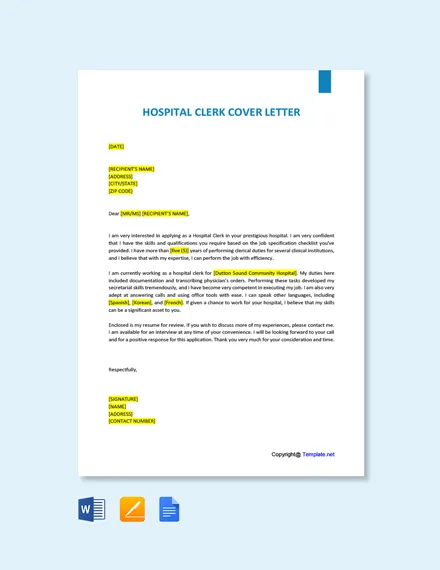
What is a Hospital Cover Letter (Overview)
A hospital cover letter is a crucial document that accompanies your resume when applying for a job within a hospital setting. Unlike a resume, which is a factual summary of your skills and experience, a cover letter allows you to express your personality, enthusiasm, and why you are a perfect fit for the specific role and the hospital’s culture. It’s your opportunity to make a strong first impression and persuade the hiring manager to review your resume in detail and consider you for an interview. This guide will help you understand the key components and provide you with the tools to create a compelling cover letter that sets you apart from the competition. Understanding the purpose of a cover letter helps you to present a compelling case for your candidacy, aligning your skills and experience with the requirements of the job and the values of the hospital. A well-crafted cover letter can significantly increase your chances of landing an interview.
Key Components of a Strong Hospital Cover Letter
A well-structured hospital cover letter includes several essential components that work together to present you as a qualified and enthusiastic candidate. Each section plays a vital role in conveying your interest in the position and your suitability for the role. By addressing each component thoroughly, you can create a cover letter that is both informative and persuasive, highlighting your strengths and demonstrating your commitment to the hospital. These key components ensure that your cover letter is comprehensive, professional, and tailored to the specific job and hospital.
Header Information (Address, Date, Recipient)

Begin your cover letter with a professional header. Include your full name, address, phone number, and email address. Directly below, add the date of the letter. Following the date, include the hiring manager’s name, title, and the hospital’s address. This is an important step for professionalism. Correctly addressing the recipient shows attention to detail and respect for the hiring process. If the hiring manager’s name is unavailable, research the department head or use a general salutation, such as ‘Dear Hiring Manager’. Researching this information beforehand is key to a positive impression.
Greeting Your Letter (Formal vs. Informal)
Choose a greeting that is appropriate for a professional setting. If you know the hiring manager’s name, use a formal greeting such as ‘Dear Mr./Ms./Mx. [Last Name]’. If you are unsure of the name, use ‘Dear Hiring Manager’ or ‘Dear [Department Name] Team’. Avoid overly casual greetings. The greeting sets the tone for the entire letter, so maintain a tone of respect and professionalism. The goal is to create a positive first impression that encourages the reader to continue. Proper etiquette shows you value the opportunity and respect the hospital’s standards.
Body Paragraph 1 Highlight Your Enthusiasm
In the first paragraph, clearly state the position you are applying for and where you saw the job posting. Express your enthusiasm for the role and the hospital. Explain why you are interested in this particular opportunity. Briefly mention something specific that attracted you to the position or the hospital’s mission. This demonstrates your genuine interest and sets a positive tone for the rest of the letter. Showing genuine excitement about the opportunity can make a significant difference. Your passion is something that a hiring manager looks for. A compelling first paragraph quickly grabs the reader’s attention and creates a positive impression.
Body Paragraph 2 Showcase Relevant Skills & Experience

This is the most important section of your cover letter. Connect your skills and experiences to the job requirements. Highlight the most relevant qualifications and achievements. Provide specific examples that demonstrate your abilities. Use action verbs to describe your accomplishments. Quantify your achievements whenever possible. Use the keywords from the job description to tailor your letter. When you explain your skills, use examples to show how your skills fit the role. The skills that you choose to share should reflect what the hiring manager has listed in the job description. Highlighting skills helps you stand out and demonstrates you understand what the job entails.
Body Paragraph 3 Why This Hospital?
Demonstrate your knowledge of the hospital and express why you want to work there specifically. Mention the hospital’s mission, values, or recent achievements. Explain how your goals align with the hospital’s. Show that you have researched the hospital and understand its culture. This paragraph shows you’re not just applying for any job; you’re interested in working at this specific hospital. Talking about the hospital shows you did your homework. Discussing the hospital’s mission or values shows that you share similar goals. This helps the hiring manager see you as a good fit for the team.
Body Paragraph 4 Call to Action
Conclude with a clear call to action. State your availability for an interview. Thank the hiring manager for their time and consideration. Express your excitement about the opportunity to discuss your qualifications further. Reiterate your contact information. End with a professional closing, such as ‘Sincerely’ or ‘Best regards’. A strong closing paragraph provides a clear message to the hiring manager, encouraging them to take the next step in the hiring process. You want to make it easy for the hiring manager to reach out and discuss your application.
Closing Your Letter (Formal and Professional)

Use a professional closing. Common closings include ‘Sincerely,’ ‘Best regards,’ or ‘Thank you for your consideration.’ Ensure the closing is appropriate for the tone of your letter. Following the closing, leave space for your signature, then type your full name. A professional closing reinforces the professionalism of your application. A formal closing leaves a positive impression and shows respect for the hiring process. The signature confirms the letter as official.
Formatting & Design of Your Cover Letter
Formatting and design can greatly impact the readability and professionalism of your cover letter. A well-formatted letter is easier to read and shows attention to detail. Choose a clean and professional design that reflects well on your candidacy. Use a standard font, appropriate spacing, and clear section headings. These elements contribute to the overall presentation and make your letter more appealing to the reader. Good formatting enhances the reader’s experience and reflects well on you. Ensuring readability is key to getting your letter noticed.
Font and Readability
Select a professional and easy-to-read font, such as Times New Roman, Arial, or Calibri. Use a font size between 10 and 12 points for body text. Ensure the font is consistent throughout the letter. Use bolding or italics sparingly for emphasis. Proper font choice ensures that your letter is easily readable. Maintaining a consistent font size enhances readability. The font’s appearance is critical. A font that is hard to read can discourage the reader. Proper readability helps make your letter more engaging.
Proper Cover Letter Length

Keep your cover letter concise. Aim for one page in length. Ensure all the information is relevant and well-organized. Avoid unnecessary details. A concise cover letter shows respect for the hiring manager’s time. A one-page format is sufficient to make a strong impression. Editing carefully will make sure that your letter is easy to read, which is something that hiring managers appreciate. A brief, well-written cover letter is more impactful than a long one.
Proofreading for Errors
Carefully proofread your cover letter for any grammatical errors, spelling mistakes, and typos. Check for proper punctuation and sentence structure. Have someone else review your letter. Errors can detract from your professionalism. Proofreading ensures your letter is polished and error-free. Proofreading is an essential part of the process. Errors can create a bad impression. A mistake-free cover letter makes a great impact. Proofreading also helps show that you pay attention to detail, something that’s very important.
Common Mistakes to Avoid
Avoiding common mistakes in your hospital cover letter can significantly increase your chances of making a positive impression. Certain errors can immediately disqualify your application. By paying attention to these potential pitfalls, you can ensure your cover letter is polished and professional. The best cover letters reflect a level of professionalism and care. Avoiding common errors sets you apart. Make a strong impression by avoiding these common mistakes.
Generic Content

Avoid using generic phrases or content that could apply to any job. Tailor your cover letter to the specific hospital and position. Show that you’ve researched the hospital and understand the job requirements. Generic content suggests a lack of interest and effort. Customizing your letter shows you care. Researching the hospital shows a genuine interest in the role. Hiring managers want to see that you’re genuinely interested in the role and the hospital.
Typos and Grammatical Errors
Always proofread your cover letter carefully for typos and grammatical errors. These errors can create a negative impression and suggest a lack of attention to detail. Use a grammar checker and have someone else review your letter. Typos and grammatical errors make your letter look unprofessional. Proofreading helps avoid these mistakes. It can be hard to spot your own errors, so getting a second opinion is a great idea. Attention to detail is key, and proofreading is an essential step.
How to Tailor Your Cover Letter
Tailoring your cover letter to each job application is essential. Customizing your cover letter significantly increases your chances of success. It also shows that you are committed to the specific role. Customize your letter to show that you understand what the hospital is looking for. Tailoring the cover letter is key to a successful application. Tailoring shows the hospital that you care about the role.
Researching the Hospital and Position

Thoroughly research the hospital and the specific position. Understand the hospital’s mission, values, and recent achievements. Review the job description carefully, noting the required skills and qualifications. Demonstrating that you understand the hospital and the job requirements is essential. Researching the hospital and the position shows your dedication. You can make your letter more relevant. Using the hospital’s values will make your letter more persuasive.
Customizing Your Letter to the Job Description
Carefully review the job description and tailor your cover letter to match the requirements. Highlight the skills and experiences that align with the job requirements. Provide specific examples of how you have demonstrated these skills in the past. Tailoring your letter shows that you’ve taken the time to understand the role. Aligning your skills with the job description demonstrates your understanding. Ensure your cover letter reflects what the hospital is looking for.
Using Keywords Effectively
Incorporate keywords from the job description into your cover letter. Use these keywords naturally throughout the text. Keywords help the hiring manager quickly identify your relevant skills and experience. Including relevant keywords will help get your letter noticed. Including keywords shows that you understand the role and what the hospital is looking for. Keywords also help your cover letter pass any applicant tracking systems.
Cover Letter Examples for Hospital Jobs
Reviewing cover letter examples can provide valuable insights into effective writing. By studying examples, you can understand how to structure your letter, showcase your skills, and highlight your experiences. Adapt the examples to your own circumstances, ensuring they reflect your unique qualifications and the specific requirements of the job. Examples give you a solid foundation to begin. They provide a template for a successful letter. Learning from examples is a great way to get started with writing your own letter.
Examples for Nurses
Nurses should highlight their clinical skills, experience with specific patient populations, and certifications. Include examples of patient care, teamwork, and critical thinking skills. If you are a nurse, you can use a template for your own role. Adapt examples to reflect your specific background. Focus on patient care, patient safety, and professional skills. Make sure to include any relevant certifications that you have, as well. Use these templates to guide you and create an effective cover letter for your career.
Examples for Medical Assistants
Medical assistants should emphasize their clinical and administrative skills, such as taking patient histories, assisting with examinations, and managing patient records. Show experience with electronic health records (EHR) systems and other relevant technologies. Highlighting these skills will help you to stand out. Use an example to structure your own letter. Make sure to focus on the skills that are most relevant to the job. Tailor your letter to reflect your specific experience. Emphasize skills related to administrative and clinical tasks.
Examples for Administrative Roles
Applicants for administrative roles should highlight their organizational skills, communication abilities, and experience with office management tasks. Emphasize skills such as scheduling, managing correspondence, and handling patient inquiries. Tailor your letter by focusing on the skills most relevant to the job. Adapt examples to reflect your specific experiences. Show the hiring manager that you have the skills they need for the role. Highlighting your skills will make you a strong candidate. A template is very useful for administrative roles.
Tips to Make Your Cover Letter Stand Out
To make your hospital cover letter stand out, focus on highlighting your achievements and quantifying your accomplishments. Including a skills section and personalizing your letter to the specific job can make a positive impression. These tips will help to make your letter more effective. These tips will ensure that you’re presenting the best possible version of yourself. You can create an impressive cover letter that will get you noticed. These tips will help you to make a great impression.
Highlighting Achievements
Instead of just listing your responsibilities, highlight your accomplishments. Provide specific examples of your achievements in previous roles. Quantify your accomplishments whenever possible. This demonstrates your impact and value to the hospital. Highlighting your achievements will make you stand out. Provide specific examples of how you have performed. Quantify your accomplishments by including specific statistics. Highlighting achievements makes a big impression and makes you memorable.
Quantifying Your Accomplishments
Use numbers and metrics to quantify your accomplishments. For example, if you improved patient satisfaction scores, state the percentage increase. If you reduced costs, state the amount. If you trained a certain number of employees, include this information. Including numbers will help your application stand out. Using numbers will make your accomplishments more impactful. Showing how you have contributed to the company is key. Numbers provide concrete evidence of your capabilities.
Including a Skills Section
Consider including a separate skills section in your cover letter. This section can list your key skills and qualifications in a clear and concise manner. Use bullet points to make the information easy to read. This section provides a quick overview of your skills. Listing your skills makes them easy to find and review. Your skills section is a valuable part of the application.
Finalizing and Submitting Your Cover Letter
Once you’ve written your cover letter, it’s time to finalize and submit it. Choose the correct file format, such as a PDF, to maintain the formatting and ensure that the hiring manager can open and view the document. Follow the hospital’s instructions carefully. When submitting your cover letter, make sure everything looks professional. These are the final steps that will make your cover letter successful. Make sure the hospital instructions are followed exactly, so that your application gets noticed. Submitting your letter correctly is just as important as the letter itself.
Choosing the Right File Format
Save your cover letter in a PDF format to ensure that your formatting is preserved. PDFs are universally accessible and can be opened on any device. Avoid sending your letter in a .doc or .docx format, unless specifically requested. Choosing the correct file format ensures that your letter looks professional. A PDF helps guarantee that the hiring manager sees the document as you intend. Make sure to use a format that preserves the integrity of the document.
Submitting Your Application Online
Follow the instructions provided by the hospital regarding the application process. Upload your cover letter and resume using the designated online portal. Ensure that all the required fields are completed accurately. Double-check your contact information. If you have any questions, contact the hospital’s human resources department. Make sure the application is submitted in the proper format. Following the instructions will increase your chances. Sending your application correctly is vital. Make sure you read and follow the directions very carefully.