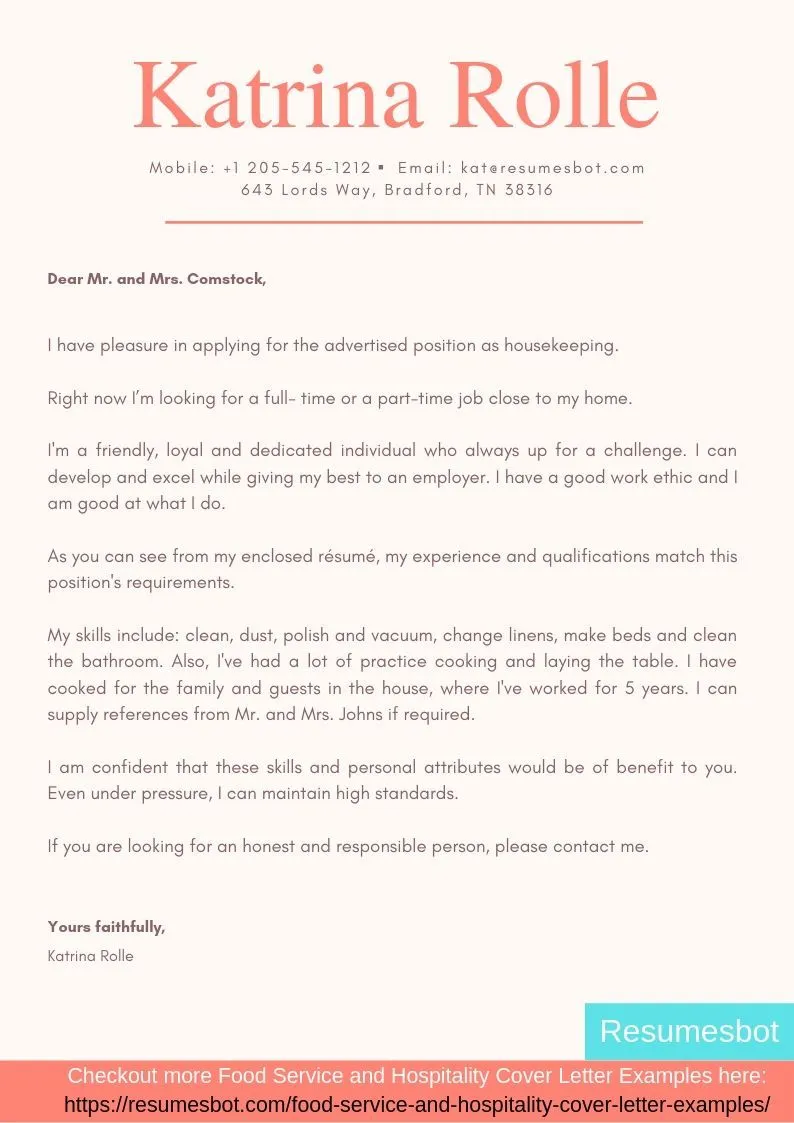
Why a Housekeeping Job Cover Letter is Essential
In the competitive job market, especially within the housekeeping sector, a well-crafted cover letter can be your golden ticket to securing an interview. It’s not merely a formality; it’s a powerful tool that allows you to introduce yourself to a potential employer and make a strong first impression. Unlike a resume, which provides a factual overview of your experience and skills, a cover letter gives you the opportunity to express your personality, enthusiasm, and genuine interest in the position. It provides the context that a resume often lacks, explaining why you’re the ideal candidate and how your past experiences align with the specific needs of the role and the organization. A compelling cover letter can set you apart from other applicants, showcasing your attention to detail, communication skills, and commitment to excellence, qualities highly valued in housekeeping. Ignoring the cover letter could mean losing a chance to highlight your passion for creating clean, comfortable, and welcoming spaces.
Highlighting Relevant Skills and Experience
When drafting your cover letter, it’s crucial to focus on skills and experience that directly relate to the housekeeping job requirements. Begin by carefully reviewing the job description, identifying the key skills the employer seeks. Common skills include cleaning, dusting, vacuuming, mopping, and sanitizing surfaces. Also highlight any experience you have in laundry services, such as washing, drying, ironing, and folding clothes. Consider any specialized skills such as knowledge of cleaning products or experience with specific equipment. For instance, if the job involves using industrial cleaning machines, be sure to mention your familiarity with them. Quantify your achievements whenever possible. Instead of simply stating you ‘cleaned rooms,’ mention the number of rooms you cleaned daily or the level of detail to which you maintained them. Moreover, emphasize your ability to work independently and as part of a team, demonstrating that you can manage your responsibilities and collaborate with colleagues effectively. Your cover letter should serve as a preview of your capacity to perform these essential tasks.
Detailing Previous Housekeeping Duties

Your cover letter provides the perfect space to elaborate on the specific housekeeping duties you have performed in previous roles. Instead of just listing your responsibilities, provide concrete examples of your accomplishments. For example, if you have experience in a hotel setting, describe how you maintained a certain number of rooms to meet or exceed quality standards consistently. If you have worked in a residential setting, describe the specific cleaning tasks you performed and how you ensured the comfort and satisfaction of the residents. Go beyond the basics, providing details about any special projects you have managed, such as deep cleaning a particular area or managing inventory of cleaning supplies. By giving these details, you showcase your ability to go above and beyond the standard requirements of a housekeeping job. Moreover, it is important to talk about the specific cleaning products you have used and the methods you are familiar with, such as disinfecting surfaces or handling sensitive materials, which shows that you understand the role.
Emphasizing Soft Skills for Housekeeping
While technical skills are important, the housekeeping job requires more than just cleaning expertise. Soft skills such as time management, attention to detail, and communication play an important part in the work. Showcasing these traits will help you. Mention your ability to work efficiently and manage your time effectively to complete tasks within deadlines. If you’ve worked in a customer-facing environment, mention your experience interacting with guests or residents, highlighting your ability to provide excellent customer service. Include your ability to solve problems. If you’ve come up with creative solutions to ensure cleanliness, mention those details. Demonstrate your ability to stay organized, work independently, and adapt to changing situations. Providing these details will show employers that you are not just a cleaner but a well-rounded professional. Moreover, demonstrate your commitment to maintaining a positive attitude even when faced with challenges. This is an attribute that all employers value in housekeeping.
Showcasing a Positive and Professional Attitude
A positive and professional attitude is highly valued in housekeeping, as it contributes to a comfortable and welcoming environment. Your cover letter is the perfect place to demonstrate this. Express your enthusiasm for the housekeeping role and your dedication to providing exceptional service. Highlight your ability to work as part of a team, communicating clearly and respectfully with colleagues and supervisors. Show your commitment to maintaining a clean and organized workspace, demonstrating your attention to detail and pride in your work. Furthermore, illustrate your reliability and punctuality, emphasizing your commitment to showing up on time and fulfilling your responsibilities. Express your flexibility and willingness to adapt to changing needs, and explain that you are prepared to handle various cleaning tasks. Make sure to show your desire to provide high-quality service by taking initiative and going above and beyond the basic job requirements. A genuine positive attitude will make a lasting impression.
Addressing Common Housekeeping Job Requirements

Make sure your cover letter reflects the specific requirements of the housekeeping job. If the job posting mentions any specific skills or certifications, such as experience with particular cleaning products or equipment, or certifications in sanitation, be sure to mention them. Explain how your skills and experiences match the listed requirements. If the job requires experience in a specific environment, such as a hotel, hospital, or residential home, highlight your relevant experience and expertise in that setting. Address the working hours and days. If the job involves working weekends or evenings, indicate your flexibility and willingness to work during those times. Moreover, demonstrate your understanding of the importance of confidentiality, especially if the job involves accessing private areas or handling sensitive information. By proactively addressing the requirements outlined in the job description, you show the employer that you have carefully considered the role and are a suitable match.
Tailoring Your Cover Letter to the Specific Job
Avoid sending a generic cover letter to every housekeeping job. Instead, tailor each letter to the specific role you are applying for. Research the employer and the environment in which you would be working. Read the job description carefully and use keywords and phrases from the posting. Then, highlight the skills and experiences that align with the job requirements. Show your enthusiasm for the specific opportunity, referencing the company’s values or mission if possible. This demonstrates that you have a genuine interest in working for that particular employer. Make sure to include relevant information. If you have worked in a similar setting or have experience with the specific equipment or products mentioned in the job description, be sure to highlight it. Personalized letters that show that you’ve put time and effort into your application are more likely to make a positive impression.
Providing Contact Information and Following Up
Ensure your cover letter and resume include accurate and up-to-date contact information, including your full name, phone number, and email address. This allows the hiring manager to reach you easily. After submitting your application, consider following up with the employer to express your continued interest in the position. Do so by sending a brief email a week or so after submitting your application, reiterating your enthusiasm. Thank the hiring manager for their time and consideration, and ask if they require any further information. This demonstrates your initiative and interest in the role and helps you stay top-of-mind. By following up, you show that you are proactive and keen to land the job. However, be careful not to bombard the employer with follow-up calls or emails, as this may be seen as overbearing.