What is a Cover Letter and Why Does it Matter?
A cover letter is a crucial document accompanying your resume when applying for a job. It serves as your personal introduction, offering an opportunity to highlight your qualifications, experiences, and aspirations in a way that your resume alone cannot. Think of it as your first chance to make a strong impression on a potential employer, showcasing your personality and enthusiasm for the position. In today’s competitive job market, a well-crafted cover letter can significantly increase your chances of getting noticed and securing an interview. It provides context to your resume, allowing you to elaborate on your skills and experiences, and demonstrating how they align with the specific requirements of the job.
Understanding the Purpose of a Cover Letter
The primary purpose of a cover letter is to introduce yourself to the hiring manager and express your interest in a specific job. It’s your chance to make a compelling case for why you’re the ideal candidate. It allows you to articulate your understanding of the role, the company, and the industry. More than simply restating your resume, a cover letter explains how your skills and experiences match the job’s requirements. It’s where you demonstrate your personality, communication skills, and genuine interest in the opportunity. By effectively conveying your value proposition, you can pique the employer’s interest and encourage them to delve deeper into your qualifications.
Cover Letter vs. Resume Key Differences

While both the cover letter and resume are essential parts of your job application, they serve distinct purposes. Your resume offers a concise summary of your work history, education, skills, and accomplishments. It’s a factual document that presents your qualifications in a straightforward manner. In contrast, your cover letter is a more personal and narrative-driven document. It provides an opportunity to elaborate on specific experiences, showcase your personality, and explain why you’re a good fit for the job and the company. The cover letter adds context to your resume, making it more relatable to the hiring manager. It allows you to tell your story and illustrate how your skills and experiences align with the job requirements. They work in tandem, one providing the facts, the other providing the narrative.
Essential Elements of a Captivating Cover Letter
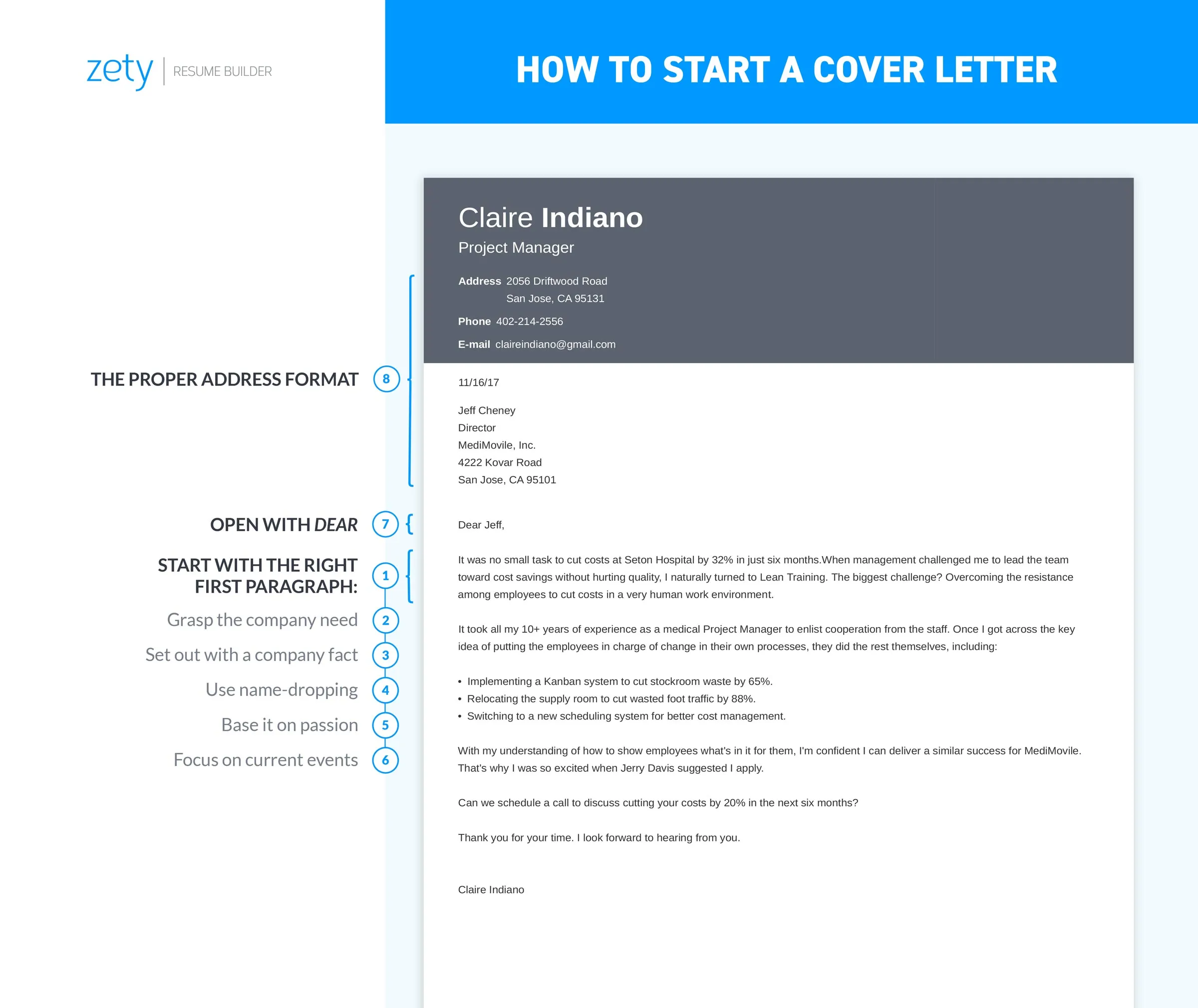
A captivating cover letter includes several key elements that work together to make a strong impression. It should begin with a professional header and include your contact information, the date, and the hiring manager’s contact information if known. The opening paragraph must grab the reader’s attention and state your purpose. The body paragraphs should highlight your relevant skills, experiences, and achievements, providing specific examples to support your claims. Tailoring your letter to the job and company is critical; research the company and the role and demonstrate your understanding of their needs. The closing paragraph should express your gratitude, reiterate your interest, and include a call to action, such as requesting an interview. Proofreading and formatting are essential to ensure your letter is polished, error-free, and easy to read.
Header and Contact Information
The header of your cover letter should be professional and include your contact information. This typically includes your full name, phone number, email address, and optionally, your LinkedIn profile URL or personal website. Ensure your contact information is up-to-date and easily accessible. Following your information, include the date of the letter, and the hiring manager’s name, title, and company address if known. If you are unsure of the hiring manager’s name, research the company website or LinkedIn to find it. Addressing the letter to a specific person demonstrates that you have taken the time to research and personalize your application. This professional header sets the tone for the rest of your letter and ensures the hiring manager can easily contact you.
The Opening Paragraph Crafting a Strong First Impression

The opening paragraph is your first and perhaps only opportunity to capture the reader’s attention. It should immediately state the purpose of your letter which is to apply for a specific job. Briefly mention where you found the job posting. Then, express your enthusiasm for the position and the company. Consider starting with a brief anecdote or a compelling statement that showcases your personality and highlights your relevant skills. Tailor your opening to the specific job requirements, demonstrating that you understand the role and are excited to contribute to the company’s goals. The goal is to get the hiring manager interested enough to read the rest of your letter. Avoid generic openings and opt for a concise, engaging introduction that sets the tone for the rest of your letter.
Body Paragraphs Showcasing Your Value
The body paragraphs are where you elaborate on your skills, experiences, and achievements, highlighting how they align with the job requirements. Choose 2-3 key skills or experiences that are most relevant to the role and elaborate on them. Provide specific examples, using the STAR method (Situation, Task, Action, Result) to demonstrate your accomplishments. Quantify your achievements whenever possible, using data and metrics to showcase the impact of your work. Tailor each paragraph to the job description, explaining how your skills and experiences meet the company’s needs. Show, don’t just tell; back up your claims with concrete examples. Your body paragraphs should provide compelling evidence that you are the ideal candidate for the position.
Highlighting Relevant Skills and Experiences
Carefully review the job description and identify the key skills and experiences the employer is seeking. Then, in your cover letter, strategically highlight the skills and experiences that directly match those requirements. Use action verbs to describe your accomplishments and responsibilities. Provide specific examples of how you have successfully utilized these skills in previous roles. Focus on the accomplishments that demonstrate your ability to perform the job effectively and deliver results. If you have gaps in your experience, address them briefly and positively, focusing on what you have learned and how it can benefit the company. Demonstrate that you understand the role and have the necessary skills to excel in it.
Quantifying Achievements with Data

Whenever possible, quantify your achievements with data and metrics. Instead of saying you ‘increased sales,’ specify by how much (e.g., ‘increased sales by 15% in one quarter’). Use numbers and percentages to demonstrate the impact of your work. For example, if you improved efficiency, state the percentage of time or resources saved. If you led a project, mention the number of team members or the project’s budget. By providing quantifiable results, you give the hiring manager a clear understanding of your abilities and the value you can bring to the company. This approach is far more persuasive than vague statements. The more data you provide, the more compelling your cover letter will be, increasing your chances of getting noticed.
Tailoring Your Letter to the Job and Company
Customization is critical. Generic cover letters are easily spotted and often discarded. To stand out, thoroughly research the company and the specific job you are applying for. Understand the company’s mission, values, and recent accomplishments. Tailor your letter to align with their needs and culture. In the body paragraphs, explain how your skills and experiences are relevant to the role and how you can contribute to the company’s success. Show that you understand the job’s requirements and the company’s goals. Personalize your letter by mentioning something specific that attracted you to the company. This demonstrates that you’ve taken the time to understand the opportunity and are genuinely interested in the position.
The Closing Paragraph Making a Memorable Impact
The closing paragraph is your final chance to make a positive impression. Express your gratitude for the hiring manager’s time and consideration. Reiterate your interest in the position and the company, emphasizing why you are the ideal candidate. Include a clear call to action, such as requesting an interview or offering to provide additional information. Keep it concise and professional, leaving a lasting positive impression. Proofread the entire letter one last time before submitting it to ensure there are no errors. End your letter with a professional closing (e.g., ‘Sincerely,’ or ‘Best regards,’) followed by your typed name. A strong closing paragraph leaves the hiring manager with a clear understanding of your enthusiasm and next steps.
Expressing Gratitude and Call to Action

In the closing paragraph, express your gratitude to the hiring manager for their time and consideration. Thank them for reviewing your application and taking the time to consider you for the role. This demonstrates professionalism and courtesy. Following your expression of gratitude, include a clear and direct call to action. This tells the hiring manager what you expect them to do next. For example, you can request an interview, stating your availability and willingness to discuss your qualifications further. You could also offer to provide any additional information they may need. Ensure your call to action is clear, concise, and leaves the reader with a clear next step. This proactive approach can increase your chances of moving forward in the hiring process.
Proofreading and Formatting for Perfection
Before submitting your cover letter, it is essential to proofread and format it meticulously. Carefully review your letter for any grammatical errors, typos, or formatting inconsistencies. Use a professional and easy-to-read font, such as Times New Roman or Arial, and ensure consistent spacing and alignment. Ensure the document is properly formatted, with clear headings, subheadings, and paragraphs. Ask a friend, family member, or career counselor to review your letter for clarity and accuracy. A polished and error-free cover letter demonstrates attention to detail and professionalism. It shows the hiring manager that you care about your application and are committed to presenting yourself in the best possible light. A well-formatted cover letter is a reflection of your professionalism and increases the impact of your message.