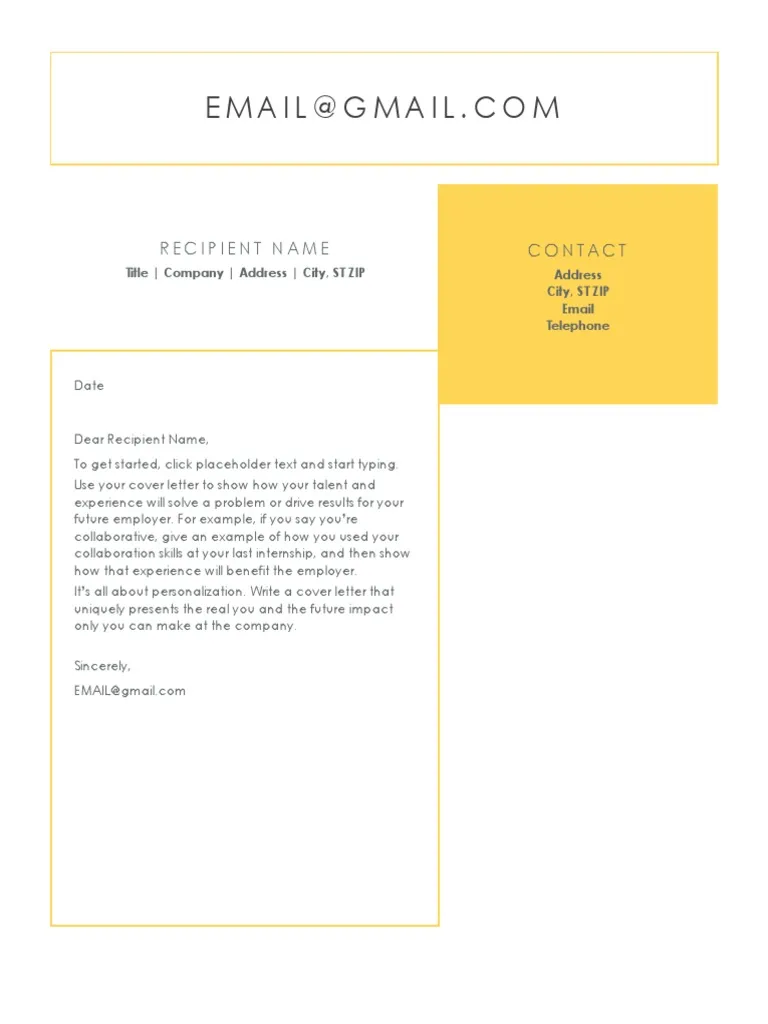
Why You Need a Cover Letter for a Job
In the competitive job market, a well-crafted cover letter is your essential marketing tool. It’s a crucial document that accompanies your resume, providing potential employers with a personalized introduction and showcasing your suitability for a specific role. While your resume presents your skills and experience, a cover letter allows you to explain why you are the ideal candidate, making a compelling case that sets you apart from other applicants. Ignoring the importance of a cover letter could mean missing out on opportunities, as it can often be the deciding factor in whether or not your application gets noticed.
Benefits of a Cover Letter
A cover letter offers several advantages that can significantly improve your chances of getting hired. It provides an opportunity to highlight your personality, enthusiasm, and communication skills, giving the hiring manager a glimpse into your professional demeanor. Cover letters allow you to elaborate on experiences that may not be fully detailed in your resume, providing context and demonstrating how your previous roles have prepared you for the job. They demonstrate your genuine interest in the company and the specific position, signaling to employers that you’ve taken the time to research and understand their needs. By addressing specific requirements mentioned in the job description, you prove that you’re a great fit and that you’re serious about the role. These benefits translate to better chances of getting an interview and, ultimately, a job offer.
Cover Letter vs Resume

Understanding the distinct roles of a cover letter and a resume is fundamental to a successful job application. Your resume is a concise summary of your qualifications, work history, education, skills, and achievements. It is a formal document that focuses on providing facts and figures, such as job titles, company names, dates of employment, and specific responsibilities. In contrast, a cover letter is more flexible, allowing you to expand on your experiences and make a personal connection with the hiring manager. It provides a space to showcase your communication skills, explain career gaps, and express your unique value proposition. Unlike the resume, the cover letter lets you articulate your passion for the role and your enthusiasm for the company. Think of the resume as the ‘what’ and the cover letter as the ‘why’.
Understanding the PDF Format
The PDF (Portable Document Format) is a file format that preserves the formatting of your documents, regardless of the device or operating system on which they are opened. This means that your cover letter will look exactly as you intended it to, ensuring consistency across all platforms. PDFs are widely compatible, making them easily accessible by anyone. They also help to prevent unintended edits, as the format is designed to be less easily modified compared to other formats such as .docx files. This is especially crucial for job applications, where the professional presentation of your document can make a significant difference.
Why PDF is Preferred for Cover Letters
Using the PDF format for your cover letter offers several advantages that contribute to a polished and professional application. PDFs are highly compatible, ensuring that your cover letter can be opened on any device, from computers to smartphones. This widespread accessibility guarantees that hiring managers can easily view your document. The format preserves formatting, preventing layout issues that might occur if the recipient uses a different word processor or operating system. By maintaining a consistent appearance, you ensure that your cover letter presents your information clearly and professionally, making a positive first impression. Moreover, PDFs are considered more secure and are less likely to be accidentally altered.
Essential Elements of a Cover Letter

A well-structured cover letter should include several key elements that provide a comprehensive overview of your qualifications and motivations. These elements ensure that you present a clear and compelling narrative to the hiring manager. A cover letter should start with your contact information, followed by the date and the recipient’s details. Then, you’ll need a professional salutation to address the hiring manager. The body of the cover letter should highlight your skills and experience, tailored to the job description. Quantify your achievements to demonstrate your accomplishments with supporting data. Finish with a compelling closing, including an expression of enthusiasm and a call to action. Finally, proofread every element.
Your Contact Information
At the top of your cover letter, include your full name, phone number, email address, and optionally, your LinkedIn profile URL. This information should be clearly visible and easy to find. Make sure that the contact information you provide is up-to-date and professional. Double-check your email address and phone number to ensure that the hiring manager can reach you without any issues. Using a professional email address is essential; avoid using informal or unprofessional email addresses.
Date and Recipient Details
Below your contact information, include the date of the cover letter and the recipient’s details. The recipient’s details should include their full name, job title, the company name, and the company’s address. If you know the hiring manager’s name, address them by name; otherwise, use a generic salutation. Ensure the date is current, reflecting the date you are submitting the cover letter. If possible, research the hiring manager’s name and title to personalize your letter and demonstrate your attention to detail.
Professional Salutation

Start your cover letter with a professional salutation. If you know the hiring manager’s name, use ‘Dear Mr./Ms. [Last Name]’. If you don’t know the hiring manager’s name, use a generic salutation like ‘Dear Hiring Manager’ or ‘Dear [Department Name] Team’. Avoid overly casual greetings and always use a professional tone. Double-check the spelling of the recipient’s name to ensure you make a positive first impression. Correct salutations show respect and attention to detail, demonstrating your professionalism and seriousness about the job.
Crafting the Body of Your Cover Letter
The body of your cover letter is where you connect your skills, experience, and achievements to the job requirements. It’s your chance to showcase why you’re the perfect fit for the position. To make a strong impression, structure the body of your letter into a few clear paragraphs. Start by expressing your interest in the role and the company. Highlight your relevant skills and experience, tailoring your examples to match the job description. Quantify your achievements by using numbers and data to showcase your impact. Conclude with a strong closing that reiterates your enthusiasm and includes a call to action.
Highlighting Your Skills and Experience
In the body of your cover letter, highlight your key skills and experiences that align with the job requirements. Review the job description carefully and identify the core skills and qualifications the employer is seeking. Provide specific examples from your past work or academic experiences that demonstrate these skills. Instead of merely listing your skills, explain how you’ve used them to achieve results. Use action verbs and provide context to show how your skills translate to success in the role. Tailor this section to each job application, ensuring that the skills and experiences you highlight directly address the needs of the position.
Tailoring Your Cover Letter to the Job

Customizing your cover letter for each job application significantly increases your chances of success. Avoid using a generic template; instead, take the time to research the company and the specific role. Analyze the job description and identify the key requirements, skills, and qualifications they are looking for. Then, tailor your cover letter to directly address these points. Highlight how your experience, skills, and achievements align with their needs, providing specific examples. Demonstrate that you understand the company’s values, mission, and the challenges they face, and explain how you can contribute to their goals. Personalization shows initiative and demonstrates that you genuinely want the role.
Quantifying Your Achievements
When describing your achievements, use numbers, data, and specific examples to demonstrate the impact you’ve made in your previous roles. Instead of saying ‘Improved sales,’ quantify your statement with something like ‘Increased sales by 20% within six months.’ Use metrics to showcase your accomplishments and the value you can bring to the company. For example, if you’re highlighting your project management skills, mention how you successfully completed projects on time and within budget. Including tangible results is compelling evidence of your capabilities and adds credibility to your claims, making you stand out from other candidates.
Writing a Compelling Closing
The closing of your cover letter should leave a lasting impression and encourage the hiring manager to take action. It should reiterate your enthusiasm for the role and the company. Express your interest in an interview and your eagerness to discuss your qualifications further. Make it easy for the hiring manager to contact you. Always include a clear call to action, such as ‘I am eager to discuss how my skills can contribute to your team. I am available for an interview at your earliest convenience.’ Finish with a professional closing, such as ‘Sincerely’ or ‘Best regards,’ followed by your full name.
Expressing Enthusiasm and Interest

Your cover letter should convey genuine enthusiasm for the job and the company. Demonstrate that you’ve done your research and that you’re excited about the opportunity. Briefly mention what specifically interests you about the role or the company’s mission. Show your passion by using enthusiastic language and expressing your eagerness to contribute to their success. Be specific about why you want to work there, highlighting how your values align with the company culture and what you hope to achieve if hired. Authenticity and enthusiasm make a memorable impression.
Call to Action
Include a clear call to action in your closing paragraph. This signals to the hiring manager what steps you would like them to take next. State that you’re available for an interview and provide your contact information. Make it easy for them to move forward with your application by inviting them to contact you. Consider adding, ‘I am available for an interview at your earliest convenience. Thank you for your time and consideration. I look forward to hearing from you soon.’ This direct approach encourages the hiring manager to reach out, improving your chances of progressing in the hiring process.
Formatting Your Cover Letter for PDF
Proper formatting ensures that your cover letter is visually appealing, readable, and professional. Effective formatting makes it easy for the hiring manager to read and understand your information. Consistent formatting also maintains the integrity of your document when it is converted to a PDF. Choose a professional font, set appropriate margins, and use clear spacing. Use headings to break up the text and make it easy to scan. By carefully formatting your cover letter, you demonstrate your attention to detail and commitment to professionalism.
Font and Size

Select a professional and easy-to-read font, such as Times New Roman, Arial, Calibri, or Helvetica. Avoid using overly decorative or unusual fonts, as they can distract the reader. Stick to a standard font size, typically between 11 and 12 points, to ensure readability. The font size should be comfortable to read on a screen or when printed. Make sure that the font is consistent throughout the entire document. Ensuring your font and size is consistent demonstrates a high level of professionalism.
Margins and Spacing
Use standard margins, typically 1 inch on all sides, to provide ample white space and improve readability. Adequate margins create a clean and uncluttered appearance, allowing the text to breathe. Use single spacing within paragraphs and double spacing between paragraphs to create visual breaks and make the content easier to scan. Proper spacing enhances the overall presentation of your cover letter, making it more inviting to the reader. Maintain consistent spacing throughout your cover letter to create a professional and organized document.
Saving and Sending Your PDF Cover Letter
Once you have completed your cover letter, save it as a PDF to preserve its formatting. When sending your cover letter, attach it to your email application alongside your resume. Always review the file before sending it to ensure that it looks correct and that all information is included. Following these simple steps will help you present your cover letter professionally and increase the chances of it getting noticed.
File Naming Conventions
Use a clear and professional file naming convention for your PDF cover letter. Include your name and the job title or company name in the file name. For example, a good file name would be ‘JaneDoe_CoverLetter_MarketingManager.pdf’ or ‘JaneDoe_CoverLetter_AcmeCorp.pdf’. This helps the hiring manager easily identify your document and keeps your files organized. Consistent naming also indicates your professionalism and attention to detail, improving your impression.
Attaching to Your Application
When sending your cover letter, always attach it to your email application alongside your resume. When you apply online, often the portal specifies where to upload the files. Ensure that both your resume and cover letter are easily accessible in the same folder on your computer. This ensures that the hiring manager has easy access to both documents. If the application asks for a single document, merge your resume and cover letter into one PDF document.
Common Mistakes to Avoid
Avoiding common mistakes is critical to creating a cover letter that makes a positive impression. Typos, grammatical errors, generic content, and failing to address the job description are common pitfalls that can hurt your chances of getting hired. Take the time to proofread your letter carefully, tailor it to the specific job, and provide concrete examples of your skills and experience. Avoiding these mistakes will improve the quality of your cover letter and boost your chances of getting an interview.
Typos and Grammatical Errors
Typos and grammatical errors can make your cover letter look unprofessional and can damage your credibility. Before submitting your cover letter, carefully proofread it for any mistakes. Use a spell checker and grammar checker, but also read the document slowly, looking for errors. Have someone else review your cover letter as a fresh pair of eyes can catch mistakes you might miss. Correct grammar and spelling demonstrate attention to detail and commitment to quality, which are crucial qualities for any role.
Generic Content
Avoid using generic content in your cover letter. Customize your letter for each job application, as generic cover letters make a poor impression. Highlight your specific skills and experiences relevant to the job description. Show that you’ve taken the time to understand the company’s needs and tailor your application accordingly. Use specific examples to demonstrate how your past work aligns with the new job. Focus on what you bring to the table and how you can contribute to the company’s success. Personalization makes your cover letter stand out and shows your sincere interest.
Ignoring the Job Description
Failing to address the requirements of the job description is a significant mistake. Review the job description carefully and tailor your cover letter to highlight your skills and experiences that align with the stated requirements. Use the same keywords and phrases from the job description to demonstrate that you understand the role and that you meet the requirements. Explain how your background prepares you to succeed in the role, providing specific examples. Addressing the job description shows that you have the qualifications and that you’re a great fit, increasing your chances of getting noticed.
Cover Letter PDF Examples
Reviewing examples of effective cover letters can provide valuable insights into what works and how to structure your own document. These examples can help you understand how to best present your qualifications, highlight relevant skills, and tailor your content to the job description. Use these samples as inspiration, customizing them to reflect your unique experience and the specific requirements of the role you are applying for. Always ensure that your cover letter reflects your individual style and the unique contributions you will bring to the position.
Sample Cover Letter for Marketing Position
Dear [Hiring Manager name], I am writing to express my keen interest in the Marketing Manager position at [Company Name], as advertised on [Platform]. With a proven track record in developing and executing successful marketing campaigns, I am confident in my ability to drive brand awareness and revenue growth. In my previous role at [Previous Company], I increased lead generation by 30% in just six months by implementing a data-driven marketing strategy. My expertise includes digital marketing, content creation, and market analysis. I am particularly drawn to [Company Name]’s commitment to [Company Value], and I am eager to contribute my skills. Thank you for your time and consideration. I look forward to hearing from you soon.
Sample Cover Letter for Software Engineer Position
Dear [Hiring Manager name], I am writing to express my strong interest in the Software Engineer position at [Company Name], as advertised on [Platform]. As a highly skilled software engineer with a passion for developing innovative solutions, I am eager to contribute my expertise to your team. In my previous role at [Previous Company], I was instrumental in developing and deploying a new application that improved user engagement by 40%. I am proficient in [list of languages] and have experience in agile development. I am excited about the opportunity to work on cutting-edge projects and to contribute to [Company Name]’s mission. Thank you for your time and consideration. I look forward to hearing from you soon.
Tips for Success
To increase your chances of success, follow these tips to make your cover letter stand out. Proofread carefully, seek feedback from trusted sources, and follow up with the hiring manager. By following these practices, you’ll be well on your way to creating a compelling cover letter that makes a lasting impression on potential employers.
Proofreading and Editing
Thoroughly proofread and edit your cover letter before sending it to ensure it is free of errors. Check for typos, grammatical mistakes, and formatting inconsistencies. Review the content for clarity, flow, and impact. Use a spell checker and grammar checker, but don’t rely on these tools alone. Read the document multiple times to catch any errors. Proofreading helps guarantee that your cover letter is polished and professional.
Seek Feedback
Ask trusted friends, family members, or career advisors to review your cover letter. Get feedback on the content, tone, and overall presentation. A second opinion can help you identify areas for improvement and catch any errors you might have missed. Ask for specific feedback on the clarity, effectiveness, and impact of your letter. Incorporating constructive criticism will refine your cover letter and boost your chances of making a strong impression.
Follow Up
Follow up with the hiring manager a week or two after submitting your application. This demonstrates your continued interest in the role and keeps you top of mind. You can send a brief email thanking them for their time and reiterating your interest. Use the opportunity to restate your key qualifications and express your enthusiasm for the opportunity. Following up is professional and shows your commitment, potentially giving you a slight advantage over other candidates.