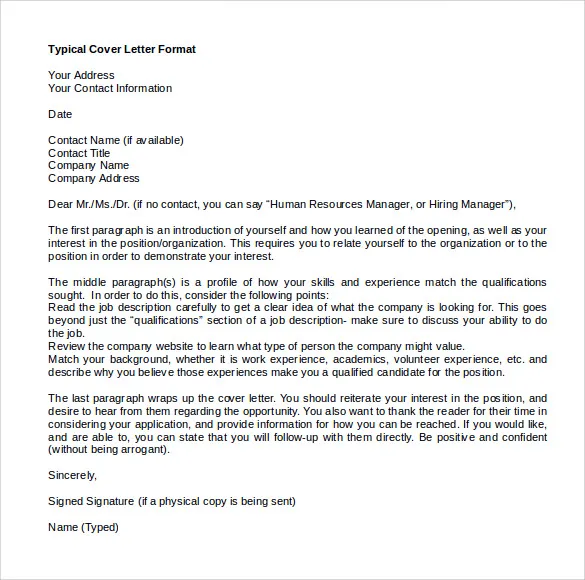
Understanding Cover Letters
A cover letter is a crucial document that accompanies your resume when applying for a job. It serves as your first introduction to a potential employer, offering you the opportunity to showcase your personality, skills, and enthusiasm for the position. Unlike a resume, which provides a factual overview of your experience, a cover letter allows you to elaborate on your qualifications and explain why you’re a perfect fit for the specific role and company. Writing a compelling cover letter can significantly increase your chances of getting an interview and ultimately, landing your dream job. In today’s competitive job market, a well-crafted cover letter can make you stand out from the crowd.
What is a Cover Letter?
A cover letter is a one-page document you submit with your resume when applying for a job. It allows you to introduce yourself to the hiring manager, express your interest in the position, and highlight the skills and experiences that make you a strong candidate. The cover letter should be tailored to the specific job you are applying for, demonstrating your understanding of the company and the role’s requirements. It’s your opportunity to provide context to your resume, explaining how your qualifications align with the job description and why you are excited about the opportunity. Think of it as a personalized sales pitch that aims to convince the employer to read your resume and consider you for an interview.
Why Cover Letters Matter

Cover letters play a vital role in the job application process. They provide an opportunity to make a strong first impression and persuade the employer to consider your application. They allow you to personalize your application, showcasing your genuine interest in the company and the specific role. Cover letters also demonstrate your communication skills and attention to detail, which are crucial for many positions. Moreover, they enable you to highlight relevant skills and experiences that might not be explicitly evident in your resume. A well-written cover letter can significantly increase your chances of being noticed and moving to the next stage of the hiring process, ultimately leading to a job offer. In short, they help you stand out from the competition.
Essential Components of a Cover Letter
A well-structured cover letter includes several key components that work together to present you as a qualified and enthusiastic candidate. Each section serves a specific purpose, from introducing yourself to highlighting your skills and expressing your interest. It’s important to ensure all the parts are included and thoughtfully composed. These components should work together seamlessly to create a compelling document that grabs the reader’s attention and encourages them to learn more about your qualifications. Proper formatting and content are equally important to catch a hiring manager’s eye.
Your Contact Information
Start your cover letter with your contact information. This should include your full name, address, phone number, and professional email address. Make sure your contact information is up-to-date and easily accessible. Use a clear and professional font style. Place the information in the top left corner of the page or aligned to the left. Ensure the information is consistent with what you’ve provided on your resume. This ensures the hiring manager can quickly contact you should they want to move forward with your application.
Date and Recipient’s Information

Below your contact information, include the date you are writing the letter. Then, provide the recipient’s information, which typically includes the hiring manager’s name, their title, and the company’s name and address. If you can’t find the name of the hiring manager, try to find it through a LinkedIn search or by checking the company’s website. Addressing the cover letter to a specific person is always preferable to using a generic salutation such as “To Whom It May Concern.” Using the correct information demonstrates your attention to detail and initiative, which are qualities employers value.
Salutation
The salutation sets the tone for your cover letter. Use a formal and professional salutation such as “Dear Mr./Ms. [Last Name]” or “Dear [Hiring Manager Name].” If you were unable to find a specific contact person, you can use “Dear [Hiring Team],” but avoid vague greetings. Avoid using informal greetings, such as “Hi.” The salutation is your first opportunity to show the employer you are professional. A well-crafted salutation makes a positive first impression.
Body Paragraph 1
The first paragraph of your cover letter should introduce yourself and state the specific position you are applying for. Mention where you found the job posting and why you are interested in the role and the company. Briefly highlight your most relevant skills or experiences. This is your chance to capture the reader’s attention from the start. Express your enthusiasm for the opportunity and demonstrate your knowledge of the company. Showing your knowledge and excitement will make your cover letter more impactful.
Body Paragraph 2

In the second paragraph, provide details about your skills, experiences, and accomplishments that align with the job requirements. Use specific examples to demonstrate how you have successfully performed tasks or achieved results in the past. Quantify your accomplishments whenever possible. For instance, instead of saying you “managed projects,” you could say, “Managed three projects, delivering them on time and under budget.” This section is where you show the hiring manager that you have the required qualifications. Tailor this section to match the needs of the employer. It’s vital that your achievements match what the company is looking for.
Body Paragraph 3
The third paragraph allows you to explain why you are interested in the company. Research the company’s mission, values, and recent news or projects to demonstrate your understanding of their work. Connect your values and goals with the company’s. Show how you can contribute to the company’s success. Express your enthusiasm for the role and the company, highlighting how your skills and experiences will benefit them. This is your chance to stand out from other applicants and increase your chances of getting an interview.
Closing and Signature
Conclude your cover letter with a strong call to action, expressing your enthusiasm for the opportunity and your availability for an interview. Reiterate your interest in the position and thank the hiring manager for their time and consideration. Use a professional closing, such as “Sincerely,” “Respectfully,” or “Best regards,” followed by your typed name. If you are sending a physical copy, leave space for your signature above your typed name. This is the final opportunity to leave a good impression and reiterate your desire to obtain the position.
Creating Your Cover Letter in MS Word

Microsoft Word is a powerful tool for creating professional-looking cover letters. Its user-friendly interface and variety of features make it an excellent choice for crafting your application. Word allows you to easily format your document, choose from various templates, and ensure your cover letter looks polished and professional. Using MS Word gives you the power to create a visually appealing and effective document that showcases your skills and qualifications. It’s an essential skill for any job seeker.
Choosing a Template
MS Word offers many built-in cover letter templates that can save you time and effort. To access these templates, open MS Word, click on “File,” then “New.” In the search bar, type “cover letter” and you will see many templates. Choose a template that suits your style and the job you are applying for. The right template will save you time and help ensure your cover letter has a polished look. Remember to modify the template to fit your needs, as it’s crucial that it represents you and your skills. You can select a design that you find both appealing and professionally appropriate.
Formatting Your Document
Proper formatting is crucial for making your cover letter easy to read and visually appealing. Formatting ensures that the document looks professional and well-organized. You can adjust the formatting based on the requirements of the employer. By paying attention to formatting, you can help your cover letter look clean and professional, which is an important factor in the hiring process.
Font and Size

Choose a professional and easy-to-read font, such as Times New Roman, Arial, or Calibri. Keep the font size between 10 and 12 points. These fonts are common and easily legible. Avoid using overly stylized or decorative fonts, as they can be distracting. Ensure consistency throughout the document, using the same font and size for the body text and different font for headings. A clean font and size makes the letter easy on the eyes and professional-looking. These choices will ensure that your cover letter looks professional.
Margins and Spacing
Set the margins of your document to 1 inch on all sides. This creates a balanced and uncluttered look. Use single or 1.15 line spacing for the body text to enhance readability. Avoid using double-line spacing. Use consistent spacing between paragraphs and sections for a clean appearance. Proper margins and spacing contribute to a polished and professional look. These formatting elements will help to ensure your cover letter is easy to read and looks professional.
Adding Your Content
Once you have chosen your template and formatted your document, you can begin adding your content. Start by entering your contact information, the date, and the recipient’s information at the top of the document. Then, compose your cover letter, following the structure discussed above. Tailor your content to the specific job you are applying for, highlighting your skills, experiences, and accomplishments that align with the job requirements. Ensure you proofread your document carefully for any grammar or spelling errors before submitting. Consider incorporating keywords from the job description. Personalize the cover letter with details that show your enthusiasm.
Proofreading and Editing

Proofreading and editing your cover letter is a critical step that ensures your document is error-free and professionally written. Thorough proofreading helps you identify and correct mistakes that can damage your credibility. Take your time to carefully review your cover letter for grammar, spelling, punctuation, and formatting errors. Proofreading is essential to present yourself in a professional light. Failing to proofread can make the reader think you are not attentive to details, which are valuable in the workplace.
Common Mistakes to Avoid
Several common mistakes can undermine the effectiveness of your cover letter. Being aware of these mistakes will help you to avoid them. It is best to avoid these to ensure that you portray the best version of yourself. It’s important to keep your cover letter as clean and concise as possible.
Grammar and Spelling Errors
Grammar and spelling errors can immediately discredit your application. Always proofread your cover letter carefully. Use spell check and grammar check tools in MS Word, but don’t rely on them completely. Read your cover letter aloud to catch any awkward phrasing or mistakes that might be missed when reading silently. Ask a friend or family member to review your cover letter. Ensure that all your sentences are correct and easy to understand. Pay close attention to subject-verb agreement, punctuation, and correct word usage. This is to help with clarity in your cover letter. Double-check all names, titles, and company names for accuracy.
Length and Tone
Keep your cover letter concise and to the point. Aim for one page. Avoid writing generic or overly long paragraphs. Tailor your tone to match the company’s culture, while maintaining a professional demeanor. Avoid slang, jargon, and overly casual language. Use a positive and enthusiastic tone. Demonstrate your passion for the role and your eagerness to contribute. Highlight your skills, experience, and accomplishments in a concise, engaging manner. It should have a well-balanced amount of information and not be too lengthy.
Saving and Submitting Your Cover Letter
After you’ve proofread and edited your cover letter, save it in a professional format, such as PDF or Word. Always save a copy of your cover letter for your records. PDF is recommended as it preserves the formatting. Make sure your cover letter file name is professional. Check the job application instructions for preferred file formats. Before submitting, review the application instructions. Make sure that you have included all the required documents. Ensure your application is delivered properly by following all the directions carefully. Following these guidelines will help you make a strong impression.
In conclusion, writing a cover letter in MS Word is a simple process. By following these steps, you can create a polished, professional cover letter that showcases your skills and increases your chances of landing an interview. Remember to tailor your cover letter to each job you apply for and proofread it carefully before submitting it. Good luck with your job search!