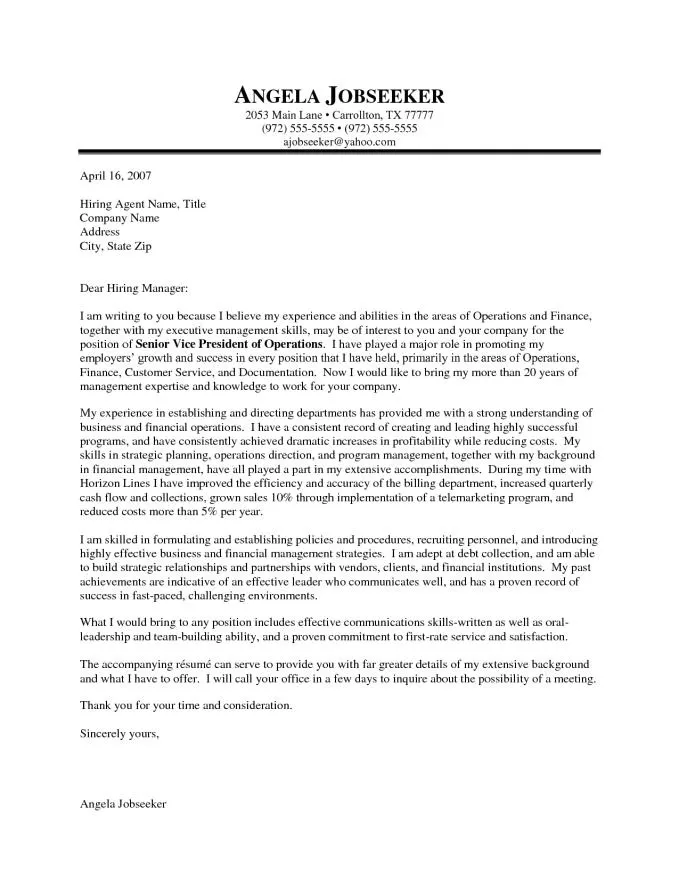
What is a Cover Letter
A cover letter is a crucial document that accompanies your resume when applying for a job. It serves as an introduction to your qualifications, skills, and experience, providing an opportunity to showcase why you are the ideal candidate for the position. Unlike a resume, which provides a factual summary of your career history, a cover letter allows you to personalize your application and demonstrate your enthusiasm for the specific role and company. It is your chance to tell your story, highlight your key accomplishments, and connect with the hiring manager on a more personal level. A well-crafted cover letter can significantly increase your chances of getting an interview and landing your dream job.
Why is a Cover Letter Important
In today’s competitive job market, a cover letter is essential for several reasons. First, it provides context to your resume, helping the hiring manager understand how your skills and experience align with the job requirements. Second, it allows you to elaborate on your accomplishments and explain how you can contribute to the company’s success. Third, it demonstrates your communication skills, writing ability, and attention to detail. Furthermore, a cover letter allows you to express your genuine interest in the role and the company, setting you apart from candidates who may only submit a resume. Many employers consider a cover letter a mandatory part of the application process, and neglecting to include one can immediately disqualify you from consideration.
Key Components of a Winning Cover Letter

A compelling cover letter consists of several key components, each designed to capture the reader’s attention and persuade them to learn more about you. It starts with a clear header and contact information, followed by a compelling opening paragraph that grabs the reader’s attention. The body of the letter should highlight your value proposition, tailor your skills to the job requirements, showcase relevant experience, and quantify your achievements. The closing paragraph should express your enthusiasm, reiterate your interest, and include a call to action. Finally, the entire letter should be carefully proofread and edited for grammar and clarity. By paying attention to these key components, you can create a cover letter that effectively communicates your qualifications and increases your chances of securing an interview.
Header & Contact Information
The header is the first element of your cover letter and should contain your full name, address, phone number, and email address. It’s important to use a professional-looking email address. This information should be clearly displayed at the top of the page, making it easy for the hiring manager to contact you. Consistency with the contact information on your resume is also critical. Using the same format and details across both documents helps maintain a professional and organized appearance, reinforcing your attention to detail and making it easier for recruiters to find your information. Ensure that the header is well-formatted and visually appealing, contributing to the overall positive impression of your application.
Opening Paragraph: Grab Their Attention
The opening paragraph is your chance to make a strong first impression. Start by stating the position you are applying for and where you saw the job posting. Then, immediately grab the reader’s attention by highlighting a key achievement or skill that directly aligns with the job requirements. This could be a specific accomplishment, a relevant skill, or your passion for the company’s mission. Avoid generic openings, such as “I am writing to apply for the position…” Instead, be creative and demonstrate your enthusiasm. For example, you could start by referencing a recent company project, mentioning a skill you possess that is crucial for the role, or expressing your admiration for the company’s work. Your goal is to pique the hiring manager’s interest and encourage them to read the rest of your letter.
Highlight Your Value Proposition

In the body of your cover letter, clearly articulate your value proposition. Explain what you can offer the company and how your skills and experience align with their needs. Focus on the key requirements outlined in the job description and provide specific examples of how you have demonstrated these skills in the past. This is where you show, don’t just tell, the hiring manager why you are the best candidate. Use action verbs to describe your accomplishments and quantify your results whenever possible. For example, instead of saying “I managed projects,” say “I successfully managed five projects, delivering them on time and under budget.” Tailor your message to the specific role and company, demonstrating that you understand their goals and how you can contribute to their success.
Tailor Your Skills to the Job
Carefully review the job description and identify the key skills and qualifications the employer is seeking. Then, tailor your cover letter to showcase how your skills and experience directly match these requirements. Provide specific examples of how you have used these skills in past roles and the results you achieved. This demonstrates that you have not only the required skills but also the ability to apply them effectively in a professional setting. Use keywords from the job description throughout your cover letter to help the hiring manager quickly see the connection between your qualifications and the job requirements. Customization is key; avoid using a generic cover letter and instead, create a unique document that highlights your suitability for the specific position.
Showcase Relevant Experience
Use the body of your cover letter to elaborate on your relevant experience. Focus on the accomplishments and responsibilities that align with the job requirements. Describe your past roles, highlighting specific achievements and contributions that demonstrate your abilities. Quantify your results whenever possible, using numbers and data to illustrate your impact. For instance, if you improved sales, state the percentage increase or the dollar amount. If you streamlined a process, mention the time or cost savings. Provide concrete examples that support your claims and illustrate your expertise. Make sure to connect your experience to the needs of the employer, explaining how your skills and knowledge will benefit the company.
Quantify Your Achievements

Whenever possible, quantify your achievements to demonstrate the impact of your work. Instead of saying “I improved customer satisfaction,” say “I increased customer satisfaction scores by 15% within six months.” Quantifying your accomplishments provides concrete evidence of your skills and abilities. Use numbers, percentages, and data to illustrate your results. This helps the hiring manager understand the tangible value you can bring to the company. For example, if you managed a budget, state the size of the budget and any cost savings you achieved. If you led a team, mention the team’s size and any notable achievements. Quantifying your achievements makes your cover letter more compelling and memorable.
Address the Employer’s Needs
Demonstrate your understanding of the employer’s needs and how your skills and experience align with their goals. Research the company and the role to understand their priorities and challenges. In your cover letter, address these needs directly, explaining how you can help them achieve their objectives. Highlight your relevant skills, experience, and accomplishments that address their specific requirements. Show that you understand the company’s mission, values, and culture, and explain how you can contribute to their success. Customizing your cover letter to reflect your understanding of the employer’s needs will significantly increase your chances of getting an interview and landing the job.
Closing Paragraph: Call to Action
The closing paragraph is your final opportunity to make a positive impression. Express your enthusiasm for the role and reiterate your interest in the company. Include a call to action, such as stating your availability for an interview and providing your contact information again. Thank the hiring manager for their time and consideration. Keep the tone professional and confident. A strong closing paragraph leaves the reader with a positive impression and encourages them to take the next step in the hiring process. For example, you might say “I am eager to learn more about this opportunity and discuss how my skills and experience can benefit your team. Thank you for your time and consideration. I look forward to hearing from you soon.”
Express Enthusiasm and Gratitude

Throughout your cover letter, express genuine enthusiasm for the role and the company. Show that you are excited about the opportunity and eager to contribute to their success. Demonstrate your passion for the industry and your desire to learn and grow within the organization. In the closing paragraph, express your gratitude to the hiring manager for their time and consideration. Thank them for reviewing your application and acknowledge their efforts in the hiring process. A sincere expression of enthusiasm and gratitude leaves a lasting positive impression and demonstrates your commitment to the opportunity.
End with a Professional Closing
End your cover letter with a professional closing, such as “Sincerely,” “Best regards,” or “Thank you.” Follow this with your full name and contact information. Avoid informal closings like “Cheers” or “Best.” Ensure the closing is consistent with the overall tone of the letter and reflects your professionalism. Double-check that all contact details are accurate and up-to-date. A professional closing adds a final touch of polish to your application and reinforces your attention to detail and commitment to the opportunity.
Proofread and Edit
Before submitting your cover letter, carefully proofread and edit it for any errors. Typos, grammatical errors, and formatting issues can undermine your credibility and damage your chances of getting an interview. Read your cover letter multiple times, paying close attention to spelling, grammar, punctuation, and sentence structure. Use spell-check and grammar-check tools, but don’t rely on them entirely. Have a friend or colleague review your cover letter to catch any errors you might have missed. A well-written, error-free cover letter demonstrates your attention to detail and your commitment to presenting yourself in the best possible light. Investing time in proofreading and editing is a critical step in the job application process.
Formatting and Design

Pay attention to the formatting and design of your cover letter. Use a clean, professional font, such as Times New Roman, Arial, or Calibri, and ensure the font size is easy to read (typically 11 or 12 points). Maintain consistent spacing and margins throughout the document. Use clear headings and subheadings to break up the text and make it easier to scan. Avoid using overly decorative fonts or excessive formatting, as this can detract from your message. Keep your cover letter concise, aiming for no more than one page in length. A well-formatted and visually appealing cover letter makes a positive impression and reflects your professionalism.
Maintain a Professional Tone
Maintain a professional tone throughout your cover letter. Use formal language and avoid slang, jargon, or overly casual expressions. Be respectful and courteous in your writing. Address the hiring manager appropriately, using their correct title and name. Avoid using contractions, such as “can’t” or “won’t,” and opt for the full forms instead. Ensure your writing style is clear, concise, and focused on the job requirements. A professional tone demonstrates your maturity, attention to detail, and respect for the hiring process. It helps you make a positive impression and increases your chances of being considered for the position.
Keep it Concise
Keep your cover letter concise and to the point. Aim for a one-page document, focusing on the most relevant information. Avoid including unnecessary details or repeating information from your resume. Be strategic about what you choose to highlight, selecting the skills, experience, and accomplishments that are most relevant to the job requirements. Use clear and concise language, avoiding wordiness or overly complex sentences. A concise cover letter demonstrates respect for the hiring manager’s time and makes it easier for them to quickly assess your qualifications. Being succinct is key to ensuring your message is impactful and memorable.
Avoid Common Mistakes

Avoid common mistakes that can undermine your cover letter and damage your chances of getting an interview. These include generic cover letters, typos and grammatical errors, a lack of enthusiasm, ignoring the job description, and formatting issues. Ensure your cover letter is tailored to the specific job and company, highlighting relevant skills and accomplishments. Proofread your letter carefully to eliminate errors. Express genuine enthusiasm for the role and the company. Carefully review the job description and address the employer’s requirements. Use a professional format and ensure the document is visually appealing. Avoiding these common mistakes can significantly improve the effectiveness of your cover letter.
Generic Cover Letters
One of the most significant mistakes is submitting a generic cover letter that is not tailored to the specific job or company. A generic cover letter lacks personalization and fails to demonstrate your genuine interest in the role. It often uses vague language and does not highlight the skills, experience, and accomplishments that are most relevant to the job requirements. To avoid this mistake, customize your cover letter for each application. Research the company, understand their mission, values, and culture, and tailor your letter to address their specific needs. Show that you understand the role and the company and explain how you can contribute to their success.
Typos and Grammatical Errors
Typos and grammatical errors can immediately undermine your credibility and damage your chances of getting an interview. Errors in spelling, grammar, punctuation, and sentence structure reflect a lack of attention to detail and a lack of professionalism. Before submitting your cover letter, carefully proofread and edit it multiple times. Use spell-check and grammar-check tools, but don’t rely on them entirely. Have a friend or colleague review your cover letter to catch any errors you might have missed. A well-written, error-free cover letter demonstrates your attention to detail and your commitment to presenting yourself in the best possible light. Always double-check the document before sending it.
Lack of Enthusiasm
A cover letter without enthusiasm fails to engage the reader and convey your genuine interest in the opportunity. A lack of enthusiasm might result from using a monotonous tone, not highlighting any specific accomplishments or showing excitement about the prospect of working for the organization. Express your genuine interest in the role and the company throughout your cover letter. Use enthusiastic language to showcase your excitement and passion. Refer to specific aspects of the role or the company that appeal to you, and explain why you are the ideal candidate. Show that you are not only qualified but also genuinely interested in the opportunity to contribute to their success.
Ignoring the Job Description
Ignoring the job description is a critical mistake that can lead to your cover letter missing the mark. The job description provides a roadmap of the skills, experience, and qualifications the employer is seeking. Failing to address these requirements in your cover letter shows that you have not taken the time to understand the role or the company’s needs. Carefully review the job description and tailor your cover letter to highlight your relevant skills, experience, and accomplishments. Use keywords from the job description to demonstrate your understanding of the role and your ability to meet the employer’s requirements. Customize your cover letter to show that you are the best fit for the position.
Formatting Issues
Formatting issues can distract the reader and make your cover letter less effective. Formatting errors include inconsistent spacing, poor font choices, and a lack of visual appeal. Ensure your cover letter is well-formatted, using a clean and professional font, such as Times New Roman, Arial, or Calibri. Maintain consistent spacing and margins throughout the document. Use clear headings and subheadings to break up the text and make it easier to scan. Keep your cover letter concise, aiming for no more than one page in length. A well-formatted cover letter is visually appealing and reflects your professionalism.
Cover Letter Examples to Get You Started
Reviewing cover letter examples can provide valuable insights and guidance for writing your own. Look for examples that are tailored to specific industries, roles, and experience levels. Analyze the structure, language, and tone used in these examples. Use them as inspiration, but always customize your cover letter to reflect your unique qualifications and the specific job requirements. Adapt examples to align with your own experiences and the company’s culture. There are numerous online resources and templates that offer cover letter examples and guidance. By studying these examples, you can learn best practices and avoid common mistakes. Consider the different types of cover letters, such as those for entry-level positions, experienced professionals, and career changers.