Why a Cover Letter is Essential
In today’s competitive job market, a cover letter can be the key that unlocks the door to your dream job. It’s more than just a formality; it’s your opportunity to make a strong first impression and showcase your unique value proposition. A well-crafted cover letter complements your resume by providing context and personality, allowing you to connect with the hiring manager on a personal level. It’s your chance to tell your story, elaborate on your skills, and demonstrate your genuine interest in the role and the company. Without a cover letter, you might miss the chance to highlight the specific qualifications and experiences that make you the ideal candidate, leaving the recruiter with only a snapshot of your professional history. Ultimately, it’s your chance to stand out from the crowd and make a memorable impact.
Elements of a Great Cover Letter
A compelling cover letter is a carefully constructed document that highlights your key qualifications and demonstrates your enthusiasm for the position. Start by researching the company and the specific job requirements to tailor your letter accordingly. The best cover letters are concise, professional, and easy to read, typically spanning one page. Begin with a strong opening that grabs the reader’s attention and clearly states your purpose. In the body of the letter, highlight your relevant skills and experiences, providing specific examples of your accomplishments and quantifying them whenever possible. Show, don’t just tell, by using action verbs and focusing on the value you bring to the table. Conclude with a confident closing that reiterates your interest and includes a clear call to action, such as requesting an interview. Proofread meticulously for any errors in grammar or spelling, and ensure the formatting is clean and consistent.
Header and Contact Information

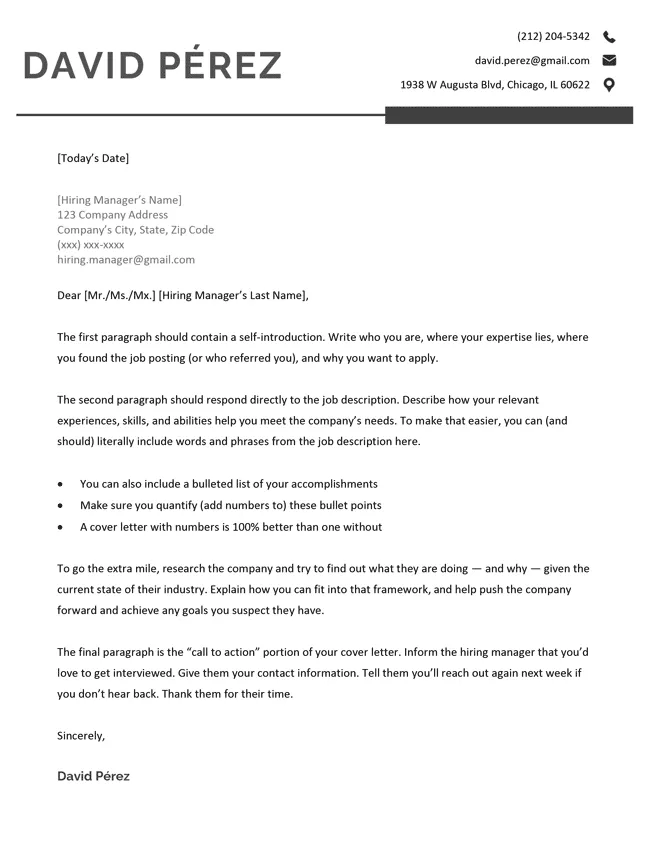
Begin your cover letter with a professional header that includes your full name, contact information (phone number and email address), and the date. Ensure that your contact information is accurate and up-to-date, as this is how the hiring manager will reach you. It is also crucial to include the recipient’s information, such as the hiring manager’s name (if known), title, and the company’s address. If you are unable to find the specific hiring manager’s name, try to address the letter to the ‘Hiring Manager’ or ‘Recruiting Team.’ This not only gives your cover letter a polished look but also shows attention to detail and professionalism. Make sure the header design complements your resume’s design to maintain consistency and demonstrate your organized approach to professional communication.
Greeting the Hiring Manager
The greeting sets the tone for your entire cover letter, so make sure it’s professional and personalized. The ideal approach is to address the hiring manager by name; doing so shows that you’ve taken the time to research and understand the company. If you can’t find the hiring manager’s name, using a general greeting like ‘Dear Hiring Manager’ or ‘Dear [Department Name] Team’ is acceptable. Avoid generic greetings like ‘To Whom It May Concern,’ which can come across as impersonal and show a lack of effort. Make sure the salutation matches the formality of the company culture and the job you’re applying for. A well-crafted greeting can instantly grab the hiring manager’s attention and encourage them to continue reading. This personalized approach sets the stage for the content that will follow, demonstrating your interest and making your application more appealing.
The Opening Paragraph Make an Impact
The opening paragraph of your cover letter is your first chance to make a strong impression. It should be concise, engaging, and directly address the job requirements. Start by stating the position you are applying for and where you found the job posting. Then, immediately capture the reader’s interest by highlighting one or two of your most relevant skills or experiences. This hook should demonstrate your understanding of the company’s needs and why you’re a suitable fit. Instead of repeating your resume, focus on a specific accomplishment or a unique quality that sets you apart. This creates a sense of curiosity and encourages the hiring manager to delve deeper into your qualifications. The opening paragraph should be a preview of your value, setting the stage for the rest of your letter and motivating the reader to learn more about you.
Highlighting Your Skills and Experience

The body of your cover letter should elaborate on your skills and experience, linking them directly to the job requirements. Carefully review the job description and identify the key skills and qualifications the employer is seeking. Then, use specific examples from your past roles or projects to showcase how you’ve successfully utilized these skills. Instead of simply listing your responsibilities, provide context and explain your accomplishments. For each point, describe the situation, the actions you took, and the positive results you achieved. This ‘STAR’ method (Situation, Task, Action, Result) can be highly effective in demonstrating your capabilities. Tailor each cover letter to the specific role by emphasizing the skills and experiences most relevant to that position, helping you present yourself as the perfect fit for the job.
Quantify Your Achievements
Whenever possible, quantify your achievements with specific numbers and data. This adds credibility to your claims and provides concrete evidence of your impact. Instead of saying ‘Improved customer satisfaction,’ state ‘Increased customer satisfaction by 15% within six months.’ Use metrics such as percentages, dollar amounts, and specific figures to demonstrate your effectiveness and the value you brought to previous employers. Quantifying your achievements not only makes your cover letter more compelling but also helps the hiring manager understand the tangible benefits of hiring you. It helps to visualize your accomplishments and understand the real value that you could potentially provide to the company.
Tailoring Your Letter to the Job
One of the most critical aspects of a successful cover letter is tailoring it to each job application. Generic cover letters that are sent to multiple companies can be easily identified and often dismissed. To tailor your letter, carefully analyze the job description and research the company to understand its values, mission, and specific needs. Then, customize your letter by highlighting the skills and experiences that align most closely with those requirements. Use the same keywords and phrases from the job description to show the hiring manager that you understand what they are looking for. Personalize your letter by mentioning something specific about the company or the role that excites you. Tailoring your letter demonstrates that you have taken the time to understand the opportunity, making you a more attractive candidate.
Showcase Your Personality

While maintaining professionalism, infuse your cover letter with your personality. This helps the hiring manager get a sense of who you are beyond your resume and allows them to connect with you on a personal level. Use a conversational tone and inject your enthusiasm for the role and the company. Share your genuine interest, passion, or any unique experiences that make you stand out from other applicants. This does not mean being overly casual; rather, it is about adding a touch of individuality to demonstrate your authenticity. Personalizing your letter by expressing your genuine interest in the position and the company makes you more memorable and helps the hiring manager visualize you as a valuable addition to the team.
Closing Paragraph and Call to Action
The closing paragraph is your final opportunity to reinforce your interest and prompt the hiring manager to take action. Reiterate your enthusiasm for the role and the company, restating the key reasons why you’re a good fit. Clearly state what you’re hoping for, such as an interview, and make it easy for the hiring manager to contact you. Thank them for their time and consideration, and express your anticipation for the next steps. A strong call to action might be, ‘I am eager to discuss my qualifications in more detail during an interview.’ Ensure that you include your contact information again, making it easy for the hiring manager to reach you. A well-crafted closing paragraph leaves a positive lasting impression and increases the likelihood of a follow-up.
Proofreading and Formatting
Before submitting your cover letter, thoroughly proofread it for any errors in grammar, spelling, and punctuation. A single mistake can undermine your credibility and make you seem unprofessional. Read your letter aloud to catch awkward phrasing or unclear sentences. Ask a friend or family member to review it as well; a fresh pair of eyes can often spot errors that you might miss. Pay close attention to formatting, ensuring that your letter is easy to read. Use a professional font, such as Times New Roman, Arial, or Calibri, and maintain consistent spacing. Ensure your margins are appropriate, and the paragraphs are well-structured and concise. A clean, well-formatted cover letter demonstrates your attention to detail and professionalism, making a positive impact on the hiring manager.
Cover Letter Examples

Studying examples of successful cover letters can provide valuable insight into how to structure your own. Search online for cover letter templates that suit your industry and job type. You can find a variety of examples tailored to different professions, from entry-level positions to executive roles. Look for letters that effectively highlight the applicant’s skills, experience, and personality. Note the use of action verbs, the emphasis on achievements, and the personalized approach. Adapt the examples to reflect your unique qualifications and the specific requirements of the jobs you are applying for. However, avoid simply copying and pasting; use the examples as a guide to create your own original and compelling cover letter. By analyzing different examples, you can learn the best practices for writing an effective cover letter.
Cover Letter Mistakes to Avoid
Several common mistakes can hinder your cover letter’s effectiveness. Avoid generic letters that are not tailored to the specific job or company. Do not simply repeat your resume; use the cover letter to elaborate on your qualifications and provide context. Steer clear of excessive length; aim for one page, unless the job requires a longer letter. Refrain from including negative information or complaints about past employers. Always proofread carefully to eliminate errors in grammar, spelling, and punctuation. Avoid using jargon or overly complex language that can confuse the hiring manager. Do not include irrelevant information or personal opinions that do not relate to the job. By avoiding these common pitfalls, you can ensure that your cover letter makes a positive impression and increases your chances of landing an interview.
In conclusion, writing a compelling cover letter is a crucial step in the job application process. By following these guidelines, you can create a document that highlights your strengths, demonstrates your enthusiasm, and sets you apart from the competition. Tailor your letter to each job, focus on your accomplishments, and always proofread for errors. A well-crafted cover letter can significantly increase your chances of landing an interview and ultimately securing your dream job.