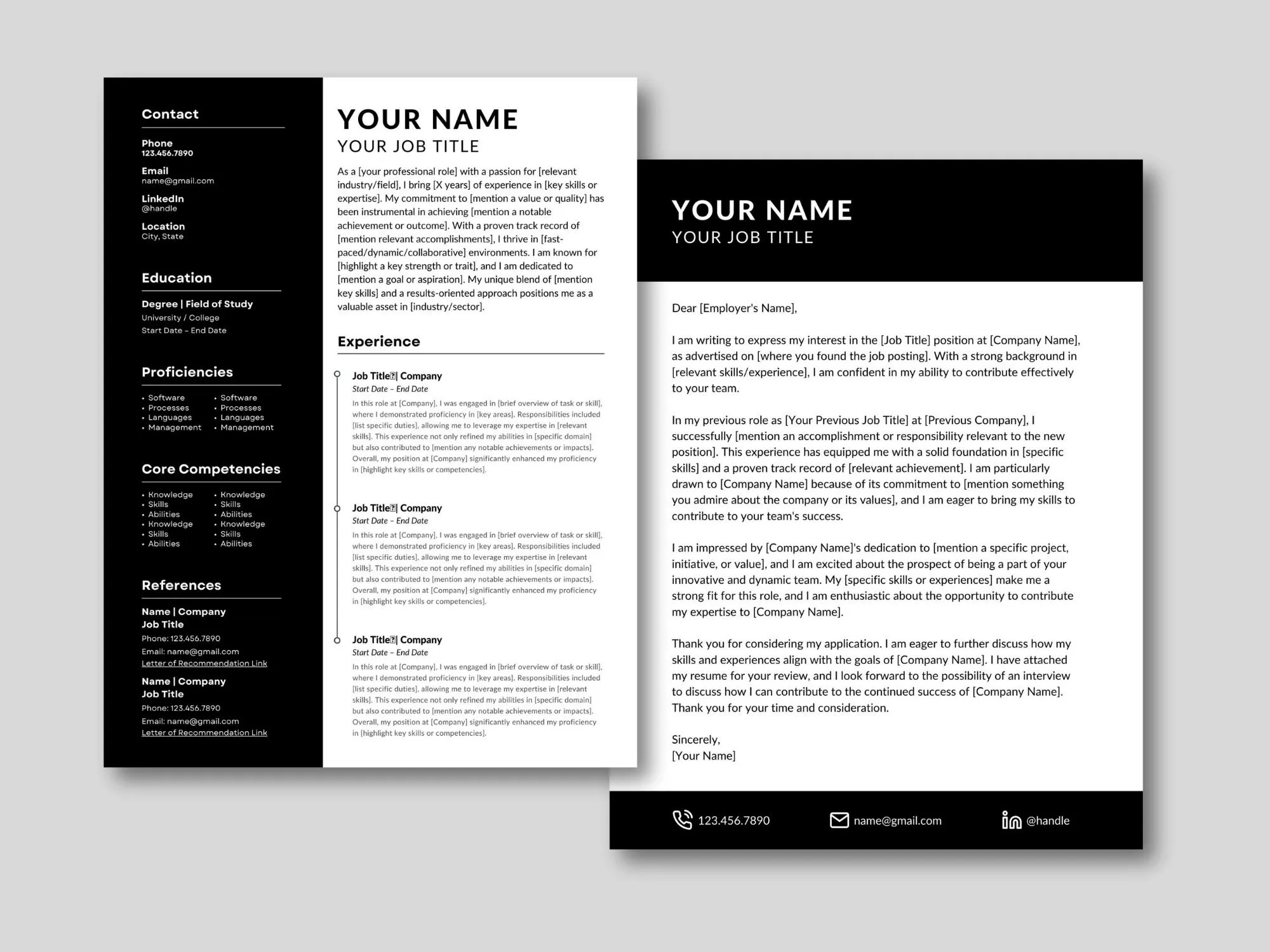
What is a Cover Letter and Why You Need One
A simple cover letter is a crucial document that accompanies your resume when applying for a job. It serves as your personal introduction, providing a concise overview of your qualifications, skills, and experience. Unlike a resume, which presents a factual summary, a cover letter allows you to express your personality, enthusiasm, and how your background aligns with the specific job requirements. Think of it as your first impression, the chance to make a compelling case for why you’re the perfect candidate.
The Importance of a Cover Letter
In today’s competitive job market, a well-written cover letter can be the deciding factor between getting an interview and being overlooked. It demonstrates your genuine interest in the position and the company, showing you’ve taken the time to understand their needs. It also provides an opportunity to elaborate on experiences and skills that might not be fully detailed in your resume, allowing you to highlight specific accomplishments and quantify your contributions.
Cover Letter Benefits

The benefits of a cover letter are numerous. Firstly, it allows you to personalize your application to each specific job, showcasing how your skills and experience match the employer’s requirements. Secondly, it gives you a platform to tell your story, explaining career gaps, changes, or other circumstances that might need context. Finally, a cover letter demonstrates your communication skills, providing an example of your writing ability and attention to detail – crucial qualities employers look for.
Key Components of a Simple Cover Letter
A simple cover letter typically consists of several key components, each serving a specific purpose in making a strong impression on the hiring manager. Structuring your letter correctly is critical to ensure your message is clear, concise, and effective. This section details the essential elements to include in your cover letter to make it stand out. Ensure you include all the necessary information to get the attention of a potential employer.
Contact Information and Date
Begin your cover letter with your contact information: your name, address, phone number, and email address. This should be located at the top left of the letter. On the right, include the date you are sending the letter. This provides the hiring manager with easy access to your contact details and establishes when the letter was written. Make sure this information is up-to-date and professional-looking
See image: cover-letter-structure.webp
Greeting

Address your letter to the hiring manager or the specific person listed in the job posting. If a name isn’t available, a general greeting like “Dear Hiring Manager” is acceptable. Avoid generic greetings such as “To Whom It May Concern” which can appear impersonal. Researching the company and finding the name of the hiring manager shows initiative and personalization. Ensure you spell the name correctly.
Body Paragraph 1 Introduce Yourself
The first paragraph should clearly state the position you’re applying for and how you found the job opportunity. Briefly mention your key qualifications and express your enthusiasm for the role. Show that you understand the company’s needs and what you can bring to the table. This introductory paragraph should immediately grab the reader’s attention and encourage them to keep reading. A strong opening sets the tone for the rest of the letter.
Body Paragraph 2 Highlight Skills and Experience
This section is where you highlight your relevant skills and experiences. Use specific examples to demonstrate how you have successfully performed tasks and achieved results in previous roles. Quantify your achievements whenever possible. Match your skills to the job description; tailor your examples to the specific requirements of the position you are applying for. This is your chance to prove that you are a good fit and a valuable asset to the company.
Body Paragraph 3 Show Enthusiasm

In your final body paragraph, reiterate your interest in the company and the role. Explain why you are excited about the opportunity and how your career goals align with the company’s mission. Mention what specifically attracts you to the company, such as its culture, values, or recent achievements. This shows you’ve done your research and are genuinely interested in joining their team. Close with a confident statement about your suitability for the role.
Closing
Conclude your cover letter with a professional closing, such as “Sincerely” or “Respectfully”. Include your typed name below the closing. You may also want to indicate that your resume is attached and that you look forward to hearing from them soon. This confirms your professionalism and eagerness for the next steps in the application process. A strong closing leaves a lasting positive impression.
Cover Letter Examples
To help you understand the structure and content, here are a few cover letter examples tailored to different scenarios. These examples provide a practical reference for formatting your own cover letter, depending on your experience and job search situation. Adapting these examples will make your cover letter specific to the role and company you are applying for.
Example 1 Recent Graduate

Dear Hiring Manager, I am writing to express my enthusiastic interest in the Marketing Assistant position at XYZ Company, as advertised on [Platform]. As a recent graduate with a degree in Marketing from [University], I am eager to apply my academic knowledge and skills to a dynamic and innovative team. During my studies, I gained hands-on experience in social media management, content creation, and market research through internships and projects. I am particularly drawn to XYZ Company’s commitment to [Company Value or Initiative] and believe my skills and passion align perfectly with your company culture.
See image: recent-graduate-cover-letter.webp
Example 2 Experienced Professional
Dear [Hiring Manager Name], I am writing to express my interest in the Project Manager position at ABC Corp, as advertised on LinkedIn. With over 10 years of experience in project management within the technology sector, I have a proven track record of successfully delivering complex projects on time and within budget. In my previous role at [Previous Company], I led a team of [Number] professionals and managed projects valued at over $[Amount], resulting in a [Percentage]% increase in efficiency. I am particularly impressed by ABC Corp’s recent advancements in [Specific Area] and am confident that my expertise would significantly contribute to your team.
Example 3 Career Change
Dear Hiring Manager, I am writing to express my interest in the Customer Service Representative position at DEF Solutions, as advertised on Indeed. While my background is in [Previous Field], I am eager to transition my skills to a new field. During my time at [Previous Company], I developed strong interpersonal and communication skills, managing a team of [Number] employees. I consistently achieved [Achievement] and I am excited to apply my experience to a customer-focused role. I am particularly drawn to DEF Solutions’ commitment to customer satisfaction and their innovative approach to problem-solving.
Formatting and Design Tips for Cover Letters

The formatting and design of your cover letter can significantly impact how it is perceived by the hiring manager. A well-formatted letter is easy to read, professional, and visually appealing. Attention to detail in the layout and design can communicate your professionalism. Here are some essential formatting tips to help your cover letter stand out, from font selection to overall layout and spacing.
Font Selection
Choose a professional and easy-to-read font such as Times New Roman, Arial, Calibri, or Georgia. Use a font size between 10 and 12 points. Avoid using overly decorative or unusual fonts that might distract the reader. Keep it simple and legible. Maintain consistency in font throughout the document to project a polished and professional image.
Layout and Spacing
Use single-spaced lines within paragraphs and double-space between paragraphs. This creates visual clarity and improves readability. Set 1-inch margins on all sides of the page. Align your text to the left. Avoid using justified text, as it can sometimes create uneven spacing. Make sure the layout is clean, uncluttered, and easy on the eyes. A well-structured layout helps the reader navigate your cover letter more effectively.
See image: cover-letter-formatting.webp
Proofreading and Editing

Proofread your cover letter meticulously for any grammatical errors, typos, or punctuation mistakes. A cover letter riddled with errors reflects negatively on your attention to detail and professionalism. Use spell-check tools, but also manually review your letter. Have a friend or colleague review it as well. Fresh eyes can often spot mistakes that you might miss.
Common Mistakes to Avoid in Cover Letters
Avoiding common mistakes in your cover letter can significantly increase your chances of making a positive impression. These errors can range from generic content to careless formatting and can be easily avoided with careful attention. Recognizing and preventing these mistakes will make your cover letter more effective in highlighting your skills and qualifications.
Generic Cover Letters
Avoid using a generic cover letter that could be sent to any company or any job. Tailor each letter to the specific job and company you are applying to. Customize your letter to match the requirements and keywords in the job description. Show that you understand the company’s values and goals. A generic cover letter indicates a lack of genuine interest and effort, while a tailored letter shows your initiative.
Typos and Grammatical Errors
Carelessly written cover letters with typos and grammatical errors create a poor impression and can undermine your credibility. Proofread your cover letter thoroughly before sending it. Use spell-check and grammar-check tools, but also manually review your letter for any mistakes. Errors signal a lack of attention to detail. Ensure your cover letter is polished and error-free.
Ignoring the Job Description
Do not ignore the job description when writing your cover letter. Carefully read the job posting and match your skills and experience to the specific requirements. Highlight relevant skills and accomplishments mentioned in the job description. Tailor your letter to demonstrate how you meet the employer’s needs. Ignoring the job description is a missed opportunity to demonstrate your relevance.
See image: cover-letter-mistakes.webp
Tips for Tailoring Your Cover Letter
Tailoring your cover letter to each job application is essential for demonstrating your genuine interest and suitability for the role. It’s a strategic approach that increases your chances of getting noticed. By customizing your letter, you show that you’ve done your research, understand the job requirements, and are genuinely interested in the opportunity. Here are some tips to help you tailor your cover letter.
See image: cover-letter-tailoring.webp
Review the job description closely, identifying the key skills, experiences, and qualifications the employer is seeking. Then, highlight your relevant skills and experiences, providing specific examples to show how you’ve met the job requirements. Adapt your letter to the company’s mission, values, and culture. Research the company to understand its goals and tailor your language accordingly. Use keywords from the job description. This ensures your letter aligns with the company’s needs.
A simple cover letter, crafted with care and attention to detail, can significantly improve your job application and increase your chances of securing an interview. By following the steps and tips outlined, you can create a cover letter that effectively communicates your qualifications and showcases your enthusiasm for the role. Always proofread carefully and tailor your cover letter to each job application to increase your chances of landing your dream job.