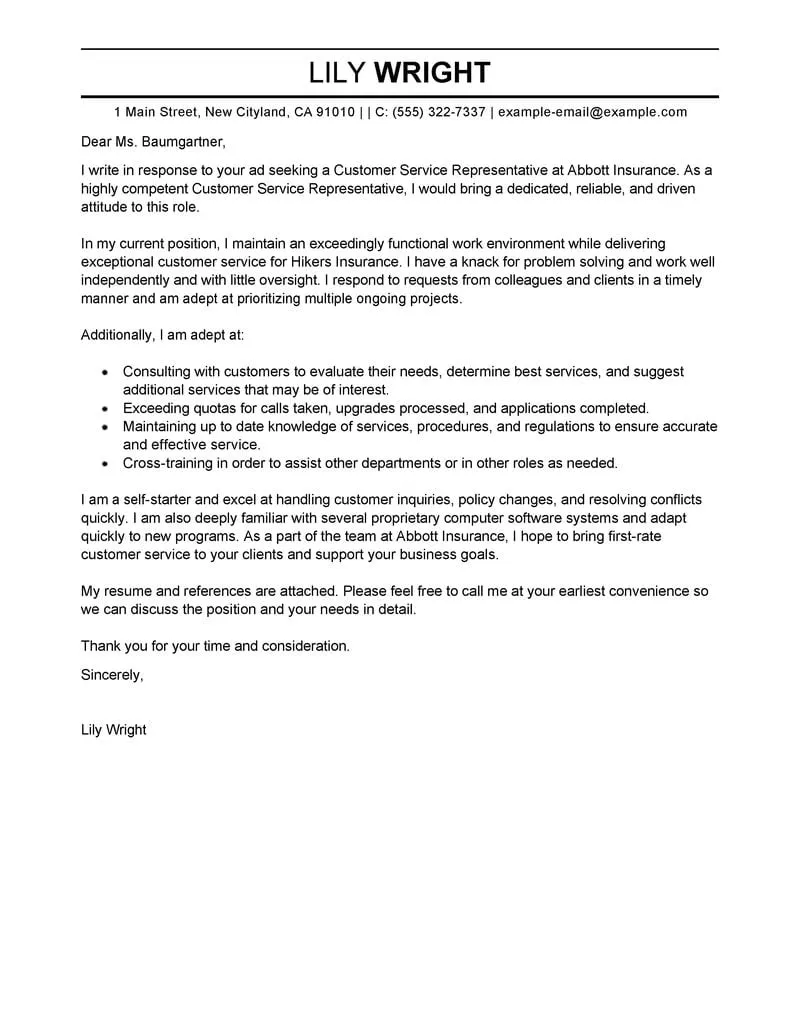
Understanding the Purpose of a Customer Service Cover Letter
A customer service cover letter is more than just a formality it’s your first chance to make a positive impression on a potential employer. It serves as a personalized introduction, allowing you to showcase your relevant skills, experience, and personality in a way that a resume alone cannot. The primary goal is to persuade the hiring manager that you are the perfect fit for the customer service role and to secure an interview. Unlike a resume, the cover letter lets you tell a story, connecting your past achievements to the specific requirements of the job and demonstrating your genuine interest in the company. A well-crafted cover letter increases your chances of getting your resume read and securing an interview.
Key Components of a Winning Customer Service Cover Letter
A successful customer service cover letter contains several key components that work together to present you as a compelling candidate. Structuring your letter effectively is essential. This includes a clear header with your contact information, a professional greeting, an engaging opening paragraph, well-defined sections that highlight your skills and experience, a strong closing paragraph with a call to action, and careful proofreading. Each element should be carefully crafted to communicate your qualifications and enthusiasm. Proper formatting and a professional tone are also crucial to convey your professionalism and attention to detail.
Contact Information and Header

Your cover letter should start with a clear and professional header. This includes your full name, address, phone number, and email address. Place this information at the top of the document, typically aligned to the left or right. Make sure your email address is professional (e.g., jane.doe@email.com, not cutiepie123@email.com). Also, include the date and the hiring manager’s name and title, if known, along with the company’s name and address below your contact details. This header immediately establishes your identity and provides the recruiter with the necessary contact information should they wish to reach you.
Professional Greeting
Begin your cover letter with a professional greeting. If you know the hiring manager’s name, address the letter to them directly (e.g., “Dear Mr. Smith,”). This personal touch shows that you’ve taken the time to research the company and pay attention to detail. If you don’t know the hiring manager’s name, a general greeting like “Dear Hiring Manager” or “Dear Customer Service Team” is acceptable, but always try to find a specific name if possible. Avoid generic greetings like “To Whom It May Concern,” which can make your letter seem impersonal.
Opening Paragraph Hook
Your opening paragraph should immediately grab the reader’s attention. Start with a brief, compelling statement that highlights your interest in the position and the company. You can mention where you saw the job posting, a key skill or achievement, or why you are excited about the opportunity. Avoid generic phrases like “I am writing to express my interest.” Instead, aim for a statement that shows your enthusiasm and connects your skills or experience to the job requirements. This initial paragraph sets the tone for the entire letter, so make it impactful.
Highlighting Relevant Skills
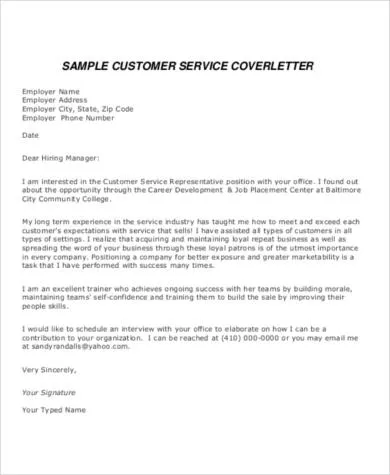
The core of your cover letter should highlight the customer service skills most relevant to the job. Review the job description carefully and identify the key skills the employer is seeking. Then, use specific examples from your experience to demonstrate how you possess these skills. Instead of just listing your skills, provide brief anecdotes that showcase how you used these skills to achieve positive outcomes in past roles. This section is your opportunity to prove to the recruiter you can do the job, make it count.
Communication Skills
Excellent communication skills are essential in customer service. Highlight your ability to communicate clearly and effectively, both verbally and in writing. Provide examples of how you’ve handled difficult customers, explained complex information in a simple way, or adapted your communication style to different audiences. Mention any experience with phone, email, chat, or other communication channels. For example, “In my previous role, I consistently resolved customer issues via phone, maintaining a 95% satisfaction rate by actively listening and providing clear, concise explanations.”
Problem-Solving Abilities
Customer service often requires strong problem-solving skills. Showcase your ability to identify issues, analyze situations, and find effective solutions. Provide examples of how you’ve resolved customer complaints, troubleshooted technical problems, or found creative solutions to challenging situations. For instance, “When a customer reported a billing error, I investigated the issue, identified the root cause, and quickly implemented a solution, resulting in a positive resolution and improved customer satisfaction.”
Empathy and Patience

Empathy and patience are crucial for building positive customer relationships. Demonstrate your ability to understand and address customer needs with compassion and understanding. Provide examples of how you’ve handled upset customers, remained calm in stressful situations, or gone above and beyond to help someone. An example could be, “I have a proven ability to remain calm and empathetic, even in high-pressure situations. I consistently received positive feedback for my ability to de-escalate customer concerns and offer effective solutions with patience.”
Detailing Relevant Experience
In addition to highlighting your skills, provide concrete examples of your relevant experience. Describe your previous customer service roles, highlighting your responsibilities and accomplishments. Use the STAR method (Situation, Task, Action, Result) to structure your examples, providing specific details about the situations you faced, the tasks you undertook, the actions you took, and the results you achieved. This helps employers understand your impact and effectiveness. Always focus on what you accomplished, not just what you did. Quantify your achievements whenever possible.
Quantifying Achievements
Whenever possible, quantify your achievements with numbers and data. This makes your accomplishments more impactful and shows the employer the value you can bring. For example, instead of saying “Improved customer satisfaction,” say “Increased customer satisfaction scores by 15% through proactive follow-up and personalized service.” Use metrics like percentages, dollar amounts, and timeframes to demonstrate your impact. This level of detail provides concrete evidence of your abilities and makes your cover letter more compelling.
Tailoring Your Letter to the Job

Avoid using a generic cover letter. Customize each letter to the specific job you are applying for. This involves researching the company, matching your skills to the job requirements, and highlighting the experiences that are most relevant to the position. Tailoring your letter shows that you have taken the time to understand the role and the company, demonstrating your genuine interest and increasing your chances of getting an interview. This attention to detail sets you apart from candidates who use a one-size-fits-all approach.
Researching the Company
Before writing your cover letter, research the company thoroughly. Understand their mission, values, and recent news. Visit their website, read their “About Us” section, and check their social media profiles. This knowledge will help you tailor your letter to align with their culture and demonstrate your genuine interest. Reference specific products, services, or initiatives that resonate with you. You can then explain why you are a good fit for their organization. This shows the hiring manager that you have gone the extra mile.
Matching Skills to Requirements
Carefully review the job description and identify the key skills and qualifications the employer is seeking. Then, match your skills and experience to those requirements. Use the same keywords and phrases from the job description in your cover letter, but do so naturally, weaving them into your examples and descriptions. This ensures that your letter clearly demonstrates how your qualifications align with the job’s needs. Don’t just list the skills; provide specific examples of how you’ve used them in the past.
The Closing Paragraph

Your closing paragraph should reiterate your interest in the position and summarize why you are a strong candidate. Express your enthusiasm for the opportunity and thank the hiring manager for their time and consideration. Keep the tone positive and professional, and reinforce the key message of your letter. Briefly mention your understanding of the company’s culture and what you can bring to their customer support team. This is your last chance to make an impression, so make it count.
Expressing Enthusiasm and Availability
In your closing paragraph, clearly express your enthusiasm for the opportunity and your interest in the company. State that you are eager to learn more about the position and are confident that you can contribute to the team. Mention your availability for an interview and your willingness to provide any additional information. This demonstrates your proactive approach and your genuine interest in the role. Show your keenness in the company and your interest in working for them.
Call to Action
Include a clear call to action in your closing paragraph. This should prompt the hiring manager to take the next step, such as scheduling an interview. State that you are available for an interview at their earliest convenience and provide your contact information again. By including a call to action, you make it easier for the hiring manager to respond and move your application forward. Close with a professional closing, such as “Sincerely” or “Best regards”, followed by your name.
Proofreading and Formatting

Before submitting your cover letter, proofread it carefully to eliminate any errors in grammar, spelling, and punctuation. Errors can create a negative impression and suggest a lack of attention to detail. Use spell-check and grammar-check tools, but also read the letter aloud to catch any mistakes. Pay attention to formatting, ensuring that your letter is easy to read and visually appealing. Use a professional font, consistent spacing, and clear paragraph breaks. A well-formatted and error-free letter demonstrates your professionalism and attention to detail.
Common Mistakes to Avoid
Avoid making common mistakes that can undermine your application. These include using generic templates, failing to tailor your letter to the specific job, including irrelevant information, and having typos or grammatical errors. Additionally, avoid being overly verbose, using unprofessional language, or focusing solely on what you want rather than what you can offer the employer. Make sure you proofread your letter and have a friend review it as well.
Length and Tone
Keep your cover letter concise and to the point. Aim for a length of one page. Use a professional and enthusiastic tone throughout your letter. Avoid overly casual language or slang. The tone should reflect your personality while maintaining a high level of professionalism. Make sure your writing style is clear, concise, and engaging. You must make a positive impression.
Grammar and Spelling Errors
Carefully proofread your cover letter for any grammar and spelling errors. These can be a major turnoff for hiring managers and create a negative impression. Use spell-check and grammar-check tools, but don’t rely on them completely. Read your letter aloud to catch any errors that you may have missed. Pay attention to punctuation, capitalization, and sentence structure. A polished cover letter demonstrates your attention to detail and your commitment to excellence.