Understanding the Business Development Director Role
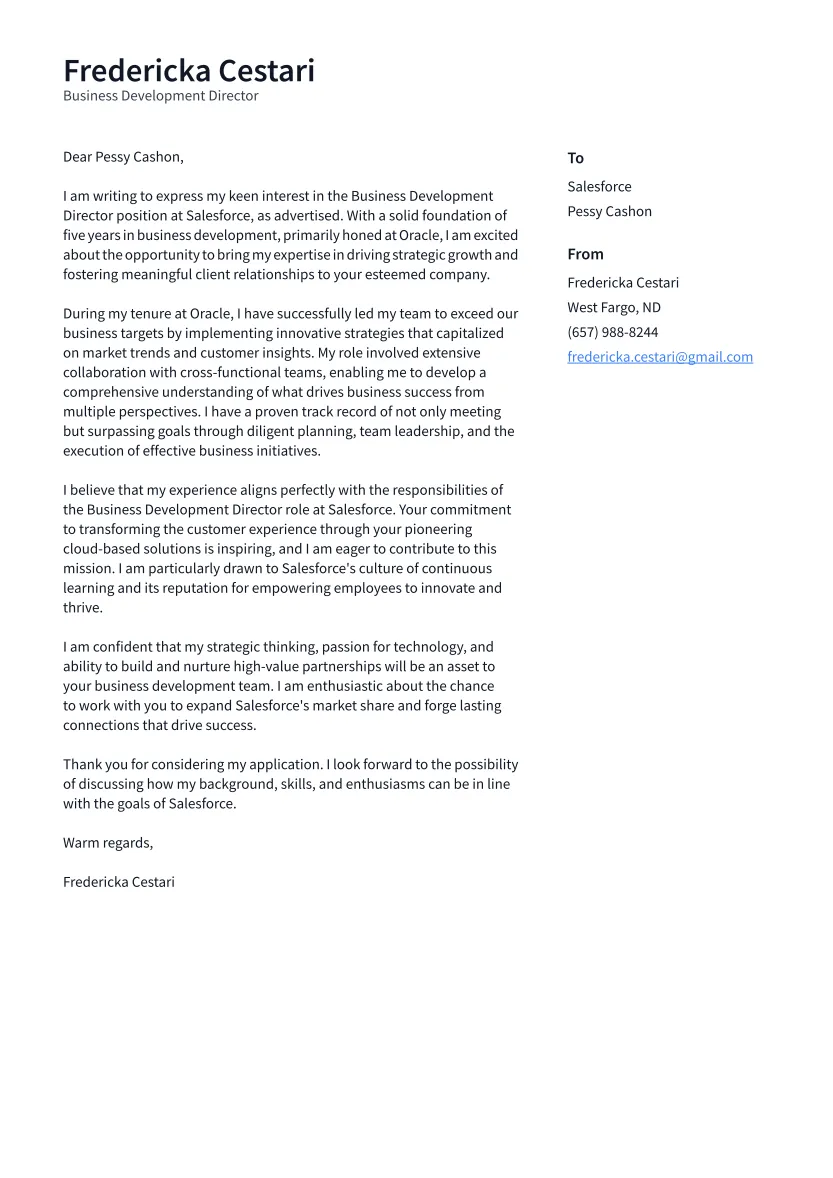
Before you begin crafting your cover letter, it’s crucial to understand the role of a Business Development Director. This position is pivotal for any company aiming for growth and expansion. The director is responsible for identifying new business opportunities, developing strategies, and nurturing relationships that drive revenue and market share. A well-crafted cover letter must reflect this understanding, showcasing your ability to not only perform the job but also excel in it.
Key Responsibilities of a Business Development Director
Business Development Directors wear many hats, and your cover letter needs to reflect your versatility. Key responsibilities include market analysis, lead generation, strategic planning, partnership development, and client relationship management. They also oversee the sales process, ensuring targets are met and often take a leadership role in the sales team. Highlight your experience in these areas, providing specific examples of how you’ve contributed to business growth and revenue generation.
Essential Skills for the Role

Beyond responsibilities, a Business Development Director needs a diverse skill set. These include strategic thinking, excellent communication, negotiation skills, financial acumen, and leadership abilities. You should also have strong networking and presentation skills. Quantify these skills whenever possible. For example, instead of saying “strong communication skills,” write, “Successfully presented proposals to C-level executives, securing contracts worth over $1 million.”
Crafting Your Cover Letter: The Foundation
The foundation of a winning cover letter lies in its structure and presentation. A well-organized letter demonstrates professionalism and attention to detail. Before you start writing, gather all the necessary information. Research the company, the specific role, and the hiring manager if possible. This information will enable you to tailor your cover letter to the specific requirements of the job.
Header and Contact Information
Begin with a professional header that includes your full name, contact information (phone number, email address, and LinkedIn profile URL). Ensure that your contact details are current and professional. Your header should be clean and easy to read. Place the header at the top of the page, and make sure the formatting is consistent with your resume.
Date and Recipient’s Details

Include the date of the letter below your contact information. Then, add the hiring manager’s name, title, and the company’s address. Addressing the letter to a specific person shows that you’ve done your research and that you’re genuinely interested in the role. If the hiring manager’s name isn’t available, use a professional greeting, such as “Dear Hiring Manager”.
The Opening Paragraph: Grab Attention
The opening paragraph is your chance to make a strong first impression. Start by stating the position you’re applying for and where you saw the advertisement. Then, immediately capture the reader’s attention. Mention something that makes you stand out, such as a significant achievement or a unique skill relevant to the role. This sets the tone for the rest of the letter, indicating that you’re a strong candidate. Avoid generic openings like “I am writing to express my interest…”
Highlighting Your Enthusiasm
Show your enthusiasm for the company and the role. This can be achieved by mentioning what specifically attracted you to the company (its mission, values, culture, or recent achievements). Expressing your interest in the position and your desire to contribute to their success makes you appear more committed and driven. Make sure your enthusiasm feels genuine and not forced.
Mentioning the Specific Role

Clearly state the specific role you’re applying for. This leaves no doubt about your intentions and ensures the hiring manager understands immediately. Refer to the job title exactly as it is listed in the job description. Briefly explain why you’re a good fit. Connect your skills and experiences to the key responsibilities outlined in the job posting.
Showcasing Your Achievements
Your cover letter should highlight your achievements, not just list your responsibilities. Use the STAR method (Situation, Task, Action, Result) to describe how you’ve handled challenges and achieved positive outcomes. Focus on quantifiable results, such as increased revenue, improved market share, or successful partnerships. This section is where you make a strong case for your qualifications.
Quantifiable Results and Metrics
Always include numbers and metrics to showcase your achievements. Instead of saying “Increased sales,” say “Increased sales by 20% within one year.” Use percentages, dollar amounts, or other metrics to quantify your impact. This provides tangible evidence of your capabilities and demonstrates your ability to drive results. These measurable achievements add credibility to your claims.
Using Action Verbs

Use strong action verbs to describe your accomplishments and responsibilities. Verbs such as “led,” “managed,” “achieved,” “developed,” “negotiated,” and “implemented” make your statements more dynamic and compelling. Action verbs showcase your proactive approach and give the hiring manager a clear picture of your capabilities. They also make your cover letter more engaging to read.
Demonstrating Relevant Experience
The cover letter is your chance to expand on your resume and connect your experience to the job requirements. Provide specific examples of how you’ve succeeded in previous roles. Highlight the skills and experiences that are most relevant to the position. Customize your letter to align with the job description, ensuring you address the employer’s needs.
Tailoring to the Company
A generic cover letter is easily dismissed. Tailor your letter to the specific company and role. Show that you’ve researched the company by mentioning their recent achievements, values, or mission. Explain how your skills and experiences align with their goals and the requirements of the position. This demonstrates your genuine interest and commitment.
Researching the Company’s Needs

Before writing, deeply research the company’s current challenges and goals. This information will help you articulate how you can contribute to their success. Look for news articles, press releases, or industry reports to understand their market position and strategic priorities. By understanding their needs, you can tailor your cover letter to show how your skills and experience can help solve their problems.
Addressing the Employer’s Requirements
Carefully review the job description and identify the key requirements the employer is seeking. Address each requirement in your cover letter, providing specific examples of how you have met these criteria in the past. This targeted approach shows the hiring manager that you are a good fit for the role and that you have the skills and experiences they are looking for.
Keywords and Phrases to Include
Incorporate keywords and phrases from the job description into your cover letter. This helps the hiring manager quickly identify your relevant skills and experiences. Use these keywords naturally within your sentences, ensuring the letter flows well. Ensure you are not stuffing keywords, and your use of the keywords is relevant to your experience. This helps you get past applicant tracking systems (ATS) and catch the hiring manager’s attention.
Highlighting Your Soft Skills
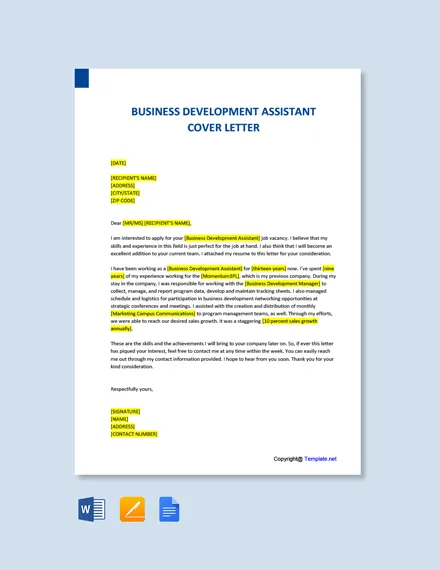
While hard skills are important, don’t forget to showcase your soft skills. Business Development Directors need strong communication, leadership, and interpersonal skills. Provide examples of situations where you demonstrated these skills, such as leading a team, negotiating a deal, or building relationships with clients. Demonstrating your soft skills will make you a more well-rounded candidate.
The Closing Paragraph: Call to Action
Your closing paragraph should leave a lasting positive impression and encourage the hiring manager to take action. Summarize your key qualifications and reiterate your enthusiasm for the role. End with a clear call to action, such as requesting an interview or offering to provide additional information. Make it easy for them to move forward with your application.
Expressing Gratitude and Anticipation
Thank the hiring manager for their time and consideration. Express your enthusiasm for the opportunity to discuss your qualifications further. This shows that you are appreciative and eager. This final statement reinforces your interest in the position and makes you appear professional and considerate.
Providing Contact Information
Reiterate your contact information. Ensure the hiring manager knows how to reach you. Include your phone number and email address. This makes it convenient for the hiring manager to contact you for an interview or to request additional information. Make sure this information is correct and easy to locate.
Proofreading and Formatting
Before submitting your cover letter, proofread it carefully. Spelling and grammatical errors can create a negative impression. Check for clarity, conciseness, and professionalism. Your cover letter is a reflection of your attention to detail, so make sure it is impeccable.
Checking for Errors
Carefully proofread your cover letter for any errors. This includes spelling, grammar, punctuation, and typos. Use spell-check and grammar-check tools, but also read the letter yourself. It helps to have someone else review your letter for a fresh perspective. Errors can undermine your credibility, so ensure your cover letter is perfect.
Formatting for Readability
Ensure your cover letter is easy to read. Use a professional font (such as Times New Roman, Arial, or Calibri) and a standard font size (10-12 points). Use clear spacing, and keep paragraphs concise. Avoid lengthy blocks of text; break up the content with bullet points or short paragraphs. Your cover letter should be visually appealing and easy to scan.
Writing a winning cover letter for a Business Development Director position requires a strategic approach. By understanding the role, showcasing your achievements, tailoring your letter, and focusing on clear communication, you can significantly increase your chances of landing an interview and ultimately securing the job. Remember to always proofread and customize your cover letter for each application. Good luck!