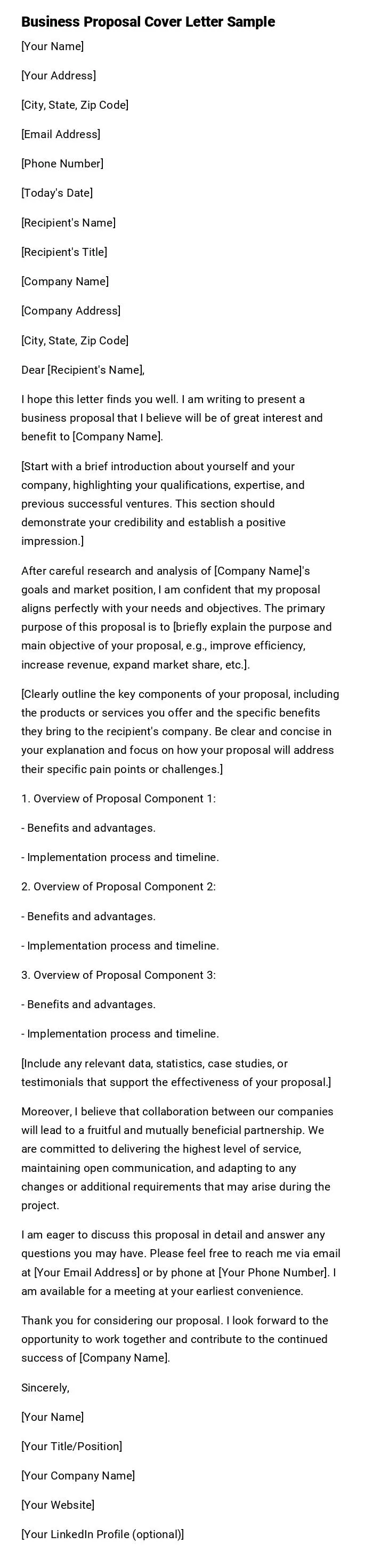
What is a Business Proposal Cover Letter
A business proposal cover letter is the first impression you make on a potential client or investor. It’s a crucial component of your proposal package, serving as a formal introduction that sets the stage for the rest of your document. More than just a formality, the cover letter aims to capture the reader’s attention, pique their interest, and persuade them to delve deeper into your proposal. It provides context, highlights the key benefits, and establishes a professional tone right from the start. A well-crafted cover letter can significantly increase the chances of your proposal being considered and ultimately, accepted. It’s your opportunity to make a compelling case for why your business is the right choice.
Key Components of a Cover Letter
A winning business proposal cover letter is comprised of several essential elements. Each component plays a critical role in conveying your message effectively and professionally. By including these elements, you ensure clarity, build rapport, and increase the impact of your proposal. These elements when combined create a persuasive and professional introduction to your business proposition.
Your Contact Information and Date

Begin your cover letter by placing your contact information at the top. This typically includes your name, title, company, address, phone number, and email address. Following this, include the date you’re sending the letter. This information allows the recipient to easily contact you and also indicates when the proposal was created. Ensuring that your contact details are accurate is crucial for any follow-up communication.
Recipient’s Information
Directly below your contact information, address the letter to the recipient. Include the recipient’s name, title, company, and address. If possible, address the letter to a specific person rather than a generic title like ‘To Whom It May Concern’. Personalizing the letter shows that you’ve taken the time to understand who you’re communicating with and increases your chance of grabbing their attention.
The Salutation
Start with a professional salutation, such as ‘Dear Mr./Ms./Dr. [Last Name]’. If you do not know the specific person’s name, use ‘Dear [Title]’. Avoid overly casual greetings, such as ‘Hi’ or ‘Hello’, to maintain a professional tone. The salutation sets the stage for your letter and establishes the tone you’ll maintain throughout the document. A well-chosen salutation shows respect and helps build rapport with the recipient.
The Hook Make Them Interested

The opening paragraph of your cover letter is crucial for grabbing the reader’s attention. This is your opportunity to make a strong first impression and convince the reader to continue reading. Start with a compelling statement that highlights a key benefit of your proposal or addresses a specific need the recipient has. Make the hook short, sweet, and to the point, it must be persuasive and focused on the recipient’s needs. State clearly the purpose of the proposal.
Summarize the Proposal’s Value
Briefly summarize the value proposition of your proposal. Explain what the recipient will gain by accepting your proposal. Focus on the key benefits, outcomes, and advantages of working with you. This section should be concise and clearly communicate how your solution meets their needs and objectives. Highlight the unique selling points of your business and how you are a better option than your competitors.
Highlight Your Qualifications
Briefly mention your relevant experience, expertise, or qualifications that make you the ideal choice for this project. Provide a brief overview of your company’s background, or highlight your team’s specific achievements and experience. Focus on the aspects that directly relate to the proposal and the client’s needs. This helps build credibility and shows that you understand their requirements. Keep it concise and targeted to reinforce your value proposition.
Call to Action and Closing

End your cover letter with a clear call to action. Tell the recipient what you want them to do next, such as schedule a meeting, review the proposal, or contact you with questions. Thank the recipient for their time and consideration, and express your enthusiasm for the opportunity to work together. Provide your contact information once more for easy follow-up. A strong closing reinforces your value and makes it easy for the client to take action.
Formatting and Design tips
The visual presentation of your cover letter is essential for maintaining professionalism and ensuring readability. A well-designed cover letter enhances the overall impact of your message and encourages the reader to engage with your proposal. Using a clear, consistent design not only enhances readability but also projects a professional image.
Use a Professional Tone and Layout
Maintain a formal and professional tone throughout your cover letter. Avoid slang, jargon, or overly casual language. Keep the layout clean and easy to read. Use a standard font like Arial or Times New Roman in a readable size (11 or 12 points). Use clear headings, bullet points, and white space to break up text and guide the reader. Ensure the letter is well-organized and visually appealing. Refer to the image to see the design of a great cover letter.
Proofread for Errors

Always proofread your cover letter carefully before sending it. Check for grammatical errors, spelling mistakes, and punctuation issues. These errors can undermine your credibility and create a negative impression. It is best to ask someone else to review your letter for a fresh perspective and to catch any errors you might have missed. If possible, use grammar and spell-checking tools to refine your document.
Keep It Concise
Aim for brevity in your cover letter. Keep it to one page if possible. Focus on the most important information and avoid unnecessary details. Respect the reader’s time by getting straight to the point and highlighting key information. A concise cover letter ensures that the reader stays engaged and understands the core message of your proposal quickly. The image demonstrates the best way to keep your cover letter concise.
Examples of Effective Cover Letters
The approach to writing your cover letter varies based on the type of proposal. While the core elements remain the same, adapting your cover letter to suit the specific type of proposal can improve its impact. Tailoring your cover letter to the type of proposal being submitted ensures relevance and highlights the most important aspects of the proposal. Here are examples to help guide you.
Cover Letter for Service Proposals

If you are offering a service, your cover letter should emphasize the benefits of the service to the client. Highlight how your service solves their problems, meets their needs, and achieves their goals. Include specific examples and case studies to illustrate the effectiveness of your service. Customize the language to demonstrate your understanding of their challenges and your ability to deliver results. The image shows an example of a great cover letter tailored for service proposal.
Cover Letter for Product Proposals
For product proposals, your cover letter should focus on the value of the product and how it meets the customer’s needs. Describe the product’s features, benefits, and competitive advantages. Highlight any positive outcomes or return on investment the client can expect. Include visuals, such as a product image or a chart showing the product’s features. The goal is to grab the reader’s interest immediately and explain how your product will benefit them. This image shows a great way to show what is in your product proposal.
Cover Letter for Project Proposals
A project proposal cover letter should focus on the scope, timeline, and deliverables of the project. Summarize your understanding of the project requirements, the proposed approach, and the expected results. Highlight your experience in managing similar projects and the qualifications of your team. Make sure the letter clearly communicates how you will ensure project success. Demonstrate confidence in your ability to deliver a successful project. An image like this one, can help you. shows a great example of a Project proposal cover letter.
Conclusion

Writing a winning business proposal cover letter is an essential skill. By following these guidelines and tailoring your cover letter to each specific proposal, you can increase your chances of success. Remember to focus on the reader, highlight the value you bring, and maintain a professional tone. A well-crafted cover letter will make a great first impression. With the right cover letter, you’re well on your way to winning more business and achieving your goals.