Understanding the Purpose of a Quotation Cover Letter
A quotation cover letter serves as a crucial introduction to your proposal, going beyond a simple price list or itemized breakdown. It is your first opportunity to connect with the client on a personal level, demonstrating your understanding of their needs and showcasing the value you offer. A well-crafted cover letter can significantly increase your chances of winning the project or sale by building trust and establishing a professional relationship. It’s not just about stating the price; it’s about selling yourself and your company.
Why a Cover Letter Matters
In a competitive market, a cover letter can make or break your chances. It differentiates you from competitors who might simply send a price sheet. It allows you to personalize your communication, demonstrating that you have taken the time to understand the client’s requirements. It provides context for your quotation, explaining the benefits of your products or services and addressing any potential concerns the client might have. A cover letter transforms a cold proposal into a warm introduction, setting the stage for a successful business relationship.
Key Elements of a Compelling Cover Letter

Your Company’s Branding
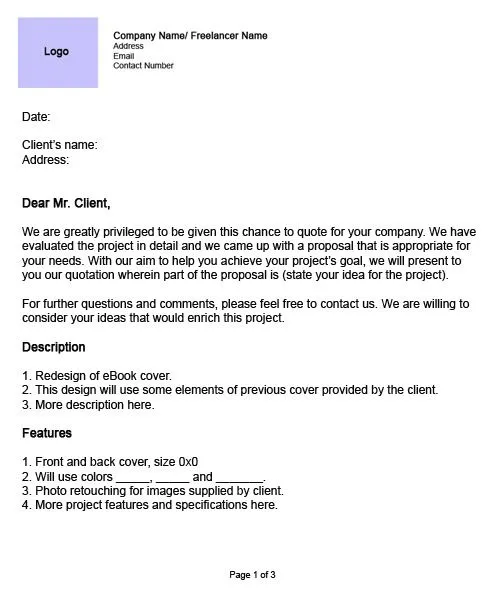
Your cover letter should reflect your company’s brand identity. This includes using your company letterhead, logo, and consistent fonts and colors. The tone of your writing should also align with your brand – whether it’s formal, friendly, or innovative. Maintain a consistent brand voice throughout the letter, ensuring it represents your company’s values and professionalism. This ensures that the client immediately recognizes your brand and associates it with quality and reliability. The consistent branding builds credibility and brand recognition.
Clearly State Your Purpose
The purpose of your cover letter must be clear from the very beginning. Briefly state what you are offering and why you are sending the quotation. Immediately grab the reader’s attention by mentioning the specific project or service they requested. Avoid ambiguity; directly reference the client’s needs and your proposed solution. Make sure your goal is clear: to provide the client with a detailed proposal and price for the work in question. Starting your letter with a clear and concise explanation of your aim immediately clarifies the purpose of your proposal and grabs the client’s attention.
Highlight Key Benefits for the Client

Do not focus solely on features; instead, emphasize the benefits your products or services provide to the client. Explain how your offerings solve their problems, improve their efficiency, or enhance their business outcomes. Quantify these benefits whenever possible. Use specific examples to illustrate how your services have benefited other clients, and ensure that you’re addressing the client’s needs in a way that resonates with them. The aim is to show the value you provide and what the client stands to gain from selecting your quotation.
How to Structure Your Quotation Cover Letter
Header and Contact Information
Start with your company’s letterhead, including your logo, company name, address, phone number, and email address. This immediately identifies you and provides the client with easy ways to contact you. Place the date below your company’s information. This clearly provides all necessary information for the client to reach out if they need to. The header sets a professional tone and assures the client of your legitimacy.
Client and Date

Below your header, include the date, followed by the client’s contact information. Address the letter to the specific contact person, if known. Use their full name and job title to show you’ve done your research and taken the time to understand their role. Include the company name and address. Correctly formatting this section adds to the professional appearance of your cover letter and demonstrates attention to detail.
Opening Address the Client
The opening of your cover letter is the first impression. Start with a polite salutation, such as ‘Dear Mr./Ms. [Last Name].’ Immediately refer to the project or service they requested. State what you are providing – a quotation for [project name] – and briefly mention the key benefits of your proposal. This sets the tone and context for the entire letter. The opening should be concise, engaging, and focused on their needs and what you’re offering.
Body Highlighting Your Proposal
The body of your cover letter should expand on your proposal. Briefly summarize the key elements of your quotation, such as the scope of work, the deliverables, and the timeline. Focus on the benefits for the client, explaining how your solution addresses their needs. Include any unique selling propositions that differentiate you from your competitors. If applicable, make sure that your value proposition is clear and convincing. Do not overwhelm the client with excessive detail; instead, provide a concise summary that leads them to review the detailed quotation itself.
Closing Call to Action

End your cover letter with a clear call to action. State what you want the client to do next – for instance, ‘Please review the attached quotation and contact me with any questions.’ Provide your contact information, making it easy for the client to reach you. Express your enthusiasm for the project and thank the client for their time and consideration. A strong call to action increases the likelihood that the client will take the next step. The closing should be professional and show your confidence in the proposal.
Proofreading and Formatting Tips
Ensuring Professionalism
Always proofread your cover letter carefully for grammar, spelling, and punctuation errors. Errors can damage your credibility and make your company appear unprofessional. Check your letter with a proofreading tool or have a colleague review it. Ensure the language is clear, concise, and free of jargon unless appropriate for your industry. Ensure that the tone of your writing is professional and consistent throughout the document. This attention to detail will help you show your professionalism.
Formatting and Layout
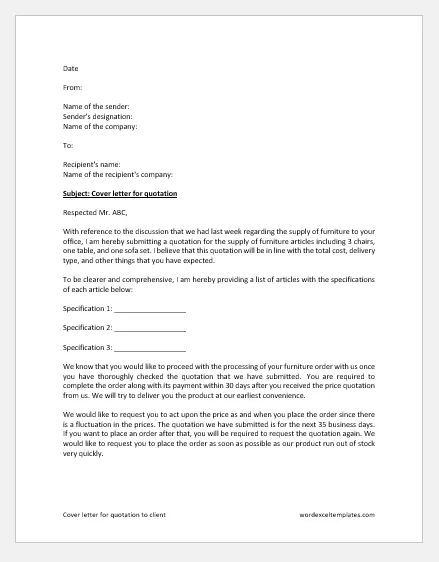
Use a professional font, such as Arial or Times New Roman, in a readable size (11 or 12 points). Maintain consistent margins and spacing throughout the document. Make your letter easy to read by using bullet points and short paragraphs where appropriate. Keep your layout clean and uncluttered. This enhances the readability of your letter and ensures it is visually appealing. Clear formatting shows you value presentation.
Common Mistakes to Avoid
Ignoring the Client’s Needs
Do not send a generic cover letter without tailoring it to the client’s specific requirements and situation. Address their specific needs, challenges, and goals. Demonstrate that you understand their business and have considered their unique requirements. This shows the client that you’ve listened to their requests and are providing a customized solution. Make sure you are showing that you understand what the client really needs.
Using Generic Language

Avoid using generic phrases that could apply to any client or project. Instead, use specific and detailed language that showcases your understanding of their needs. Avoid clichés and overused expressions. Specific, tailored language makes your cover letter more engaging and increases your chances of capturing the client’s attention. Show that you’ve gone beyond the basic to connect with your potential client.
Poor Proofreading
Typos, grammatical errors, and spelling mistakes can undermine your credibility. Always proofread your cover letter carefully. If possible, have someone else review it before sending it. Errors make your company appear unprofessional and careless. Attention to detail in the cover letter reflects your commitment to quality and professionalism in your work. Always ensure your work is the best that it can be before sending.
Example Cover Letter Template
While a template provides a structure, it’s crucial to customize it for each client. Include your company letterhead, and address the letter to the specific contact person. Start with a clear opening, state the purpose, highlight the benefits, and end with a strong call to action. Tailor the content to the specific client and project to show that you understand their needs and can meet their expectations. You can find many templates online, but the key is to customize them to reflect your company and the specific opportunity.
Customizing Your Letter
Every cover letter must be customized to the specific project and client. Research the client’s company, industry, and needs. Tailor your language, highlighting benefits that address their particular challenges and goals. Show how your services or products provide a unique value proposition. Include examples and data that illustrate how your proposal can benefit them. Customization shows that you have invested time and effort into understanding the client, enhancing their likelihood of selecting your quotation.