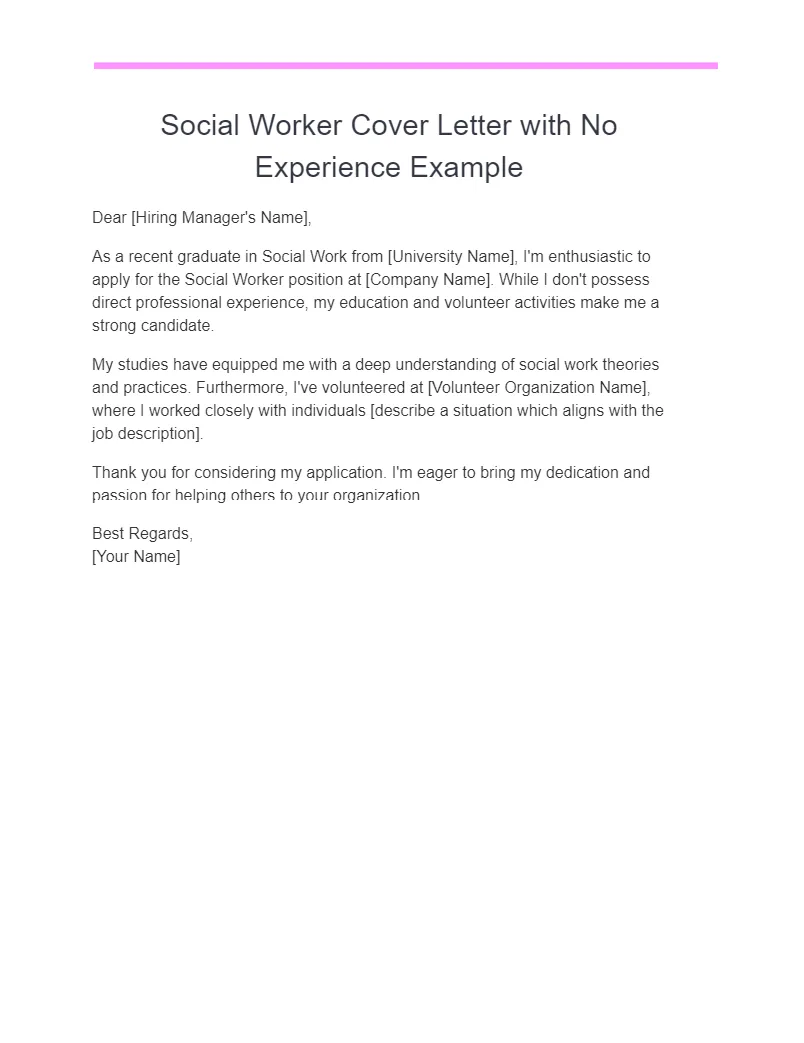
Understanding the Purpose of a Cover Letter
A cover letter is more than just a formality; it’s your first impression on paper. It serves as a crucial introduction, allowing you to communicate your enthusiasm for a role and showcase your relevant skills and qualifications. Even without work experience, a well-crafted cover letter can be your strongest asset in landing an interview. It’s your opportunity to tell a story, highlighting your passion, skills, and how your unique background aligns with the company’s needs. A cover letter is your chance to make a personal connection with the hiring manager and stand out from the crowd, particularly important when competing against candidates with extensive experience. Think of it as your personal marketing document, designed to sell you to the potential employer. The goal is to persuade them that you are the right fit, despite a lack of traditional work experience, and that you deserve an interview to elaborate further.
Why a Cover Letter Matters Even With No Experience
When you lack work experience, the cover letter becomes even more vital. It provides the space to articulate why your skills, education, and experiences make you a suitable candidate. It allows you to explain your career goals, showcase your personality, and address any gaps in your resume. The cover letter helps you to create a narrative that connects your aspirations with the job requirements, demonstrating your understanding of the role and the company. Without a strong employment history, you must effectively communicate your value proposition, using the cover letter to connect the dots for the hiring manager. The cover letter demonstrates your writing and communication skills, your attention to detail, and your ability to follow instructions – all essential for any job. It also provides a chance to humanize your application, letting your personality shine through and setting you apart from candidates whose resumes may look similar.
Highlighting Skills and Abilities

Since you may lack work experience, it’s important to highlight your skills and abilities that are relevant to the job. This includes both hard skills (technical skills) and soft skills (personal attributes). Identify what you are good at and how those skills align with the job description. Even if you’ve never held a formal job, you’ve likely acquired skills through other activities such as volunteering, academic projects, extracurricular involvement, or personal projects. Use the cover letter to emphasize these skills, providing specific examples of how you’ve used them. Quantify your achievements whenever possible – for example, “Managed a team of five volunteers” or “Increased social media engagement by 20%.” By focusing on your skills, you transform your perceived lack of experience into a strength, demonstrating what you can offer the employer, regardless of your work history.
Identifying Transferable Skills
Transferable skills are those you’ve gained in one context that can be applied to another. Common examples include communication, teamwork, problem-solving, leadership, time management, and adaptability. Think about every activity in your life – academics, sports, clubs, hobbies, even your personal projects – and how you’ve developed these skills. The ability to identify and articulate your transferable skills is crucial. If you led a team in a school project, describe how you used leadership and communication skills. If you were involved in a sports team, explain how you demonstrated teamwork and discipline. The more specific and relevant the examples, the better. Employers seek these skills, so showcasing them in your cover letter will show how you are a good fit for the job. Ensure these examples illustrate your ability to contribute to the company’s goals.
Listing Relevant Skills for the Job
Carefully review the job description and identify the specific skills the employer is seeking. Then, list the relevant skills you possess. Make sure you have concrete examples and evidence to back up each claim. If the job requires strong communication skills, provide an example of a presentation you gave or a time you successfully resolved a conflict. If the job requires technical skills, mention any coursework or projects where you utilized those skills. Use the keywords from the job description throughout your cover letter to help the hiring manager immediately recognize your qualifications. Tailor your skills list to each job application. This targeted approach will demonstrate that you’ve put in the effort to understand the job requirements and that you possess the necessary skills to succeed in the role.
Showcasing Your Education and Achievements

Your education is a primary asset if you have no work experience. Highlight your degree or any relevant coursework, certifications, or training. Even if your major isn’t directly related to the job, emphasize any skills or knowledge gained through your studies that align with the role. Provide details of your GPA, particularly if it is strong. Mention any academic awards, honors, or scholarships you have received. This information showcases your commitment to learning and your ability to excel in an academic setting. Education is a valuable indicator of your work ethic and intellectual capabilities. Use this section to your advantage, illustrating your qualifications and your potential to make a meaningful contribution to the team. Do not be afraid to highlight extracurricular accomplishments such as a high GPA or any distinctions.
Emphasizing Academic Projects
Academic projects offer valuable opportunities to demonstrate your skills. Describe any projects that are related to the job requirements, even if the projects were part of a class. Focus on your role in the project, the skills you utilized, and the outcomes you achieved. Did you lead a team? Did you solve a complex problem? Did you develop a new product or system? Provide specific examples. If the project involved research, mention your methodology and findings. If it involved coding, provide details about the programming languages and tools you used. Including this information makes you more appealing to employers. Showcase how your academic projects have prepared you for the work you hope to do. Remember to quantify your accomplishments whenever possible.
Mentioning Relevant Coursework
Highlight any coursework that aligns with the job requirements. If the job description mentions specific skills, review your transcripts or course descriptions to identify relevant classes. Mention any specialized knowledge you have gained, such as specific software programs, technical skills, or industry-specific knowledge. Provide the name of the course, a brief description of the content, and any notable achievements. If you received a high grade in a relevant course, mention that as well. Tailoring your cover letter in this way shows the employer that you possess the knowledge and understanding needed to succeed in the role. This can offset your lack of work experience.
Demonstrating Your Passion and Enthusiasm

Expressing genuine passion and enthusiasm for the role and the company is critical. Use your cover letter to convey your excitement and explain why you’re interested in the position. Be specific about what aspects of the job or the company appeal to you. Show that you’ve done your homework and that you understand the company’s mission, values, and products. If the job aligns with your long-term career goals, be sure to mention this as well. Your enthusiasm can make a strong impression, even if you don’t have much work experience. It shows that you are self-motivated and eager to learn, both of which are highly valued by employers. A carefully crafted letter helps you stand out by highlighting your positive attitude and eagerness to contribute.
Expressing Your Interest in the Company
Show that you’re genuinely interested in the company and not just looking for any job. Research the company’s mission, values, recent achievements, and any news that catches your attention. Then, in your cover letter, show that you have done your homework by referencing specific initiatives, projects, or values that resonate with you. Explain why you want to work for this particular company. Talk about how you can contribute to their specific goals. Demonstrate that you see yourself as a valuable addition to their team. Personalized expressions of interest show a hiring manager that you are not only interested in the job but also invested in the company’s success. This personalization can make a significant difference, especially if you lack experience.
Researching the Company Culture
Before writing your cover letter, research the company’s culture. Visit their website, read their social media, and search online for articles and reviews. What is the company’s vibe? What are their values? What is their mission? Understand the company culture, and then tailor your cover letter to reflect that. If the company emphasizes teamwork, highlight your experience working in teams. If the company values innovation, showcase any innovative ideas or projects you’ve been involved in. Demonstrate how your skills and personality align with the company’s culture. Doing your research and aligning with the company’s core values demonstrates that you are prepared and understand the company’s environment, and that you are more likely to be a good fit.
Tailoring Your Cover Letter to the Specific Job

Never send a generic cover letter. Tailor each cover letter to the specific job you are applying for. Read the job description carefully and identify the key requirements, skills, and qualifications. Then, customize your cover letter to address those specific requirements. Use the keywords from the job description, and provide concrete examples of how your skills and experience align with the job’s needs. Highlight the skills and experiences that are most relevant to the position. This shows that you are serious about the job and have taken the time to understand its demands. Even if you are applying for similar positions at different companies, adjust your cover letter. Each employer has different expectations. Therefore, tailoring your cover letter to the job increases your chances of success.
Reviewing the Job Description
Thoroughly review the job description before you start writing your cover letter. Understand the job’s responsibilities, qualifications, and required skills. Identify the keywords that are used throughout the description. Consider the company’s values and culture. Use the job description as a guide for structuring your cover letter. Make sure your cover letter addresses each of the key requirements. Use the same language and keywords from the job description throughout your cover letter, but use them naturally. This strategy allows the hiring manager to see that you possess the skills and qualities they seek. This targeted approach makes your cover letter much more effective.
Using Action Verbs
Use strong action verbs to describe your skills and achievements. Action verbs help you convey what you have done, and demonstrate your abilities. Examples include “managed,” “led,” “developed,” “created,” “implemented,” “analyzed,” “organized,” “coordinated,” and “achieved.” When describing your skills, start each sentence with a strong action verb. Quantify your achievements whenever possible, as this makes your accomplishments more concrete and impactful. Using action verbs makes your cover letter more compelling, and it highlights your skills and accomplishments. Action verbs demonstrate your proactivity and ability to get things done. This is particularly important for entry-level candidates without work experience because it showcases your potential.
Formatting and Proofreading Your Cover Letter

A well-formatted and error-free cover letter demonstrates professionalism and attention to detail. Use a clear and readable font, such as Arial or Times New Roman. Maintain consistent formatting throughout the document, including spacing, margins, and bullet points. Proofread your cover letter carefully for any spelling, grammar, or punctuation errors. Errors can create a negative impression, suggesting you lack attention to detail. Ask someone else to review your cover letter for you. Another set of eyes can often catch errors that you might have missed. A polished cover letter makes a strong first impression, showcasing your professionalism and your commitment to excellence.
Choosing the Right Font and Font Size
Choose a professional and easy-to-read font. Avoid using overly decorative fonts that are difficult to read. Popular and safe choices include Arial, Times New Roman, Calibri, and Helvetica. Keep the font size between 10 and 12 points. This is standard and ensures your cover letter is legible. Your goal is to provide a clean and professional appearance that is easy for the hiring manager to read. Ensure your name and contact information at the top are easy to see. Professional fonts convey professionalism. Choosing the right font and font size shows attention to detail, which is especially important when you lack work experience.
Proofreading for Errors
Proofread your cover letter carefully for any errors. Typos, spelling errors, and grammatical mistakes can undermine your credibility and make you look unprofessional. Read your cover letter multiple times, and read it aloud to yourself. Use a spell-checker and grammar-checker, but don’t rely on them completely. These tools can miss subtle errors. Ask a friend, family member, or career counselor to review your cover letter as well. A fresh pair of eyes can often catch errors you might have overlooked. A well-proofread cover letter makes a strong impression. It shows that you pay attention to detail and take pride in your work, making a significant difference when you have little or no experience.