Understanding the Importance of Cover Letters
In the competitive world of job applications, a cover letter serves as your personal introduction to a potential employer. It’s your chance to go beyond the facts and figures presented in your resume and showcase your personality, skills, and genuine interest in the position. A well-crafted cover letter can significantly increase your chances of landing an interview, making it a crucial tool in your job-seeking arsenal. Ignoring this step means missing a significant opportunity to differentiate yourself from other applicants and make a lasting first impression. Remember, your resume tells what you’ve done, while your cover letter explains why you’re the perfect fit for the role.
Why Cover Letters Matter
Cover letters are more than just formalities they are your opportunity to tell a story. They allow you to explain any gaps in your resume, highlight specific skills that align with the job requirements, and express your enthusiasm for the role and the company. They demonstrate your communication skills and your understanding of the job and the employer’s needs. A strong cover letter shows that you’ve put in the effort to understand the company and the position, setting you apart from candidates who may have simply submitted a generic application. It’s your chance to make a compelling case for why the hiring manager should choose you.
Cover Letters vs Resumes

While your resume provides a snapshot of your professional history, your cover letter adds context and personality. The resume lists your accomplishments and experiences, but the cover letter explains why those experiences make you the ideal candidate for this particular job. Think of the resume as the ‘what’ and the cover letter as the ‘why.’ A resume is structured, factual, and concise. The cover letter is more conversational, allowing you to elaborate on your qualifications and demonstrate your unique value proposition. Both are essential, but they serve different purposes in the application process. Consider your cover letter as the introduction and your resume as the supporting details of your story. (cover-letter-vs-resume.webp)
Key Components of a Cover Letter
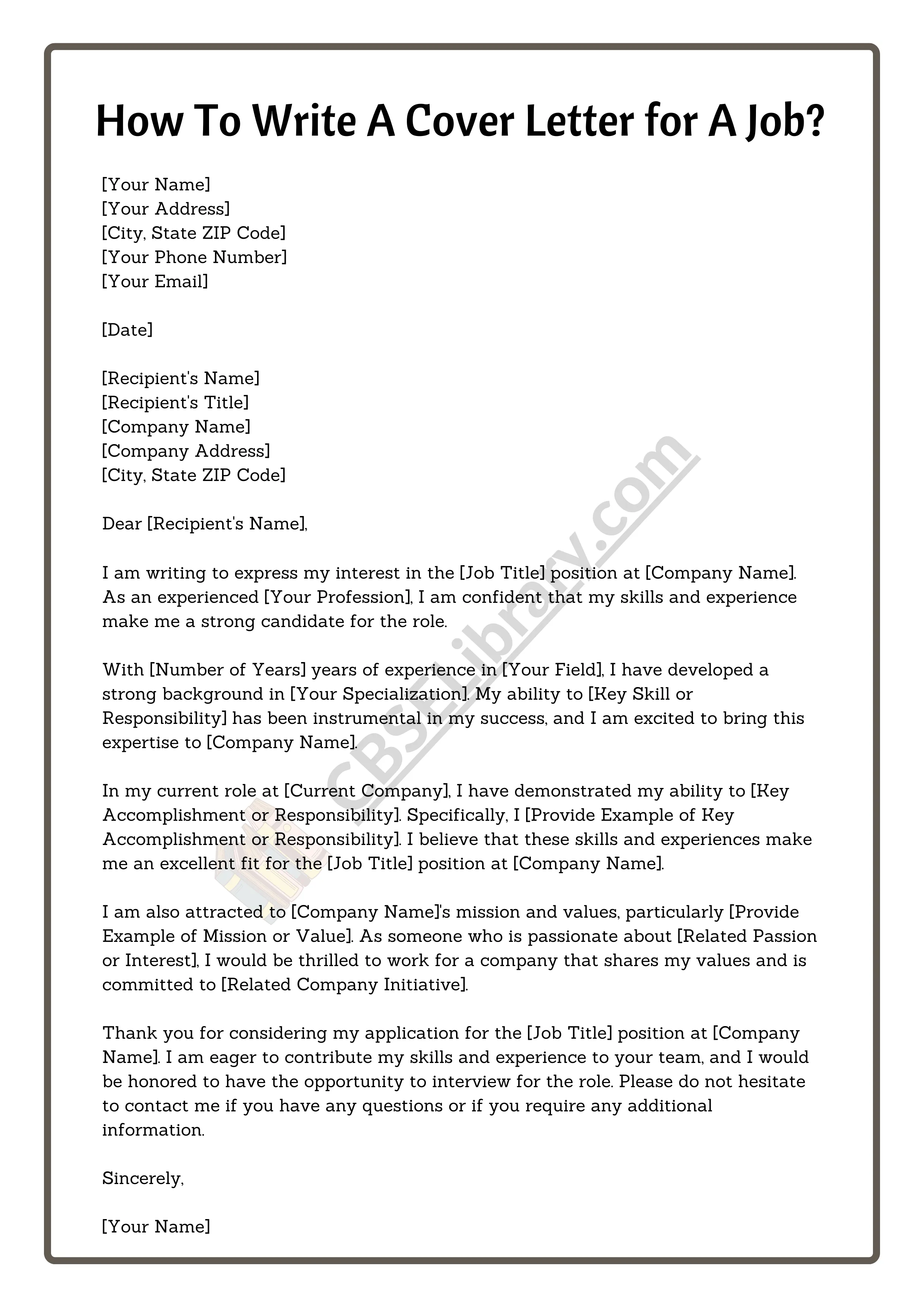
A well-structured cover letter has several key components that work together to make a strong impression. These elements include your contact information, the hiring manager’s information, a compelling opening, highlights of your skills and experience, an expression of your enthusiasm, and a strong closing. Each component contributes to a cohesive and persuasive message, demonstrating your suitability for the role and your interest in the company. When constructing your letter, it’s best to think of the process as a conversation designed to be mutually beneficial for both parties. Each section must be catered toward the goal of an interview, not just a job.
Your Contact Information
Start with your full name, address, phone number, and email address. Ensure your email address is professional. Your contact information should be easily accessible at the top of your cover letter, typically left-aligned. This ensures the hiring manager can quickly reach you. Be sure the contact information is correct and up to date; missing a digit could mean missing an interview. The best approach is to ensure that your information is present, easy to read, and in line with the current standards of professional correspondence.
The Hiring Manager’s Contact Information

Whenever possible, address your cover letter to a specific person the hiring manager or the recruiter. Research the company website, LinkedIn, or other sources to find the correct name and title. If you cannot find a name, you can use a generic greeting, but personalizing your letter significantly improves its impact. Addressing the letter to a specific individual shows that you’ve done your research and are genuinely interested in the position. Also, it sets you apart from those using a generalized approach. Be sure the information is correct; misspellings or using the wrong title can create a negative impression.
Greeting the Hiring Manager
Use a professional greeting. ‘Dear Mr./Ms. [Last Name]’ is standard. If you don’t know the name, ‘Dear Hiring Manager’ or ‘Dear [Department Name] Team’ are acceptable alternatives. Avoid overly casual greetings. Your salutation sets the tone for the entire letter, so ensure it is appropriate for the company culture and the position you are applying for. A proper greeting demonstrates respect and attention to detail, which are crucial qualities in any job. Maintain the tone throughout the letter. This builds a relationship between the applicant and the recruiter.
Crafting a Compelling Opening
Your opening paragraph is your first chance to grab the hiring manager’s attention. State the position you are applying for and briefly explain why you are interested. If you have a referral, mention it here. Keep it concise, and make sure it immediately conveys your enthusiasm and suitability for the role. Start strong, and aim to pique the reader’s interest right away. A weak opening can lead to the hiring manager losing interest before they even get to the body of your letter. The goal is to make them want to read on, to see if you are the right person for the job.
Highlighting Your Skills and Experience

The body of your cover letter is where you showcase your skills and experience. Select a few key skills and accomplishments that directly align with the job requirements. Provide specific examples of how you’ve used these skills to achieve results in previous roles. Quantify your achievements whenever possible (e.g., ‘Increased sales by 15%’). Use action verbs and focus on what you can bring to the company. Tailor this section to the specific job and company to demonstrate your understanding of their needs and how you can meet them. It’s about showcasing the value you will provide to the company and the department.
Tailoring Your Cover Letter
Customize your cover letter for each job application. Use the job description as your guide to identify the key skills and qualifications the employer is seeking. Then, highlight the relevant aspects of your experience and skills. Avoid sending a generic cover letter; show that you’ve taken the time to understand the specific requirements of the role. Customization demonstrates your attention to detail and your genuine interest in the position. Tailoring is an investment of time that pays off in increased interview opportunities.
Quantifying Your Achievements
Whenever possible, use numbers and data to quantify your achievements. Instead of saying ‘Improved customer satisfaction,’ say ‘Increased customer satisfaction scores by 20%.’ Numbers provide concrete evidence of your impact and make your accomplishments more compelling. Quantifiable results demonstrate your effectiveness and provide tangible evidence of your value. Use metrics to showcase how you’ve made a difference in previous roles and how you can bring those results to the new role. (cover-letter-components.webp)
Expressing Your Enthusiasm

Throughout your cover letter, express your enthusiasm for the role and the company. Show that you are genuinely excited about the opportunity and that you’ve done your research about the company’s mission and values. Demonstrating enthusiasm can set you apart from other candidates, as it shows you’re not just looking for any job; you’re looking for this job, with this company. Enthusiasm shows you will care more about the job and be more likely to succeed if hired. Make it clear why you are interested in working for the specific company and in this specific role. This will help you come off as a better fit for the hiring manager.
Making a Strong Closing
Your closing paragraph should reiterate your interest in the position and thank the hiring manager for their time and consideration. Include a call to action, such as ‘I look forward to the opportunity to discuss my qualifications further.’ or ‘Thank you for your time; I welcome the opportunity to speak with you further.’ Provide a professional closing, such as ‘Sincerely’ or ‘Best regards,’ followed by your full name. A strong closing reinforces your professionalism and leaves the reader with a positive impression. End your letter with confidence and express your eagerness for the next steps in the hiring process.
Proofreading and Editing
Before you submit your cover letter, carefully proofread it for any errors in grammar, spelling, and punctuation. Typos and grammatical errors can undermine your credibility and make you appear unprofessional. Read the letter aloud to catch any awkward phrasing or sentence structure. Have a friend or family member review it as well; a fresh pair of eyes can often spot errors that you may have missed. Proofreading is critical, and it is one of the last steps that must be taken before sending your letter. Use tools like Grammarly or other spell-checkers, and make sure to take the time to do it right.
Formatting Your Cover Letter

Proper formatting is essential for creating a professional and readable cover letter. Good formatting makes your letter easy to read and enhances your overall presentation. Formatting ensures that your information is presented in a clear and organized manner. Avoid the use of overly creative or distracting formatting. Follow these tips for better cover letters to increase your interview opportunities.
Font Selection
Choose a professional and easy-to-read font, such as Times New Roman, Arial, Calibri, or Helvetica. Keep the font size between 10 and 12 points. Avoid using overly stylized fonts that may be difficult to read. Choose fonts that are professional and readable. The aim is to make the document easy to read, rather than visually striking. Ensure that the font is consistent throughout the document. Be careful not to select fonts that are difficult to see. Using clear font choices increases the chances the reader understands the message and is more likely to interview the candidate.
Margins and Spacing
Use standard 1-inch margins on all sides of your cover letter. Use single spacing within paragraphs and double spacing between paragraphs. Proper margins and spacing make your cover letter more visually appealing and easier to read. Properly spaced text makes it clear and concise. The goal is to make the document easy to read at a glance. A cluttered or dense layout can be off-putting to the reader. This makes your cover letter more engaging and keeps the reader’s attention focused. Be sure to keep the layout as clear as possible to ensure clarity.
File Format and Submission

Unless otherwise specified in the job posting, save your cover letter as a PDF file. This ensures that your formatting remains consistent across different devices and operating systems. Name your file with your name and the job title (e.g., ‘JaneDoe_MarketingManager_CoverLetter.pdf’). Follow the instructions in the job posting for submitting your cover letter. If you are unsure of the best method, reach out to the recruiter. PDF files ensure that formatting and images are correctly displayed. This reduces the chances of any formatting errors. Always follow the instructions for submission as provided in the job description; this shows attention to detail.
Common Cover Letter Mistakes to Avoid
Even the best cover letters can be ruined by common mistakes. Avoiding these pitfalls is crucial for making a positive impression on the hiring manager. Some common errors include generic content, typos, excessive length, and a failure to tailor the letter to the specific job. Each of these mistakes can quickly lead to your application being overlooked. This shows that you don’t put in the work and reduces the chances of being selected. (cover-letter-mistakes.webp)
Generic Cover Letters
Avoid using generic cover letters that are not tailored to the specific job or company. Such letters show a lack of interest and attention to detail. The hiring manager can quickly identify a generic cover letter, and your application will likely be discarded. Always customize your cover letter to demonstrate your understanding of the role and the company’s needs. Be specific about the role, and indicate what you plan to do in that role. Focus on what you have to offer the company and tailor it to the specific opportunity. Tailoring it to a specific role will create a better impression on the reader.
Typos and Grammatical Errors
Proofread your cover letter meticulously for any typos or grammatical errors. Typos and grammatical errors make you appear unprofessional and careless. Use spell-check and grammar-check tools, but also read the letter carefully to catch any errors that those tools may miss. A polished, error-free cover letter demonstrates your attention to detail and professionalism. Poor grammar can show a lack of caring, while solid grammar helps show that you are organized and presentable. Be sure to take the time to ensure that there are no errors of any kind.
Exceeding Page Length
Keep your cover letter concise, ideally no more than one page. Hiring managers are busy and may not have time to read a lengthy letter. Focus on highlighting your most relevant skills and experiences. Concise letters are easier to read and more likely to hold the reader’s attention. Ensure the letter includes all the key aspects but avoid overexplaining. It’s critical to ensure that the letter is not overly long, as this will cause the reader to lose interest. When writing a cover letter, make sure to be thorough but concise and clear.
Examples and Templates for Cover Letters
Using examples and templates can be a great way to start when crafting your cover letter. These resources can provide structure and inspiration, but they should be customized to fit your specific qualifications and the job you are applying for. Tailor these letters for the specific job you are applying for. The goal is to ensure the letter stands out, rather than being generic. (cover-letter-templates.webp)
Using Cover Letter Templates
Cover letter templates can save you time and provide a starting point. However, don’t simply copy and paste the template. Use it as a framework and customize it with your own information and experiences. Modify the template to reflect your personal brand and the specific requirements of the job. Templates can be a good place to start, but customization is critical to ensuring your cover letter stands out. Templates provide a base framework; customization is the key to making your letter stand out. When using a template, ensure the customization is on point and that the letter is formatted well.
Customizing Templates
Tailor the template to the specific job and company. Research the company and tailor the language and content to reflect their values and needs. Highlight skills and experiences that align with the job description. Make sure your letter is unique and speaks to your abilities. Customization is key to creating an effective cover letter. The key is to personalize the letter to match the specific requirements. Make the letter about the job and the company as this will improve your chances.
Where to Find Cover Letter Examples
You can find cover letter examples on career websites, in online guides, and through your university’s career services. These examples can provide inspiration and demonstrate how to structure your letter effectively. Look for examples related to your industry or the specific type of job you are seeking. Be sure to adapt those examples to your needs. Reading samples can show you a well-structured layout that increases the chances of being noticed. (cover-letter-examples.webp)
Final Thoughts and Next Steps
Writing a strong cover letter is an essential skill for any job seeker. By understanding the importance of cover letters, following the key components, avoiding common mistakes, and utilizing examples and templates, you can create a cover letter that stands out and increases your chances of landing an interview. Remember to always tailor your cover letter to each specific job application. Make the time to make it clear that you are applying for the specific role. Following this easy guide provides better chances of landing the job of your dreams. Now, go forth and create a cover letter that gets you hired!