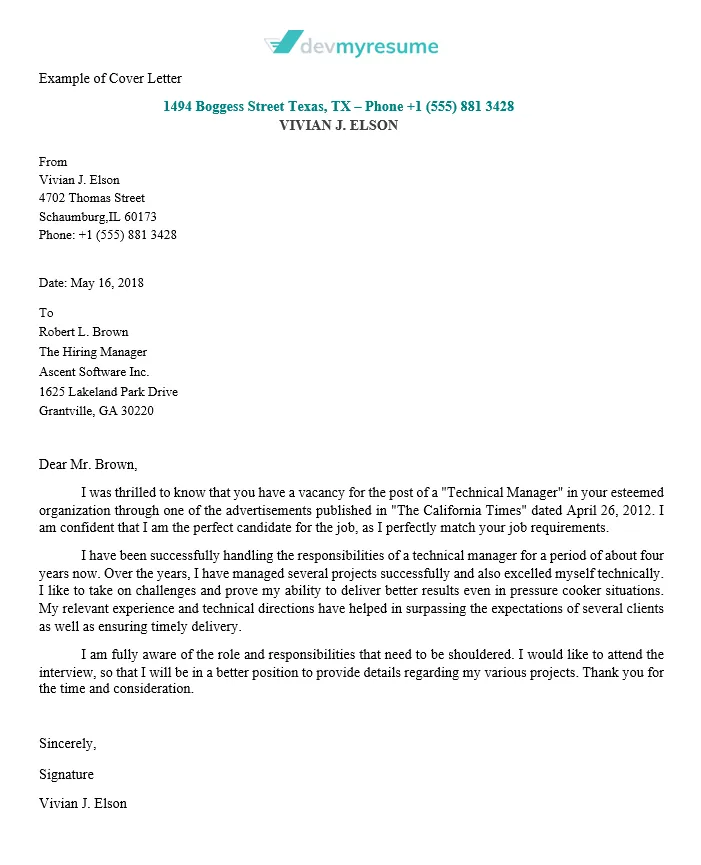
Understanding the IT Cover Letter
In the competitive world of Information Technology, a well-crafted cover letter is your key to unlocking opportunities. It’s more than just a formality; it’s your chance to make a strong first impression and differentiate yourself from other applicants. A cover letter provides a platform to showcase your personality, skills, and enthusiasm in a way that a resume alone cannot. Understanding its purpose is the first step towards writing an effective one. It is the perfect opportunity to communicate why you are a good fit for the role, demonstrating not just what you can do but also why you want to do it.
Why an IT Cover Letter Matters
An IT cover letter matters significantly because it adds a personal touch to your job application. In an industry where technical skills are crucial, a cover letter allows you to communicate your soft skills, such as problem-solving, communication, and teamwork, which are equally important. It enables you to explain gaps in your resume, highlight specific projects, and demonstrate your genuine interest in the company and the specific role. A well-written cover letter shows that you’ve taken the time to research the company and tailor your application, increasing your chances of getting noticed by the hiring manager. It’s your chance to demonstrate your personality and professionalism.
Key Components of a Strong IT Cover Letter

Building a solid foundation for your IT cover letter involves several key components. Each element plays a crucial role in conveying your qualifications and enthusiasm. From the initial contact information to the final closing, every part should be carefully considered to create a compelling narrative that captures the hiring manager’s attention. It is about presenting yourself as the best candidate possible. By carefully constructing these elements, you will significantly increase your chances of success in the application process.
Your Contact Information and the Date
Start by providing your full name, address, phone number, and professional email address at the top left of the page. Include the date below your contact information. This ensures the hiring manager can easily reach you and knows when the letter was written. Make sure that the information is accurate and up-to-date. This step shows professionalism and organization, which is vital in IT.
Addressing the Hiring Manager
Always address the hiring manager by name whenever possible. Research the company’s website or LinkedIn to find the name of the person responsible for hiring. If you can’t find a specific name, use a professional greeting like ‘Dear Hiring Manager’. Personalizing your cover letter demonstrates that you’ve done your research and are genuinely interested in the position. This small step makes your application stand out from generic applications.
Opening Paragraph: Hook the Reader

The opening paragraph is your chance to grab the hiring manager’s attention. Briefly state the position you’re applying for and how you learned about it. Then, highlight a key achievement or skill that immediately showcases your value. Avoid generic phrases. Instead, make the opening engaging and specific, demonstrating your understanding of the role and company. The goal is to intrigue the reader and compel them to continue reading.
Highlighting Your IT Skills and Experience
The body of your cover letter is where you highlight your IT skills and experience. Tailor this section to match the job description, emphasizing the skills and experiences that are most relevant. Use specific examples to demonstrate your abilities, rather than just listing them. Your goal is to paint a clear picture of what you can bring to the table and how your experience aligns with the company’s needs. This is where you translate your resume points to engaging and persuasive arguments.
Showcasing Technical Skills
List your technical skills, such as programming languages, operating systems, and specific software, that align with the job requirements. Provide examples of how you have used these skills in previous roles or projects. If a job requires experience with cloud computing, mention your experience with AWS, Azure, or Google Cloud Platform. Ensure to tailor your skills list to match the requirements stated in the job description to show that you’ve considered the needs of the employer.
Demonstrating Relevant Experience

Describe your relevant work experience, focusing on your accomplishments and contributions. Instead of simply listing job duties, explain what you achieved in each role. Quantify your achievements whenever possible. For example, mention that you improved system efficiency by a certain percentage or reduced downtime. This is the opportunity to show the value you bring to an organization and how your previous experiences can benefit the potential employer. Make sure your experience directly relates to the requirements stated in the job ad.
Quantifying Achievements
Quantifying your achievements makes your cover letter much more impactful. Use numbers, percentages, and specific metrics to demonstrate the impact you’ve made in previous roles. For example, rather than saying you ‘improved network performance,’ state that you ‘increased network speed by 20%’. Such precise language creates credibility and demonstrates your ability to deliver results. Including data in your cover letter helps set you apart by proving the value you’d provide.
Explaining Your Passion for IT
In addition to technical skills, showcase your passion for IT. Explain what interests you about the field, what motivates you, and why you are excited about this particular opportunity. Show the hiring manager that you have a genuine interest and a long-term perspective. Highlighting your enthusiasm will make your cover letter more memorable and show that you’re a great fit for the company culture. This is an important element in securing a job.
Expressing Enthusiasm for the Company

Research the company and express genuine enthusiasm for their work, mission, or products. Explain why you are drawn to their company culture and what you admire about their approach to IT. This shows that you’ve taken the time to learn about the company and are not just applying for any job. Mention any specific projects or technologies that excite you. Demonstrating your interest makes you more relatable and shows that you are likely to invest in the role long-term.
Connecting Your Goals to the Role
Clearly articulate how the role aligns with your career goals. Explain how this position will help you grow professionally and contribute to your long-term career objectives. This shows the hiring manager that you have a clear career path and that this opportunity is a step toward your future. Showing that your goals match the company’s needs makes you a more attractive candidate.
Call to Action and Closing
The closing of your cover letter should include a call to action and a professional sign-off. This will encourage the hiring manager to take the next steps and will leave a lasting, positive impression. A well-crafted closing leaves a positive impression.
Thanking the Hiring Manager

Thank the hiring manager for their time and consideration. Express your appreciation for the opportunity to apply. Showing gratitude is a simple, effective way to leave a positive impression. It demonstrates that you value their time and recognize the effort they put into the hiring process.
Ending with a Professional Closing
End with a professional closing, such as ‘Sincerely’, ‘Best regards’, or ‘Thank you’. Include your full name below the closing. Also, mention that your resume is enclosed. This is standard practice and reinforces that you are prepared and professional. Making your ending clean and professional reinforces the impression of a well-organized and polished applicant.
Formatting and Proofreading Your IT Cover Letter
Proper formatting and careful proofreading are essential for creating a polished and professional cover letter. These details can significantly impact the hiring manager’s perception of your attention to detail and professionalism. Even the most qualified candidates can be overlooked if their cover letter is poorly formatted or contains errors. Attention to formatting and detail shows you care about making a good impression.
Choosing the Right Font and Layout

Choose a clear, professional font such as Times New Roman, Arial, or Calibri, and use a font size between 10 and 12 points. Ensure consistent formatting throughout the document. Use one-inch margins on all sides for a clean appearance. Structure your letter with clear paragraphs and adequate spacing to make it easy to read. A well-formatted document is easier to navigate, making a good impression on the reader.
Proofreading for Errors
Thoroughly proofread your cover letter for any grammatical errors, spelling mistakes, or typos. Ask a friend or colleague to review your letter as well, as a fresh pair of eyes can often catch mistakes you might miss. Ensure the language is clear, concise, and professional. Errors reflect poorly on your attention to detail and professionalism. A mistake-free cover letter demonstrates that you care about making a good impression.
IT Cover Letter Examples
Reviewing cover letter examples tailored to specific IT roles can give you valuable insights. The examples below demonstrate how to tailor your cover letter to different types of IT positions. Each example highlights how to incorporate the key components. Remember to customize these examples to reflect your unique skills and experiences.
Example for Software Engineer

Dear [Hiring Manager Name],
I am writing to express my keen interest in the Software Engineer position at [Company Name], as advertised on [Platform]. With five years of experience in developing and implementing software solutions, I am confident I can significantly contribute to your team. In my previous role at [Previous Company], I led the development of [Project], which resulted in a 25% increase in efficiency. My expertise in Java, Python, and Agile methodologies aligns well with your requirements. I am eager to apply my skills to innovate and contribute to [Company Name]’s cutting-edge projects. Thank you for considering my application.
Sincerely, [Your Name]
Example for IT Support Specialist
Dear [Hiring Manager Name],
I am writing to apply for the IT Support Specialist position at [Company Name], as seen on [Platform]. With three years of experience in providing technical support and troubleshooting hardware and software issues, I am well-equipped to excel in this role. In my previous role, I successfully resolved over 1000 technical issues. I am proficient in Windows, macOS, and various network troubleshooting tools. I am enthusiastic about helping users and supporting their technical needs. I am thrilled to join [Company Name] and contribute to a smooth workflow.
Sincerely, [Your Name]
Example for Data Analyst
Dear [Hiring Manager Name],
I am writing to apply for the Data Analyst position at [Company Name], as advertised on [Platform]. I have a strong background in data analysis and a passion for turning raw data into actionable insights. In my previous role, I developed data dashboards using Power BI. My experience with SQL and data visualization tools matches your requirements perfectly. I am excited about the opportunity to apply my analytical skills to contribute to [Company Name]’s business strategies. Thank you for your consideration.
Sincerely, [Your Name]